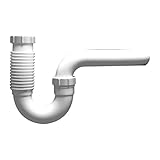
I remember the first time I tried to fix a leaky sink myself. Armed with a wrench that felt way too big and a YouTube video that made it look ridiculously simple, I tackled the P trap. An hour later, I was knee-deep in murky water, wondering if I’d accidentally summoned some sort of plumbing demon. It’s moments like these that make you question the fundamental nature of things, like whether, for crying out loud, are p traps universal?
The idea of a universal part sounds like a plumber’s dream – or maybe a homeowner’s biggest lie. You grab a replacement, slap it on, and you’re done. But in the messy reality of pipes and water flow, things are rarely that straightforward. Let’s cut through the noise and get to what actually matters.
Why ‘universal’ Is Mostly Bs for P Traps
Look, if you’re dealing with a brand new, perfectly straight, standard-height sink cabinet and you’re replacing a P trap with another P trap of the exact same configuration, then yeah, maybe you can get away with calling it ‘universal’. For about 10% of the plumbing jobs out there, it might feel universal. But for the other 90%?
It’s a misleading term that costs people time, money, and a whole lot of frustration. I learned this the hard way when I bought a ‘universal’ P trap kit for an old claw-foot tub setup.
The box promised it would fit anything. It fit nothing. The pipe lengths were wrong, the angles were weird, and the little rubber seals looked like they belonged on a toy boat, not a serious drain line.
I ended up driving to three different hardware stores before finding pieces that actually worked together. So, are p traps universal?
My experience screams a resounding ‘no’. The plumbing in your house is a living, breathing, slightly crooked entity, and it rarely conforms to a one-size-fits-all solution. Each fixture, each installation, has its own quirks. The wall pipe might be too high, too low, or just in the wrong darn spot.
The sink drain might be offset. The floor is probably not perfectly level.
These aren’t ‘exceptions’; these are the norm. Trying to force a ‘universal’ part into these situations is like trying to fit a square peg into a round hole, and then complaining that the peg is defective.
Understanding How P Traps Actually Work
Before we get too deep into the ‘are p traps universal’ debate, you gotta know what this thing is actually doing. A P trap isn’t just a bent piece of pipe; it’s a important piece of your plumbing’s defense system against the nasties that live in your sewer lines. That U-shaped bend you see? That’s the magic.
When water flows down your drain, a small amount of it gets held in that curve. This little pool of water acts as a seal, a barrier. What’s it sealing against?
Sewer gases. Think methane, hydrogen sulfide – the stuff that makes your drains smell like a dead rat had a party in your walls. Without that water seal, those foul-smelling, and potentially harmful, gases would waft right up into your home. (See Also: Are Omega Watch Straps Real Alligator )
Pretty important, right? The ‘P’ shape, or sometimes an ‘S’ shape (though less common for sinks and tubs), is designed to trap and hold that water. When you run water, it flushes out the old water and refills the trap.
So, it’s a dynamic system, constantly being replenished. The effectiveness of this seal depends on the trap being properly installed and not drying out.
If you have a rarely used guest bathroom sink, for example, the water in the P trap can evaporate over time, breaking the seal and letting those odors creep in. That’s why plumbers often tell you to run water in seldom-used fixtures occasionally. It’s not just to feel busy; it’s to maintain that vital water seal. Understanding this simple mechanism is key to appreciating why a ‘universal’ fix can often be a faulty one.
What to Look for: Beyond the ‘universal’ Sticker
Forget the marketing jargon. When you need a P trap, you need to look at the type and the dimensions. They come in different materials, primarily PVC (plastic) and metal (like brass or chrome-plated brass). PVC is cheaper, lighter, and easier to work with, especially for DIYers.
It’s common in new construction and basement renovations. Metal traps are generally considered more durable and aesthetically pleasing, especially if they’re going to be visible under a pedestal sink or a console sink. They cost more, though.
I paid about $40 for a nice chrome P trap for my guest bathroom vanity, whereas the standard PVC one was maybe $15. Big difference. The really important part, though, is the configuration and the pipe diameter. P traps have specific lengths and angles to connect your sink or tub drain to the waste pipe coming out of the wall or floor.
You’ve got simple P traps, those with an extension tube, and those with a cleanout plug (a little threaded cap that lets you access the trap to clear clogs). You measure the distance from your drain to the wall or floor pipe, and you need a trap that can bridge that gap without being too long or too short.
Too short and you can’t make the connection; too long and you’re cutting it, which might compromise the seal. Even within the same type, say a standard sink P trap, the exact measurements can vary. Some are designed for standard 1-1/2 inch drain pipes, others for 1-1/4 inch. You MUST match the diameter to your existing pipes.
Get it wrong, and you’ll have leaks or an incomplete seal. So, when you’re shopping, don’t just grab the cheapest thing labeled ‘universal’. Take a picture of your existing setup, measure everything you can, and compare it to the specifications on the packaging. It’s worth the extra five minutes.
Common P Trap Mistakes and How to Avoid Them
I’ve seen people make enough P trap mistakes to fill a small book. The most common one, of course, is buying the wrong ‘universal’ part and then trying to force it.
That leads to cracked fittings, stripped threads, and leaks that are worse than the original problem. Another biggie is over-tightening. (See Also: Are Traditional Mouse Traps Humane )
Especially with plastic traps, you can crack the nuts or the pipe itself. They just need to be snug, not Hulk-level tight. Remember, you’re not trying to stop a dam breach with your bare hands.
You just need a good seal. I once saw a guy literally use pipe dope (the gooey stuff for threaded metal pipes) on a plastic P trap.
That’s a recipe for disaster; it can degrade the plastic. For plastic fittings, a little bit of plumber’s grease or even just a bit of water on the rubber washers is all you need to help create a good seal and make assembly easier.
Don’t forget the washers! These little rubber or plastic rings are key for creating a watertight seal between the pipe sections and the nuts.
If they’re missing, cracked, or installed incorrectly, you’re guaranteed a leak. I learned this lesson when I replaced a trap and forgot to put the washer back in one of the connections. It dripped for two days before I noticed it.
Finally, and this is huge: don’t assume the pipe coming out of your wall is perfectly straight and level. It’s often not.
When you install the new trap, you might need to flex the pipes slightly, or even cut a small piece to get everything aligned. If you’re fighting it too much, something’s wrong.
Take a step back, re-evaluate, and don’t be afraid to cut a new piece if necessary. It’s better to have a perfectly fitted, correctly sized trap than to struggle with a part that fundamentally doesn’t match your plumbing’s reality. I spent about $25 total on replacement pieces for my botched first attempt, plus the cost of the useless ‘universal’ kit.
That’s money I could have saved by just looking at what I actually had.
When to Call a Pro (and When Not To)
So, when are p traps universal enough that you can just grab one off the shelf and go to town? Honestly, my threshold for calling a plumber has gotten lower over the years as I’ve seen how much mess I can make. If you’re dealing with a simple sink replacement where the drain pipe is in a standard location, and you’re replacing an existing, correctly installed P trap with one of the exact same dimensions and type, then yeah, you can probably do it. If you’re comfortable working under the sink, can identify all the parts, and have a good set of basin wrenches (those weird long ones for tight spaces), go for it.
But if anything feels… off… it’s time to put the tools down and pick up the phone. This includes situations where the drain pipe is unusually high or low, the pipes are corroded and fragile, or you’re dealing with a complex setup like a double vanity or a floor drain that doesn’t have a clear P trap. My uncle tried to fix a tricky shower drain that had a built-in trap, and ended up flooding the downstairs bathroom. It cost him a fortune in water damage repairs, way more than a plumber would have charged for the initial job. (See Also: Are Sticky Mouse Traps Humane )
The rule of thumb I live by now: if you have to ask ‘are p traps universal’ with genuine uncertainty, you probably shouldn’t be buying a ‘universal’ one. Call a pro.
They have the experience, the tools, and the knowledge to identify the right parts and install them correctly the first time. They can also spot potential issues you might miss, like venting problems or sloping issues, that could cause drain backups or sewer gas leaks down the road. Sometimes, saving a few bucks on a DIY job ends up costing you way more in the long run. It’s not about ego; it’s about avoiding costly mistakes.
P Trap Faq
Can I Use a Metal P Trap with a Pvc Drain Pipe?
Yes, you absolutely can. Most P trap kits come with rubber washers and adapter nuts that allow you to connect metal to PVC. You just need to make sure the diameters match. The key is making sure the seal is tight using the correct components provided in the kit. Don’t force connections; they should fit together smoothly.
What Happens If My P Trap Dries Out?
If your P trap dries out, the water seal is broken. This means sewer gases can escape from your drain pipes and enter your home. You’ll notice unpleasant odors coming from the sink or shower. To fix it, simply run water down the drain for a minute or two to refill the trap and re-establish the seal.
How Often Should I Replace a P Trap?
P traps themselves, especially metal ones, are quite durable and don’t need regular replacement unless they are damaged, leaking, or corroded. The rubber washers and nuts, however, can degrade over time and may need replacement if you notice leaks. It’s more common to replace a P trap when you’re redoing your plumbing or if it’s become clogged and is difficult to clean.
What’s the Difference Between a P Trap and an S Trap?
Both P traps and S traps are designed to create a water seal to prevent sewer gases from entering a building. The P trap has a single U-shaped bend, while an S trap has two U-shaped bends that create an S shape. P traps are far more common in modern plumbing, particularly under sinks, because they are more effective at maintaining their water seal and are less prone to siphoning issues than S traps.
Can I Use Teflon Tape on P Trap Connections?
For plastic P trap connections, you generally should NOT use Teflon tape or pipe dope. These fittings rely on rubber washers and compression nuts to create a watertight seal. Using tape or dope on plastic can damage the fittings or interfere with the seal. For metal P trap connections, Teflon tape is sometimes used, but it’s often not necessary if the washers are in good condition and the nuts are properly tightened.
| P Trap Material | Pros | Cons | Verdict |
|---|---|---|---|
| PVC (Plastic) | Inexpensive, lightweight, easy to cut and install, resistant to corrosion. | Can become brittle over time, less aesthetically pleasing, can be damaged by heat. | Great for most DIYers and budget-conscious projects. Functional and reliable. |
| Metal (Brass, Chrome-Plated) | Durable, aesthetically superior, less prone to damage from heat. | More expensive, heavier, can corrode over long periods if not properly maintained, harder to cut. | Ideal for visible installations where appearance matters. A solid long-term investment. |
Conclusion
So, to circle back to the million-dollar question: are p traps universal? The short, blunt answer is no, not in the way most people hope. The ‘universal’ label is a marketing gimmick designed to simplify a purchase, but it often oversimplifies the reality of plumbing.
What you need is a trap that fits your specific setup – the pipe size, the distance, and the angle. Don’t be swayed by promises of one-size-fits-all solutions. Take the time to measure, understand the types of traps available, and if you’re unsure, call someone who does this for a living. It’s a small investment to avoid a much larger headache.
The next time you’re under that sink, look closely at the pipes. See how they connect. Understanding that simple U-bend is more important than any ‘universal’ sticker. It’s the difference between a quick fix and a week of leaks.