I remember staring at my wobbly, brush-stroked bookshelf, a monument to my misguided enthusiasm for a quick weekend project. My partner had just bought me a cheap electric paint sprayer, promising a ‘professional finish’ in half the time. Hours later, I was covered in more paint than the bookshelf, wrestling with clogs and drips, and wondering if the marketing hype was just that – hype.
So, are paint spray guns any good? It’s a question that’s probably crossed your mind if you’ve ever stared down a wall or a piece of furniture and dreaded the thought of endless roller strokes.
The truth is, they can be brilliant, but they can also be an absolute nightmare. It all depends on understanding what you’re getting into and choosing the right tool for the job.
The Reality of the Finish: Brush vs. Roller vs. Sprayer
Look, let’s cut to the chase. For decades, brushes and rollers were the undisputed kings of DIY painting. They’re simple, relatively forgiving, and you can get a decent finish if you take your time and have a steady hand. I’ve slapped paint on enough walls with a roller to know it’s a grind, but it’s a predictable grind. You know what you’re going to get: a textured finish that hides minor imperfections and is easy to touch up.
Then came the paint sprayers, promising a smooth, factory-like finish in a fraction of the time. And yeah, when they work right, they deliver.
I’ve seen furniture pieces that looked like they came straight off a showroom floor, all thanks to a well-used spray gun. The atomization of the paint creates a smooth layer that’s virtually impossible to replicate with a brush or roller, especially on intricate details or large, flat surfaces like cabinets or doors. The overspray, while a pain, means you’re not dealing with brush marks or roller stippling.
It’s a different kind of finish entirely. For certain projects, like painting a whole house’s worth of trim or giving a fleet of kitchen cabinets a facelift, the speed and quality of finish are undeniable game-changers.
But here’s the catch: getting that perfect finish isn’t automatic. It’s not just about pulling the trigger. It’s about understanding paint viscosity, nozzle size, air pressure, spray pattern, and technique. I once tried to spray a bathroom vanity with exterior house paint because it was the only paint I had on hand.
Big mistake. The paint was too thick, the nozzle was too small, and the result was a splotchy, uneven mess that looked worse than if I’d just used a small brush. It took me longer to fix the spray job than it would have taken to paint it properly with a brush in the first place. That was a hard lesson in matching the material to the tool.
So, while the potential for a superior finish is there, achieving it requires knowledge and the right setup. It’s not always as simple as ‘point and shoot’.
People also ask: ‘Do you need a special paint for spray guns?’ Generally, yes. You need to thin your paint to the correct consistency, and the type of paint matters. Latex and acrylics often need thinning significantly, while oil-based paints or lacquers might be closer to the right viscosity out of the can. Some sprayers are better suited for different paint types and thicknesses than others. Cheap guns often struggle with thicker materials, leading to clogs and poor atomization. High-pressure airless sprayers are generally more forgiving with thicker paints than HVLP (High Volume, Low Pressure) guns, but they also create more overspray.
The Different Types of Paint Spray Guns Explained
When you start looking into paint sprayers, you’ll quickly realize there isn’t just one kind. They range from tiny, battery-powered gizmos to professional-grade behemoths. Understanding the main types is key to knowing if a spray gun is going to be a good fit for your projects.
First up, you have HVLP sprayers. These stand for High Volume, Low Pressure. The idea here is that they move a lot of air at a low pressure, which helps to atomize the paint efficiently and, importantly, reduces overspray. This is generally what you want for interior work, furniture, cabinets, and anything where you want to minimize paint flying everywhere.
They tend to be a bit slower than other types for large areas but offer excellent control and a smooth finish. I’ve used a few different HVLP guns for painting interior doors and a dining table.
For those smaller, detail-oriented jobs, they’re fantastic. The setup can be a little more involved with a separate turbine or compressor, but the payoff in finish quality and reduced mess is worth it.
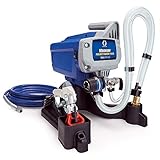
Then there are Airless sprayers. These don’t use air to atomize the paint; they use extremely high pressure to force the paint through a small nozzle. Because they don’t rely on air, they’re much faster for covering large areas like walls or exterior siding. They can handle thicker paints with less thinning, which is a big plus.
However, they create a LOT of overspray. Like, a significant amount. (See Also: Can Craft Foam Be Spray Painted )
You’ll be masking off everything within a 10-foot radius. They also tend to leave a slightly less refined finish than a good HVLP gun, sometimes described as ‘dusty’ or ‘peaky’ if not used perfectly. For a quick job on a large surface where perfection isn’t the absolute top priority, or if you’re painting a whole house, an airless sprayer can be a lifesaver. I borrowed a friend’s airless for painting the exterior of my garage, and I got it done in a single afternoon – a job that would have taken me a week with rollers.
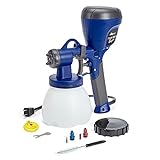
Finally, there are electric cup guns, often called handheld sprayers or turbine sprayers. These are typically all-in-one units, with the motor, fan, and paint cup integrated.
They’re usually HVLP in principle but are designed for portability and ease of use. They’re great for smaller projects like accent walls, fences, or small furniture pieces.
They’re generally the most affordable and easiest to set up. However, they can struggle with larger volumes of paint, may not atomize as finely as dedicated HVLP systems, and can be prone to overheating on extended use.
I bought one of these years ago for a small deck staining project. It worked okay, but I found myself refilling the cup constantly, and the finish wasn’t quite as smooth as I’d hoped. For touch-ups or very small jobs, they’re fine, but don’t expect miracles on a whole room.
The choice really boils down to your project size, the type of paint you’re using, and how much control and finish quality you need. People often ask, ‘What is the best type of paint sprayer for beginners?’ For absolute beginners tackling furniture or small projects, an electric cup gun or a smaller HVLP unit is usually the least intimidating and most cost-effective way to start. They offer a good balance of ease of use and decent results without the overwhelming overspray of an airless system.
Paint Sprayer Types Comparison
| Type | Best For | Pros | Cons | My Verdict |
|---|---|---|---|---|
| HVLP | Furniture, cabinets, trim, interior doors | Smooth finish, less overspray, good control | Slower for large areas, requires thinning paint, can be complex setup | Excellent for detailed work and quality finishes. Worth the effort. |
| Airless | Walls, fences, exterior siding, large projects | Fast coverage, handles thicker paints, good for large areas | Significant overspray, less refined finish, requires heavy masking | A workhorse for speed on big jobs. Not for precision. |
| Electric Cup | Small projects, fences, accent walls, touch-ups | Portable, easy setup, affordable | Smaller paint capacity, can overheat, less fine atomization | Good entry-level option for small tasks, but limited. |
Common Mistakes That Ruin Your Paint Job (and Your Day)
You might have the fanciest spray gun money can buy, but if you make a few common blunders, you’ll end up with a finish that looks like a kindergartener finger-painted it. I’ve made most of these, so I speak from painful experience.
Mistake number one: Not preparing the surface properly. This is universal for all painting, but it’s amplified with spraying. Any dust, grime, grease, or old flaking paint will be blasted onto your surface, creating little bumps and imperfections under the new layer. I once skipped cleaning a set of old wooden chairs before spraying them. The result? A bunch of tiny, embedded bits of wood fuzz and dead bugs under a beautiful, smooth coat of paint. It was infuriating. You need to clean, sand, and prime thoroughly. Fill any holes or cracks. A spray gun doesn’t magically hide imperfections; it just lays paint over them. If anything, it can make them more noticeable.
Mistake number two: Wrong paint viscosity. As I mentioned, this is huge. Too thick, and it won’t atomize properly, leading to splatters, runs, and a gritty texture.
Too thin, and it’ll run like water and won’t cover. Most paint manufacturers provide thinning recommendations for spraying their products, usually involving adding water (for latex/acrylics) or a specific solvent.
You need to test this. Most spray guns come with a viscosity cup. Get a small amount of thinned paint, fill the cup, and time how long it takes to drain.
Compare that to the manufacturer’s recommendation for your gun and paint type. I used to just eyeball it, but that’s a fool’s errand. Investing in a viscosity cup and following the guidelines is a must for a good finish.
Mistake number three: Incorrect spray technique. This is where the ‘professional finish’ illusion often shatters.
You can’t just wave the gun around like you’re a conductor. You need to hold the gun at a consistent distance from the surface (usually 8-12 inches for HVLP, a bit closer for airless), maintain a consistent speed, and overlap each pass by about 50%. Start the gun before you reach the surface and stop it after you pass the edge. Starting and stopping the spray while it’s over the surface creates those ugly “tails” or “pistol marks” at the beginning and end of your stroke.
I used to get impatient and rush my passes, resulting in uneven coverage and those dreaded runs. Slow down.
Be methodical. Practice on a piece of cardboard first. (See Also: Can Aluminum Be Spray Painted )
Mistake number four: Not masking enough. Overspray is a beast. Especially with airless sprayers. If you’re spraying anything indoors, you need to cover everything you don’t want painted. This includes walls, floors, furniture, windows, light fixtures, and even yourself (wear a respirator and a good suit). I learned this the hard way when I sprayed a set of shelves in my garage and ended up with a fine mist of paint coating my car that was parked just outside the open garage door. It took hours to wipe off. Use painter’s tape and plastic sheeting religiously. It might seem like overkill, but it’s far less work than trying to clean up overspray.
Common Spray Gun Mistakes to Avoid
- Skipping surface prep (cleaning, sanding, priming).
- Using paint that’s too thick or too thin for the sprayer.
- Inconsistent spray distance, speed, or overlap.
- Not masking off surrounding areas adequately for overspray.
- Forcing a sprayer designed for small jobs on large projects (or vice-versa).
Real-World Projects: When Sprayers Shine and When They Don’t
So, are paint spray guns any good for the average homeowner? The answer is a resounding ‘it depends.’ For certain projects, they are an absolute lifesaver. For others, you’ll be wrestling with a monster and wishing you’d just grabbed your roller.
Where they truly shine is on complex or large, smooth surfaces. Think about kitchen cabinets. Trying to get a smooth, even finish on dozens of doors and drawer fronts with a brush or roller is a monumental task.
You’ll inevitably get drips, brush marks, and roller stipple. A good HVLP sprayer, with the right paint, can give you that factory-perfect finish with relative ease.
It’s not just about speed; it’s about the quality of the final product. I refinished a set of old oak kitchen cabinets a few years back using a decent HVLP system. The transformation was incredible.
The old, dated cabinets looked brand new, with a perfectly smooth, durable finish. It took time for prep and setup, but the painting itself was surprisingly quick and satisfying.
Another prime candidate is trim and molding. The intricate profiles and tight corners of baseboards, crown molding, and door casings are a nightmare for rollers. Brushes can work, but it’s tedious. Spraying, especially with an HVLP, lays down a consistent coat that gets into all the nooks and crannies. It’s a far more efficient way to achieve a professional look on these architectural details.
Large, flat surfaces like garage doors, exterior siding, or even an entire exterior house can be tackled quickly with an airless sprayer. The speed is unmatched. I’ve seen friends paint their entire houses in a weekend with an airless unit, something that would take weeks with traditional methods. However, you have to accept the trade-off: more overspray, more masking, and a finish that might require a bit more touch-up or accept a slightly less refined look compared to a meticulous brush job.
Where I’d personally avoid a sprayer, or at least be very cautious, is on small, highly textured surfaces or when you’re painting small, awkward spaces. Trying to spray a single, small, heavily textured picture frame can be more hassle than it’s worth. The setup time, cleanup, and the potential for uneven coverage on such a tiny, uneven object can be frustrating. Similarly, if you’re just painting one or two interior doors in an already furnished room, and you’re not prepared for extensive masking, a roller might be simpler and less stressful. The overspray can be a real problem if you can’t properly seal off the area.
Also, if you are using chalk paint or very thick, textured paints, a standard sprayer might struggle. These paints often require significant thinning, and some sprayers simply don’t have the power or the nozzle options to handle them well, leading to clogs and a poor finish. Always check your paint’s compatibility with sprayers and the specific type of sprayer you’re considering.
A practical tip: Always buy more paint than you think you’ll need. Spraying uses more paint than rolling because of overspray and waste in the lines and gun. It’s better to have a little extra for touch-ups than to run out mid-project and try to match the color and sheen perfectly later.
Choosing the Right Sprayer for Your Needs (and Budget)
Okay, so you’re convinced. You want to give this spraying thing a shot. But how do you pick the right one without breaking the bank or buying a glorified paperweight?
First, assess your typical projects. Are you mostly painting furniture and cabinets? Go for an HVLP system. Do you need to paint large walls or your house exterior? An airless might be more appropriate. If you’re just dabbling and want to try painting a fence or a couple of doors, a more affordable electric cup gun might suffice. Don’t buy a professional-grade airless if you’re only painting one bedroom wall. It’s overkill and frankly, too much to handle for a beginner.
Second, consider your budget. This is where things get tricky.
You can spend anywhere from $50 for a basic electric cup gun to over $1000 for a high-end professional airless sprayer. As a general rule, you get what you pay for. Cheap sprayers tend to have less powerful motors, poorer quality atomization, and are more prone to clogging and breaking.
I learned this the hard way with that first $70 sprayer. It was a constant battle. Spending around $150-$300 for a decent consumer-grade HVLP or a good quality electric cup gun will get you a tool that’s much more user-friendly and produces better results. If you plan to use it frequently for significant projects, investing in a mid-range or even pro-grade sprayer makes sense in the long run. (See Also: Can Bug Spray Damage Car Paint )
Third, think about the paint type you’ll use. Water-based latex paints are common for DIYers and are generally fine with most HVLP and airless sprayers, though thinning is usually required for HVLP. Oil-based paints, lacquers, and stains can be sprayed, but you need to make sure the sprayer is compatible and use the appropriate solvents for cleanup. Some sprayers are better suited for specific paint types. For instance, high-gloss lacquers often require very fine atomization that cheaper guns can’t achieve.
Fourth, read reviews, but take them with a grain of salt. Look for reviews from people who are doing similar projects to yours. Pay attention to comments about ease of use, cleanup, and the quality of the finish. Be wary of reviews that just say ‘it broke’ without explaining why, or ‘it’s great!’ without specifics. Real-world usage is key.
Finally, don’t underestimate the importance of accessories. You’ll need good quality painter’s tape, plastic sheeting, a respirator mask, and possibly extension poles or different nozzle sizes. Factor these into your overall budget.
For instance, if you’re looking to paint a set of kitchen cabinets and are on a budget of around $250, you’re likely looking at a solid consumer-grade HVLP system. If your budget is closer to $500, you might be able to step up to a more solid HVLP or a smaller, entry-level airless sprayer if you’re tackling larger wall projects.
Are Paint Spray Guns Worth the Money for Diyers?
Yes, for many DIYers, paint spray guns are absolutely worth the money, provided you have the right projects for them. If you’re painting furniture, cabinets, doors, or trim, a spray gun can provide a far superior finish and save you a lot of time compared to brushes and rollers. However, if you only paint a wall every few years, the investment and learning curve might not be justified.
Can I Use a Paint Sprayer for Latex Paint?
Yes, you can use a paint sprayer for latex paint, but it almost always needs to be thinned. Latex paint straight from the can is typically too thick to spray properly. You’ll need to use a viscosity cup to measure and thin it to the manufacturer’s recommended consistency for your specific sprayer. Different sprayers and different brands of latex paint will require different thinning ratios.
How Do I Clean a Paint Sprayer?
Cleaning a paint sprayer immediately after use is important for its longevity and performance. For water-based paints, this involves flushing the system with water, then a mild soap and water solution, until all paint residue is gone. For oil-based paints, you’ll need to use the appropriate solvent (like mineral spirits) for flushing and cleaning. Disassemble and clean all parts that came into contact with paint, including the cup, siphon tube, and nozzle. Refer to your sprayer’s manual for specific cleaning instructions.
What Is the Difference Between Hvlp and Airless Sprayers?
HVLP (High Volume, Low Pressure) sprayers use a large volume of air at low pressure to atomize the paint, resulting in less overspray and a smoother finish, making them ideal for furniture and fine details. Airless sprayers use high pressure to force paint through a small tip, creating a faster spray that’s great for large surfaces like walls and fences, but they generate significantly more overspray and a less refined finish.
How Close Do You Hold a Paint Sprayer?
The optimal distance for holding a paint sprayer varies depending on the type of sprayer and the nozzle size, but a general guideline for HVLP sprayers is 8-12 inches from the surface. Airless sprayers can often be held a bit closer, around 6-10 inches. Consistency is key; maintaining a steady distance and speed during application prevents uneven coats and runs. Always test on scrap material to find the best distance for your specific setup and paint.
Verdict
So, the big question: are paint spray guns any good? After wrestling with my share of leaky hoses, clogs, and splatters, my honest answer is: yes, when used correctly and for the right jobs, they are fantastic tools. They can lift your projects from ‘decent DIY’ to ‘surprisingly professional’ in ways that rollers and brushes simply can’t match for certain finishes. But they are not a magic wand.
If you’re expecting to pick one up and instantly achieve flawless results without any learning curve or prep work, you’re setting yourself up for disappointment. They demand respect, proper technique, and a commitment to thorough cleanup. The initial investment in a decent gun, plus the time spent learning to use it effectively, is real.
However, for furniture restoration, cabinet repainting, or even tackling larger surfaces like fences or garage doors, the time saved and the quality of the finish you can achieve are often well worth the effort and expense. Just make sure you understand the type of sprayer that best suits your needs, and always, always do your prep work. Don’t be like me and waste hours fixing a botched spray job.
Ultimately, whether a paint spray gun is ‘good’ depends on your definition and your expectations. For smooth, consistent finishes on specific surfaces, they are incredibly effective. They’re not a shortcut to professional results without effort, but rather a different, often superior, method of application when done right.
If you’re on the fence, consider renting one for a larger project to see if you like the process before you buy. Or, start with a more affordable electric cup model for smaller tasks to get a feel for spraying.
Think about what you want to paint, the finish you desire, and how much time and effort you’re willing to invest. That’s your best guide to whether a paint spray gun will be a helpful addition to your toolbox or just another dusty item in the garage.