I remember staring at the pile of cabinet samples, trying to figure out what the hell ‘plywood’ even meant in the grand scheme of kitchen renovations. Everyone kept talking about solid wood this and particle board that, but plywood felt like this weird middle ground nobody really bothered to explain. Are plywood cabinets good? Honestly, I was skeptical. I’d seen some cheap-looking stuff out there and worried I was about to waste a chunk of my hard-earned cash on something that would look dated and fall apart faster than my last diet. Turns out, it’s not that simple, and I learned a few things the hard way.
Why I Gave Plywood Cabinets a Shot (and Didn’t Regret It)
Look, when you’re remodeling, the sticker shock can be brutal. Solid wood doors? Beautiful, sure, but they can add thousands to your bill.
Then you’ve got particle board or MDF, which often feels like a gamble. I’d had a bad experience years ago with a cheap MDF vanity that swelled up like a balloon after a minor leak under the sink.
So, when my contractor started raving about plywood for the cabinet boxes – the guts of the operation, not the doors – I was intrigued but still wary. He explained that for the main structure, the parts you don’t necessarily see every second, plywood offers a sweet spot. It’s engineered wood, but done right, it’s surprisingly sturdy.
We’re talking layers of wood veneer glued together with alternating grain patterns. This cross-graining is key; it makes the material much more stable and less prone to warping or cracking compared to solid wood, especially when you’re dealing with changes in humidity, which is a constant battle in my kitchen. He showed me a piece of ¾-inch birch plywood and honestly, it felt solid. No flex, no cheap-sounding hollowness.
For the sheer structural integrity where it matters most – holding up shelves, supporting drawers, and generally bearing the weight of your dishware – plywood is a no-brainer for me now. It’s about understanding where to spend your money. The doors and drawer fronts?
Sure, you might want to splurge on a nice wood veneer or even solid wood there for the aesthetics. But the boxes? Plywood is where it’s at. I went with a furniture-grade birch plywood for the visible parts of the boxes, and it looks damn good, far from the ‘cheap’ reputation it sometimes gets.
It’s a practical choice that doesn’t scream ‘compromise’ if you pick the right grade.
What to Actually Look for in Plywood Cabinetry
This is where most people get tripped up, and I’m guilty too. You can’t just grab any old plywood.
It’s like buying lumber; there are grades, and you need to know the difference if you want your cabinets to last. For cabinet boxes, the most important factor is the thickness and the quality of the veneer. I’m talking ¾-inch thick for the sides, tops, and bottoms.
Anything less and you risk sagging shelves and drawers that don’t operate smoothly. The veneer quality matters too. Look for hardwood plywood. This usually means a hardwood face veneer (like birch, maple, or oak) and a core made of plies of softwood or hardwood.
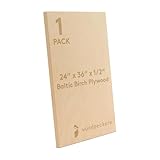
The ‘ply’ count is also a clue; more plies generally mean a stronger, more stable panel. I saw a cabinet maker once who swore by Baltic Birch plywood for cabinet boxes. It’s got a ton of plies, is incredibly stable, and has a nice, clean look on the edges if they’re exposed. It’s a bit pricier than standard hardwood plywood, but for high-end builds, it’s worth it. (See Also: Can A 4x8 Plywood Fit In A Honda Pilot )
When I was shopping, I specifically asked about the construction. Were the plies uniformly thick? Were there any voids (gaps) in the core? Voids are bad news; they create weak spots.
The salesperson tried to steer me toward a cheaper option with fewer plies and some visible glue lines. I politely declined. My advice?
Don’t be afraid to ask questions. Inspect the panels yourself if you can.
Feel the weight, check for warpage, and ask about the grading. I learned that AC or BC grades are decent for cabinet fronts, but for the core structure, you want something more solid. Think about the hardware too.
High-quality drawer slides and hinges are key, and they need a solid foundation to work on. Plywood, when it’s the right kind, provides that. It’s not just about the material; it’s about how it’s put together.
I once found a cabinet with a drawer that stuck constantly. Turns out, the plywood box had warped slightly, throwing off the alignment. That’s why focusing on the core material and its stability is most important.
The Old Advice That’s Just Plain Wrong
Here’s a contrarian take for you: the idea that all plywood is inherently ‘cheaper’ or ‘lower quality’ than solid wood for cabinet boxes is, frankly, outdated and often misleading. For decades, the mantra was ‘solid wood or nothing.’
And sure, solid wood has its place – it’s beautiful for exposed frames and doors, and it offers a certain warmth. But for the structural components, the parts that form the actual cabinet boxes?
Plywood has surpassed solid wood in many practical aspects, and it’s about time people recognized that. Solid wood expands and contracts significantly with changes in humidity. This can lead to doors that stick, drawers that jam, and even cracks in the wood itself over time.
I had a solid oak hutch growing up, and every summer you could hear the wood creak and groan as it expanded. It was a constant battle.
Plywood, with its cross-grained construction, is far more dimensionally stable. It resists warping, swelling, and shrinking much better. (See Also: Can Bondo Be Applied To Plywood )
This means your cabinets will maintain their shape and function reliably, year after year, regardless of seasonal humidity shifts. Think about it: you want your drawers to slide smoothly and your doors to hang straight. Plywood helps make sure that. Furthermore, the manufacturing process for quality hardwood plywood allows for consistent thickness and density across the panel.
This uniformity is harder to achieve with solid wood, where knots, grain variations, and even subtle differences in drying can impact performance. So, while solid wood might have the ‘natural’ allure, for the core of your cabinets, where stability and durability are king, quality plywood is not just a good alternative; in many cases, it’s the superior choice. Don’t let outdated notions dictate your decisions when practical engineering has provided a better solution for the hidden workhorses of your kitchen.
Plywood vs. Mdf vs. Particle Board: A Quick Verdict
When you’re comparing materials for cabinet construction, especially the boxes, understanding the differences is key. Here’s a quick rundown based on my experience:
| Material | Pros | Cons | Verdict |
|---|---|---|---|
| Hardwood Plywood ( ¾-inch ) | Excellent stability, strong, resistant to warping, good screw-holding power, wide range of finishes. | Can be more expensive than MDF/particle board, quality varies by grade. | My Go-To for Cabinet Boxes. Offers the best balance of performance and cost for structural components. |
| MDF (Medium-Density Fiberboard) | Smooth surface, paints well, consistent, no grain, less expensive than plywood. | Heavy, susceptible to water damage (swells easily), poor screw-holding power without inserts, can sag under heavy loads. | Okay for painted doors or drawer fronts, but avoid for cabinet boxes if possible, especially in humid areas. |
| Particle Board | Cheapest option, lightweight. | Least durable, very prone to swelling and disintegration when wet, poor screw-holding power, can sag easily. | Avoid for Cabinetry. Only suitable for very temporary or non-important applications. I learned this the expensive way with a cheap bookshelf. |
My Own Plywood Cabinet Mishap (and What I Learned)
So, I thought I was pretty smart. I’d read up on plywood, I knew to go for the thicker stuff, and I figured I’d save a few bucks by ordering some ‘unfinished’ plywood cabinet boxes online from a place that seemed reputable. They arrived, and visually, they looked okay. The edges were clean, the veneers seemed decent.
I was so proud of myself. Then came the assembly.
Trying to screw hinges into the side panels was a nightmare. The screws just wouldn’t bite properly, and the plywood felt… crumbly, almost. I had to go out and buy special inserts, which added cost and a ton of frustration.
Worse still, after I installed them, I noticed one of the shelves in a base cabinet was starting to sag, and this was only a few weeks in. I pulled it out, and sure enough, the plywood core had some significant voids. It wasn’t the furniture-grade stuff I’d seen and felt at the local lumber yard.
It was clearly a lower-grade panel that looked acceptable on the surface but lacked the structural integrity I needed. The lesson? Buying online without physically inspecting the material or knowing the exact specifications (like void-free core or specific ply count) is a gamble.
I ended up having to reinforce that sagging shelf with a metal bracket, which looks… well, it looks like a fix. It’s a constant reminder that sometimes, you need to see and touch the material, or at least trust a contractor who knows their stuff and can vouch for the supplier. The ‘deal’ I thought I was getting cost me more in time, materials, and a less-than-perfect final result. Stick to reputable suppliers or get recommendations.
Don’t make my mistake of assuming ‘plywood’ is a universal standard for quality.
Practical Tips for Plywood Cabinet Longevity
Even with good quality plywood, treating your cabinets right will make them last longer. First off, clean spills immediately. Water is the enemy of any wood product, and while plywood is more resistant than MDF or particle board, it’s not waterproof. (See Also: Can Cat Plywood Be Used For Exterior Siding )
A quick wipe-down can prevent swelling or staining. For regular cleaning, a damp cloth with a mild detergent is usually sufficient. Avoid harsh chemicals or abrasive scrubbers, which can damage the veneer or the finish.
If your cabinets are unfinished plywood and you plan to paint or stain them, proper preparation is key. Sanding with fine-grit sandpaper to create a smooth surface before applying your finish will make a huge difference in the final look. And don’t forget to condition the wood if you’re going for a natural or stained finish. For cabinets that are already finished, a good quality furniture polish applied occasionally can help maintain their sheen and protect the surface.
Consider the weight you’re putting on shelves. While ¾-inch plywood is strong, there’s a limit.
For very heavy items, like stacks of cast iron pans or large appliances, you might consider adding reinforcing strips or even a second layer of plywood to the underside of the shelf. This is a simple DIY fix that adds significant support. Think about ventilation too. If your cabinets are in a particularly humid area, like a basement kitchen or a poorly ventilated laundry room, consider adding small vents or making sure good airflow.
This helps prevent moisture buildup that can stress any wood product over time. Finally, if you’re installing new hinges or drawer slides, pre-drilling pilot holes is a good idea. This prevents the screws from splitting the plywood, especially near the edges, and makes sure a secure fit.
These aren’t complicated steps, but they make a difference in keeping your plywood cabinets looking and functioning great for years to come.
Can Plywood Cabinets Be Painted?
Yes, absolutely. Plywood cabinets can be painted, and often look fantastic when done so. The key is to start with a good quality plywood that has a smooth, consistent veneer. You’ll need to properly prep the surface by cleaning it thoroughly, sanding it smooth, and applying a high-quality primer designed for wood. Multiple thin coats of paint are better than one thick coat. The smooth, uniform surface of plywood makes it an excellent candidate for a painted finish, often achieving a cleaner look than some solid wood options that might show grain inconsistencies.
Are Plywood Cabinets More Durable Than Solid Wood?
For the cabinet boxes themselves, yes, quality plywood is often more durable than solid wood due to its superior dimensional stability. Solid wood is prone to expanding and contracting with humidity changes, which can lead to warping, cracking, and doors that don’t align. Plywood’s cross-grained construction makes it far less susceptible to these issues, meaning your cabinet boxes are less likely to shift or deform over time, making sure hinges and drawer slides remain properly aligned and functional. This stability is a significant advantage for the longevity of the cabinet’s structure.
What Is the Best Grade of Plywood for Cabinets?
For cabinet boxes, you generally want to look for hardwood plywood with a ¾-inch thickness. Grades like ‘B’ or ‘C’ for the face veneer are common and acceptable, but for the core, it’s best to opt for void-free or a high ply count (like Baltic Birch plywood) for maximum strength and stability. Avoid grades with significant voids or delamination, as these will compromise the structural integrity and longevity of the cabinets. Always ask about the core construction when purchasing.
How Long Do Plywood Cabinets Last?
With proper care and installation, plywood cabinets can last for decades, often 30 years or more. Their durability is largely due to their resistance to warping and moisture damage compared to other wood products like particle board or MDF. Quality plywood, combined with good hardware and a protective finish, will hold up very well over time, maintaining its structural integrity and appearance for a very long time, making them a sound long-term investment for your kitchen.
Verdict
So, are plywood cabinets good? The short answer is yes, especially for the main boxes. I’ve learned that the reputation of plywood has suffered from the sins of its cheaper cousins, particle board and low-grade MDF. When you choose quality hardwood plywood, you’re getting a material that’s stable, strong, and holds up incredibly well to the daily grind of a kitchen. Don’t be afraid to ask questions, inspect the material, and trust your gut (and maybe a good contractor).
It’s not about getting the cheapest option; it’s about getting the best value for the hidden structure that supports everything else. For me, plywood cabinets are a solid, reliable choice that often gets overlooked in favor of more traditional—and often less practical—options.
If you’re planning a renovation, consider where you want your money to go. Splurge on the pretty doors if you must, but for the boxes, high-quality plywood is a smart, durable investment.