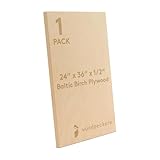
I once spent a weekend building a simple boat seat, only to have it warp and delaminate after its first encounter with a rogue splash of saltwater. I’d used what I thought was the best stuff – marine grade plywood. Turns out, “marine grade” isn’t a magic bullet against water; it’s about how the glue holds up and the type of wood used. This whole experience got me thinking, are there veneers placed on marine grade plywood? The answer is a resounding yes, and understanding that is key to not wasting your money and time like I did.
It’s a bit of a confusing topic because people often assume marine grade means it’s solid, waterproof wood all the way through. That’s rarely the case. Most of what you buy will have a veneer on the outside, and knowing what kind and how it’s bonded is way more important than just seeing that ‘marine grade’ stamp.
So, let’s cut through the BS and talk about what’s really going on with these fancy plywood sheets.
What Exactly Is Marine Grade Plywood Anyway?
When you hear “marine grade plywood,” your brain probably conjures images of sturdy hulls, decks that can handle constant spray, and maybe even a fancy yacht. And yeah, that’s the goal. But the name itself can be a little misleading. It doesn’t mean the entire sheet is carved from a single, magically waterproof tree. Instead, it refers to a specific construction and the type of adhesives used, designed to resist water and rot better than your average construction-grade plywood.
The real magic, or rather, the engineering, happens inside. Marine grade plywood is made from specific hardwood species – think mahogany, birch, or okoume – chosen for their durability and resistance to decay. The key differentiator, though, is the glue. Standard plywood often uses glues that break down when exposed to moisture, leading to delamination – that horrible puffing up and separation of the layers. Marine grade plywood uses waterproof adhesives, typically phenolic resin glues, which are designed to withstand prolonged contact with water without failing. This is the first big hurdle it clears to earn its stripes.
Now, about those veneers. Yes, most marine grade plywood has veneers. Typically, you’re looking at a number of plies, or layers, glued together. The exterior veneers, the ones you see on the top and bottom surfaces, are usually made from the same high-quality hardwood as the core. These aren’t just decorative; they are structural and contribute to the overall strength and stability of the panel. The number of plies can vary, but more plies generally mean a stronger, more stable sheet. Think of it like stacking layers of solid wood; the more you have, the harder it is to bend or break.
The quality of these veneers is most important. For a panel to be truly considered marine grade, the veneers must be free of significant defects. This means no knotholes, no splits, and no core gaps. Core gaps are basically voids or empty spaces between the layers of wood. In standard plywood, these can easily fill with water, leading to rot and structural failure. In marine grade, the manufacturing process is much tighter, aiming to minimize or eliminate these gaps. Sometimes, you’ll find a very thin decorative veneer placed on top of the structural hardwood veneer for aesthetic purposes, especially if the plywood is intended for interior use where looks matter, but the core construction remains the focus.
So, when you’re shopping, don’t just look for the ‘marine grade’ stamp. Ask about the type of glue used (it should be waterproof, like Type WBP or phenolic), the species of wood, and the construction quality. Inspect the panel for any visible defects. I once bought a sheet that looked okay on the surface, but when I cut into it, I found a massive core gap. It was a humbling reminder that not all ‘marine grade’ is created equal, and sometimes, you have to dig a little deeper. The veneers are part of that construction, and their quality, along with the glue, is what makes it marine grade.
The Veneer Construction: What to Look For
Alright, so we’ve established that marine grade plywood almost always has veneers. But not all veneers are created equal, and the way they’re put together makes a huge difference. Think of it like building a sandwich; the bread matters, but so does what’s inside and how evenly it’s spread.
The most common construction for marine grade plywood involves multiple plies of hardwood, glued together with waterproof adhesive. You’ll often see terms like “high-quality hardwood veneers” or specific wood types mentioned, like okoume or meranti. Okoume is a popular choice because it’s relatively lightweight, strong, and has a uniform grain that makes it easy to work with. Meranti is another good option, known for its durability. The key is that these are dense, rot-resistant hardwoods. You’re not going to find cheap pine or fir plies in a reputable marine grade panel.
The number of plies is also important. While there isn’t a strict rule for every manufacturer, more plies generally mean a stronger, more stable panel. A standard piece of plywood might have 3 or 5 plies. Marine grade plywood often has 7 plies or more, even in thinner sheets. This increases its resistance to bending, twisting, and impact. Imagine trying to bend a stack of 10 thin pieces of wood versus 3 thick ones; the thinner, more numerous layers distribute stress much better.
When you’re inspecting a sheet, look at the edges. You should be able to see the distinct layers of veneer. Ideally, these layers should be tightly bonded with no visible gaps or voids. These voids are the enemy. They are entry points for moisture, which can then get trapped between the layers and start the rot process, even with waterproof glue. A good manufacturer will press these veneers together under immense pressure with the waterproof glue, making sure a solid, gap-free core.
Some manufacturers might also apply a thin decorative veneer over the structural hardwood face veneers for aesthetic purposes, especially for interior applications where the wood will be visible. This could be a nice-looking piece of teak, walnut, or another premium wood. However, this decorative veneer is on top of the already solid marine-grade core. Its primary purpose is looks, not structural integrity or water resistance, which are handled by the layers underneath. You’ll pay a premium for these, and frankly, for many boat applications, the raw structural veneer is perfectly fine and more cost-effective. (See Also: Can A 4x8 Plywood Fit In A Honda Pilot )
I learned this the hard way when I was building a small dinghy. I opted for a fancy, clear-finished marine plywood for the hull. It looked beautiful, but it cost me nearly double. While it held up, I realized later that for the areas that would be painted or covered, a standard, high-quality marine grade with a less pretty face veneer would have been just as effective structurally and saved me a good chunk of cash. The quality of the core veneers and the glue are far more important than the surface appearance for most real-world, demanding uses.
What to Avoid
- Core Gaps: Big voids between plies. Inspect the edges.
- Softwood Plies: Look for hardwood construction.
- Standard Glue: Make sure it’s waterproof (WBP, phenolic resin).
- Delamination: Any sign of layers separating is a red flag.
It’s this attention to the internal construction – the quality and density of the core veneers and the strength of the adhesive – that truly defines marine grade plywood, far more than any single decorative layer.
The Real-World Application: When Veneers Matter Most
So, you’ve got this marine grade plywood, and it’s got veneers. Where does that actually make a practical difference? It’s not just about looking pretty or being fancy. The construction and quality of those veneers, especially the core, directly impact how the plywood performs in wet, demanding environments. This is where the rubber meets the road, or in this case, the hull hits the water.
The primary reason veneers are used is to create a strong, stable panel from wood. Solid lumber can warp, twist, and is prone to checking (small cracks) as it expands and contracts with moisture changes. Plywood, with its cross-laminated veneers, counteracts these forces. Each layer is oriented at a 90-degree angle to the one below it, meaning the stresses are distributed across the panel. This makes it much more dimensionally stable and less prone to movement, which is absolutely important when you’re building something that needs to hold its shape and integrity in a constantly shifting environment like a boat.
In boat building, this stability is key. Whether it’s a hull, a deck, bulkheads, or interior cabinetry, the plywood needs to resist the constant flexing, vibrations, and changes in humidity and temperature that a boat experiences. If the plywood warps, it can stress other structural components, leading to leaks or even catastrophic failure. The strong, gap-free core veneers, bonded with waterproof glue, are the foundation of this stability.
The exterior veneers also play a role in wear and tear. While they are often painted or coated in marine applications, they still need to be durable enough to withstand sanding, shaping, and the occasional bump or scrape during construction and use. High-quality hardwood veneers are more resistant to surface damage than softer woods. If you’re using the plywood for a surface that will see frequent contact, like a cockpit sole or a galley countertop, the toughness of the outer veneers becomes more relevant.
However, here’s my contrarian take: For many structural boat components that will be completely encapsulated in fiberglass and epoxy, the aesthetic quality of the face veneer is almost irrelevant. I’ve seen amazing boats built using what might be considered ‘utility grade’ marine plywood – meaning the core is perfect and the glue is waterproof, but the face veneers have some minor imperfections. Once that fiberglass and epoxy are laid up, you’d never know the difference, and the structural integrity is identical. You’re paying a premium for a pretty face that ends up hidden. So, while veneers are key, don’t get fixated on the ‘grade’ of the face veneer if it’s going to be covered.
I remember talking to an old boat builder once. He swore by using the cheapest marine ply he could find for anything going under glass. He’d meticulously fill any minor surface imperfections with epoxy filler before glassing. He said, ‘The water doesn’t care if the face veneer had a little character, it only cares if the glue holds and the core is sound.’ He built boats that are still sailing 40 years later. That stuck with me. The core veneers and the glue are the real heroes.
When Decorative Veneers Make Sense
- Interior cabinetry where the wood is visible and a premium look is desired.
- Salon tables or counters that aren’t heavily laminated.
- Certain custom trim or accent pieces.
For most structural and under-deck applications, focus on the core quality and the adhesive. The veneers are there to make it plywood, but it’s the internal quality that makes it marine grade.
Common Mistakes and What to Watch Out For
Building with marine grade plywood, especially for the first time, is ripe for making mistakes. You think you’re buying the best, but sometimes the devil is in the details, and those details often involve the veneers and the manufacturing process. I’ve certainly made my share of blunders, and most of them boil down to a few common pitfalls.
The biggest mistake I see people make is assuming that because it’s labeled “marine grade,” it’s impervious to water damage. That’s a dangerous assumption. Marine grade plywood is water-resistant, meaning the glue won’t fail when exposed to water. It does NOT mean the wood itself won’t absorb moisture, swell, or eventually rot if left sitting in a puddle indefinitely. You still need to seal and finish it properly, especially any exposed edges or surfaces. Think of it as a very tough, water-tolerant soldier, not a waterproof submarine hull all on its own. The veneers are tightly packed, but wood is still wood.
Another common error is not understanding the difference between different grades or standards of marine plywood. There are international standards (like BS 1088) and regional certifications. While many manufacturers adhere to these, some might use the term loosely. Always try to buy from reputable suppliers who can provide documentation or clearly state the specifications (glue type, wood species, number of plies). I once bought a sheet that was marketed as marine grade, but it was made with a lower-grade hardwood and a slightly less solid adhesive. It looked okay, but it didn’t have the same heft or resilience as the stuff I usually buy. It was cheaper, and I learned a valuable lesson about brand and specification reliability. (See Also: Can Bondo Be Applied To Plywood )
Over-sanding is another issue. Because marine grade plywood often uses high-quality face veneers, people can get a bit carried away with sanding, trying to get that perfect, glass-smooth finish. This can thin out the face veneer too much, especially on cheaper grades that might have thinner outer plies to begin with. If you sand through the face veneer, you expose the core ply, which might not be as aesthetically pleasing or as dense, and it can create a weak spot or an area prone to absorbing moisture. Go easy on the sandpaper, especially if you’re not planning on covering it with fiberglass.
I remember a project where I was building some custom shelving for a boat galley. I used a beautiful okoume marine ply. I got a little too enthusiastic with the orbital sander, trying to get it showroom perfect. I ended up sanding through the veneer on a couple of edges. It wasn’t a structural failure, but it looked terrible and I had to use a wood filler and then paint the whole thing to hide my mistake. It was a good reminder that even premium materials have their limits, and understanding those limits is part of the process. The veneers are good, but they aren’t infinitely thick.
Finally, people often neglect to properly edge-seal. The edges of plywood are basically end-grain, and they’re like little straws that can soak up water. Even with waterproof glue holding the plies together, if the edge gets waterlogged, it can lead to swelling and delamination over time. Always, always seal the edges of marine grade plywood. Epoxy, primer, paint – whatever you’re using for your finishing system, make sure it gets a good coat or two on the edges. The veneers might be tough, but the exposed end grain is a vulnerability.
A simple rule of thumb: treat marine grade plywood with respect. It’s tough, but it’s not indestructible. Understanding how the veneers and glue work together will help you avoid costly mistakes and make sure your project lasts.
The “solid Wood” Myth and Alternatives
Let’s get something straight right off the bat: the idea that marine grade plywood is somehow “solid wood” in the traditional sense is a myth. It’s built from layers of wood veneer, and that’s its strength. If you’re looking for solid, single-piece lumber for boat building, you’re entering a whole different ballgame with its own set of challenges and benefits. But for the vast majority of applications where plywood is used, the layered veneer construction is superior for reasons we’ve touched on.
The advantage of plywood’s layered structure, thanks to those veneers, is its incredible strength-to-weight ratio and dimensional stability. Solid wood panels, especially wide ones, are prone to warping, twisting, and cracking as they absorb and release moisture. This movement can put immense stress on fasteners and glue joints, leading to leaks and structural weaknesses. Marine grade plywood, by virtue of its cross-banded veneers and waterproof glue, resists this movement far better. Imagine trying to twist a single plank of wood versus trying to twist a stack of thin layers oriented in different directions. The latter is much harder to distort.
So, why do some people still crave solid wood? Sometimes it’s about aesthetics – the desire for a continuous grain pattern. Other times, it’s a misconception that solid equals stronger. But in the context of boat building, where flexibility, water resistance, and weight are most important, high-quality marine grade plywood is often the more practical and reliable choice. Those veneers are performing a important engineering function.
What about alternatives that aren’t plywood but still hold up in marine environments? One common alternative is fiberglass-reinforced plastic (FRP) or composite panels. These are made from layers of fiberglass cloth bonded with polyester or epoxy resin. They are inherently waterproof and very strong. However, they can be more expensive, heavier, and require specialized tools and techniques for cutting and finishing. They also don’t offer the same kind of structural rigidity as a thick plywood panel without significant reinforcement.
Another, more niche, option is certain types of engineered wood products specifically designed for marine use, though these are less common than plywood. They might involve different types of wood fibers or resins, but the principle of engineered stability remains. However, for readily available, cost-effective, and proven performance in most boat building scenarios, marine grade plywood remains the go-to material for a reason. The technology behind the glued veneers has been refined over decades.
I once helped a friend re-deck a small catboat. He was adamant about using solid teak for the deck. It looked absolutely gorgeous, but the cost was astronomical, and the installation was a nightmare. Every plank had to be perfectly fitted and sealed to prevent water from getting underneath. Within a year, some planks had started to cup, and he was constantly battling leaks. We ended up recommending replacing sections with marine grade plywood topped with a good non-skid coating, which was far more practical, less prone to issues, and significantly cheaper. The veneers in the plywood, when properly protected, offered a more stable and forgiving surface for that application.
The takeaway here is that the layered veneer construction of marine grade plywood isn’t a compromise; it’s a feature. It’s an engineered solution that provides strength, stability, and water resistance that solid wood often can’t match in a marine setting. Don’t dismiss the veneers; they are the building blocks of its performance.
Practical Tips for Working with Marine Grade Plywood
Having wrestled with my fair share of marine grade plywood over the years, I’ve picked up a few tricks that make the process less painful and the end result better. It’s not rocket science, but a few simple steps can save you a lot of grief down the line. These tips focus on making the most of those veneers and making sure your project stands up to the elements. (See Also: Can Cat Plywood Be Used For Exterior Siding )
First off, always inspect your sheets before you buy. I’ve said it before, but it bears repeating. Look at the edges for core gaps. Hold the sheet up to the light if you can; sometimes you can spot voids that way. Check for any signs of delamination, swelling, or water staining, especially on the edges. If a supplier won’t let you inspect the sheets, find another supplier. The veneers might look good from a distance, but the devil is in the details, and quality control is king.
When cutting, use sharp tools. This is true for any wood, but especially for plywood with multiple layers of veneer. A dull blade will tear out the plies, creating fuzzy edges that are a pain to clean up and can be entry points for moisture. A sharp, high-tooth-count blade designed for plywood or hardwoods will give you cleaner cuts. For very fine cuts or important edges, consider using a router with a sharp bit. This will give you a crisp, clean edge on those veneers.
Always, always, always seal the edges. I cannot stress this enough. The edges of plywood are basically end grain, and they will soak up water like a sponge if left unprotected. Epoxy is your best friend here. Coat all cut edges thoroughly with a good marine epoxy, making sure it soaks in. Once the epoxy is cured, you can then apply your primer and topcoat. If you’re painting, use a good quality marine primer and topcoat, and apply multiple coats to the edges. Don’t skimp on this step; it’s one of the most common reasons for premature failure in plywood projects.
Consider the orientation. While marine grade plywood is designed to be stable, there can still be subtle differences in strength and stiffness depending on which way the face veneer runs. For structural components like hulls or bulkheads, pay attention to the manufacturer’s recommendations or general boat building practices regarding the direction of the face grain. Typically, for strength, the grain should run parallel to the longest dimension of the panel or in the direction of anticipated stress.
Here’s a practical tip I learned from framing a boat hull: when fastening, pre-drill holes slightly smaller than your screws or nails. This prevents splitting the veneers, especially near the edges. Use stainless steel or bronze fasteners for marine applications to prevent corrosion. And when using adhesives, like epoxy or polyurethane construction adhesive, make sure they are compatible with the wood and the finishing system you plan to use. Some adhesives can react with certain finishes or even affect the wood veneers over time.
Finally, don’t try to use marine grade plywood where it’s not needed. It’s more expensive than regular construction plywood. If your project is going to be entirely protected from the elements and isn’t subject to significant moisture, you might be overspending. However, for anything exposed to even occasional moisture, boat interiors, or exterior structures, the extra cost is usually well worth the peace of mind and longevity it provides. The quality of those glued veneers is what you’re paying for, and it’s worth it when the water starts flying.
Are There Veneers Placed on Marine Grade Plywood?
Yes, absolutely. Marine grade plywood is constructed from multiple layers of wood veneer glued together. The quality of these veneers, particularly the core plies, and the type of waterproof adhesive used are what define its marine grade status. The outer veneers provide the surface finish and contribute to overall panel strength.
Is Marine Grade Plywood Completely Waterproof?
No, marine grade plywood is water-resistant, not waterproof. This means the adhesives used are designed to withstand prolonged exposure to water without delaminating. The wood itself can still absorb moisture, swell, and eventually rot if not properly sealed and maintained.
What Kind of Wood Is Used for Marine Grade Plywood Veneers?
Marine grade plywood typically uses durable, rot-resistant hardwoods such as okoume, mahogany, meranti, or birch for its veneers. The specific wood species can vary by manufacturer and region, but the emphasis is always on density and resistance to decay.
Can You Use Standard Plywood for Boat Building?
Generally, no. Standard construction plywood uses glues that are not designed for prolonged water exposure and will delaminate. While it might be used for temporary structures or interior elements that are guaranteed to stay dry, it is not suitable for hulls, decks, or any part of a boat that will be exposed to moisture.
How Do I Know If Marine Grade Plywood Is Good Quality?
Look for panels free from core gaps, made with waterproof glue (like phenolic resin), and constructed from dense hardwoods. Reputable manufacturers will often adhere to specific standards like BS 1088. Inspecting the edges for voids and making sure the veneers are tightly bonded is important.
Final Verdict
So, to circle back to the main question: are there veneers placed on marine grade plywood? Yes, and understanding their role is absolutely key to using the material effectively. It’s not just about the outer appearance; it’s about the structure, the stability, and the strength that those layered veneers provide when bonded with the right kind of glue.
Don’t be fooled into thinking ‘marine grade’ is a free pass to neglect sealing and finishing. It’s a high-performance material, but it still needs protection, especially at the vulnerable edges. Pay attention to the core quality, the glue, and inspect your sheets like a hawk before you buy.
My advice? Treat marine grade plywood with the respect it deserves. It’s an engineered product where the veneers are a fundamental part of its design. Use it wisely, seal it well, and your project will thank you for years to come.