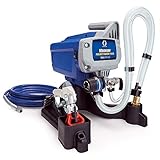
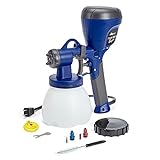
I remember the first time I saw one of those fancy spray painters. It promised a showroom finish on my old garden fence, faster than I could even find my brushes. I bought it, of course. Big mistake. The paint splattered, the overspray coated half the neighborhood, and the cleanup took longer than the actual painting. It made me wonder about brands, about who’s actually making what. So, when folks ask me, ‘Are Titan spray painters made by Wagner?’, I get it. You want to know if you’re buying into hype or a solid tool.
It’s a legitimate question, especially with brands that seem to pop up everywhere. The line between who makes what can get blurry real fast in the tool world.
Let’s cut through the noise and get down to brass tacks about these Titan units.
Who Actually Makes Titan Spray Painters? Let’s Get This Straight.
Alright, let’s tackle the big question head-on: Are Titan spray painters made by Wagner? The short, no-nonsense answer is no.
Titan is a brand that’s been around for a while, and they do make their own line of tools, including spray painters. However, they are not manufactured by Wagner.
Wagner is a completely separate entity, a German company with its own long history and a very distinct range of products, particularly in the paint sprayer market. It’s easy to get confused because both companies operate in the same space and aim for a similar customer base – DIYers and professionals looking for efficient ways to apply paint and coatings. But functionally, technologically, and ownership-wise, they are distinct.
Think of it like Ford and Chevrolet – both make trucks, but they’re not made by the same company. Wagner has its own proprietary technologies, like their High Volume Low Pressure (HVLP) systems, and Titan has its own product lines and engineering. Trying to find a Titan spray painter made by Wagner is like looking for a specific kind of apple that doesn’t exist; it’s just not how it works.
My own dive into this question came about because I saw a Titan sprayer at a hardware store, and the packaging looked surprisingly similar in style to some Wagner units I’d owned. It plants a seed of doubt, right?
You wonder if there’s some licensing deal or if one company is just rebranding the other’s equipment. But after digging a bit, it became clear: Titan has its own manufacturing and design ethos. They’ve been building sprayers under their own banner for years.
Wagner, on the other hand, is a powerhouse in its own right, known for its specific innovations in paint application. So, when you’re comparing them, you’re comparing two different brands, each with their own strengths and weaknesses, rather than a single brand with different labels. Understanding this distinction is key to making an informed purchase.
Don’t fall for the assumption that just because two brands are in the same market, they’re related. They are not.
The market is flooded with sprayers, and trying to figure out who’s who can be a headache. But for Titan, the brand itself is the manufacturer. There isn’t some shadowy parent company or a major competitor secretly building their products. They source their components, design their machines, and put their name on them. It’s a straightforward model, even if the marketing can sometimes make things seem more complicated.
Why does this matter? Because each brand will have different build quality, different spray patterns, different levels of durability, and different support networks. If you’re expecting Wagner quality or technology from a Titan sprayer, you’ll likely be disappointed, and vice-versa. You need to evaluate each product on its own merits.
What Makes a Titan Sprayer Tick (and Should You Buy One)?
Okay, so they aren’t made by Wagner, but are Titan spray painters any good? This is where the rubber meets the road. I’ve used a few different Titan sprayers over the years, and my honest take is that they fall into a specific category.
They’re generally aimed at the homeowner or the serious DIYer who needs a step up from a cheap, disposable sprayer but isn’t ready to drop serious cash on professional-grade equipment. Think of them as the solid, dependable middle-ground. (See Also: Can Craft Foam Be Spray Painted )
They work. They apply paint. They can give you a smoother finish than a roller, especially on textured surfaces or intricate trim. But don’t expect them to perform miracles or handle heavy-duty commercial jobs day in and day out without showing their limits.
I remember buying a Titan Task Force 4000 model a few years back for a deck staining project. The old fence was looking pretty sad, and I figured a sprayer would make quick work of it. The unit itself felt reasonably sturdy, not flimsy plastic like some of the absolute cheapest options out there.
It came with a decent-sized cup, which was a plus because nobody wants to stop and refill every five minutes. The setup was straightforward – attach the cup, pour in the stain, prime it, and go. The spray pattern was adjustable, which is something you really need.
I could go from a wide fan for the larger boards to a narrower stream for the edges. It did a decent job, and the deck looked a lot better than it had before. The biggest surprise, though, was the cleanup.
It wasn’t as simple as I’d hoped. Getting all the stain out of the internal components and the nozzle took more time and a few more rags than I’d anticipated. That’s a common theme with almost any sprayer, but it’s something to budget for.
When you’re looking at Titan sprayers, here’s what I’ve found matters:
- Power and Flow Rate: For thicker paints or stains, you need a sprayer with enough power to atomize the material properly. Look at the Gallons Per Minute (GPM) or similar flow rate figures. Higher is generally better for thicker substances, but can also mean more overspray.
- Cup Size and Type: A larger cup means fewer refills. Some models have gravity-fed cups, others are suction-fed. Gravity-fed is usually better for smaller projects and finer finishes, while suction-fed can handle larger volumes.
- Adjustability: The ability to change the spray pattern (vertical, horizontal, round) and the amount of paint flow is a must.
- Ease of Cleaning: This is HUGE. If it’s a pain to clean, you’ll dread using it. Check reviews specifically mentioning cleanup.
I’ve seen models that are great for latex paint on walls but struggle with oil-based enamels or thick stains. It’s all about matching the sprayer’s capability to the material you’re using. So, while Titan makes decent sprayers, understand their place. They’re workhorses for the homeowner, not necessarily the seasoned pro who needs absolute precision and durability for daily use.
Common Mistakes People Make with Spray Painters (titan or Otherwise)
You’d think spraying paint would be simple, right? Point, shoot, done. Oh, how wrong that is.
I’ve seen so many people, myself included in my early days, make the same dumb mistakes that turn a simple painting job into a disaster. And these aren’t just Titan-specific issues; these are universal sprayer blunders. The biggest one?
Not preparing the area. I once painted a small bathroom without properly masking off the toilet, the sink, or even the doorknob. The overspray got everywhere. It looked like a snowstorm had hit the room, but with paint.
It took me hours of wiping and scrubbing to get it off. Lesson learned: masking tape and plastic sheeting are your best friends. Cover EVERYTHING you don’t want painted.
And I mean everything.
Another massive mistake is not thinning the paint correctly. Most paints, especially latex or acrylics, need to be thinned to spray properly. If you don’t thin it enough, the paint won’t atomize, and you’ll get splatters, drips, and a terrible finish. If you thin it too much, it becomes watery and won’t cover. It’s a delicate balance, and the paint manufacturer’s recommendations are usually a good starting point, but you often need to experiment. I’ve had to run the paint through a viscosity cup (yes, they’re a thing, and yes, I bought one because I was so fed up with bad finishes) to get it just right. It adds time, but it saves so much frustration later.
Skipping the test spray is another common pitfall. Before you hit your actual project, always do a test spray on a piece of cardboard or scrap wood. This lets you check the spray pattern, the paint flow, and the thinning consistency. It’s your chance to make adjustments before you mess up your nice wall or furniture. I’ve seen people skip this and then spend the rest of the job trying to fix runs and uneven coats. (See Also: Can Aluminum Be Spray Painted )
Finally, and this is a big one that trips up beginners with any brand, including Titan: improper technique. People tend to hold the sprayer too close or too far from the surface, or they move too slowly or too quickly. The key is to maintain a consistent distance (usually 8-12 inches) and a steady, even speed, moving your entire arm, not just your wrist. Overlap each pass by about 50% to make sure an even coat and avoid lines. Rushing is the enemy of a good spray finish. Patience is key.
Real-World Use: My Titan Sprayer Story
So, I finally decided to tackle refinishing an old wooden porch swing. It was weathered, a bit chipped, and definitely needed a refresh. I had a mid-range Titan sprayer, not their absolute cheapest, but not their top-of-the-line either. I figured this was the perfect test for it. The job involved staining the wood, then applying a couple of coats of exterior sealant.
First off, the prep. I spent a solid afternoon sanding the swing down to bare wood, cleaning it, and then meticulously masking off any parts I didn’t want stained or sealed. I used painter’s tape and cheap plastic sheeting, the kind you can get at any hardware store. I even put down a drop cloth under the whole swing.
This is where you save yourself tons of grief later. Trust me. The Titan sprayer was easy enough to assemble. I filled the cup with the exterior stain, making sure to thin it according to the manufacturer’s instructions – about 10% water for this particular stain.
I did a test spray on a piece of scrap lumber. The pattern was a bit wide, so I adjusted the nozzle and the paint flow. It took a few tries to get it just right, but once I dialed it in, it was pretty smooth sailing.
Applying the stain took about 20 minutes per coat. The finish was remarkably even, much better than I could have achieved with a brush. The swing had all those nooks and crannies, and the sprayer got into them easily. The cleanup, however, was where the Titan showed its limitations.
It wasn’t a quick rinse. I had to disassemble parts, flush it with water multiple times, and then use a cleaning solution to get all the stain residue out of the internal pathways. It probably took me close to an hour to clean it thoroughly. If I were using it for a quick touch-up, the cleanup would feel like a massive chore.
But for a project like this, where I was applying multiple coats over a few days, it was manageable.
The sealant coats went on just as smoothly. The key was letting each coat dry completely and doing a light sanding between coats with very fine-grit sandpaper. The final result? The swing looked fantastic, like new. The Titan sprayer, despite the cleanup hassle, delivered a professional-looking finish. It proved its worth for this kind of project, but it also highlighted that you need to be prepared for the maintenance. It’s not a ‘use it and forget it’ tool.
Here’s a quick comparison of how I felt about the Titan versus what I’d expect from a higher-end unit:
| Feature | Titan (My Experience) | Professional Grade Expectation | Verdict |
|---|---|---|---|
| Finish Quality | Very Good for DIY projects | Excellent, flawless for demanding jobs | Titan is good, but not pro-level perfect. |
| Ease of Use (Setup) | Simple, straightforward | Usually very intuitive, quick setup | Titan is perfectly fine here. |
| Paint Atomization | Good with proper thinning, struggles with very thick materials | Excellent, handles a wide range of viscosities | Titan is adequate for most homeowner tasks. |
| Durability | Seems decent for occasional use, not heavy daily grind | Built for years of abuse | Titan is a homeowner’s tool. |
| Cleanup Effort | Requires significant time and effort | Can be quicker with specific cleaning kits/methods | This is Titan’s weak spot. |
Titan Sprayer vs. Wagner Sprayer: A Practical Comparison
Since the question about Wagner keeps popping up, let’s talk about how Titan sprayers generally stack up against Wagner units, based on my experience and what I’ve seen. Remember, Titan is not made by Wagner, so they are direct competitors. Wagner, particularly their line of Control sprayers (like the Control Pro series), often gets praised for its efficiency and the quality of the finish it can produce, especially with their Airless or High Volume Low Pressure (HVLP) technologies. They tend to have more advanced features for paint atomization and control, which can translate into less overspray and a smoother application, even with less-than-perfect thinning or technique.
I remember using a friend’s Wagner Control Pro 250 M a while back to paint a few interior doors. The difference was noticeable. The paint coverage felt more consistent, and there was a definite reduction in the amount of paint mist floating around the room. The setup was just as easy, but the actual spraying felt more controlled.
It was like the paint just flowed onto the surface with less effort on my part. The cleanup on that Wagner was also marginally easier – it felt like the internal parts were designed with maintenance in mind a bit more, though it was still a chore.
Wagner often uses specific nozzle technologies that are patented and designed for better results, which you don’t typically find on the more budget-friendly Titan models. (See Also: Can Bug Spray Damage Car Paint )
On the flip side, Wagner sprayers often come with a higher price tag. If you’re just painting a fence once a year or touching up a piece of furniture, a Titan might be all you need. You’re paying for that Wagner technology, that finer atomization, and often, a more solid build that’s designed for more frequent use.
My Titan Task Force, while it got the job done for the porch swing, feels less refined. It’s a bit louder, the spray pattern can be a little less predictable if you’re not careful, and as I’ve mentioned, the cleanup is a significant undertaking.
However, the Titan often costs significantly less than a comparable Wagner unit, making it a very attractive option for people on a tighter budget or those who don’t paint very often.
So, when you’re choosing between them, it really comes down to your needs and your budget. If you want the best possible finish with the least amount of fuss, and you’re willing to pay for it, a Wagner might be the way to go. If you need a functional tool that can get a decent finish on your home projects without breaking the bank, and you don’t mind putting in a bit more effort for setup and cleanup, a Titan can be a perfectly acceptable choice. Both brands have their place. Just remember that Titan sprayers are not made by Wagner, so you’re comparing two distinct product philosophies and price points.
People Also Ask: Titan Sprayer Faqs
Are Titan Sprayers Good for Cabinets?
Titan sprayers can be decent for cabinets, especially the smaller, more detailed models or if you’re working with a slightly higher-end Titan unit. You’ll need to make sure the paint is thinned correctly and use a fine-tip nozzle for a smooth, even finish without runs. Proper masking and a steady hand are important. For very high-end, furniture-grade finishes, professional-grade sprayers might offer better control and finer atomization, but for a homeowner looking to update cabinets, a Titan can certainly do the job with careful application.
What Is the Difference Between Titan and Wagner Sprayers?
The primary difference is that they are made by different companies with different product development and manufacturing processes. Wagner is a German company known for its advanced technologies like HVLP and airless systems, often resulting in superior atomization, less overspray, and a finer finish, but typically at a higher price point. Titan sprayers are generally positioned as more budget-friendly options for DIYers and homeowners. They offer functional performance for common household tasks but might require more effort in thinning paint, achieving a perfect finish, and cleanup compared to higher-end Wagner models.
Can You Spray Latex Paint with a Titan Sprayer?
Yes, most Titan sprayers are designed to handle latex paint, especially water-based latex and acrylics. However, it’s important to check the specific model’s specifications and the paint manufacturer’s recommendations. Latex paint often needs to be thinned to achieve the correct viscosity for spraying. Using a viscosity cup to measure is highly recommended to make sure the paint flows through the sprayer properly without clogging or producing a poor finish. Always clean the sprayer immediately after use with latex paint to prevent it from drying and clogging the system.
Are Titan Sprayers Professional Grade?
Titan sprayers are generally considered homeowner or prosumer grade, not full professional grade. While they can produce excellent results for DIY projects and semi-professional use, they are typically not built for the heavy, daily demands of professional painting contractors. Professional-grade sprayers from brands like Wagner, Graco, or Titan (though note that ‘Titan’ as a pro brand is often associated with specific industrial equipment, separate from the consumer line that might be confused with Wagner) usually feature more durable components, higher power output, and technologies designed for sustained performance and faster application on large-scale jobs.
Tips for Getting the Best Finish with Your Sprayer
No matter what brand of sprayer you’re using, even a Titan unit, there are a few practical tips that can make a world of difference in your final result. First off, always prep your surface. Sanding, cleaning, and priming are a must for a smooth, durable finish. For wood, this means getting it smooth. For walls, it means patching holes and making sure the surface is clean. Then, masking. I cannot stress this enough. Use good quality painter’s tape and plastic sheeting. Don’t skimp here. You’ll thank yourself later when you’re not scrubbing paint off your window frames or light fixtures.
When it comes to thinning paint, it’s an art. Every paint is different. Start with the manufacturer’s recommendation for thinning, then use a viscosity cup (they are cheap and worth it) to check. A good rule of thumb for many latex paints is that the paint should flow out of the cup in about 30-45 seconds. If it’s too thick, add a tiny bit more thinner or water. If it’s too thin, you’ve gone too far. It’s better to err on the side of slightly too thick and thin it down more than to make it too watery.
Technique is king. Hold the sprayer about 8-12 inches from the surface. Move at a consistent speed, and keep the sprayer perpendicular to the surface. Overlap each pass by about 50%. Think of it like laying down even stripes. Start your spray before you reach the edge of your area and continue spraying past the edge. This prevents those ugly start-and-stop marks. Don’t try to cover everything in one thick coat; multiple thin coats are always better. They dry faster, adhere better, and look far more professional.
Finally, clean your sprayer immediately and thoroughly. Seriously. Don’t let paint dry in it. Disassemble it as much as the manual allows, flush it with the appropriate cleaner (water for latex, mineral spirits for oil-based), and make sure all passages are clear. A clean sprayer is a happy sprayer, and it will last you much longer. If you neglect cleaning, you’ll be buying a new one sooner than you think, regardless of whether it’s a Titan or a Wagner.
Conclusion
So, to wrap it all up, when you’re asking ‘are Titan spray painters made by Wagner?’, the definitive answer is no. They are separate brands with their own products and manufacturing. Wagner is a big player with advanced tech, often at a premium price, while Titan offers more accessible options for the home user who needs a reliable tool without the professional price tag. My experience with Titan has been positive for specific projects where I was willing to put in the effort for prep and cleanup. They can deliver a great finish if used correctly.
Don’t get caught up in brand confusion. Instead, focus on the specific model you’re considering, read reviews from people who have used it for similar projects, and honestly assess your own needs and budget. A Titan sprayer isn’t a Wagner, and that’s okay. It might be exactly what you need for your next painting gig.
Before you buy, think about how often you’ll use it, what types of materials you’ll be spraying, and how much time you’re willing to dedicate to setup and cleanup. That will tell you more than any brand name ever could.