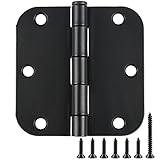
You’ve been there. You’re halfway through a cabinet refit, hinges in hand, and a tiny voice in the back of your head starts screaming, “Wait a minute… are these gonna work?” Specifically, the question pops up: are Youngdale cabinet hinges L for left opening? I’ve definitely wasted time and money on hardware that looked the part but turned out to be completely wrong for the job. It’s a frustration I wouldn’t wish on anyone, especially when you’re trying to get a project done.
So, let’s cut to the chase and get this sorted. This isn’t about fancy marketing jargon; it’s about what actually works when you’re fitting hinges. We need to know if these specific Youngdale hinges are designed for doors that swing open to the left, or if they’re a universal fit, or worse, only for the right side.
Figuring Out Hinge Swing: It’s Not Always Obvious
Alright, let’s talk about hinges. Specifically, the common confusion around whether cabinet hinges are “left-handed” or “right-handed.” Most people assume that if a hinge is for a left-opening door, it’s some kind of specialized, mirrored piece of metal. The reality is, for the vast majority of common cabinet hinges, including many from brands like Youngdale, this isn’t the case. They’re usually designed to be reversible, meaning they can work on either a left-opening or a right-opening door. The “handedness,” if you can even call it that, often comes down to how you install them and the configuration of your cabinet box and door.
Think about it: if every hinge needed a left and right version, manufacturers would have to stock twice as many SKUs (Stock Keeping Units), and you, the consumer, would have to navigate an even more confusing marketplace. That’s a recipe for disaster and increased costs. What usually dictates the swing is the hinge type and its placement. For instance, European-style concealed hinges, often called ‘Euro hinges,’ are almost universally non-handed. The way they mount into the cabinet door and the cabinet frame itself is what determines if the door opens left or right, not the hinge itself.
However, there’s a caveat. Some very specific, older, or highly specialized hinge designs might have a handedness.
This is less common with standard overlay or inset cabinet hinges you’d find at a big box store or online for general kitchen or closet cabinet use. If you’re dealing with something like a gate hinge or a very particular architectural hardware piece, then yes, you might need to pay attention to left/right. But for typical Youngdale cabinet hinges you’re likely looking at, especially if they are the standard concealed or semi-concealed types, the “L for left opening” designation is often more about the application you’re planning for, rather than an inherent feature of the hinge itself. The confusion often stems from how the hinge arm extends or sits when the door is closed.
Some hinge arms protrude more on one side than the other, which can matter in very tight clearances, but this isn’t a strict left/right rule.
I remember one project where I was fitting new kitchen cabinets. I’d ordered what I thought were the right hinges, and then realized half my doors opened the wrong way. Panic set in. I spent a good hour online, convinced I needed to order a whole new set. Turns out, the hinges I had were perfectly fine, I just needed to adjust the mounting plates and the hinge arm placement slightly. It was a simple fix, but the initial stress was real. That’s why understanding that most hinges are adaptable is key.
What to Actually Look for: Beyond the ‘l’
So, if the ‘L’ on a Youngdale cabinet hinge package doesn’t automatically mean it’s exclusively for left-opening doors, what should you be looking for? It boils down to understanding hinge types and installation methods. The most common types you’ll encounter for standard cabinets are: (See Also: Are Spring Loaded Door Hinges Better )
- Full Overlay Hinges: These are designed so the cabinet door covers most of the cabinet frame when closed. They are super common in modern kitchens.
- Half Overlay Hinges: The door covers about half of the cabinet frame. You often see these on double-door cabinets where the doors meet in the middle.
- Inset Hinges: These sit inside the cabinet frame, making the door flush with the front of the cabinet when closed. This gives a more traditional, built-in look.
The important part is the mounting plate. This is the piece that attaches to the cabinet frame itself. For most concealed hinges (the ones with the cup in the door), the mounting plate has some adjustability.
This adjustability is what allows you to fine-tune the door’s position, including how it closes. If you need a door to open to the left, you’ll typically mount the hinge arm (the part that attaches to the door) to the hinge plate that is secured to the left side of the cabinet opening, assuming you are standing in front of the cabinet and the door swings away from you to the left. If you wanted it to open to the right, you’d mount the hinge plate to the right side of the opening.
Another aspect is the hinge arm itself. Some hinge arms have a greater ‘overlay’ capability or a different shape. For example, a “full-depth” hinge arm might be more appropriate for overlay doors, while a “cranked” or “angled” arm might be used for inset doors or specific frame constructions. The packaging or product description for Youngdale hinges might mention terms like ‘overlay,’ ‘inset,’ ‘blank’ (for no overlay), ‘100-degree opening,’ or ‘170-degree opening.’ These specs tell you how the hinge functions and what kind of door and frame it’s designed for, rather than a strict left or right designation.
If you’re genuinely confused, the best bet is to look at the hinge’s technical drawing or installation guide. These will often show how the hinge is mounted and can illustrate how it achieves either a left or right opening. Sometimes, a product listing might say “for left or right swing,” which is the clearest indicator. If it only says “left,” then, yes, it’s likely intended only for that. But most often, especially with popular brands like Youngdale, hinges are designed with flexibility in mind.
Common Mistakes That Make You Buy the Wrong Hinges
Look, we’ve all been there. You’re staring at a wall of hardware, or scrolling through endless online listings, and you just want to get the job done. This is where people make boneheaded mistakes. The biggest one, as we’ve touched on, is assuming a hinge is strictly “left” or “right” when it’s not. This leads to buying unnecessary parts or, even worse, trying to force the wrong hinge and damaging your cabinets or the hardware itself.
Another common blunder is not accounting for the door overlay. Let’s say you have a standard cabinet box and you want your doors to sit flush with the front frame when closed. You need inset hinges. If you want the doors to cover the frame, you need overlay hinges. If you buy overlay hinges for an inset application, or vice-versa, you’re going to have gaps, doors that don’t close properly, or hinges that won’t even mount correctly. The Youngdale hinges might be perfectly functional for left opening, but if you bought them thinking they were inset when they are actually full overlay, they’ll look and behave all wrong.
Then there’s the issue of door thickness and weight. Hinges have weight ratings. Trying to use a small, lightweight hinge on a heavy solid wood door is a recipe for sagging doors and premature hinge failure. Always check the manufacturer’s recommendations, especially if you’re working with oversized or particularly heavy doors. Youngdale, like most reputable manufacturers, will specify the intended use for their hinges. Overlooking this isn’t about left or right opening; it’s about the hinge’s structural capability.
A surprising number of people also forget about the cabinet construction. Are your cabinet frames made of solid wood, particle board, or MDF? The screws that come with hinges might not hold well in particle board or MDF. You might need to use different screws, inserts, or even wood glue to make sure a secure fit. A perfectly good hinge, intended for left opening, will perform terribly if it’s not securely attached to the cabinet frame. It’s not the hinge’s fault; it’s the installation. (See Also: A Box Without Hinges Key )
My own personal screw-up involved ordering hinges for frameless cabinets (often called European cabinets) and trying to fit them onto a face-frame cabinet. The mounting plates were completely different, and the overlay wasn’t what I needed. I ended up having to buy specific face-frame adapter plates, which added cost and a lot of extra work. I thought the hinges were the problem; turns out, I hadn’t considered the cabinet’s structure when selecting the hardware. It’s easy to get tunnel vision on one aspect, like the swing direction, and miss the bigger picture.
Real-World Use: How Youngdale Hinges Perform
When you’re actually using Youngdale cabinet hinges, what can you expect? Generally speaking, Youngdale is a brand that falls into the mid-tier category for cabinet hardware. They aren’t usually the ultra-premium, buttery-smooth, lifetime-guarantee kind of hinges you might find from very high-end European brands, but they’re also far from the flimsy, cheap ones that fail after a year or two. They offer a solid balance of functionality, durability, and affordability.
For typical kitchen, bathroom, or closet cabinet doors, a standard Youngdale hinge, whether it’s a concealed Euro style or a more traditional butt hinge, will do the job well. The “L” designation, if it appears, is usually tied to a specific series or style where the physical design of the hinge arm or mounting mechanism does lend itself to one direction more naturally, or it’s simply a way they categorize their product line for easier ordering. But, as I’ve said, always check the specs.
The adjustment screws on most Youngdale concealed hinges are pretty standard. You’ll typically find screws for in-and-out adjustment (to control how flush the door is), up-and-down adjustment (for vertical alignment), and side-to-side adjustment (for horizontal alignment). These are your best friends for getting doors to hang perfectly, and they are what allow you to correct for minor installation errors or achieve a consistent reveal on double-door cabinets. The torque on these screws is usually just right – not so stiff you’ll strip them, but firm enough to hold their position.
One area where some budget-friendly hinges can sometimes falter is in the smoothness of the opening and closing action, especially at the extremes of their range. You might notice a slight clunk or a less-than-fluid motion when the door is fully open or closed. Youngdale hinges are generally acceptable in this regard. They won’t feel like silk, but they won’t feel like you’re wrestling a badger either. The closing mechanism, if they have soft-close integrated, usually works reliably for a good number of cycles, though they might not be quite as refined as higher-end systems that use more solid damping fluids or mechanisms.
In terms of installation, I’ve found Youngdale hinges to be pretty forgiving. The pre-drilled holes in their mounting plates and the cup dimensions in their door hinges are usually consistent, meaning you’re less likely to run into issues with the hinge not fitting into its designated recess or the plate not aligning with common cabinet spacing. This makes them a good choice for DIYers or for contractors looking for reliable, cost-effective hardware. The metal itself feels sturdy enough – not flimsy tin, but a decent gauge steel or zinc alloy that should hold up to regular use.
A Few Practical Tips for Hinge Success
Let’s make this easier. When you’re dealing with cabinet hinges, and especially when you’re trying to figure out if your Youngdale cabinet hinges L are for left opening, here are a few practical tips that have saved my bacon more times than I can count:
- Measure Twice, Order Once: This is the golden rule. Before you even think about ordering, measure your existing hinges (if replacing), measure the cabinet opening, the door thickness, and the distance from the edge of the door to the center of the hinge cup. Note whether your cabinet has a face frame or is frameless. These measurements are a must.
- Understand Overlay vs. Inset: This is important for alignment. Overlay doors sit on top of the cabinet frame. Inset doors sit inside the cabinet frame. If you buy the wrong type, no amount of adjustment will make it look right.
- Check the Manufacturer’s Specs: Don’t guess. Go to the Youngdale website or the retailer’s product page. Look for technical drawings, installation guides, or clear descriptions. If it says “for left opening only” and doesn’t mention reversibility, treat it as such. If it says “reversible” or “for left/right swing,” you’re golden.
- Consider Soft-Close: If your budget allows, integrated soft-close hinges are a godsend. They prevent doors from slamming shut, protecting both the cabinets and your fingers. Youngdale offers these, and they’re usually worth the small extra cost.
- Buy a Hinge Jig (Optional but Recommended): If you’re doing multiple cabinets and especially if you’re drilling the hinge cups yourself, a hinge jig (also called a concealed hinge jig) is a lifesaver. It makes sure perfectly placed holes every time, which is important for proper hinge function. I resisted buying one for years, thinking I could eyeball it. Big mistake. It cost me hours of frustration and re-drilling.
- Have Extra Screws on Hand: The screws that come with hinges are usually adequate, but sometimes they can strip out in softer wood or particle board. Keep a small box of high-quality wood screws of the same gauge and appropriate length handy. Sometimes, a longer screw into a stud behind the cabinet is necessary for heavy doors.
- Don’t Be Afraid of Adjustment: The adjustment screws on concealed hinges are there for a reason. Learn what each screw does (usually depth, height, and side-to-side). It’s often a process of small tweaks until the doors are perfectly aligned.
Here’s a quick comparison table of common hinge types, keeping in mind how they might relate to your left-opening question: (See Also: Are Integrated Washing Machine Door Hinges Standard )
| Hinge Type | Typical Application | Handedness Concern | Verdict for Left Opening |
|---|---|---|---|
| Euro Concealed (Cup) | Frameless cabinets, overlay doors | Generally NON-HANDED. Installation determines swing. | Works for left opening by mounting to left side of cabinet opening. |
| Standard Butt Hinge | Face-frame cabinets, inset or overlay | Usually NON-HANDED. Can be installed on either side. | Works for left opening. |
| Specialty Architectural Hinges | Gates, heavy doors, unique designs | Often HANDED. Must verify specific product. | May require a specific left-hand version if available. |
| Youngdale Standard Cabinet Hinges (most common types) | Kitchen, bath, closet cabinets | Typically NON-HANDED, unless specified. | Likely works for left opening; check documentation. |
The key takeaway here is that for most standard cabinet applications, the question isn’t so much are Youngdale cabinet hinges L for left opening? as it is how do I install these Youngdale hinges to achieve a left opening door? The hinge itself is usually the adaptable part, not the fixed left/right component.
The Faq: Clearing Up Hinge Confusion
Are Cabinet Hinges Universal for Left and Right Doors?
For the vast majority of common cabinet hinges, especially Euro-style concealed hinges and standard butt hinges, the answer is yes. They are designed to be non-handed, meaning they can be installed on either left-opening or right-opening doors. The direction of the swing is determined by how you attach the hinge mounting plate to the cabinet frame and which side of the opening you place it on.
How Do I Know If a Hinge Is Specifically for a Left-Opening Door?
If a hinge is truly designed for only one direction of swing, the product packaging, description, or technical specifications will explicitly state this. Look for terms like “left-hand only” or specific model numbers that denote handedness. If the product description doesn’t mention anything about being handed, it’s highly probable that it’s a reversible hinge.
What If I Accidentally Buy a Hinge That’s Only for Right-Opening Doors?
If you discover you have a hinge that is strictly for right-opening doors and you need it for a left-opening door, you generally cannot convert it. Your best bet is to return the incorrect hinge and purchase the correct one. Trying to force a handed hinge to work in the opposite configuration will likely lead to poor alignment, functional issues, and potential damage to the hinge or cabinet.
Do I Need Special Hinges for Frameless Cabinets?
Yes, frameless cabinets (also known as European cabinets) typically require specific types of hinges, most commonly Euro-style concealed hinges. These hinges mount directly into a drilled cup on the cabinet door and use a separate mounting plate that attaches to the inside edge of the cabinet side panel. Standard face-frame hinges will not work correctly on frameless cabinets.
How Much ‘play’ or Adjustment Do Typical Cabinet Hinges Offer?
Most modern concealed cabinet hinges offer significant adjustability. You can usually adjust the door’s position in three directions: up/down, left/right, and in/out (depth). This allows for precise alignment of doors, even if the initial installation isn’t perfectly accurate. The amount of adjustment can vary by hinge model and manufacturer, but a few millimeters in each direction is common.
Conclusion
So, to wrap this up: are Youngdale cabinet hinges L for left opening? In most practical scenarios, the ‘L’ isn’t a hard-and-fast rule. For standard Youngdale cabinet hinges, especially the concealed Euro style, they are almost always reversible. The installation method is what dictates the door’s swing direction. Don’t let a vague ‘L’ designation on a product listing send you into a panic and make you order the wrong thing.
Your focus should be on the hinge type (overlay, inset, concealed) and its adjustability. If you need a left-opening door, you’ll be mounting your chosen hinge hardware accordingly. Always, always check the detailed product specifications or technical drawings if you’re unsure. Trust me, a few extra minutes of research now will save you hours of frustration and potential wasted money down the line. Get those cabinets swinging the way you want them to!