I remember staring at a pile of scrap 1/8 inch plywood after a shelving project, wondering if I could salvage it for something. Specifically, I was wrestling with a cabinet whose original drawer bottoms had disintegrated faster than a cheap popsicle on a July sidewalk. My mind immediately went to the 1/8 inch stuff. Could it actually hold up? It felt thin, almost flimsy. The question echoed in my head: can 1/8 in plywood be used for drawer bottoms? I’ve learned the hard way that just because you can use something doesn’t mean you should. Let’s cut through the noise.
There are a lot of opinions out there, some good, some… well, let’s just say they’ve never seen a drawer full of tools or heavy linens. I’ve built, repaired, and cursed my way through enough drawers to have a pretty good idea of what’s going to last and what’s going to sag like a tired old couch.
Is 1/8 Inch Plywood Really Strong Enough for Drawers?
Let’s get straight to it. Can 1/8 inch plywood be used for drawer bottoms? Yes. Can it be used effectively and durably for all drawer bottoms? Absolutely not. This is where a lot of DIY guides and folks who haven’t actually lived with their creations get it wrong. They see a thin piece of wood and think, ‘lightweight, easy to cut, perfect!’ And for certain applications, they aren’t entirely off base. But a drawer bottom isn’t just a decorative piece; it’s a structural component that bears weight, endures sliding friction, and often gets a good yank when you’re in a hurry.
Think about what a drawer bottom has to do. It supports everything inside.
If you’re building a desk drawer that will hold a few reams of paper and a stapler, 1/8 inch might just squeak by, especially if it’s well-supported by the drawer sides and a good amount of cross-bracing. But if you’re thinking about a kitchen utensil drawer that’s going to be packed with heavy silverware, or a dresser drawer filled with sweaters, that 1/8 inch material is going to start bowing. I learned this the hard way with a set of repurposed nightstand drawers. I used 1/8 inch lauan for the bottoms, thinking I was being resourceful.
Within six months, the heavy books I kept in one drawer had caused the bottom to sag so much it was dragging on the drawer runners. It was a mess, and I ended up having to replace them with thicker material anyway.
That was a wasted weekend and a good chunk of change for the replacement plywood.
The key differentiator here is support. A 1/8 inch sheet is notoriously flexible. If the drawer sides are solid and the bottom is dadoed (grooved) into them, providing continuous support all around, it’ll perform better than if it’s just stapled or screwed to the bottom edge of the drawer sides. The longer the drawer, the more important this becomes. A 12-inch wide drawer bottom will fare much better than a 36-inch wide one made of the same 1/8 inch material, assuming the same support structure.
So, while the answer to ‘can 1/8 in plywood be used for drawer bottoms’ is a technical ‘yes,’ your real question should be ‘is it wise to use 1/8 inch plywood for drawer bottoms for my specific project?’ Generally, for anything that needs to hold more than a few pounds or will see frequent use, I’d steer clear. There are better, more cost-effective options that won’t leave you with sagging, splintering disasters down the line. I’ve spent enough time fixing my own mistakes to know when to recommend biting the bullet and spending a little more on material that will actually last.
When 1/8 Inch Might Actually Work (and When It Won’t)
Alright, let’s talk about the exceptions, because there are always exceptions. When might that thin 1/8 inch plywood actually be a decent choice for drawer bottoms? Primarily, it’s when the drawer is small, shallow, and will hold very light items. Think of a jewelry box drawer, or a small organizer tray inside a larger drawer, or perhaps the tiny drawers in an old secretary desk that were originally designed for paper or correspondence. In these cases, the span is short, the weight load is minimal, and the aesthetic might be more important than brute strength. The material is easy to cut and shape, making it suitable for intricate designs or smaller, less demanding applications. (See Also: Can A 4x8 Plywood Fit In A Honda Pilot )
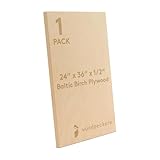
I once built a set of miniature drawers for a dollhouse. For that, 1/8 inch Baltic birch plywood was perfect. It was thin enough to look proportional, and it only needed to hold tiny trinkets. The drawer boxes themselves were also very small and lightly constructed. So, context is everything. If you’re building a drawer that is less than 10 inches wide and less than 12 inches deep, and you plan on filling it with things like socks, small craft supplies, or maybe just a few paperback books, then 1/8 inch plywood could be an option, especially if you get good quality stuff like Baltic birch, which is denser and more stable than standard lauan or pine plywood.
However, the moment you introduce significant weight or use, that 1/8 inch material starts to fail. Kitchen drawers, tool drawers, dresser drawers, file drawers – these are the situations where you absolutely want to step up your game. The repeated action of sliding a heavy drawer in and out puts stress on the bottom. If it’s not rigid enough, it will flex. This flexing can cause it to rub against the drawer slides or the cabinet interior, leading to premature wear and tear. Worse, it can cause the fasteners holding the bottom to the sides to loosen or pull out, effectively destroying the drawer’s integrity.
My general rule of thumb? If you can easily bend a piece of the 1/8 inch plywood with just your hands, it’s probably too thin for a functional drawer bottom in anything but the most lightweight applications. Consider the forces at play.
A drawer bottom is basically a shelf that slides. Shelves need to be stiff to prevent sagging. 1/8 inch plywood, on its own, is not inherently stiff. You need to compensate with thicker material, a more solid support system, or both.
For anything substantial, I’d be looking at 1/4 inch, 3/8 inch, or even 1/2 inch plywood, depending on the drawer size and expected load. The extra cost upfront will save you a lot of headaches and potential rebuilds later.
The Best Alternatives: What to Use Instead
If you’ve decided that 1/8 inch plywood is probably not the best bet for your drawer bottoms (and for most projects, you’d be right), what should you be using? Thankfully, there are several excellent alternatives that offer much better durability and stability without breaking the bank. The most common and arguably the best all-around choice for drawer bottoms is 1/4 inch plywood. This is a sweet spot for most applications. It’s thick enough to resist bowing under a reasonable load, but not so thick that it adds excessive weight or cost.
When choosing 1/4 inch plywood, look for void-free or cabinet-grade options. These have fewer internal gaps and a smoother finish, which is important for the underside of the drawer that slides against the runners. Baltic birch plywood is a fantastic option here. Its multiple thin plies make it very stable and strong for its thickness. Another good choice is cabinet-grade maple or oak plywood, though these can be pricier. If budget is a concern, a good quality birch or even a pine plywood will do the job admirably, as long as it’s relatively free of large knots and delamination.
For drawers that will hold exceptionally heavy items – think tool chests, industrial applications, or very large, deep drawers – 3/8 inch or even 1/2 inch plywood can be your best friend. These thicker options provide maximum rigidity and support. However, they also add significant weight, so make sure your drawer slides and cabinet construction can handle the extra load. I once built a set of massive drawers for a workshop cabinet intended to hold large power tools. We used 3/4 inch baltic birch for the drawer sides and 1/2 inch for the bottoms, dadoed in securely. Those things felt like they could survive a small earthquake, and they still slide smoothly after years of abuse.
Another material worth considering, especially for traditional furniture or when you want a specific look, is solid wood. For drawer bottoms, 3/8 inch or 1/2 inch thick tongue-and-groove pine, poplar, or oak boards can work well. The tongue-and-groove system helps keep the boards interlocked and stable. However, solid wood is more prone to expansion and contraction with humidity changes than plywood, so it’s important to allow for this movement in your design. You might need to orient the grain appropriately or use a floating panel system to prevent warping. (See Also: Can Bondo Be Applied To Plywood )
Here’s a quick comparison of common choices:
| Material | Thickness Recommendation | Pros | Cons | Verdict |
|---|---|---|---|---|
| 1/8″ Plywood (Lauan/Pine) | N/A (Rarely recommended) | Cheap, lightweight, easy to cut | Very prone to bowing/sagging, low durability | Only for tiny, light-duty decorative boxes. Avoid for functional drawers. |
| 1/4″ Plywood (Baltic Birch, Cabinet Grade) | 1/4″ | Excellent strength-to-weight ratio, stable, good durability | Can be more expensive than basic plywood | The go-to for most drawer bottoms. Reliable and cost-effective. |
| 3/8″ Plywood (Baltic Birch, Cabinet Grade) | 3/8″ | High strength, very durable, good for heavier loads | Adds noticeable weight and cost | Great for larger drawers or heavier items. |
| Solid Wood (Tongue & Groove) | 3/8″ – 1/2″ | Aesthetic appeal, traditional look, strong when properly joined | Susceptible to humidity changes, can be more labor-intensive | Good for specific furniture styles, but requires careful management of wood movement. |
Common Mistakes When Using Thin Plywood for Drawers
People often try to use 1/8 inch plywood for drawer bottoms out of a desire to save money or a misconception about its strength. This leads to a few classic blunders. The most common mistake is simply not realizing how much weight a drawer can accumulate. You might think a few kitchen gadgets aren’t much, but over time, the constant stress adds up. Another mistake is poor attachment. People will often just staple or brad nail 1/8 inch plywood to the bottom edges of the drawer sides. This is a recipe for disaster. The staples have minimal holding power in such thin material, and the flexing of the bottom panel will quickly work them loose.
Then there’s the issue of support. If the 1/8 inch bottom isn’t properly seated in a groove (dado) cut into the drawer sides, it’s relying entirely on the friction and shear strength of the fasteners. This is insufficient for anything but the lightest loads. I’ve seen people try to ‘reinforce’ a sagging 1/8 inch bottom by adding a single piece of wood across the middle. While that helps a bit, it doesn’t address the fundamental weakness of the thin panel itself. It’s like putting a band-aid on a broken bone.
One of the more subtle mistakes is overlooking the friction involved. When you slide a drawer in and out, the bottom panel is rubbing against the drawer slides or the cabinet frame. This friction, combined with the weight, puts a lot of shear force on the material and its fasteners. 1/8 inch plywood, being so thin and flexible, is more prone to splintering and wearing down at the edges where this friction occurs.
This can lead to the drawer binding or becoming difficult to operate. I once had a client complain that their new custom drawers were sticking. Turns out, the 1/8 inch plywood bottoms they’d insisted on using were splintering and catching on the metal slides. Fixed it with 1/4 inch baltic birch and the problem vanished.
Finally, and this is a big one: not accounting for wood movement. While plywood is generally more stable than solid wood, even it can expand and contract slightly with changes in humidity. If a 1/8 inch bottom is installed too tightly in a dado, and the humidity rises, it can push outward and warp the drawer sides. If it’s installed too loosely, it might rattle or allow dust to fall through. With such thin material, these minor movements can have a disproportionately large effect on the overall stability and function of the drawer. It’s a delicate balance that’s hard to achieve with such a flexible material.
Practical Tips for Using Thinner Plywood (if You Must)
Okay, let’s say you’re in a situation where you absolutely must use 1/8 inch plywood for drawer bottoms – perhaps you’re doing a period-correct restoration of a very old, delicate piece of furniture where authenticity is most important, or you’re building something purely decorative. How can you maximize your chances of success and minimize the inevitable problems? First and foremost, make sure the drawer box itself is incredibly well-built and rigid. Strong corner joints, solid side panels, and a well-supported front and back are a must. The less flex in the overall drawer box, the less stress will be placed on that thin bottom panel.
Your best friend in this scenario is a well-executed dado. The drawer bottom should sit snugly in a groove cut into all four sides of the drawer box. This provides continuous support along the entire perimeter. The width of the dado should be exactly the thickness of your plywood, and the depth should be sufficient to provide a good amount of surface area for glue to bond. I usually cut my dados about 1/4 inch deep. If you don’t have a router or table saw with a dado blade, you can achieve a similar effect by carefully cutting multiple kerfs with a regular saw blade and cleaning them out, but a dado is far superior.
Another trick is to add cross-bracing underneath the 1/8 inch panel. If you’re not dadoing the bottom, or if you’re in a situation where the bottom is only supported by the lower edge of the drawer sides, you can glue and screw thin strips of wood (like 1/4 inch square stock or even ripped strips of 1/8 inch plywood) across the underside of the drawer bottom, running perpendicular to the drawer’s length. This acts like joists in a floor, dramatically increasing the panel’s stiffness and preventing sagging. Space these braces every 4-6 inches. This is probably the single most effective way to make a thin panel stronger. (See Also: Can Cat Plywood Be Used For Exterior Siding )
When it comes to fastening, forget staples and tiny brads. Use fine-thread screws specifically designed for wood. Pre-drilling is absolutely key to prevent splitting the thin plywood. Use a countersink bit so the screw heads sit flush or slightly below the surface.
For glue-up, a good quality wood glue applied to the dados and the edges of the plywood before assembly will add significant strength. You can also run a bead of glue along the cross-braces if you’re using them.
Lastly, consider the finish. A few coats of a durable finish, like polyurethane or lacquer, applied to both sides of the 1/8 inch plywood will help seal it against moisture and add a bit of extra surface hardness, which can reduce wear from friction.
Here’s a process for a more solid installation, even with thinner plywood:
- Make sure Drawer Box Rigidity: Build the drawer box with strong joinery (dovetails, mortise and tenon, or well-reinforced butt joints) and make sure it’s square and true.
- Cut Dados: Using a router with a straight bit or a dado blade on a table saw, cut a groove (dado) 1/4 inch deep into the inside faces of all four drawer sides. The width of the dado should be the exact thickness of your plywood.
- Prepare the Bottom Panel: Cut your 1/8 inch plywood to fit snugly into the dados. If you’re not dadoing, cut thin reinforcing strips (e.g., 1/4″ x 1/2″) to run across the underside.
- Assemble with Glue: Apply wood glue generously to the dados and the edges of the plywood bottom. Slide the bottom into the dados. If using reinforcing strips, glue and screw them to the underside of the bottom panel now, making sure screws don’t penetrate the visible top surface.
- Fasten Securely: For additional security (especially if not dadoed), use fine-thread wood screws (e.g., #6 x 5/8″ or #8 x 3/4″). Pre-drill pilot holes and countersink the screw heads. Place screws every 4-6 inches along the drawer sides.
- Clamp and Cure: Clamp the drawer box firmly while the glue cures. Wipe away any excess glue squeeze-out.
- Finish: Once the glue is dry, apply several coats of a durable finish to all surfaces of the drawer bottom.
People Also Ask
Can 1/8 Inch Plywood Be Used for Drawer Bottoms?
Technically, yes, but it’s generally not recommended for most functional drawers due to its lack of strength and susceptibility to bowing and sagging under load. It’s best reserved for very small, lightweight decorative applications like jewelry boxes or dollhouse drawers where durability isn’t a major concern.
What Is the Best Thickness for Drawer Bottoms?
For most standard drawers, 1/4 inch plywood is the ideal thickness. It offers a good balance of strength, weight, and cost. For drawers that will hold very heavy items, 3/8 inch or even 1/2 inch plywood is a better choice to make sure adequate support and longevity.
What Kind of Plywood Is Best for Drawer Bottoms?
Cabinet-grade plywood, such as Baltic birch, maple, or oak, is best for drawer bottoms. These types of plywood are denser, more stable, and have fewer internal voids, leading to a stronger and smoother finish. Avoid cheap construction-grade plywood if possible, as it can delaminate or have significant voids.
How Do You Attach Drawer Bottoms?
Drawer bottoms are typically attached by being seated in a dado groove cut into the drawer sides, then glued and often screwed or stapled for extra security. If not dadoed, they can be glued and screwed to the bottom edges of the drawer sides, or attached using drawer slides that have integrated supports for the bottom panel.
Final Verdict
So, to circle back to the original question: can 1/8 in plywood be used for drawer bottoms? The short, blunt answer is: if you want them to last and function well, probably not. I’ve wasted enough time and money on projects where I tried to cut corners with materials, only to have to redo the work later. That 1/8 inch stuff is just too flexible for the demands placed on most drawer bottoms.
If you’re building something that needs to hold more than a few ounces or will be used regularly, do yourself a favor and step up to at least 1/4 inch plywood, preferably a good cabinet-grade material like Baltic birch. It’s a small investment that pays dividends in durability and preventing future headaches. Trust me, your future self will thank you.
If you’re still on the fence or have a very specific, delicate application, remember the tips about dadoes and cross-bracing. Those can bolster thinner materials, but they are still bandaids on a fundamentally weak material choice for most drawer applications. Think about the weight, the use, and the longevity you expect, and choose your materials accordingly. For most of us, that means leaving the 1/8 inch plywood for other, less demanding projects.