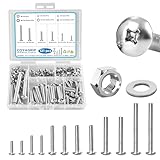
I remember the first time I tried to mount a V8 onto my shiny new engine stand. Felt like a surgeon prepping for a life-saving operation. I grabbed what looked like perfectly good bolts from my assorted stash, figuring four M8s would be more than enough. They were fine, until they weren’t. That whole ‘can 4 m8 1 25 bolts hold an engine on stand’ question isn’t just academic; it’s about preventing a very expensive, very messy disaster.
Look, the internet’s full of guys saying ‘yeah, sure, just use whatever you have.’ I’m here to tell you that’s a gamble you don’t want to take, especially when you’re dealing with a few hundred pounds of cast iron and aluminum hanging precariously.
So, Can 4 M8 1.25 Bolts Actually Hold an Engine? Let’s Get Real.
Alright, let’s cut to the chase. The short, blunt answer to ‘can 4 m8 1 25 bolts hold an engine on stand?’ is: it depends, but more often than not, it’s a bad idea.
An M8 bolt, especially a standard grade 8.8 or even a 10.9, has a respectable shear strength. For a grade 10.9 M8 bolt, you’re looking at a tensile strength of around 63,000 pounds per square inch, and shear strength is typically around 60% of that, so roughly 37,800 psi. Multiply that by the cross-sectional area of the bolt (about 0.048 square inches for an M8), and you get a theoretical shear strength of nearly 1800 pounds per bolt. If all four bolts were perfectly loaded and at their absolute limit, that’s around 7200 pounds of shear force capacity.
Now, an engine doesn’t just sit there statically. When you’re wrestling it onto the stand, swinging it around, or even just the vibrations from working on it, you introduce dynamic loads. Plus, the weight distribution is rarely perfect. You’re relying on those four little threads to keep gravity from winning. I’ve seen a small-block Chevy engine, fully dressed with accessories, easily tip the scales at over 500 pounds. A big-block? We’re talking 600-700 pounds without breaking a sweat. Add to that the use the engine exerts on the mounting plate and the bolts, especially when it’s hanging off the side of the stand.
The problem isn’t just the raw strength of a single bolt. It’s about load distribution, the quality of the threads on both the bolt and the mounting plate, and the material of the engine’s mounting flange. Some engine blocks have thicker, more solid mounting ears than others. A cast-iron block might handle things a bit better than an aluminum one, though aluminum blocks are usually lighter overall.
The real kicker is vibration. Constant, low-level vibration can fatigue metal over time, especially if the bolts aren’t torqued correctly or if there’s any play in the mounting system.
I once had a transmission mount shift just enough due to vibration that it started chewing through the bolt head. That was a wake-up call.
Honestly, the ‘don’t cheap out on fasteners’ rule applies here tenfold. You’re not just holding a bracket; you’re suspending the heart of the machine. Using undersized or inadequate bolts is like playing Russian roulette with a tool that’s designed to be heavy and awkward. I learned this the hard way after a friend’s engine stand nearly tipped over because he used what he thought were ‘strong enough’ bolts. We ended up reinforcing it with bigger hardware and a much more solid mounting plate. It’s not worth the risk to save a few bucks.
Why Standard Hardware Often Falls Short
Let’s talk about the kind of bolts most people have lying around. You know, that big metal bin full of miscellaneous fasteners you’ve accumulated over the years from various projects. Most of those M8 bolts are likely Grade 8.8. They’re decent for many general-purpose applications, but for holding an engine?
It’s pushing it. Even Grade 10.9 bolts, while better, still have their limitations when you consider the real-world forces at play. The important issue is that engine mounting points are designed to accept specific, often larger, fasteners for a reason.
The bolt holes on the engine block itself, and the corresponding holes on the engine stand’s adapter plate, are engineered to handle certain loads. When you use smaller bolts, you’re concentrating that load over a smaller area, increasing the stress on the bolt and the threads. (See Also: Can I Buy A Full Auto Bolt Carrier )
I remember a job where I inherited a project car. The previous owner had tried to save a few bucks and used standard M8 bolts to attach a custom exhaust manifold. Within a few months, two of the bolts had sheared off due to heat and vibration. It was a nightmare to get the broken studs out. This is the same principle, just on a much larger scale with an engine. The engine’s mounting flange acts as a lever arm, and the bolts are the fulcrum. The further the center of gravity of the engine is from the mounting plate, the greater the bending moment on the bolts.
Furthermore, the quality of the bolt material and its thread form matter. Are you using fully threaded bolts or partially threaded?
For shear applications, fully threaded bolts are generally preferred as they engage more of the bolt’s shank in the shear plane. However, for engine mounting, you’re often relying on the threads engaging properly with the block or the adapter plate. Any damage to the threads on the bolt or in the engine block, or using bolts with inconsistent thread pitch (like you might find in cheap, generic fasteners), can significantly reduce the load-bearing capacity.
I once bought a pack of M10 bolts that had slightly off-spec threads. They felt tight going in, but I had zero confidence in them for anything structural.
You can often feel this inconsistency when you thread them in by hand; they don’t run smoothly. That’s a red flag.
The common advice you’ll find online, especially on forums where people are trying to get by on a budget, often glosses over these details. They’ll say ‘Yeah, M8s will work fine if you’re careful.’ But ‘careful’ doesn’t magically increase the tensile strength of a bolt or the integrity of its threads. It’s a recipe for a disaster waiting to happen, and the cost of a damaged engine or a wrecked stand is far higher than a set of proper fasteners. Don’t fall for the ‘good enough’ trap when it comes to important structural components. Think about the forces involved: gravity, use, vibration, and potential shock loads if the stand gets bumped.
What to Look for: The Right Hardware for the Job
So, if M8s are usually a no-go, what should you be looking for when you’re asking ‘can 4 m8 1 25 bolts hold an engine on stand?’ The answer usually lies in going bigger and stronger. Most engine stands and adapter plates are designed for M10 or even M12 bolts. The standard setup for most V8 adapter plates, for instance, is typically M10 x 1.5 thread pitch. For a small-block Chevy, you’ll often see four M10 bolts required. For larger engines, or if your stand’s adapter plate has larger holes, you might even need M12 bolts.
The key is to match the bolt size and thread pitch to what the engine block’s mounting bosses are designed for and what the engine stand’s adapter plate accommodates. Always check the documentation for your specific engine stand or adapter plate. If it doesn’t come with bolts, it should specify what size and grade you need. The most common recommendation for engine mounting is a high-strength bolt, typically Grade 10.9 or even Grade 12.9 if available and appropriate for the application. Grade 12.9 bolts are significantly stronger than Grade 10.9 and are often used in important automotive applications.
When buying bolts, look for reputable brands. McMaster-Carr is a go-to for many professionals because of their quality and selection, but any good hardware store or automotive supplier should carry appropriate fasteners. Don’t buy generic ‘mystery metal’ bolts from a discount store for this job. You want bolts that are clearly marked with their grade. For M10, a Grade 10.9 bolt has a tensile strength of around 145,000 psi. That’s nearly double a Grade 8.8 M8. For an M10, the cross-sectional area is about 0.077 square inches, giving a theoretical shear strength of well over 5000 pounds per bolt. Four of those, properly loaded, are far more capable than four M8s.
Here’s a quick rundown of what to aim for:
| Bolt Size (Metric) | Common Grade | Approximate Tensile Strength (psi) | Engine Stand Suitability |
|---|---|---|---|
| M8 x 1.25 | 8.8 / 10.9 | ~90,000 / ~145,000 | Generally NOT recommended for full engines. Maybe for very light components or specific, low-stress adapters. |
| M10 x 1.5 | 10.9 / 12.9 | ~145,000 / ~180,000 | Commonly used for V8 engines. This is usually the minimum you should consider. |
| M12 x 1.75 | 10.9 / 12.9 | ~145,000 / ~180,000 | Suitable for larger, heavier engines or when greater margin of safety is desired. |
Always use hardened washers under the bolt heads and nuts (if your adapter uses them) to distribute the load and prevent the bolt head from digging into the stand’s adapter plate. Torque them to the manufacturer’s recommended specification. If you don’t have a spec, a good starting point for M10 Grade 10.9 bolts is around 40-50 ft-lbs, and for M12 Grade 10.9, around 70-80 ft-lbs. For Grade 12.9, increase these values by about 20-25%. But again, check your stand/adapter manual first. (See Also: Are Mercruiser 5 7 Engines Four Bolt Mains )
Real-World Scenarios: When Might M8s Get Away with It?
Okay, I’m not going to be a complete purist here. There are niche situations where four M8 1.25 bolts might hold an engine on a stand, but these are exceptions, not the rule, and usually involve significant caveats. First off, we’re not talking about a full-sized V8 or a heavy diesel. Think smaller engines.
A Subaru EJ25, for example, is significantly lighter than a Ford big-block. Even then, you’d be looking at using the highest quality M8 bolts you can find – Grade 10.9 minimum, preferably Grade 12.9 if you can source them in that size and thread pitch. You’d also need to make sure the engine’s mounting bosses are in perfect condition, with no corrosion or damage, and that the adapter plate is solid and designed for that specific engine’s mounting pattern.
Another scenario is if you’re using the engine stand for something other than its intended purpose, or if you’re only holding a bare block or a very light component. I’ve seen guys use engine stands to hold transmissions, differential housings, or even just bare engine blocks without heads or accessories. In these cases, the weight is considerably less, and the center of gravity might be more manageable. However, you’re still relying on those four bolts to handle any movement or torque applied during disassembly or assembly.
It’s still a risk. I once saw a guy using an engine stand to hold a heavy industrial pump. He’d used M8s. The pump was vibrating itself loose over time, and one of the bolts eventually failed.
Thankfully, the stand had some legs that caught it before it fell completely, but it was a close call.
The common advice to ‘just use longer bolts’ or ‘add washers’ doesn’t inherently make smaller bolts stronger. What it does is make sure better thread engagement and load distribution. So, if you absolutely must consider M8s for a lighter-duty application (and I still advise against it for full engines), make sure you have:
- High-grade bolts (Grade 10.9 minimum, ideally 12.9).
- Fully threaded bolts for maximum thread engagement.
- Hardened, wide-diameter washers under the bolt heads to spread the load.
- Perfectly clean and undamaged threads on both the bolts and the engine block/adapter plate.
- A very careful, slow, and deliberate mounting process.
Even with all these precautions, you’re still operating at the very edge of what’s safe, and I wouldn’t sleep well at night. The peace of mind that comes with using appropriately sized, high-strength fasteners for an engine is worth every penny. The cost of a set of M10 or M12 bolts is trivial compared to the potential cost of engine damage, personal injury, or a ruined engine stand.
Common Mistakes and How to Avoid Them
The biggest mistake, hands down, is underestimating the weight of an engine and the forces involved. People see a bolt, they see a hole, and they think ‘it fits, it’ll hold.’ This is where the ‘can 4 m8 1 25 bolts hold an engine on stand’ question becomes dangerous. It implies a simple yes/no that isn’t accurate. You’re not just dealing with static weight; you’re dealing with use, potential shock loads, and vibration. I’ve personally witnessed a friend’s engine stand wobble alarmingly because he used bolts that were too small for the mounting holes, leading to slight movement and a lot of noise. We had to stop the operation and find proper M10 hardware.
Another common pitfall is using the wrong thread pitch. M8 bolts come in 1.25mm pitch, but some other metric fasteners might be 1.0mm or 1.5mm. While they might thread in a bit, they won’t seat properly and will severely weaken the connection. Always confirm the thread pitch matches the tapped holes on your engine block and the adapter plate. For M8, it’s almost always 1.25mm. For M10, it’s usually 1.5mm. For M12, it’s typically 1.75mm. Don’t guess; measure or consult your engine’s service manual.
Using old, corroded, or damaged bolts is another no-no. The rust and pitting weaken the bolt’s cross-section. If the threads are stripped or damaged, they won’t hold torque effectively, and the connection will be loose. I’ve seen people try to ‘save’ bolts by chasing the threads with a die, but if the bolt is significantly corroded or deformed, it’s often better to just replace it. A few dollars for new bolts is cheap insurance against a major failure. I once had a bolt snap during assembly because it had a hairline crack from being over-tightened previously. It was a clear sign that reusing questionable fasteners is a bad idea.
Finally, not using a torque wrench is a massive oversight. Overtightening can stretch and weaken the bolt, or even strip the threads in the engine block or adapter plate. Undertightening means the bolts aren’t providing adequate clamping force, allowing for movement and vibration. While specific torque specs for engine stand mounting aren’t always readily available from the stand manufacturer, general automotive torque charts for high-strength bolts of the appropriate size and grade are a good reference. For example, a common torque spec for M10 Grade 10.9 bolts in a connecting rod application is around 45 ft-lbs. You’ll want to be in that ballpark, perhaps slightly higher if your adapter plate allows for it, but never exceed the bolt’s yield strength. (See Also: Can Am Merverick X3 Max Xrs Wheel Bolt Pattern )
People Also Ask:
What Size Bolts Do I Need for an Engine Stand?
Most engine stands and adapter plates are designed for M10 or M12 bolts. The exact size and thread pitch will depend on your specific engine and the stand’s adapter. Always check the documentation for your engine stand and adapter plate. Common sizes are M10 x 1.5 or M12 x 1.75, typically requiring Grade 10.9 or 12.9 high-strength bolts.
How Many Bolts Should Hold an Engine on an Engine Stand?
Engine stands and their adapter plates typically use four bolts to secure the engine. This provides a stable, balanced connection. Using fewer than four bolts compromises stability and drastically increases the stress on the remaining fasteners.
What Is the Shear Strength of an M8 Bolt?
The shear strength of an M8 bolt varies significantly with its grade. A common Grade 8.8 M8 bolt has a shear strength of roughly 1000-1200 pounds. A higher-strength Grade 10.9 M8 bolt can have a shear strength closer to 1800 pounds. However, this is theoretical and doesn’t account for dynamic loads, vibration, or imperfect load distribution.
Can I Use Standard Bolts for an Engine Stand?
No, it is generally not recommended to use standard, lower-grade bolts (like Grade 8.8) for mounting an engine to an engine stand. Engines are heavy and exert significant forces. You need high-strength bolts, typically Grade 10.9 or 12.9, in the correct size (usually M10 or M12) to safely support the engine’s weight and the dynamic stresses involved.
A Few Practical Tips for Secure Mounting
When you’re ready to mount your engine, don’t rush. Lay out your bolts, washers, and any nuts or thread-locking compound you might need. Clean the bolt holes on your engine block and the adapter plate. A blast of brake cleaner and a quick wipe-down can remove grease and grime that might prevent proper seating. I always give the threads in the block a quick once-over with a wire brush and maybe a shot of penetrating oil just to make sure they’re clean and clear. It doesn’t take long and can prevent a lot of headaches down the line.
Use hardened washers. I cannot stress this enough. They prevent the bolt head from galling or digging into the adapter plate, which can lead to a loose connection or damage to the stand’s hardware. If your adapter plate has larger, slotted holes, use washers that cover a good portion of that slot. This makes sure the bolt head is properly supported. I always keep a stash of assorted hardened washers in my toolbox.
Consider thread locker. For important fasteners like engine mounting bolts, a medium-strength thread locker (like blue Loctite) can provide extra security against vibration loosening the bolts. Apply it to the clean, dry threads of the bolts before installation. Don’t go overboard; a few drops are sufficient. Remember, you’ll need to break it loose later, so don’t use the permanent red stuff unless you have a very good reason and the proper tools.
When you start tightening, do it in a cross pattern, just like tightening lug nuts on a wheel. Snug up each bolt a little at a time, working your way around. This makes sure the engine mounts evenly against the adapter plate and prevents any twisting or uneven stress on the bolts or the engine block. Once all bolts are snug, go back and torque them to specification in the same cross pattern. Give the engine a gentle nudge on the stand to make sure it’s secure and doesn’t wobble excessively. If it feels loose or unstable, recheck your work and the torque settings.
Final Thoughts
So, to circle back to the original question: can 4 m8 1 25 bolts hold an engine on stand? In most practical, real-world scenarios involving engines you’d actually want to work on, the answer is a resounding ‘no.’ It’s a gamble with incredibly high stakes. The forces involved, the weight of the engine, and the potential for vibration and movement mean you need hardware that’s designed for the job.
Stick with M10 or M12 high-strength bolts (Grade 10.9 or 12.9) from a reputable source. It’s a small investment that protects your engine, your stand, and most importantly, your safety. Don’t let a few dollars saved on fasteners turn into thousands in repair bills or a trip to the emergency room. Get the right bolts and do it right the first time.
If you’re still unsure about the exact hardware for your specific engine and stand, consult your stand’s manual or ask a trusted mechanic. Better safe than sorry, always.