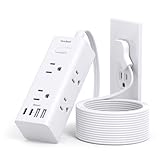
I remember the first time I blew a fuse trying to power my Christmas lights from the garage. That flimsy orange cord, the kind you see everywhere, was supposed to handle it. It didn’t. It got damp, shorted out, and nearly started a fire. So, let’s cut to the chase: can all extension cords be used outside? No, absolutely not. Thinking they can is a surefire way to waste money, cause electrical headaches, and frankly, create a safety hazard.
Most indoor cords are just not built for the elements. Sun, rain, snow, temperature swings – they’re all brutal. You need something tougher, something designed for the job. Trying to wing it with the wrong cord is like trying to hammer a nail with a screwdriver; it might sort of work for a minute, but it’s a mess waiting to happen.
Indoor vs. Outdoor: The Big Difference No One Tells You
Look, the most common extension cords you’ll find sitting in a bucket in your garage or hanging at the hardware store are generally meant for indoor use. They’re typically made with lighter-duty insulation, often PVC, that’s perfectly fine for a dry living room or a workshop where you’re careful. But take that same cord outside, and it’s like sending a kitten out to fight a bear. The sun’s UV rays will degrade the plastic over time, making it brittle and prone to cracking. Rain and moisture can seep into any nicks or cuts, leading to corrosion of the internal wires and, worst-case scenario, a short circuit.
I learned this the hard way. I had this bright idea to run a standard 16-gauge cord to my patio for some string lights one summer. It worked for a few weeks. Then we had a freak thunderstorm.
The cord, which I thought was tucked safely away, got soaked. The next day, nothing. I pulled it out, and it was stiff, cracked, and smelled faintly of burnt plastic.
I’m lucky it didn’t cause a fire. That’s when I realized there’s a serious distinction, and simply assuming any cord will do is pure folly.
Outdoor-rated cords are built differently. They use tougher, more weather-resistant materials like heavy-duty vinyl or rubber insulation. They’re also designed to handle a wider range of temperatures without becoming brittle or melting. You’ll often see them labeled with terms like ‘SJTW’ or ‘SJOOW’.
Don’t just nod and assume that’s marketing jargon; it’s a code for durability.
The gauge of the wire is another huge factor. For outdoor use, especially if you’re running longer distances or powering higher-wattage tools like mowers or leaf blowers, you need a heavier gauge.
A thinner gauge cord (higher number, like 16-gauge) has more resistance, meaning more power loss over distance and a greater risk of overheating. For most outdoor applications, 14-gauge is a good starting point, and 12-gauge is even better for demanding tasks or longer runs. Think of it like water pressure in a hose; a wider hose (lower gauge number) lets more water flow with less resistance.
Trying to push a lot of electrical power through a thin outdoor cord is a recipe for disaster, just like trying to water a whole garden with a kinked, narrow hose.
There’s also the matter of the plug and socket. Outdoor cords should have polarized plugs (one blade wider than the other) and often feature a grounding pin. The sockets are usually designed to be more solid and sometimes even have little rubber flaps to keep moisture out. I’ve seen people try to use indoor extension cords with those little two-prong plugs outside, and it’s just asking for trouble. It’s not just about the cord itself; it’s the entire system being safe and effective in an environment that’s actively trying to corrode and damage it.
What to Look for: Decoding the Labels and Specs
So, you’re at the store, staring at a wall of cords. How do you know which one is the right one for that garden project or for powering your patio lights? It’s not as complicated as it seems, but you do have to pay attention. First, look for the label. It’s your best friend here. You want to see specific designations that scream ‘I can handle the outdoors.’ The most common and important ones are related to the type of insulation and its construction. Look for codes like ‘W’ for ‘weather-resistant’ or ‘water-resistant.’ You’ll frequently see ‘SJTW’ or ‘SJOOW’.
Let’s break down what those letters typically mean:
| Code | Meaning | Outdoor Suitability |
|---|---|---|
| S | Service-rated cord (medium duty) | Generally okay, but check for ‘W’ |
| J | Junior service cord (light duty) | Not ideal for most outdoor tasks |
| T | Thermoplastic insulation | Can be sensitive to extreme temps |
| O | Oil-resistant outer jacket | Good for workshops, garages |
| W | Weather-resistant outer jacket | This is what you want for outdoors |
| OO | Oil-resistant AND weather-resistant | Excellent, very durable |
So, ‘SJTW’ means it’s a junior service cord with thermoplastic insulation that’s weather-resistant. ‘SJOOW’ is a heavier-duty service cord, oil-resistant, and weather-resistant. For most people, a cord with a ‘W’ in its designation is the baseline you should be looking for. If you’re powering something with a motor or a significant power draw, and it’s going to be exposed to more than just a light drizzle, aim for ‘OO’ – oil-resistant and weather-resistant. It costs a bit more, but trust me, it’s worth it. (See Also: Are Extension Cords Safe Outside )
Beyond the jacket code, check the gauge (thickness) of the wire. As mentioned, 14-gauge is a decent all-around choice for moderate use and shorter runs (up to about 50 feet).
If you’re going longer or powering something that really draws juice, like a pump or a heavy-duty tool, 12-gauge is much better. You can usually find the gauge printed right on the cord itself, often near the plug.
Don’t try to power a lawnmower with a 16-gauge cord; it’s a fire waiting to happen. And speaking of plugs, make sure it’s a three-prong plug for grounding. For some specific outdoor uses, you might even find cords with built-in GFCI (Ground Fault Circuit Interrupter) protection, which adds another layer of safety. These are fantastic for areas where water is a real concern, like near a pond or a temporary outdoor setup.
Finally, look at the overall construction. Does the insulation feel thick and solid? Are the plugs firmly attached? Does it feel like it could take a bit of abuse? A good outdoor extension cord will feel substantial, not flimsy. Sometimes, you can tell a good cord by its weight. It’s not a perfect metric, but heavier often means thicker wires and more durable insulation.
Common Mistakes That Fry Cords (and Your Patience)
I’ve seen people do some truly baffling things with extension cords. The biggest, most common mistake, of course, is using an indoor cord outside. I’ve already told you my story, but I’ve seen friends do it too, thinking the rain would just ‘dry off.’ It doesn’t work like that. Moisture gets in, things corrode, and eventually, something goes wrong. That beautiful patio lighting you set up? Suddenly a hazard.
Another massive error is overloading the cord. Every extension cord has a maximum wattage or amperage rating. This is usually printed on the cord or its packaging.
Running something that pulls more power than the cord is rated for is a surefire way to overheat it. The insulation can melt, the wires can fuse, and you’ve got a melted, useless mess. It’s like trying to pour a gallon of water through a coffee stirrer; it just won’t handle it.
People often do this when they plug multiple high-draw items into a single cord or a power strip connected to an extension cord. Always check the rating and compare it to the power needs of the device you’re plugging in. For tools, it’s usually listed on the tool itself in watts or amps.
For appliances, check the manual or the label.
Stringing cords together is another common pitfall. While technically possible with the right cords, daisy-chaining multiple extension cords creates a few problems. First, each connection point is a potential point of failure or water ingress. Second, each cord adds resistance, so the further you get from the power source, the more power you lose and the more heat you generate. If you need a really long run, it’s far better to buy a single, longer, heavy-gauge outdoor extension cord than to connect three 25-foot cords together. You’ll get better performance and a safer setup.
One mistake I’ve made more than once is not properly storing my outdoor cords. I’d coil them up and leave them out in the elements, or worse, shove them into a damp shed. Even heavy-duty cords can be damaged if they’re constantly exposed to UV rays, moisture, and extreme temperatures when not in use. Proper storage means keeping them dry, out of direct sunlight, and loosely coiled to avoid kinking. I now have a designated bin for my outdoor cords, and I make sure they’re dry before they go in. It’s a small step, but it dramatically extends their life.
Finally, neglecting to inspect your cords is a huge oversight. Before you plug anything in, especially after it’s been stored for a while or has been through rough weather, give it a good once-over. Look for any cracks, nicks, cuts, or abrasions in the insulation. Check the plugs and connectors to make sure they’re intact and not corroded. If you find any damage, that cord should be retired. No ‘but it still works’ exceptions. A damaged cord is a safety risk, plain and simple.
Real-World Use: Powering Up My Backyard Oasis
Let me paint you a picture. My backyard is my sanctuary. I’ve got a small vegetable patch, a decent-sized patio with a pergola, and a bit of a ‘man cave’ shed where I tinker with electronics. Getting power to all these places without running permanent wiring was a challenge I tackled over a couple of years. I learned a lot, mostly through trial and error (and a few sparks).
For the garden, I needed to power a small submersible pump for a DIY irrigation system and a grow light for some early-season seedlings. This meant a cord that could handle being partially buried or at least constantly in contact with damp soil, and then exposed to sun when I was tending the plants. I ended up with a 100-foot, 14-gauge ‘SJOOW’ cord. (See Also: Are Extension Cords Waterproof )
It’s thick, flexible even in cooler weather, and the heavy-duty rubber insulation feels like it could survive a nuclear winter. I run it from an outdoor-rated GFCI outlet on the house, and I carefully bury it about 4 inches deep using a trenching tool. The pump and light are plugged into a heavy-duty outdoor timer box that’s also weather-sealed. This setup has been running for two seasons now without a single hiccup.
The cord has held up beautifully, even through downpours and that blazing Texas sun.
Then there’s the patio. I wanted string lights, a portable speaker, and occasionally, a small fan or a bug zapper. For this, I went with a couple of 50-foot, 16-gauge ‘SJTW’ cords.
They’re lighter than the SJOOW but still definitely rated for outdoor use. I chose 16-gauge because the power draw for lights and speakers isn’t massive, and the runs aren’t extreme. I keep them coiled neatly on hooks under the eaves when not in use.
The only time they’re really exposed is during parties or when I’m entertaining. They’ve gotten a bit damp from sprinkler spray a few times, but they dry out quickly and haven’t shown any signs of wear.
I make sure to unplug them and bring them in if a major storm is predicted, just to be safe. It’s a bit of extra effort, but I’d rather do that than replace a fried cord.
The ‘man cave’ shed was the most demanding. I needed to power a soldering station, a small compressor, a battery charger, and various other tools. This required a longer run and higher power draw. I bought a 75-foot, 12-gauge ‘SJOOW’ cord.
This thing is a beast. It’s stiff but incredibly durable.
I ran it from another outdoor GFCI outlet, buried it properly, and connected it to a solid outdoor-rated gang box with multiple outlets inside the shed. This is where gauge really matters. A 16-gauge cord would have struggled and potentially overheated trying to run the compressor and the soldering iron simultaneously. The 12-gauge handles it with ease, staying cool to the touch.
The total cost for these three setups, including the heavier-duty cords, was probably around $180 across the different lengths and gauges. It felt like a lot at the time, but considering I haven’t had to replace any of them and they’ve performed flawlessly, it was money well spent.
Trying to get by with cheaper, indoor-rated cords would have cost me more in replacements and potential headaches.
When to Splurge and When to Save (a Little)
Let’s talk money. Because, let’s face it, we all want to save a buck. But when it comes to outdoor extension cords, there’s a point where saving money becomes incredibly foolish. The general rule of thumb I’ve adopted is: if it’s going to be exposed to the elements for more than a few hours, or if it’s going to be used regularly outdoors, you need to buy an outdoor-rated cord. Period. The price difference between a cheap indoor cord and a decent outdoor-rated one isn’t enormous, maybe $10-$20 for a 50-foot cord, but the difference in durability and safety is astronomical.
So, when can you get away with something less? Honestly, very rarely. If you’re running a cord from inside your house to a patio table just for a few hours on a perfectly dry, sunny day, and you’re bringing it right back in immediately after, and the cord isn’t exposed to anything harsh, you might be okay with a standard, heavy-duty indoor cord. But even then, I’d be hesitant. Why risk it? The risk of a frayed cord, a bit of moisture getting in, or even just UV damage from sitting out there for an afternoon is just too high for the minimal savings.
The real ‘splurge’ situations are for anything involving power tools, garden pumps, lawnmowers, or any equipment that draws significant power and will be used repeatedly outdoors. For these, you absolutely need the heaviest gauge you can get (12-gauge if possible) and the most solid, weather-resistant insulation, like the ‘SJOOW’ rated cords. These might cost $40-$70 for a decent 50-foot or 75-foot length, compared to maybe $20-$30 for a comparable indoor cord. That’s a significant jump, but it’s a must for safety and performance. I spent about $50 on a 75-foot 12-gauge cord for my workshop tools, and it’s been running compressors and welders without breaking a sweat. That’s money well invested. (See Also: Are There 50 Ft White Heavy Duty Extension Cords )
For decorative lighting, like fairy lights or temporary holiday decorations that are only up for a few weeks, you can often get away with a slightly less heavy-duty outdoor-rated cord, like a 16-gauge ‘SJTW’. These are usually more affordable than the super-heavy-duty ones, maybe in the $25-$40 range for 50 feet. As long as they are specifically marked as outdoor-rated and you keep an eye on their condition, they’ll do the job. The key is that they are designed for outdoor exposure, even if they aren’t built to power a jackhammer. Don’t compromise on the ‘outdoor-rated’ label, even if you’re trying to save a few bucks. That label is your assurance that it’s built to withstand the elements.
Practical Tips for Keeping Your Outdoor Cords Safe and Working
You’ve bought the right cords, now what? Keeping them in good shape is key to them lasting and, more importantly, keeping you safe.
It’s not rocket science, but a few habits can make a big difference. First off, always, always, always inspect your cords before each use.
I know I’ve said it before, but it bears repeating. Pull it out, uncoil it, and look for any cuts, nicks, or signs of fraying in the insulation. Check the plugs and the connectors to make sure they’re solid and free of corrosion. If you see any damage, do not use it.
Toss it. Seriously. It’s not worth the risk of a shock or a fire.
I found a small nick in one of my older cords last fall and immediately replaced it. Better safe than sorry.
Proper coiling is also important. Don’t just yank it all up and shove it in a pile. Loosely coil the cord, avoiding sharp bends or kinks. Kinks put stress on the internal wires and can lead to breakage over time. Think of it like coiling a garden hose; you want smooth, gentle curves. Many outdoor cords have a designated way they are supposed to be coiled, often indicated by diagrams on the packaging or the cord itself. For longer cords, a figure-eight coil can be a good way to prevent tangles and stress.
When you’re using them, try to keep them out of high-traffic areas. Running over a cord with a lawnmower, a car, or even just constant foot traffic can cause damage. If you need to run a cord across a walkway or driveway, use a cord protector or a cable ramp to shield it. For garden use, burying them a few inches deep, as I do with my irrigation lines, is a great way to keep them out of harm’s way and protected from the elements when not in use. Just make sure you remember where you buried them!
Avoid daisy-chaining. I’ve hammered this point home, but it’s worth repeating. If you need a long extension, buy one long cord. Connecting multiple cords increases the chance of failure at connection points and causes voltage drop, leading to less power and potential overheating. It’s a common mistake that’s easily avoided by planning your power needs ahead of time and investing in the right length from the start. I learned this when I tried to run a long extension for a temporary outdoor movie screen and ended up with a dim projector because of the voltage drop from three cords.
Finally, store your cords properly when they’re not in use. Keep them in a dry, cool place, out of direct sunlight. A plastic bin, a sturdy bag, or a dedicated cord winder can help protect them from dust, moisture, and UV damage. Don’t leave them coiled up in a puddle or exposed to the elements all winter. Proper storage will significantly extend the lifespan of your cords and make sure they’re in good condition when you need them next.
Can I Use a Regular Extension Cord for Outdoor Christmas Lights?
No, you should not use a regular indoor extension cord for outdoor Christmas lights. Outdoor lights are exposed to moisture, temperature changes, and potentially UV rays, which can damage indoor cords and create a fire or shock hazard. Always use cords specifically labeled as outdoor-rated for any exterior lighting.
What Does the ‘w’ Mean on an Extension Cord?
The ‘W’ on an extension cord designation, such as ‘SJTW’ or ‘SJOOW,’ stands for ‘weather-resistant.’ This indicates that the outer jacket of the cord is designed to withstand outdoor conditions like moisture, sunlight, and temperature fluctuations better than a standard indoor cord.
How Do I Know If an Extension Cord Is Safe for Outdoor Use?
You can tell if an extension cord is safe for outdoor use by looking for specific labeling on the cord or its packaging. Look for designations like ‘W’ (weather-resistant), or codes like ‘SJTW’ or ‘SJOOW.’ These codes indicate that the cord’s insulation and construction are designed to handle outdoor elements. Always choose cords specifically marketed and labeled for outdoor use.
Final Thoughts
So, to answer the big question definitively: can all extension cords be used outside? No. It’s a hard no. Relying on indoor cords for outdoor tasks is a gamble with your safety and your wallet. The elements are unforgiving, and standard cords just aren’t built to take the abuse. You need those specialized ‘W’ rated cords, the thicker gauges for demanding jobs, and you need to treat them with a little respect.
My advice? Don’t be that person who learns the hard way. Invest in the right gear from the start. It might feel like a small splurge now, but it’ll save you headaches, potential damage, and keep you from becoming a cautionary tale. Check the labels, consider the gauge, and always inspect before you plug in.
Next time you’re tempted to use that old indoor cord for your patio project, remember this. Think about how much you’re actually saving versus the risk. You’ll thank yourself later.