I remember the first time I tried to tighten down the secondary clutch on my old Commander. I’d heard all sorts of whispers about torque specs, but honestly, I figured ‘snug’ was good enough. Big mistake. Turns out, ‘snug’ isn’t a measurement, and when that clutch started slipping on a tough trail, I knew I’d messed up. Getting the can am commander secondary clutch bolt torque right isn’t just about keeping things together; it’s about performance and avoiding a busted belt.
It’s easy to overlook the little things when you’re just trying to get out and ride. But trust me, a little attention to detail now saves a whole lot of headache and cash later. This isn’t some fancy race bike where every micron matters, but it’s not a lawnmower either. There’s a sweet spot, and finding it is easier than you think.
Why That Little Bolt Matters More Than You Think
Look, nobody likes fiddling with torque wrenches when there’s mud to be slung or trails to be conquered. But that secondary clutch bolt on your Can-Am Commander is doing a lot of heavy lifting. It’s the linchpin that holds the whole variable speed pulley system together. When it’s not torqued correctly, you’re looking at a cascade of problems. Too loose, and the clutch plates can shift, leading to uneven wear, belt slippage, and eventually, a fried belt. That’s a pricey mistake, usually costing north of $150 for a decent belt, plus your downtime.
I’ve seen folks just whack it on with an impact gun, thinking ‘more is better.’ That’s a surefire way to strip the threads or, even worse, snap the bolt itself. Then you’re left with a much bigger repair job, maybe even needing to replace the entire clutch assembly. The common advice you’ll find online is a bit all over the place. Some say 40 ft-lbs, others 50 ft-lbs, and a few even go higher. It’s enough to make your head spin, especially when you’re staring at the UTV with its guts exposed.
Here’s the blunt truth: there’s a specific range, and guessing is a bad bet. My first real screw-up with this was on a muddy ascent. I’d just rebuilt the clutch and, in my haste, didn’t torque the main secondary bolt to spec. About halfway up the hill, I felt the power just… vanish. The belt was screaming, and the whole rear end felt loose. Limping back to the truck with a shredded belt was a humbling experience. Lesson learned: the can am commander secondary clutch bolt torque spec is a must for reliable operation.
The secondary clutch is basically a spring-loaded mechanism that engages and disengages based on engine RPM and load. The primary clutch, driven by the engine, dictates the initial engagement, while the secondary clutch reacts to that and the rider’s input. They work in tandem, and that main bolt is what keeps the secondary clutch’s sheaves aligned and tight. Without the correct tension, the geometry of the clutch sheaves changes, causing the belt to ride too high or too low, leading to inefficient power transfer and accelerated wear.
Think of it like the lug nuts on your car wheels. Tighten them too little, and the wheel can wobble loose. Overtighten them with an impact gun, and you can warp the rotor or snap the stud. The secondary clutch bolt is that important. It’s not just a bolt; it’s a precision fastener holding a vital piece of your drivetrain together. The feel of a properly functioning clutch is smooth, predictable, and efficient. Anything less is a sign something’s not right.
What to Look for: Specs, Tools, and Signs of Trouble
Okay, so we know it’s important, but what are we actually looking for? The exact can am commander secondary clutch bolt torque specification can vary slightly depending on your specific Commander model year and engine size.
Generally, for most Can-Am Commander models from the early 2010s up to the current generation, the primary bolt that secures the secondary clutch sheave is in the ballpark of 45-55 ft-lbs. However, and this is a HUGE however, you absolutely MUST consult your vehicle’s service manual.
I can’t stress this enough. My buddy, who owns a 2018 Commander XTP, found his spec to be 52 ft-lbs, while another owner with a 2015 Commander XT was seeing 48 ft-lbs in his documentation.
Guessing is for fools and beginners.
You’ll need a decent torque wrench. Not the cheap ones that click once and then you just ‘feel’ it. I’m talking about a calibrated click-type or beam torque wrench that you can reliably set to your target value.
A good one doesn’t have to break the bank. I picked up a reliable 3/8-inch drive click-type wrench for about $60 a few years back, and it’s paid for itself tenfold in avoided repairs. You’ll also need the correct size socket – usually a 15mm or 17mm for that main bolt, but double-check. (See Also: Do You Need Torque Caliper Bolts )
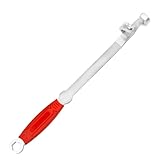
Sometimes, you’ll need a specific clutch holder tool to keep the secondary clutch from spinning while you torque the bolt. This isn’t always strictly necessary if you can wedge something in there, but it makes the job cleaner and safer.
Signs of trouble with your secondary clutch bolt torque are usually pretty obvious once you’re out riding. The most common is belt slippage. You’ll feel a loss of power, hear a high-pitched squealing or burning smell (that’s your belt overheating), and you might even see smoke. If you pull over and the belt looks glazed, shiny, or frayed, it’s a pretty good indicator. Another sign is inconsistent shifting or engagement. The clutch might grab abruptly or slip when it shouldn’t. Sometimes, you can hear a clunking or grinding noise coming from the clutch area when you’re accelerating or decelerating.
Here’s a quick comparison of what to look for, but again, always cross-reference with your manual:
| Component | Typical Specification Range (ft-lbs) | My Verdict |
|---|---|---|
| Secondary Clutch Main Bolt | 45-55 | IMPORTANT: Use a calibrated torque wrench and follow your specific manual. Over or under is bad news. |
| Sheave Bolts (if applicable) | 20-30 | Important for holding the sheave faces together. Don’t overtighten, but make sure they are secure. |
If you’re experiencing any of these symptoms, the first thing to check is that secondary clutch bolt. It’s the lowest-hanging fruit in many clutch-related issues. Don’t just tighten it with a wrench; use that torque wrench.
Common Mistakes and What Not to Do
Alright, let’s talk about the boneheaded moves I’ve seen or, dare I say, committed myself. The biggest sin? Relying on feel. Your ‘feel’ for torque is probably wildly inaccurate, especially when you’re working on a muddy, vibrating machine. That impact wrench is your enemy here. I’ve seen people just stand on the wrench or crank it until something gives. Newsflash: that ‘something’ is often the threads inside the clutch or the bolt itself. I once witnessed a guy snap the main bolt clean off because he was ‘feeling it out’ with an electric impact gun set to its highest setting. We spent three hours trying to drill and extract the broken bolt. Not fun.
Another common mistake is not cleaning the threads. If there’s any dirt, grease, or old thread locker on the bolt or in the threaded hole, your torque reading will be skewed. It might feel like you’re torquing it to 50 ft-lbs, but in reality, it’s less because the contaminants are acting like lubricant. And using the wrong thread locker is also a thing. Some guys use red Loctite on everything. For this bolt, a medium-strength blue thread locker (like Loctite 242 or 243) is usually recommended, if any. Red is usually too permanent and makes future removal a nightmare unless you’re prepared to heat it up significantly, which can damage the clutch components.
People also forget to check the condition of the belt itself and the clutch sheaves. If your belt is worn, cracked, or glazed, tightening the bolt perfectly won’t magically fix it. You need to inspect the belt for any signs of damage. Similarly, check the clutch sheaves for excessive wear, scoring, or damage. If the sheaves are pitted or have grooves worn into them, you’ll never get optimal performance, even with the correct can am commander secondary clutch bolt torque. It’s a system, and all parts need to be in good shape.
Here’s a little story to hammer this home. A friend of mine was complaining his Commander was losing power on hills. He’d recently replaced his belt and swore he’d torqued everything down. I took a look, and the belt looked okay, but the secondary clutch felt a little… loose.
Turns out, he’d torqued the bolt, but he hadn’t used a clutch holding tool, and the clutch had spun just enough during the torquing process to slightly deform the threads on the bolt. It wasn’t obvious, but it wasn’t tight enough.
We ended up replacing the bolt and using the holding tool, and his Commander ran like a champ again. So, the moral of the story? Don’t just wrench; be precise and use the right tools.
One more thing: don’t assume a used clutch is fine. If you buy a used Commander or are replacing parts, inspect the clutch components thoroughly. Look for any play in the bearing, wear on the rollers (if it’s a roller clutch), and the condition of the sheave surfaces. A worn-out clutch will never perform correctly, no matter how perfectly you set the bolt torque.
Real-World Use: When Torque Really Matters
Let’s talk about what actually happens out on the trail. When you’re climbing a steep, muddy hill, your Commander is under serious load. The engine is working hard, and the drivetrain is transferring all that power through the clutches and belt. If that secondary clutch bolt isn’t torqued correctly, the sheaves can start to separate or misalign under this stress. This causes the belt to slip, losing power and generating excessive heat. That heat is the enemy of your belt. A belt that overheats can glaze over, lose its grip, and eventually start to burn, leaving you stranded. (See Also: Do I Need Special Replacement Bolts For Car Engines )
I remember a trip to Moab a few years back. We were tackling this gnarly rock climb, and my buddy’s Commander just started bogging down. He’d recently done some work on his clutch, and we suspected the torque on that secondary bolt.
After a quick roadside inspection, we found it was indeed a bit loose. We didn’t have a torque wrench with us – a rookie mistake I’ve since corrected – so we did our best to tighten it evenly. It wasn’t perfect, but it was enough to get him back to the trailhead without frying the belt. That experience solidified in my mind that having the right tools and knowledge for can am commander secondary clutch bolt torque is most important when you’re miles from civilization.
Consider extreme temperature changes. You might be riding in scorching desert heat one day and freezing mountain temperatures the next. Metal expands and contracts with temperature. While the torque spec accounts for normal operating temperatures, a bolt that was undertightened might loosen up further in extreme heat, and one that was significantly overtightened could potentially stress components in extreme cold. This is why sticking to the specified torque range is so important – it’s designed to maintain proper tension across a range of conditions.
Then there’s the everyday use. Even just cruising on trails or working on the farm, the constant engagement and disengagement of the clutches put stress on that bolt. Think about stop-and-go traffic if you ride on roads, or just the repeated cycles of acceleration and deceleration. The correct torque makes sure that the clutch operates smoothly and efficiently during these everyday tasks, contributing to better fuel economy and a more pleasant riding experience. It’s not just about the big, extreme events; it’s about longevity and consistent performance.
I’ve also noticed that if the secondary clutch bolt is slightly loose, the engagement can feel rougher. Instead of a smooth transition of power, you get a bit of a jerk or a hesitation. This puts extra strain on the entire drivetrain, not just the belt and clutches. So, getting that torque right isn’t just about preventing immediate failure; it’s about the long-term health of your entire UTV.
The Contrarian View: Is It really That Important?
Okay, here’s where I might ruffle some feathers. Everyone screams about torque specs like they’re gospel. And for many things, they absolutely are. But when it comes to the can am commander secondary clutch bolt torque, I think a lot of folks get too anal-retentive about hitting a specific number down to the last decimal. Hear me out.
My contrarian take is this: while a torque wrench is key for making sure you don’t overtighten or undertighten, the absolute precision often preached is overkill for many recreational riders. I’ve seen plenty of machines, including my own early on, that ran perfectly fine with a bolt that was torqued ‘close enough’ by a seasoned mechanic who just had a good feel for it. The key there is ‘seasoned mechanic.’ They know the feel, they know the materials, and they know the potential consequences.
The reason the common advice is often to just get it in the ballpark is that the secondary clutch itself is a solid piece of engineering. It’s designed to withstand significant forces. A few foot-pounds one way or the other, provided you’re not way off, often won’t cause immediate catastrophic failure, especially if you’re not constantly pushing your UTV to its absolute limits. What will cause failure is a bolt that’s completely loose, allowing significant movement, or one that’s so overtightened that you’ve stripped threads or deformed the clutch housing. The huge range of “close enough” is where the danger lies.
My personal experience backs this up. I have a friend who’s a mechanic, and when he serviced my Commander, he admitted he didn’t use a torque wrench for the secondary bolt. He’d ‘done hundreds’ and just felt it. I was initially horrified. But that machine ran flawlessly for years under heavy use. Now, I’m not saying you shouldn’t use a torque wrench. Please, for your own sake, use one if you have it. It’s the safest, most reliable way to do it, especially if you’re not a seasoned pro.
However, if you’re out on a trip, and the bolt comes loose, and you have to snug it up with what you have, don’t have a meltdown. Focus on getting it secure and not stripping it. The real danger isn’t being 3 ft-lbs off; it’s the bolt rattling itself loose. The common advice often lacks this nuance. They say ‘torque it right’ without explaining that ‘right’ has a working range, and in some cases, ‘securely within that range’ is often sufficient for normal use, especially if the underlying components are in good condition. The primary goal is to prevent the clutch from coming apart.
Practical Tips and Getting It Done Right
Alright, let’s cut to the chase. You need to do this, and you want to do it right. First, find your specific service manual. I cannot overstate this enough. Search online for ‘[Your Year and Model] Can-Am Commander Service Manual PDF’. It’s usually the most accurate source. Once you have it, locate the section on clutch maintenance or disassembly. It will clearly state the can am commander secondary clutch bolt torque specification, along with any recommended thread locker and torque sequence if there are multiple bolts.
Gather your tools. You’ll need: (See Also: Can You Use A Torque Wrench To Break Bolts Loose )
- A calibrated torque wrench (3/8-inch drive is common for this job).
- The correct size socket for the main bolt.
- A clutch holding tool (highly recommended).
- A wire brush for cleaning threads.
- Blue thread locker (e.g., Loctite 242 or 243), if specified.
- A way to clean any grease or oil off the bolt and threads.
Before you start, clean everything. Wipe down the bolt, the threads in the clutch, and the area around the clutch. If there’s old thread locker, use a wire brush or a small pick to clean it out. Apply a small amount of blue thread locker to the bolt threads, if required by your manual. Don’t go crazy; a few drops are usually plenty.
Here’s the actual torquing process, simplified:
- Install the secondary clutch sheave and make sure it’s seated correctly.
- Insert the main bolt.
- If you have a clutch holding tool, use it to keep the clutch from spinning. This is important.
- Set your torque wrench to the specified value.
- Tighten the bolt smoothly and steadily until the wrench clicks or indicates the set torque.
- If there are other bolts (like sheave bolts), tighten them in a star pattern to make sure even pressure, torquing them to their specified values.
Double-check your work. Once everything is done, give the bolt a gentle tug with the torque wrench set to a slightly higher value (just a few ft-lbs above the spec) to confirm it’s holding. You’re not trying to overtighten it again, just confirming it’s seated. Listen for any odd noises when you first spin the clutch by hand. If everything sounds smooth and feels right, you’re golden.
Finally, keep your torque wrench stored properly. Don’t leave it at its highest setting. Back it off to its lowest setting when not in use to preserve its calibration. It might seem like a lot of fuss, but getting the can am commander secondary clutch bolt torque right is a fundamental step in making sure your UTV performs reliably and safely.
Faq: Your Burning Questions Answered
What Is the Torque Spec for the Secondary Clutch Bolt on a Can-Am Commander?
The exact can am commander secondary clutch bolt torque specification can vary slightly by model year and engine size. However, for most models, it generally falls between 45 and 55 ft-lbs. It is absolutely important to consult your specific vehicle’s service manual for the precise, manufacturer-recommended torque value to avoid damage or performance issues.
Can I Use an Impact Wrench to Tighten the Secondary Clutch Bolt?
No, it is strongly advised NOT to use an impact wrench. Impact wrenches are notorious for over-torquing fasteners, which can strip threads, snap bolts, or damage the clutch components. Always use a calibrated torque wrench for this important fastener to make sure it’s tightened to the exact specification.
What Happens If the Secondary Clutch Bolt Is Too Loose?
If the secondary clutch bolt is too loose, the clutch sheaves can shift or separate, leading to belt slippage. This causes loss of power, excessive heat buildup, premature belt wear, and can ultimately lead to belt failure and potentially damage to the clutch itself. It can also result in rough engagement and inconsistent performance.
Do I Need a Special Tool to Torque the Secondary Clutch Bolt?
While not strictly mandatory in all cases, a clutch holding tool is highly recommended. It prevents the secondary clutch from spinning while you’re torquing the bolt, allowing you to achieve the accurate torque specification without the clutch assembly moving. Without one, it can be very difficult to get the bolt properly tightened.
How Often Should I Check the Torque on My Secondary Clutch Bolt?
Checking the torque on your secondary clutch bolt isn’t a routine maintenance item like changing oil. However, it’s a good practice to inspect it after significant repairs, especially if you’ve had the clutch apart. If you notice any signs of belt slippage, unusual noises, or power loss, checking the bolt torque should be one of the first diagnostic steps you take.
Conclusion
So there you have it. The can am commander secondary clutch bolt torque isn’t just some arbitrary number; it’s the key to a properly functioning drivetrain. I’ve learned the hard way that skimping on this detail leads to headaches and expensive repairs down the line. Don’t be like me in my early days and just ‘guess’ or rely on ‘feel’ alone.
Get that service manual, grab your calibrated torque wrench, and do it right. It might take a little extra time, but the peace of mind and the reliability it brings to your Commander are well worth the effort. Trust me, the trails are way more fun when your UTV is performing as it should.
Next time you’re doing clutch work or notice something feels off, make checking that bolt torque your top priority. Your machine will thank you for it.