I remember the first time I tried to spray eggshell paint. It was on a set of built-in bookshelves, and the paint instructions explicitly said, ‘not recommended for spraying.’ Naturally, being the ‘it’ll be fine’ type, I ignored it. Big mistake. Huge. The result? A patchy, uneven mess that looked like a toddler had finger-painted with mud. So, can eggshell paint be sprayed? The short answer is yes, but it’s not as simple as just pouring it in the gun and pulling the trigger.
It’s a question a lot of DIYers wrestle with, especially when they’re looking for that smooth, professional finish that rollers and brushes can sometimes struggle to deliver. You want efficiency, you want quality, and you don’t want to spend hours cleaning up drips and sags. Let’s cut through the noise.
Will Eggshell Paint Actually Spray?
Okay, let’s get this straight: eggshell paint can be sprayed, but it’s not as straightforward as spraying, say, a flat ceiling paint or a high-gloss enamel. Eggshell finishes are a bit… particular. They have a subtle sheen, which is great for hiding minor imperfections on walls, but that very sheen comes from tiny reflective particles. When you try to spray it straight out of the can, those particles, along with the thicker binder in the paint, can cause all sorts of grief.
Think of it like trying to spray thin mud versus thick gravy. Gravy is going to clog your sprayer way faster. Eggshell paints are formulated with more binders and often finer pigments than flat paints, giving them that slight washability and that low sheen.
This makes them inherently thicker. Most sprayers, especially the common home-use electric ones, aren’t designed for that kind of viscosity right off the shelf. They’re built for paints that flow more freely, like latex for ceilings or even primer. You’ll often find that if you try to spray undiluted eggshell, you’ll get sputtering, uneven coverage, and a real risk of clogging your tip and gun.
I learned this the hard way, trying to do a bedroom wall and ending up with more paint on myself than the wall, with an even worse finish than if I’d just used a roller.
The main issue is the flow rate. Eggshell paint has a certain ‘body’ to it. When you’re rolling or brushing, you’re physically forcing that paint onto the surface, and your pressure helps create an even film. With a sprayer, it’s all about the atomization and the air pressure.
If the paint is too thick, the sprayer can’t break it down into a fine mist. Instead, you get larger droplets, which lead to runs, drips, and a texture that’s anything but smooth. The advice you’ll always hear is to thin it.
And they aren’t wrong. But how much and with what is where the real magic (and potential for disaster) lies.
It’s not just about making it thinner; it’s about maintaining the integrity of the finish so it actually looks like eggshell when it dries, not like a sad, streaky attempt at it.
So, yes, it’s possible. But if you’re expecting to just grab any can of eggshell and a basic sprayer and have a perfect job in minutes, you’re setting yourself up for a headache. It requires preparation, the right equipment, and a willingness to experiment a little. It’s not a ‘set it and forget it’ kind of job. You have to coax the paint into behaving. This is why many paint manufacturers will put that ‘not recommended for spraying’ disclaimer on their eggshell products. They’re trying to save you, and themselves, from the inevitable call to customer service about a clogged sprayer and a ruined finish.
The Secret Sauce: Thinning and Additives
Alright, so we know eggshell paint is thicker than your average sprayable paint. The key to making it work is thinning. But here’s where most people go wrong: they just add water, or they add too much, or they don’t use the right kind of thinner. You can’t just dump a cup of water into a gallon of paint and expect a miracle. You’ll end up with a watery mess that loses its sheen and its durability. That’s not what you paid for.
The best thing to use for thinning is typically a paint conditioner or extender. Products like Floetrol (for latex/acrylic paints) are popular for a reason. They don’t just thin the paint; they also improve its flow and leveling properties. This means the paint atomizes better, sprays more evenly, and dries with fewer brush or roller marks – or, in this case, fewer spray marks. It helps the paint ‘lay down’ smoothly. I used a product like this on a kitchen cabinet project, and it made a world of difference. Before, it was sputtering and uneven. After, it was like silk. It cost me an extra $20 for the conditioner, but it saved me hours of sanding and repainting. (See Also: Can Craft Foam Be Spray Painted )
How much thinning? This is where the experimenting comes in, and it’s different for every brand and even every batch of paint.
A good starting point is usually around 10-15% by volume, but you need to test it. The universal viscosity test is the ‘Zhau Cup’ test.
You can buy these online for about $10-$15, or make a DIY version with a specific-sized hole in a small paper cup. You measure how long it takes for a set amount of paint to flow through the hole. For most airless sprayers, you’re looking for a flow time of around 30-40 seconds.
For HVLP (High Volume Low Pressure) sprayers, it might be a bit faster. If it flows too quickly, it’s too thin. If it’s still dripping out in thick globs, it’s too thick.
Beyond thinning, some people add a tiny bit of latex additive to help with flow, but Floetrol is usually the go-to for latex-based eggshell. For oil-based paints (less common for eggshell finishes these days, but they exist), you’d use the manufacturer’s recommended thinner, like mineral spirits. The key is to add the thinner gradually, mix thoroughly, and test, test, test.
Don’t just assume the ratio you used for one gallon will be perfect for the next. Factors like humidity and temperature can even affect how the paint sprays. Always, always do a spray test on a piece of cardboard or scrap wood before you hit your actual project.
Look for even coverage, no heavy drips, and a consistent pattern. It sounds like a lot of fuss, but trust me, a little prep work now saves a monumental amount of heartache later.
Paint Sprayer Types for Eggshell
When you’re thinking about spraying eggshell paint, the type of sprayer you use matters a lot. Not all sprayers are created equal, and some are definitely better suited for thicker paints like eggshell than others.
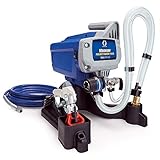
- Airless Sprayers: These are the workhorses for most professional painters and serious DIYers. They use high pressure to force paint through a small tip, atomizing it into a fine spray. They are generally the best option for thicker paints like eggshell because they have the power to push the paint through. You’ll need to make sure you have the right tip size and pressure setting, and thinning is still usually required.
- HVLP (High Volume, Low Pressure) Sprayers: These sprayers use a large volume of air at a lower pressure to atomize the paint. They are excellent for achieving a very fine, smooth finish, often used for furniture or cabinets. However, many standard HVLP sprayers struggle with thicker paints like undiluted eggshell. You might need a more powerful HVLP unit, or significant thinning, to make it work.
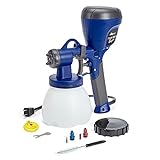
- Handheld Electric Sprayers: These are popular with DIYers for smaller projects. While convenient, they generally have less power and airflow than larger systems. Spraying eggshell with one of these is often the most challenging. You’ll almost certainly need to thin the paint significantly, and even then, you might end up with a less-than-perfect finish.
Common Mistakes to Avoid
You’d think spraying paint would be simple: point and shoot. But with eggshell, there are so many little traps you can fall into. I’ve fallen into most of them. The biggest one, as I mentioned, is not thinning the paint enough, or at all. You load up your sprayer, crank it to high, and then you get splatters, drips, and uneven coverage that looks worse than a bad roller job. That’s your first sign that the paint is too thick for the sprayer’s capabilities.
Another classic error is using the wrong tip size. Sprayer tips are rated by size, indicating the orifice opening and the fan width. A tip that’s too small for the paint viscosity will struggle to push the paint through, leading to sputtering and a weak spray pattern. Conversely, a tip that’s too large can lead to overspray and wasted paint, and you might still have issues with runs if the paint isn’t atomizing correctly.
The paint manufacturer’s recommendations or a spray-pattern chart for your specific sprayer are your best friends here. For eggshell, you’ll generally want a tip that’s rated for latex or thicker coatings, usually in the 0.015 to 0.019 inch range for airless sprayers, but always check your paint and sprayer specs.
Then there’s the technique itself. People often hold the sprayer too close to the surface, or too far away. Too close, and you’ll get heavy build-up and runs. (See Also: Can Aluminum Be Spray Painted )
Too far, and the paint droplets dry before they hit the surface, leading to a dusty, uneven texture. The sweet spot is usually around 10-12 inches away. And you’ve got to move at a consistent speed.
Too slow, and you’ll have drips. Too fast, and you’ll have thin spots.
The trick is to keep the gun moving in a steady, parallel motion, overlapping each pass by about 50%. Start spraying before you reach the edge of your work area and release the trigger after you’ve passed the other edge. This prevents those heavy start-and-stop marks at the beginning and end of each stroke.
I once tried to spray an entire room in one go, thinking I was being super efficient. I got about halfway through the first wall when I realized I hadn’t cleaned my filter properly. The paint started coming out in chunks. It was a disaster. You have to clean your sprayer thoroughly before and after every use, and clean your filters regularly during the job. Paint solids can build up in the filters and restrict flow, causing all sorts of spraying problems. It’s tedious, but a clogged filter can ruin your day (and your paint job) faster than almost anything else. Don’t skip the cleaning steps, no matter how much you’re in a hurry.
Can Eggshell Paint Be Sprayed Without Thinning?
Technically, yes, some very high-end sprayers or certain types of eggshell paint might allow for spraying with minimal or no thinning. However, for the vast majority of DIY projects and standard paint formulations, spraying eggshell paint without thinning is asking for trouble. It will likely result in poor atomization, uneven coverage, sags, and drips. The paint is too viscous for most home sprayers to handle effectively straight from the can.
Real-World Use Cases and Expectations
So, when does spraying eggshell paint actually make sense? It’s not usually the first choice for a quick living room refresh. If you’re just painting a bedroom wall and you’re not a seasoned sprayer, grabbing a roller is probably your best bet. You’ll get a good finish with far less hassle. The places where spraying eggshell shines are projects that demand a super-smooth, uniform finish and where you have the time for prep and cleanup. Think built-in cabinetry, interior doors, trim, furniture, or even those large, smooth MDF panels you might use for a modern accent wall.
For cabinets and doors, spraying is almost always superior to brushing or rolling. You can achieve that factory-like finish that’s incredibly difficult to replicate by hand. The subtle sheen of eggshell is perfect for these surfaces; it offers a bit of washability without being overly shiny. But here’s the catch: you need to be prepared for the setup. Masking everything that isn’t being painted becomes an art form. Drop cloths, masking tape, plastic sheeting – you’ll use more than you think. Overspray can travel surprisingly far, so you need to protect furniture, floors, and even adjacent walls if they aren’t being painted.
My first attempt at spraying kitchen cabinets with an eggshell finish was eye-opening. I thought I’d masked everything well, but a fine mist settled on my stainless-steel fridge. It took hours of buffing to get it off. Lesson learned: when in doubt, mask it again. And then mask it again. The time spent masking and protecting is easily half the job, sometimes more. But the result? When you get it right, it’s incredibly satisfying. The smooth, even finish on cabinet doors, without any brush strokes or roller marks, makes the whole effort worthwhile.
For furniture, eggshell is a great choice. A sprayed dresser or side table looks professional and is durable. You can get into all the nooks and crannies of decorative pieces.
For trim, spraying can be faster if you’ve got long runs, but often, careful brushing is just as effective and less messy. The key is to manage your expectations. You’re not going to spray a whole room of eggshell paint in an afternoon and be done. It’s a process.
It involves thinning, testing, proper technique, meticulous masking, and thorough cleanup. If you’re looking for a quick fix, stick to rollers and brushes. If you’re aiming for that flawless, high-end finish and you’re willing to put in the work, then spraying eggshell is definitely within reach.
Consider the environment you’re spraying in. A dusty garage or a windy patio will make your life miserable. A clean, well-ventilated indoor space is ideal. Make sure the temperature and humidity are within the paint manufacturer’s recommended range. Too cold, and the paint won’t cure properly, leading to a weak finish. Too hot or humid, and it can dry too fast, causing drips, or not cure correctly. It’s a science, but also a bit of an art. The first few tries might not be perfect, but with practice, you’ll get a feel for it. (See Also: Can Bug Spray Damage Car Paint )
Comparing Sprayers for Eggshell Paint
When you’re deciding which sprayer to use for your eggshell paint project, it’s helpful to see how different types stack up. This isn’t just about power; it’s about the overall suitability for a paint that’s trickier to spray.
| Sprayer Type | Pros | Cons | Verdict for Eggshell |
|---|---|---|---|
| High-Powered Airless Sprayer | Excellent power for thick paints, fast application, professional finish possible. | Expensive, requires significant masking, can be overkill for small projects, requires thinning. | Best Option. If you have a large project or want the best possible finish, this is the way to go, provided you’re willing to prep. |
| Mid-Range Airless Sprayer | Good balance of power and cost, can handle many paints including eggshell with thinning. | Still requires thinning, might not be ideal for very large areas, maintenance needed. | Very Good Option. A solid choice for DIYers tackling cabinets, doors, or a room. |
| Powerful HVLP Sprayer | Fine atomization, smooth finish, good for detailed work like furniture. | Can struggle with thicker paints without significant thinning, slower application than airless, less powerful for large walls. | Good for Specifics. Great for furniture or detailed trim, but requires careful thinning for eggshell. Not ideal for large walls. |
| Handheld Electric Sprayer | Convenient, portable, easy to clean for small jobs. | Least powerful, will almost certainly require heavy thinning, prone to clogging with eggshell, finish may be compromised. | Use with Caution. Only for very small touch-ups or if you’re willing to accept a less-than-perfect finish and a lot of thinning. Expect frustration. |
As you can see, there’s a clear hierarchy. For eggshell, you want power and the ability to handle viscosity. That’s why airless sprayers generally come out on top. They are designed to push paint through, and with the right tip and a bit of thinning, they can manage the body of an eggshell finish.
HVLP sprayers are fantastic for precision and a glass-like finish, but their reliance on air pressure means they can bog down with paint that’s too thick. Handheld units are convenient, but they’re often the least capable when it comes to anything beyond the thinnest paints. If you’re serious about spraying eggshell and getting a good result, investing in a decent airless sprayer, even a smaller one for home use, will save you a lot of headaches and potentially money on paint and redos.
Do I Need a Special Sprayer for Eggshell Paint?
You don’t necessarily need a special sprayer, but you do need a sprayer that’s capable of handling thicker paints. High-powered airless sprayers are the most suitable because they use pressure to push the paint. Many standard HVLP sprayers or weaker handheld units might struggle. Regardless of the sprayer type, you will almost certainly need to thin the eggshell paint properly and use the correct tip size.
How Much Thinner Should I Add to Eggshell Paint for Spraying?
This varies greatly by paint brand and formulation, but a good starting point is 10-15% thinner by volume. The most reliable method is to use a viscosity cup (like a Zhau cup) to test the flow rate. For most airless sprayers, you’re aiming for a flow time of about 30-40 seconds. Always test your thinned paint on a piece of cardboard before spraying your project.
Can I Spray Eggshell Paint with a Graco Magnum?
Yes, a Graco Magnum is an airless sprayer, and they are generally well-suited for spraying thicker paints like eggshell. You will likely need to thin the paint, select the appropriate tip size for latex/emulsion paints, and adjust the pressure. Graco Magnums are popular for DIY use for precisely this reason – they offer good power and capability for various paint types.
What Happens If I Don’t Thin Eggshell Paint Before Spraying?
If you don’t thin eggshell paint before spraying, you’ll likely experience significant problems. The paint will be too thick to atomize properly, leading to sputtering, uneven coverage, sags, drips, and a generally poor finish. You also risk clogging your sprayer’s tip and internal components, potentially damaging the equipment. It’s basically asking your sprayer to do a job it’s not designed for without proper preparation.
Will Thinning Eggshell Paint Affect Its Sheen or Durability?
When thinned correctly with the appropriate paint conditioner or extender (like Floetrol for latex paints), the sheen and durability of eggshell paint should not be significantly affected. These additives are designed to maintain the paint’s integrity while improving flow. However, if you over-thin with plain water or use an incompatible thinner, you can indeed compromise the sheen, washability, and long-term durability of the paint film.
Conclusion
So, to circle back to the big question: can eggshell paint be sprayed? The answer is a resounding, but qualified, ‘yes’. It’s not a simple ‘pour and go’ operation, and it’s certainly not for every project or every person. The key takeaway is preparation. Thinning the paint correctly, using the right equipment, and practicing your technique are a must if you want a good result.
If you’re looking for that super-smooth, professional finish on furniture, cabinets, or doors, and you have the patience for masking and cleanup, then spraying eggshell is a fantastic option. Just don’t expect miracles with a cheap sprayer and undiluted paint. It’s about understanding the properties of the paint and respecting the capabilities of your tools. It might take a bit more effort upfront, but the payoff in a flawless finish is usually worth it.
My advice? If you’re on the fence, do a small test run on some scrap material first. See how the thinned paint sprays. Adjust your thinning ratio and technique until you get a pattern you’re happy with. It’s better to waste a little paint and time on a test piece than to ruin your entire project. Good luck!