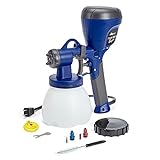
I remember the first time I saw a countertop coated in what looked like a perfectly smooth, glossy, almost impossibly deep layer of automotive paint. It was epoxy. Naturally, my mind went straight to the biggest, most efficient tool I had for applying smooth finishes: my trusty HVLP paint gun. Could I just pour this stuff in and blast away? It seemed like the logical next step for anyone who’d ever wrestled with a roller and wished for a flawless finish. My initial thought was, ‘Why wouldn’t it work?’
But then, the nagging voice of experience, built from years of wasted product and scraped-off failures, chimed in. This isn’t just paint. It’s a chemical reaction waiting to happen. So, let’s get down to brass tacks: can epoxy be sprayed by paint gun? The short answer is ‘it depends,’ and the long answer involves a fair bit of nuance that many online guides gloss over.
Spraying Epoxy: The Nitty-Gritty Reality
Look, I’ve been there. You’ve got a big project – maybe a garage floor, a massive tabletop, or even a boat hull – and you’re staring down a bucket of two-part epoxy.
Your brain, still buzzing from watching those satisfying YouTube videos of cars getting a perfect spray-on finish, screams, ‘Paint gun! It’s the only way to get it smooth and fast!’
I get it. I truly do.
My first instinct, many moons ago, was exactly the same. I pictured a beautiful, thick, even coat laid down in minutes, not hours of back-breaking work with rollers and brushes that always seem to leave little hairs or an inconsistent sheen. The idea of simply pouring a carefully measured mix into my gravity-feed sprayer and hitting the trigger felt like the ultimate shortcut to perfection. It felt… inevitable, in that moment of optimistic ambition.
But here’s the blunt truth: spraying epoxy isn’t as simple as spraying latex paint. It’s a beast with a different temperament entirely. The viscosity, the curing time, the chemical makeup – these are all massive factors that most DIYers, myself included when I first started dabbling, tend to overlook in their rush to get the job done. You can’t just grab any old paint gun and expect magic.
Most standard paint guns are designed for much thinner liquids, and trying to push something as thick and reactive as epoxy through them can be a recipe for disaster. Think clogs, uneven spray patterns, and a finish that looks less like a showroom and more like aJackson Pollock experiment gone wrong. I once tried spraying a thicker, two-part polyurethane that was similar to epoxy, and the gun just choked. It sputtered, coughed, and spat blobs.
It was a mess. I ended up having to switch to a much larger tip size and a more solid sprayer, and even then, it was a struggle. So, the question ‘can epoxy be sprayed by paint gun’ really needs a follow-up: what kind of epoxy, and what kind of paint gun?
The common advice you’ll find online often dances around this. Some say yes, some say no.
The ‘yes’ crowd usually implies using a specific type of epoxy (often a thinner, coating-grade one) and a specialized sprayer (like an airless sprayer or a conversion gun with a huge tip). The ‘no’ crowd points out the dangers of clogging, the difficulty of achieving a good mix ratio through the gun, and the sheer expense of specialized equipment. For most people, especially those who just want to coat a small piece of furniture or a garage floor, the answer leans heavily towards ‘no, not with your average paint gun.’ It’s like trying to use a scalpel to chop down a tree – technically possible if you had a magic scalpel and an infinite amount of time, but just not the right tool for the job.
You’re far better off understanding the limitations and choosing the right application method for the specific epoxy product you’re using. Don’t be fooled by the shiny pictures; the reality is often much greyer, and sometimes, much stickier.
What Kind of Epoxy Can Actually Be Sprayed?
Okay, so if you’re not just going to grab any old epoxy and a can of air, what are we actually talking about when we say ‘spraying epoxy’? It’s not about the super-thick, self-leveling art resins you see on Instagram, those glorious, viscous creations that look like liquid glass. Those are almost exclusively poured and spread, not sprayed. When we talk about spraying epoxy, we’re generally referring to industrial or heavy-duty coating epoxies, often used for concrete floors, protective coatings on metal, or sometimes specialized automotive primers that have an epoxy base. These are formulated to be thinned down to a sprayable viscosity, or they come in formulations that are inherently thinner.
The key differentiator is usually two things: solids content and viscosity. High-solids epoxies have a lot of the actual resin and hardener in the mix, meaning less solvent (if any) is needed to get it to spray.
This is good for durability but can make it very thick. Low-solids or solvent-borne epoxies often have more thinner added, making them easier to spray but potentially less durable or with more VOCs (Volatile Organic Compounds). For DIYers, you’re most likely to encounter either a concrete floor coating epoxy or a clear art resin.
The concrete floor types are the most likely candidates for spraying, but even then, you need to check the manufacturer’s instructions religiously. Many of these explicitly state not to spray, or they recommend specific, heavy-duty spray equipment. Art resins? Forget about it.
Trying to spray those is a losing battle; they’re designed to be poured and spread, and if you try to thin them too much, you compromise the entire curing and hardening process, often resulting in a sticky, uncured mess that never fully hardens.
Here’s a good rule of thumb: If the product doesn’t explicitly say it’s sprayable, or if it doesn’t provide recommended tip sizes and pressures for spraying, assume you shouldn’t be spraying it. Forcing it will likely lead to a world of hurt. I learned this the hard way with a marine-grade epoxy I wanted to use for a small fiberglass repair.
It was thick as molasses. I tried thinning it with acetone, thinking I was being clever. The result? It sprayed, sure, but it never hardened properly. (See Also: Can Craft Foam Be Spray Painted )
It remained tacky for days, attracting every piece of dust and hair in my workshop. It was a sticky, gummy disaster I had to scrape and sand off entirely.
That experience taught me to respect the product’s intended application. If it’s meant to be rolled, roll it.
If it’s meant to be brushed, brush it. And if it’s meant to be sprayed, then you can start talking about paint guns, but usually not the ones you have in your home garage.
What Are Vocs?
VOCs, or Volatile Organic Compounds, are carbon-containing chemicals that easily evaporate into the air at room temperature. In paints and coatings, they act as solvents to adjust viscosity and improve application. However, many VOCs are harmful to human health and the environment, contributing to air pollution and potential respiratory issues. Products with higher VOC content tend to have stronger fumes and require more ventilation during use. Lower VOC or zero-VOC formulations are becoming more common, especially in consumer products, but they often require different application techniques.
The Right Tools for Spraying Epoxy
So, if you’ve got an epoxy that is designed for spraying – usually a specific floor coating or industrial primer – what kind of paint gun are we talking about? Forget your standard automotive HVLP gun with a 1.3mm or 1.4mm tip. You need something more substantial. The two main categories of sprayers that can handle thicker coatings like epoxy are airless sprayers and specialized air-powered spray guns with very large tip sizes. Let’s break them down.
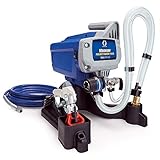
Airless Sprayers are the workhorses for heavy-duty coatings. Instead of using compressed air to atomize the paint, they use a high-pressure pump to force the material through a small orifice (the nozzle).
This creates a very fine mist that can handle thick materials like epoxy, latex paints, stains, and more. They are incredibly efficient for large areas like garage floors or walls.
The downside? They are expensive, loud, and require a good understanding of pressure settings and nozzle selection. You also need to be meticulous about cleaning them because epoxy residue can quickly seize up the internal pump mechanisms.
I’ve used airless sprayers for painting fences and large exterior walls, and the speed and coverage are phenomenal, but they are definitely overkill for small projects. If you’re doing a 1000 sq ft garage floor, an airless is your friend. For a small coffee table, it’s like bringing a cannon to a water gun fight.
Air-Powered Spray Guns (with caveats). If you’re determined to use a compressor-driven gun, you need to look at conversion guns or specialized industrial spray guns with much larger fluid tips and nozzles. We’re talking tip sizes of 2.0mm, 2.5mm, or even larger, depending on the specific epoxy and its thinning requirements. These guns require a high volume of air to atomize the thicker material.
This means you’ll need a solid compressor with a good CFM (Cubic Feet per Minute) rating to keep up. Many DIY-level compressors will simply not have the oomph. Furthermore, you’ll need to make sure the epoxy is thinned down to the manufacturer’s recommended viscosity for spraying. This is where a viscosity cup (like a Zahn cup or Ford cup) comes in handy.
You measure how long it takes the epoxy to drain through a small hole, and you adjust the thinning until it falls within the sprayable range. This is not guesswork; it’s a important step. Trying to spray an unthinned or improperly thinned epoxy through even a large-tipped air gun will lead to clogs, runs, and a very frustrated user.
Conversion Guns are a hybrid, often using a siphon feed with compressed air, but designed to handle thicker materials than standard gravity feed guns. They can be a good option if you have a decent compressor and are working on medium-sized projects where an airless might be too much. The key is always the tip size and the air pressure. Always, always, always check the epoxy manufacturer’s technical data sheet (TDS) for their recommendations on spraying. It will specify the type of sprayer, tip size, minimum air pressure, and any required thinning agents and their percentages. Ignoring this is where most people get into trouble.
| Sprayer Type | Best For | Pros | Cons | Verdict |
|---|---|---|---|---|
| Standard HVLP (e.g., 1.3-1.8mm tip) | Lacquers, enamels, thin stains | Affordable, good for detail work | Cannot handle thick materials like epoxy |
NO |
| Large Tip Air-Powered Gun (e.g., 2.0mm+) | Thicker coatings, industrial primers | Can spray epoxy if thinned properly, good control | Requires large compressor, meticulous thinning & cleaning |
MAYBE, with caveats |
| Airless Sprayer | Thick coatings, large areas (floors, walls) | Fast, excellent for thick materials, high transfer efficiency | Expensive, loud, requires specific technique, difficult for small items |
YES, for specific epoxies & large jobs |
Common Mistakes When Trying to Spray Epoxy
I’ve seen friends try this, and I’ve made my own stumbles, so I’ve got a pretty good list of what not to do. The biggest mistake, by far, is using the wrong equipment. People grab their trusty automotive spray gun, the one they use for car touch-ups, thinking it’ll handle the epoxy. It won’t. The fluid needle and nozzle are simply too small for the viscosity of most epoxies. Trying to force that thick material through will either clog the gun instantly or result in a pathetic, splattery dribble that’s impossible to control and looks like a melted candle.
Another massive pitfall is improper mixing and thinning. Epoxy is a two-part system (resin and hardener) that requires a precise mix ratio. If you get this wrong, it might not cure properly, or it might cure too fast (which can also cause issues for spraying). Then there’s thinning. (See Also: Can Aluminum Be Spray Painted )
Many epoxies require specific thinners (like acetone, denatured alcohol, or specialized epoxy thinners), and you must adhere to the manufacturer’s recommended percentage. Too much thinner compromises the integrity and hardness of the cured epoxy. Too little, and it won’t spray. I once tried to spray a two-part industrial coating that was borderline too thick.
I added a little bit of the recommended thinner, thinking I was being cautious. It came out looking like snot.
Seriously. It was thick, stringy, and refused to atomize properly. I had to stop, clean everything, and go back to the drawing board, increasing the thinner slightly and praying. It eventually sprayed okay, but the stress was immense.
Not cleaning the equipment thoroughly is also a killer. Epoxy cures hard. If you don’t clean your spray gun, lines, and cups immediately after use with the recommended solvent, you’ll end up with a solid chunk of epoxy inside your expensive sprayer. I’ve heard horror stories of people having to chisel epoxy out of spray guns.
It’s a grim scene. Finally, rushing the process. Spraying epoxy requires patience.
You need to do light, even coats, allowing for proper flash-off time between coats (the time it takes for solvents to evaporate and the surface to become slightly tacky but not wet). If you try to lay it on too thick in one go, you’ll get runs, sags, and an uneven finish that defeats the purpose of spraying in the first place. And don’t even get me started on trying to spray in humid or cold conditions – that’s a whole other layer of disaster waiting to happen, affecting cure times and finish quality.
Can You Thin Epoxy with Acetone for Spraying?
Yes, acetone can be used to thin some epoxies for spraying, but it is absolutely important to consult the manufacturer’s technical data sheet (TDS) first. Not all epoxies can or should be thinned with acetone. Using the wrong solvent or thinning beyond the recommended percentage can weaken the cured epoxy, prevent proper curing, or cause other surface defects. Acetone is a strong solvent and can also damage certain plastics or finishes on spray equipment, so proper cleaning is key. Always use the thinner recommended by the epoxy manufacturer for the best results and to maintain the integrity of the coating.
Real-World Use Cases and Experiences
So, where does spraying epoxy actually make sense? The most common and successful use case is for coating large concrete surfaces like garage floors, basements, or patios. Manufacturers of these floor coating kits often provide specific instructions for using a high-pressure sprayer, and sometimes even recommend specific models or types of sprayers.
These epoxies are formulated to be durable and withstand traffic, and spraying allows for a relatively uniform application over vast areas, minimizing roller marks and achieving a consistent thickness. I helped a buddy coat his three-car garage floor with a kit that could be sprayed. We opted for an airless sprayer because we had access to one.
It was still a ton of work – prep was intense, and the cleanup was a beast – but the finish was incredibly smooth and professional-looking, far better than we could have achieved with rollers alone. It took us the better part of a weekend, but the result was worth the effort.
Another area where spraying epoxy can be found is in industrial applications, such as protective coatings on metal structures, bridges, or large tanks. These are usually highly specialized, high-performance epoxies requiring professional-grade spray equipment and trained operators. For the average DIYer, these aren’t typically accessible or necessary. You might also encounter epoxy primers in automotive refinishing, which are specifically designed to be sprayed. These are often thinner than floor coatings and formulated for excellent adhesion and a smooth surface for subsequent paint layers. However, even here, specific guns and pressures are required.
What about smaller, more decorative projects? This is where spraying epoxy becomes problematic.
If you’re coating a small table, a countertop, or individual furniture pieces, the amount of epoxy is usually too small to justify the setup and cleanup of a sprayer, especially if you need specialized equipment. The prep and cleaning time can easily outweigh the application time saved. For these smaller jobs, a high-quality roller (like a foam roller for smooth finishes) or a brush, combined with careful technique, will often yield better results and significantly less hassle.
I once tried to spray a small epoxy countertop project. It was a disaster. The gun clogged repeatedly, the overspray was everywhere, and the cleanup took longer than actually applying it with a squeegee and roller would have. Lesson learned: know when to use the big guns and when to stick to the basics.
My experience with that countertop left me with a sticky gun and a profound appreciation for the humble squeegee.
What’s the Difference Between Epoxy and Resin?
In the context of coatings and art projects, ‘epoxy’ and ‘resin’ are often used interchangeably, but there’s a technical difference. Epoxy refers to a specific type of thermosetting polymer that requires a hardener (a curing agent) to undergo a chemical reaction that causes it to harden and form a durable, rigid material. This reaction is exothermic, meaning it generates heat. ‘Resin’ is a broader term that can refer to various polymers, including epoxy resins.
However, when people say ‘resin’ in the context of DIY projects, they are very often referring to clear, castable resins like those used for jewelry, coasters, or countertops. These are typically formulated to be crystal clear, UV-resistant, and easy to pour and spread, and they often cure at room temperature with minimal or no thinning required for application.
So, while all epoxy is a type of resin, not all resins are epoxies, and vice-versa, depending on the specific chemical formulation and intended use. (See Also: Can Bug Spray Damage Car Paint )
Practical Tips for Success (if You Must Spray)
If, after reading all this, you’re still determined to spray epoxy, here are a few hard-won tips to increase your chances of not making a colossal, sticky mess. First and foremost: Read the Manufacturer’s Technical Data Sheet (TDS). I cannot stress this enough. It’s not a suggestion; it’s a roadmap. It will tell you exactly what type of sprayer to use, the recommended tip size, the required air pressure (if applicable), the maximum thinning percentage, and the specific thinner to use. Ignore this at your peril.
Second, invest in a good quality sprayer designed for thicker materials. If you don’t have an airless sprayer, look for an industrial-grade air-powered gun with a large tip (2.0mm or larger). You’ll also need a compressor that can supply enough CFM to keep up.
Don’t try to make a small hobby compressor work. It will overheat, struggle, and give you inconsistent air pressure, leading to a terrible spray pattern.
Third, proper mixing is a must. Measure your resin and hardener precisely. Use graduated mixing cups or a scale. Incorrect ratios lead to curing issues that spraying can’t fix.
Fourth, test your thinning. Use a viscosity cup to make sure your mixture is within the manufacturer’s recommended range. It takes a few extra minutes but can save you hours of frustration and wasted product. Don’t just eyeball it; the difference between sprayable and unsprayable can be tiny.
Fifth, preparation is everything. Mask off everything you don’t want coated. Epoxy overspray is incredibly persistent and difficult to remove.
Wear appropriate personal protective equipment (PPE): a respirator with organic vapor cartridges (epoxy fumes can be nasty), gloves, and eye protection. Ventilation is also key, especially with solvent-borne epoxies. Work in a well-ventilated area, or use fans to make sure airflow. Finally, practice your technique on scrap material first.
Get a feel for the gun’s spray pattern, how fast you need to move, and how to maintain an even overlap between passes. Don’t make your actual project your first attempt.
These steps might sound like a lot, but compared to the cost and effort of fixing a botched epoxy job, they are well worth the investment of time and attention. It’s about respecting the material and the process.
Faq: Spraying Epoxy and Paint Guns
Can I Spray Epoxy Primer with a Regular Paint Gun?
Generally, no. Most standard paint guns, especially those with smaller tip sizes (like 1.3mm or 1.4mm used for automotive finishes), are not designed to handle the viscosity of epoxy primers. Epoxy primers are typically thicker and require larger tip sizes and higher air volume/pressure than a standard gun can provide. You would need a specialized industrial spray gun with a significantly larger tip (2.0mm or more) and a solid air compressor, or an airless sprayer, to effectively spray epoxy primer. Always check the manufacturer’s technical data sheet for specific recommendations.
What Is the Best Type of Paint Gun for Spraying Epoxy?
The ‘best’ type of paint gun depends on the specific epoxy product and the project size. For large areas like garage floors, an airless sprayer is often the most efficient tool, as it’s designed for high-viscosity materials. If you’re using an air-powered gun, you’ll need a conversion gun or an industrial spray gun with a large fluid tip (2.0mm or larger) and sufficient airflow from your compressor. A standard HVLP gun is generally unsuitable for most epoxies.
How Much Thinner Can I Add to Epoxy for Spraying?
This is highly variable and depends entirely on the specific epoxy product. Manufacturers provide a recommended thinning percentage range in their technical data sheets. Adding too much thinner can compromise the epoxy’s hardness, durability, and cure time, leading to a weak or sticky finish. Never add thinner without consulting the TDS, and always use the specific type of thinner recommended by the manufacturer, as using the wrong solvent can also cause problems.
What Happens If I Spray Epoxy Without Thinning It?
If you try to spray epoxy without thinning it to the manufacturer’s recommended viscosity, you will likely encounter significant problems. The material will be too thick to atomize properly, leading to a very coarse, uneven spray pattern with large droplets and splatters. The spray gun will likely clog, and you may even damage the gun or compressor due to the excessive strain. The resulting finish will be poor, likely with runs, sags, and an inconsistent texture that will require extensive sanding and refinishing. It’s a recipe for a major headache and wasted product.
Do I Need a Respirator for Spraying Epoxy?
Yes, absolutely. Spraying epoxy, especially solvent-borne formulations, releases Volatile Organic Compounds (VOCs) and fine particulate matter that can be harmful to your respiratory system. Always wear a respirator fitted with organic vapor cartridges and particulate filters when spraying any epoxy or coating. Good ventilation is also important. Ignoring respiratory protection can lead to short-term irritation and long-term health issues. It’s not a suggestion; it’s a safety requirement.
Final Thoughts
So, can epoxy be sprayed by paint gun? The answer is a qualified ‘yes,’ but only if you’re using the right type of epoxy and the right kind of sprayer, and you’re prepared for the meticulous prep and cleanup that comes with it. For most DIYers tackling smaller projects, the hassle and potential for failure often outweigh the benefits of spraying. You’re far more likely to get a superior finish and a less stressful experience by sticking to rollers, squeegees, or brushes for those applications.
However, for large-scale jobs like garage floors where uniformity and coverage are most important, and if you have access to or are willing to invest in specialized equipment like an airless sprayer or a heavy-duty air gun, spraying can be a viable and effective method. Just remember that epoxy is a chemical system that demands respect. It’s not like spraying latex paint; it’s a different ballgame with different rules.
Before you even think about pulling the trigger, grab that Technical Data Sheet. It’s your best friend in this process. If it doesn’t explicitly mention spraying, or if it recommends tools you don’t have and can’t easily rent, it’s probably time to rethink your approach. There’s no shame in using the right tool for the job, even if that tool isn’t a spray gun.