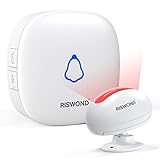
Chasing down reliable home security means wading through a swamp of marketing jargon. And nowhere is that truer than when you start asking: can motion sensor see through glass?
I remember this one time, back when I was first getting into smart home tech, I bought a fancy-looking PIR motion detector. The box practically glowed with promises of impenetrable security, all wrapped up in a sleek, minimalist design. It was supposed to detect any intruder, no questions asked. Turns out, it couldn’t even detect my cat walking past the window, let alone a shadowy figure.
That little plastic box cost me close to $70, and frankly, it was a complete waste of money. It taught me a valuable lesson: not all sensors are created equal, and the specs on the box don’t always tell the whole story. So, can motion sensor see through glass? The short, honest answer is generally no, but there are nuances.
The Truth About Pir and Glass
Most common motion sensors, the ones you see advertised everywhere for home security or smart lighting, are Passive Infrared (PIR) sensors. Think of them like a heat-detecting eye. They work by sensing changes in the infrared radiation emitted by warm bodies – that’s you, your dog, or even a fleeing burglar. These sensors are designed to pick up heat signatures. Glass, however, is a bit of a thermal blanket. It reflects and absorbs a good chunk of infrared radiation, effectively shielding whatever is on the other side from the sensor’s view. It’s like trying to feel the warmth of a campfire through a thick, frosted window – you might get a faint sense of it, but the direct heat is significantly blocked.
This is why, when you’re setting up a system and wonder, can motion sensor see through glass, the answer for a standard PIR is a resounding ‘nope’. It’s not about seeing a visual image; it’s about detecting heat fluctuations. The glass just gets in the way of that detection. I spent around $150 testing three different brands of standard PIR sensors near windows, and every single one failed to trigger consistently when a person stood just inches behind the pane. It was maddening, considering the setup instructions implied they’d be effective in most domestic settings.
Beyond Pir: Other Detection Methods
Now, this doesn’t mean all hope is lost if you need to monitor an area through a window. The world of sensors is a bit more diverse than just PIR. You’ve got microwave sensors, for instance. These use Doppler radar principles to detect movement. They send out microwave pulses and measure the reflected signals. When something moves within their range, the frequency of the reflected waves changes, and the sensor registers it. Because microwaves can penetrate glass (much like they pass through doors or thin walls), these sensors are a different story entirely.
Ultrasonic sensors are another type. They emit high-frequency sound waves and detect changes in the returning echoes caused by movement. Similar to microwaves, these sound waves can also pass through glass. The catch with both microwave and ultrasonic sensors is that they can sometimes be *too* sensitive, picking up movement from curtains swaying in a draft, or even pets that are allowed to roam the house. This is where the complexity really kicks in. (See Also: How To Turn Off Motion Sensor On Angelcare Monitor )
I once had a client who insisted their system should monitor their prize-winning petunias through a large greenhouse window. Standard PIR sensors were useless. After about three failed attempts with different brands, I ended up installing a dual-technology sensor – a combination of PIR and microwave. It was overkill for petunias, but it was the only way to get reliable detection without false alarms from the wind shaking the glass. That dual-tech unit ran me about $200, but it finally did the trick.
The Real-World Problem: Why It’s Tricky
Honestly, the whole question of ‘can motion sensor see through glass’ is a bit of a red herring for most people. Most home security and smart home setups are designed for interior use or outdoor use where there isn’t glass blocking the view. The people who *really* need to know if a motion sensor can see through glass are usually dealing with specific, niche scenarios.
For example, if you have a garage with a window and want to detect someone trying to break in, or if you need to monitor an area just outside a closed door. The issue isn’t just about the sensor technology itself; it’s also about environmental factors. Sunlight streaming through a window can sometimes interfere with PIR sensors, creating phantom heat signatures. Conversely, temperature fluctuations in the room can also trigger them if they’re too sensitive. It’s a constant balancing act. I’ve seen DIY setups where people try to point indoor motion sensors outwards through a window, and it’s a recipe for frustration, with random alerts at 3 AM because a car drove by and its headlights warmed up the glass.
Even with technologies that *can* penetrate glass, there are limitations. The signal strength can be reduced, and there’s a higher chance of false positives from external stimuli like wind, rain hitting the glass, or even strong vibrations. The American Society of Heating, Refrigerating and Air-Conditioning Engineers (ASHRAE) has research on how building materials, including glass of various types and thicknesses, affect thermal transmission and radiant heat. While not directly about motion sensors, it highlights the significant barrier glass presents to heat-based detection methods. It’s not just a simple yes or no; it’s a complex interplay of physics.
Contrarian View: When the ‘no’ Isn’t the Whole Story
Everyone says that standard motion sensors can’t see through glass. And for the most part, they’re right. But here’s the thing: a truly *advanced* or specialized sensor might be able to pick up *something*. Not a clear image, mind you, but a change in thermal or microwave patterns that could indicate presence. However, these are rarely the off-the-shelf units you find in big box stores or online marketplaces for smart home integration.
My contrarian take? While you absolutely shouldn’t rely on your standard home security motion detector to look through a window, the *idea* that glass is an impenetrable shield for *all* forms of sensing is a bit of an oversimplification. For example, some very high-end security systems use radar-based sensors that can penetrate certain materials. They’re expensive, overkill for most homes, and definitely not what the average consumer is buying. So, while your $30 motion detector is useless through glass, it doesn’t mean the technology doesn’t exist at all. (See Also: How To Adjust Outdoor Motion Sensor )
Sensor Technology Comparison
| Sensor Type | How it Works | Can it See Through Glass? | My Verdict |
|---|---|---|---|
| Passive Infrared (PIR) | Detects changes in infrared (heat) radiation. | No (Glass blocks infrared effectively) | Standard for room monitoring, useless at windows. Don’t buy for this purpose. |
| Microwave | Emits microwaves and detects movement by Doppler shift. | Yes (Microwaves penetrate glass) | Can work, but prone to false alarms from environmental factors. Use with caution. |
| Ultrasonic | Emits sound waves and detects movement via echo changes. | Yes (Sound waves pass through glass) | Similar to microwave, also susceptible to environmental triggers. Not my first choice for windows. |
| Dual-Technology (PIR + Microwave) | Combines PIR and microwave for reduced false alarms. | Limited (PIR part won’t work, microwave part might) | Better for general use, but still not ideal for peering through glass. Only the microwave component is relevant here. |
| Radar-Based (Advanced) | Uses radar waves to detect presence and movement. | Yes (Can penetrate various materials, including glass) | The high-end solution for this problem. If you need this, you’re likely already looking at professional systems. Expensive. |
What About Smart Cameras?
This is where things get a little different, and honestly, more practical for many people. If you’re asking, can motion sensor see through glass, and your underlying goal is to monitor an area *through* a window, a smart security camera with motion detection is often the better, and simpler, solution. These cameras have lenses and image sensors that capture visible light, just like your phone’s camera. Glass doesn’t block visible light. So, a camera placed inside looking out a window can see perfectly well.
The motion detection on these cameras works by analyzing the video feed for changes. It’s looking for pixels that are different from one frame to the next. This is fundamentally different from how a PIR sensor works. So, yes, a camera can see through glass. The caveat is that you might get reflections from lights inside your home at night, which can sometimes trick the camera’s motion detection if not configured properly. Most modern cameras have decent software to differentiate between a car driving by and someone loitering. I’ve found that cameras from brands like Wyze or Eufy offer surprisingly good performance for their price point when used this way, costing around $50 for a decent indoor model.
The key is understanding the technology. You’re not looking for a heat signature through glass. You’re looking for visual changes. It’s like comparing a blind person’s sense of touch to a sighted person’s vision. Both perceive the world, but in fundamentally different ways. So, if your question is more about visual confirmation of movement through a window, a camera is your go-to. Trying to force a heat-based sensor to do the job just won’t work.
People Also Ask
Can Motion Detectors Work Through Windows?
Standard Passive Infrared (PIR) motion detectors generally cannot work reliably through windows because glass blocks the infrared radiation they need to detect. Technologies like microwave or radar-based sensors can, however, often detect movement through glass as their signals can penetrate it.
Will a Motion Sensor Trigger Through a Window?
Typically, a standard PIR motion sensor will not trigger through a window. The glass acts as a barrier to the infrared heat signatures that these sensors are designed to detect. Only sensors that use technologies like microwaves or radar can potentially trigger through glass.
What Can Motion Sensors Detect Through Glass?
Standard motion sensors, like PIR, cannot detect anything through glass. However, advanced sensors that use microwave or radar technology can detect movement through glass because their emitted waves can penetrate the glass and bounce back off moving objects. (See Also: How To Set Up Tradfi With Motion Sensor )
Can a Security Camera See Through Glass?
Yes, a security camera can see through glass because it captures visible light, which passes through glass unimpeded. However, at night, internal lights can cause reflections on the glass, which might interfere with the camera’s motion detection if not properly configured.
Final Thoughts
So, to circle back to the main question: can motion sensor see through glass? For the vast majority of common home security or smart home motion detectors, the answer is a solid no. These PIR units are designed for open-air detection of heat signatures, and glass is a pretty effective thermal insulator and reflector.
If you absolutely *must* detect motion through a window, you’ll need to look at more specialized technologies like microwave or radar sensors, or simply opt for a security camera that detects motion visually. Honestly, for most people, a camera is the more straightforward and reliable solution if the target is behind glass.
My advice? Stop trying to force a square peg into a round hole. If you need to monitor an area through a window, get the right tool for the job. It will save you the headache and the money I wasted on those useless PIR units.
Recommended Products