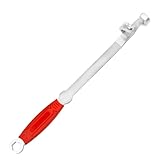
I remember the first time I overtightened a bolt on a vintage motorcycle. I was so proud of myself for using a torque wrench, trying to do it “right.” Then I heard that sickening little crunch. The bolt head was fine, but the threads inside the engine case? Toast. It cost me a pretty penny and a lot of headaches to get it fixed. So, yeah, I’ve learned the hard way that just because you have a tool, doesn’t mean you’re immune to screwing things up. The question of whether or not can torque bolt limits be exceeded isn’t just theoretical; it’s a practical, expensive lesson many of us learn.
It’s easy to think a torque wrench is some magic wand that guarantees perfection. You set the dial, you hear the click, and boom – perfect. But reality is a bit messier. There are so many variables, and a lot of common advice out there is just plain wrong.
When ‘snug’ Becomes ‘stuck’
Look, most of us weren’t born knowing how to properly use a torque wrench. We pick one up, read a manual (or half-read it), and jump in. The whole idea behind torque is to apply a specific amount of rotational force to a fastener, making sure it’s tight enough to hold but not so tight that it damages the parts or the fastener itself. Simple, right?
Not always. There’s a whole ecosystem of things that can mess with that perfect number, and the most obvious one is you, the operator. We get overzealous.
We think ‘tighter is better,’ especially on something important like an engine component or suspension part. I’ve seen guys just crank on a wrench until they feel a significant ‘give,’ completely ignoring the click or the reading. That’s how you strip threads, snap bolts, or, in the case of aluminum housings, pull the threads right out. It’s a moment of panic, followed by the sinking realization that you’ve just created a much bigger problem than the one you were trying to solve.
It’s a gut-wrenching feeling, and it’s happened to me more than once. I once tried to torque down the intake manifold bolts on an old Ford.
I kept going past the click, thinking it wasn’t quite seated. Turns out, I’d stretched the bolt and was about to crack the manifold. Thankfully, I stopped before it was catastrophic, but the bolt was toast and had to be replaced.
The common advice to ‘listen for the click’ is generally good, but it’s not foolproof. Some cheaper click-type wrenches can be a bit… vague. You might feel a click, but was it the real click, or just a slight hesitation? Or maybe you’re tired, your hand is sweaty, and you miss it. Then there’s the ‘double-clicking’ myth. Some people believe you should pull through the click a second time to be absolutely sure. This is a fast track to exceeding torque limits and damaging your fastener. The click means you’ve reached the set torque. That’s it. Anything more is overdoing it.
One of the biggest culprits for exceeding torque limits, ironically, is often the bolt or fastener itself. Different materials have different strengths. A Grade 8 bolt will take more abuse than a Grade 5. A shiny new bolt behaves differently than a rusty old one. And the threads? Oh boy, the threads. If they’re dry, they’ll need more torque to reach the same clamping force than if they’re lubricated. This is where things get really fuzzy, and why it’s so important to know what the manufacturer recommends regarding lubrication. Many don’t specify, and that’s a problem.
The Greasy Truth About Lubrication
Here’s where I really go against the grain. Everyone says, “Lubricate your threads!” and for good reason, sort of. Lubrication reduces friction, which means you achieve the desired clamping force with less applied torque.
This sounds great in theory, and for many applications, it is. However, if you’re using a torque spec that was written for dry threads and you lubricate them, you can easily over-torque the bolt, leading to stretched bolts, damaged threads, or even snapped fasteners. This is a huge point of confusion and a primary reason can torque bolt limits be exceeded even when using a torque wrench.
I’ve seen mechanics at dealerships, guys who do this for a living, just spray some WD-40 on everything before they torque it down. They’re not thinking about the torque spec; they’re thinking about ease of assembly and preventing future seizing. But if that spec is for dry threads? They’re setting themselves up for failure down the line.
The key is understanding the torque specification. Was it measured with dry threads, lubricated threads, or threads with anti-seize compound? This information is often buried in service manuals, or worse, not mentioned at all. (See Also: A 325 Bolt Torque )
If a spec is given, and no mention of lubricant is made, it’s usually safest to assume it’s for dry threads. Then, if you choose to lubricate, you need to reduce the torque value accordingly. But by how much? That’s the million-dollar question, and there’s no single answer.
Manufacturers might suggest reducing torque by 10-20% if using oil, but anti-seize compounds can significantly alter friction. For important components, like head bolts or wheel lug nuts, I’d rather be slightly under-torqued with a properly lubricated fastener than over-torqued with a dry one, but it’s a calculated risk.
I learned this the hard way trying to assemble a high-performance engine. The manual specified a torque value for the main bearing caps. I used a quality assembly lube on the threads, thinking I was doing the right thing. I torqued them down, and everything seemed fine. A few thousand miles later, I developed a bearing knock. Turns out, the over-torquing from the lubricated threads had slightly deformed the main caps, leading to premature bearing wear. It was a brutal lesson: the spec is the spec, and you can’t just ‘wing it’ with lubricants unless you understand the impact.
Factors That Mess with Your Torque Reading
Beyond operator error and lubrication confusion, a bunch of other environmental and hardware factors can throw your torque readings way off. Think about the surface finish of the bolt and the mating threads. If the threads are rough, have burrs, or are slightly corroded, they’ll create more friction, requiring more torque to achieve the same clamping force. Conversely, really smooth, polished surfaces can lead to less friction, and you might reach your target torque with less actual clamping force than intended. This is why using clean, properly chased or reamed threads is so important.
The type of torque wrench itself is a big deal. Click-type wrenches are common, but their accuracy can drift over time. They need regular calibration, which most hobbyists (and even some shops) never bother with. Beam-type wrenches are generally more accurate, but they can be harder to read precisely, especially if you’re working in an awkward spot.
Electronic torque wrenches offer the best precision and logging capabilities, but they’re expensive and rely on batteries. I’ve got a collection of clickers, and I’ve had them checked. Some were way off, especially the cheaper ones I bought years ago. It’s a good idea to get your go-to wrenches calibrated every year or so if you rely on them for important work.
A few bucks for calibration saves you a lot of bucks in repairs.
Here’s a quick comparison of common torque wrench types:
| Type | Pros | Cons | Verdict |
|---|---|---|---|
| Beam | Simple, often accurate if read carefully | Can be hard to read in tight spaces, less precise than digital | Good for occasional use, budget-friendly |
| Click | Audible and tactile signal, easy to use | Accuracy can drift, susceptible to over-torquing if not listened to | Popular choice, but needs calibration |
| Electronic | High accuracy, often with data logging | Expensive, requires batteries, can be complex | Best for important applications and frequent use |
Thread pitch also plays a role. A fine-pitch thread will require more turns to achieve the same depth as a coarse-pitch thread, and the torque-to-clamping force relationship isn’t always linear. So, even if you’re measuring torque accurately, you might not be getting the clamping force you expect if the thread pitch is unusual or not what the spec was designed for.
Common Mistakes That Lead to Overtightening
We’ve touched on a few, but let’s break down the most common blunders that lead to exceeding torque limits. The first, and I’ll hammer this home because it’s so prevalent, is the ‘feel’ method. This is when you ignore the torque wrench altogether and just tighten until it ‘feels’ right. This is pure guesswork and incredibly unreliable. What feels ‘right’ to you today might feel different tomorrow, or to someone else entirely. It’s a habit that needs to be broken if you’re serious about proper assembly.
Another big mistake is using a torque wrench for something it’s not designed for. For example, using a click-type wrench meant for 50-150 ft-lbs to tighten a tiny 5 ft-lb screw. The accuracy of most click-type wrenches is significantly reduced at the very low or very high ends of their range. It’s best to use a wrench that’s within the middle 20-80% of its rated range for the most accurate results. I made this mistake early on, trying to torque down tiny carburetor screws with my big ½-inch drive torque wrench. It was useless and probably made things worse.
Reaching for the wrong tool is a classic. You’ve got a bolt that needs 80 ft-lbs, but all you have readily available is a 3-foot breaker bar. It’s tempting to use it for use, but that’s a recipe for disaster. That much use means a tiny movement of your hand applies a huge amount of torque. Even with a torque wrench, using excessive use or extensions can throw off the reading, especially on click-type wrenches. Manufacturers often have specific instructions about using extensions or universal joints, as they can alter the effective torque applied. (See Also: Are Rocker Arm Bolts Torque To Yield )
Finally, there’s the ‘tighten in sequence’ faux pas. For components like cylinder heads, intake manifolds, or wheel hubs, there’s a specific tightening pattern. This makes sure the parts seat evenly and prevents warping or uneven stress. If you just tighten bolts randomly, even to the correct torque value, you can still introduce stress and deformation that will cause problems later. This is a surprisingly common oversight, and it means you can exceed the effective limits of the material by creating uneven stresses, even if the individual bolt torques are correct.
Common Torque Wrench Mistakes: A Quick Cheat Sheet
- Using a torque wrench outside its optimal range.
- Not calibrating your torque wrench regularly.
- Using excessive extensions or adapters without accounting for them.
- Ignoring the manufacturer’s specified tightening sequence.
- Treating a torque wrench as a “final tightening” tool rather than a measuring instrument.
Real-World Applications: Where It Really Matters
So, when does all this torque talk actually become important? It’s not just about being fussy. In automotive repair, especially on modern vehicles with sensitive electronics and lightweight materials, hitting torque specs is a must. Wheel lug nuts are a prime example.
Overtightened, they can warp rotors or stretch studs. Undertightened, and well, you’ve seen those videos of wheels coming off.
The spec for lug nuts is usually quite specific, and it’s important to use a torque wrench and the correct sequence. I once had a friend who always just used his impact gun to tighten lug nuts. He thought it was faster and stronger.
Then, one day, he went to change a flat and couldn’t get them off without a breaker bar. He’d effectively fused them on.
When he finally got them off, the studs were stretched and galled. Not good.
Engine components are another huge area. Head gaskets, main bearings, connecting rod caps – these all have important torque sequences and values. Get them wrong, and you’re looking at catastrophic engine failure, oil leaks, coolant leaks, or just a poorly running engine. I remember working on a project car where the head bolts were specified at a certain torque with a specific tightening sequence. I followed it religiously, and the engine ran like a top for years. A buddy tried to ‘wing it’ on a similar build and ended up with coolant in his oil after just a few hundred miles. The head wasn’t seated evenly because he’d ignored the torque sequence and the final torque values.
Aerospace and industrial machinery are even more extreme. Here, the consequences of a fastener failure can be deadly. They use highly sophisticated tools and procedures, often with specialized lubricants and thread preparations, to make sure every single fastener is torqued precisely. They understand that can torque bolt limits be exceeded is a constant battle against numerous variables, and they have systems in place to mitigate that risk.
Even in DIY applications like building furniture or assembling bicycles, getting the torque right can prevent squeaks, wobbles, and premature wear. A slightly loose brake caliper bolt on a bike, for instance, is a recipe for disaster.
It might not seem like a high-stakes application, but the principle is the same: proper clamping force equals safety and longevity.
When Torque Specs Are ‘suggestions’ (and When They Aren’t)
Some manufacturers are notoriously vague. They might give a torque spec but not mention lubrication, or they’ll provide a range that’s too wide to be useful. In these cases, you have to use your best judgment, combined with experience. For important components, always err on the side of caution. If there’s a manufacturer’s service manual, that’s your bible. If it’s a generic part like a bolt you’re replacing, try to find out what it’s replacing and what the original torque spec was. Sometimes, looking at similar components from other manufacturers can give you a ballpark idea. But remember, a ballpark is just that – a ballpark. It’s not the exact target.
Practical Tips for Not Messing It Up
So, how do you avoid becoming another statistic? It comes down to a few key practices. First, always use the right tool for the job. Don’t use a breaker bar to tighten a bolt that needs a torque wrench. Use a torque wrench that’s in the middle of its intended range. If you’re torquing something very small, get a small-range torque wrench. They’re not that expensive, and they’ll be far more accurate than trying to dial in a few foot-pounds on a wrench that goes up to 150. (See Also: Are Torque To Yield Bolts Reusable )
Second, read the manual. Seriously. If you’re working on a car, a motorcycle, a piece of equipment, or even assembling something from IKEA, there’s usually a manual. Find the torque specifications. Pay attention to any notes about lubrication, thread condition, or tightening sequences. If the manual says “torque dry,” then torque it dry. If it says “torque to X, then an additional 90 degrees,” do exactly that. Those extra steps are there for a reason, usually to make sure proper clamping force without over-stressing the fastener.
Third, keep your fasteners and threads clean and in good condition. Before you torque anything, inspect the threads. Are they damaged? Corroded? If they’re not perfect, the torque reading will be affected. Chase the threads with a thread chaser or tap if necessary, but be careful not to remove too much material. Clean threads mean more consistent friction and a more reliable torque reading. I’ve found that a small wire brush and some brake cleaner can work wonders on cleaning up old threads before assembly.
Fourth, be aware of extensions and adapters. If you need to use an extension on your torque wrench, remember that each foot of extension can slightly alter the torque reading. Some sources suggest adjusting the torque setting slightly higher to compensate, but this is a complex calculation and often not worth the risk unless you’re dealing with very long extensions or important applications. Generally, try to avoid them if possible. For wheel lug nuts, for instance, a straight shot with the torque wrench is always best.
Finally, and this is a contrarian one: don’t be afraid to back off. If you’ve gone past the click, or you suspect you might have, it’s better to loosen the bolt and re-torque it than to leave it overtightened. Yes, loosening and re-torquing can sometimes affect the bolt’s stretch or the thread integrity, but it’s often less damaging than leaving it at a dangerously high torque. It’s a judgment call, but when in doubt, reset.
People Also Ask:
Can You Overtighten with a Torque Wrench?
Yes, absolutely. A torque wrench is a measuring tool, not a magic barrier. You can still exceed the specified torque if you continue to apply force after the wrench indicates the set torque has been reached, or if you misread the settings or ignore the signals. Operator error, improper tool use, and environmental factors can all lead to overtightening even with a torque wrench.
What Happens If You Overtighten a Bolt?
Overtightening a bolt can lead to several problems, including stripping the threads in the bolt or the mating part, stretching or snapping the bolt, damaging the components being fastened (like cracking an engine block or warping a rotor), and creating excessive stress that can lead to premature failure. It compromises the integrity of the joint.
Is It Better to Under-Tighten or Over-Tighten?
Generally, it’s better to under-tighten slightly than to over-tighten significantly. Under-tightening usually results in a loose connection that might vibrate apart, which is often noticeable and fixable. Over-tightening can cause permanent damage to the fastener, the threads, or the surrounding components, leading to more costly repairs or potential safety issues.
How Do I Know If I’ve Overtightened a Bolt?
You might hear a crunching or cracking sound, feel the bolt head start to deform, or notice that the bolt continues to turn with little to no resistance after you believe it’s tight (indicating stripped threads). In some cases, overtightening can cause components to warp or crack, which might not be immediately apparent but will show up later as leaks or functional issues.
Final Verdict
So, to circle back to the main question: can torque bolt limits be exceeded? The answer is a resounding yes. It’s not a matter of if, but when, if you’re not careful. A torque wrench is a fantastic tool, but it’s only as good as the person using it and the understanding behind its application. Don’t just assume the click means job done and dusted. Be aware of the conditions, the fasteners, and your own technique.
Take the time to understand the specifications, use the right tools, and maintain them. It’s the difference between a job done right and a costly, frustrating repair. Next time you reach for that torque wrench, remember the crunch. Remember the lesson.
It’s worth investing in a decent torque wrench and getting it calibrated annually. That, and a healthy dose of skepticism about ‘common advice’ will save you a lot of grief.