I remember my first car, a beat-up old Honda Civic that I practically rebuilt from the ground up. I was so proud of myself, torquing every bolt down with what felt like the right amount of muscle. Then, a few weeks later, a wheel stud snapped. It turns out, ‘feeling it’ isn’t always the best strategy, and it got me thinking: do all mechanics tighten bolts to factory specs? The answer, like most things in life, is a bit more complicated than a simple yes or no.
This isn’t about being a professional mechanic, but about understanding what makes things last and what can go wrong when you wing it. We’ve all seen those YouTube mechanics who seem to just guess, or heard stories of shops cutting corners. So, let’s cut through the noise.
The Torque Wrench: Friend or Foe?
Let’s get one thing straight right off the bat: the ideal scenario is that every single bolt, nut, and fastener on any vehicle is tightened to its precise manufacturer-specified torque. That’s what factory specs are for. They’re not arbitrary numbers; they’re the result of countless hours of engineering, testing, and stressing components to find the sweet spot. Too loose, and things vibrate apart, leak, or, in the case of a wheel, can literally come off. Too tight, and you risk stretching bolts beyond their elastic limit, stripping threads, cracking castings, or warping delicate parts. Think about a cylinder head – overtighten those bolts unevenly, and you’ll warp the head, guaranteeing a blown gasket down the line.
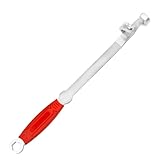
The tool for this job is, of course, the torque wrench. I’ve got a few of them, ranging from a cheap click-type I bought at an auto parts store years ago (which I now suspect is about as accurate as my gut feeling) to a more expensive digital one that beeps and flashes. The principle is simple: you set the desired torque value, apply force until the wrench indicates you’ve reached it, and move on. Sounds straightforward, right?
Well, the devil is in the details, and frankly, not everyone treats these tools with the respect they deserve. I’ve seen guys in busy shops ‘guestimate’ torque, especially on non-important components, just to save a few seconds per bolt. It’s a gamble, and while it might pay off 99 times out of 100, that one time it doesn’t can be catastrophic, leading to expensive repairs or even accidents. The difference between a properly torqued bolt and one that’s just ‘snug’ can be the difference between a reliable vehicle and one that’s a ticking time bomb.
For important components like engine internals, suspension parts, or anything safety-related, hitting the spec is a must. Imagine a brake caliper bolt loosening up. It’s not a matter of if it will fail, but when. And that’s a failure you don’t want to experience. So, while the ideal is universal adherence, the reality is that in the fast-paced world of professional mechanics, especially in quick-lube places or general repair shops dealing with high volumes, shortcuts can happen. It often depends on the mechanic’s personal ethos, the shop’s culture, and the pressure of time.
When ‘close Enough’ Becomes ‘too Far Gone’
Here’s where the rubber meets the road, or rather, where the bolt should meet the spec. Many people assume that because a mechanic is a professional, they automatically follow every single spec religiously.
That’s a nice thought, but it’s not always the case. I’ve been in workshops where the mechanic would just grunt and say, “Yeah, that’s about right.” This ‘about right’ is the enemy of precision.
It’s the same mentality that leads to using the wrong fluid, mixing parts that shouldn’t be mixed, or just generally cutting corners to get the job done faster and make more money. I once had a muffler clamp replaced at a quick-service place, and within a week, it was rattling like crazy.
Turns out, the clamp wasn’t tightened to spec, and the exhaust pipe was vibrating itself loose. Simple fix, but it cost me an extra trip and a bit of annoyance.
What does ‘factory spec’ even mean in practice? It’s usually a range, not a single, absolute number. For example, a spec might be 40-50 foot-pounds (ft-lbs). A good mechanic will aim for the middle of that range or slightly above, making sure it’s well within the acceptable window. But someone in a rush might just tighten until it feels tight, which could be 30 ft-lbs or 60 ft-lbs, both outside the spec. This is especially true for less important fasteners. A bolt holding a plastic trim piece might not get the same obsessive attention as a head bolt. It’s a hierarchy of importance, and unfortunately, not everyone respects it.
I’ve also seen mechanics who are just plain lazy or, worse, arrogant. They think they know better than the engineers who designed the car.
They’ll crank down on a bolt with an impact wrench, ignoring the torque wrench entirely, believing their ‘feel’ is superior. This is a recipe for disaster. I’ve personally experienced this when a shop replaced a CV axle on my old Subaru.
They clearly used an impact gun on the axle nut, and I ended up having to fight with it for an hour just to get it off later, because it was grossly over-torqued. That’s not just sloppy; it’s dangerous.
The common advice often skips over the human element – the pressure, the fatigue, the occasional cowboy attitude that can creep into any profession. (See Also: Do You Need Torque Caliper Bolts )
The Human Factor: Time, Pressure, and ‘feel’
Let’s talk about the elephant in the room: time is money. In a busy repair shop, mechanics are often pressured to complete jobs quickly. Each hour billed is revenue, and if a mechanic spends an extra five minutes meticulously torquing every single bolt on a brake job when they could have done it in three, that’s time lost.
This pressure can lead to what’s often called ‘good enough’ tightening. It’s not malicious, but it’s a compromise born out of efficiency.
I’ve had friends who are mechanics admit that on some less important jobs, especially routine maintenance like oil changes or tire rotations, they might not always grab the torque wrench for every single lug nut if they’re slammed. They rely on the impact gun’s settings or just a quick ‘final snug’ after initial tightening.
Then there’s the ‘feel’ factor. Some mechanics have been doing this for decades. They’ve developed an almost innate sense of how much force is ‘right’ for a particular fastener.
They might argue that their experience is just as good as a torque wrench, especially for common bolts they’ve handled thousands of times. I’m skeptical. While experience is valuable, metal fatigue, thread wear, and temperature can all affect how tight a bolt feels.
What feels right one day might be slightly off the next. My own experience with the snapped wheel stud taught me that ‘feel’ can be deceptive. I thought I was tightening those lug nuts with good force, but clearly, I was either under or over-torquing them consistently, leading to premature failure. It’s a gamble, and it’s a gamble I’m no longer willing to take with my own car.
I remember a conversation with a seasoned mechanic who told me, “Look, for something like a spark plug, you don’t need to torque it to the exact spec if you’ve done it a million times. You feel it seat, then give it another quarter turn. That’s it.” Now, spark plugs are a bit different because they have crush washers and the threads are often in aluminum heads, which are easy to strip.
But even then, manufacturers provide torque specs for a reason. Over-tightening can damage the plug, the threads, or the head.
Under-tightening can lead to blow-by and a loss of compression. While some mechanics might get away with it, it’s a bad habit that can eventually lead to a costly mistake.
The real danger is when this ‘feel’ approach bleeds into safety-important areas. Nobody’s ‘feel’ is accurate enough for suspension components or engine mounts.
The Right Tools for the Job (and When They’re Misused)
The torque wrench is the star of the show when it comes to factory specs, but it’s not the only tool that matters. Lubrication, thread condition, and the type of fastener all play a role.
Manufacturers’ torque specs often assume dry threads, or a specific type of lubricant. If a mechanic uses anti-seize compound on threads where it’s not recommended, or uses a different lubricant than specified, the friction changes. This means the torque reading on the wrench won’t correspond to the actual clamping force on the bolt.
A bolt that feels properly torqued with anti-seize might actually be significantly tighter than intended, leading to over-stressing the bolt. I learned this the hard way when I rebuilt a motorcycle engine and used too much of the wrong kind of grease on the crankcase bolts. They came together like buttery smooth, and I ended up over-torquing them, which caused some minor damage to the crankcase threads.
Another common issue is the condition of the threads themselves. If threads are worn, damaged, or dirty, the torque reading will be inconsistent. (See Also: Do I Need Special Replacement Bolts For Car Engines )
A mechanic might think they’re hitting spec, but the actual clamping force is all over the place. Good mechanics will clean threads, chase them with a tap if necessary, or even replace damaged bolts. But in a high-volume shop, this extra step might be skipped. Similarly, using the wrong type of bolt – for instance, a lower grade bolt where a higher grade is specified – can mean that even if torqued correctly, the bolt might not be strong enough to handle the load, and it could stretch or break.
I saw a buddy’s car where a mechanic replaced a suspension bolt with one that looked ‘similar’ but was clearly a lower grade. The car felt wonky for weeks until the bolt finally started to stretch and cause alignment issues.
Then there’s the calibration of the torque wrench itself. These tools aren’t infallible.
They need to be calibrated periodically, usually annually, to make sure they’re still accurate. A wrench that’s out of calibration can be under or over-torquing fasteners without the user even knowing. I’ve seen mechanics who never get their wrenches calibrated, or who use them so roughly (like dropping them or using them to loosen stubborn bolts) that their accuracy is compromised. It’s a bit like using a ruler that’s shrunk – you’re measuring, but you’re not getting the right answer.
For DIYers, it’s worth looking into the calibration history of any torque wrench you buy, especially if it’s second-hand or older. If you’re in doubt, get it checked.
When It Really, Really Matters: Safety and Performance
There are certain areas of a vehicle where deviating from factory torque specs is not just a bad idea; it’s a recipe for disaster. These are the components that directly affect safety and the core performance of the car. Think about suspension components: control arms, ball joints, tie rod ends, shock mounts. If any of these fasteners loosen, your steering or suspension could fail, leading to a loss of control.
Wheel lug nuts are another huge one. I can’t stress this enough: wheel nuts MUST be torqued to spec.
Not just snugged down, but torqued properly, and ideally, re-torqued after about 50-100 miles of driving, especially on new wheels or after they’ve been removed. I’ve heard horror stories of wheels coming off cars because the lug nuts weren’t tightened correctly. That’s not a minor inconvenience; that’s a life-or-death situation.
Engine components also fall into this important category. Cylinder head bolts, connecting rod bolts, main bearing cap bolts – these are all under immense stress and require precise clamping forces to make sure the engine functions correctly and doesn’t grenade itself. The sequence in which these bolts are tightened is also often just as important as the final torque value. A mechanic who doesn’t follow the specified tightening sequence can inadvertently create uneven pressure, leading to warped parts, leaks, or even component failure.
I once saw a friend’s car that was making a terrible knocking sound. Turns out, one of the connecting rod bolts had worked itself loose because it wasn’t torqued properly during an engine rebuild. The rod was banging against the crankshaft.
Catastrophic.
Even seemingly minor components can be important. For example, the bolts holding down a fuel pump assembly in the fuel tank.
If these aren’t tight enough, fuel can leak, creating a fire hazard. Or bolts holding down brake calipers or rotors.
If they loosen, you lose braking power. It’s about understanding the consequence of failure. (See Also: Can You Use A Torque Wrench To Break Bolts Loose )
My personal rule of thumb: if there’s any doubt, or if the component is directly related to steering, braking, suspension, or the engine’s internal integrity, I either do it myself with a calibrated torque wrench or I go to a shop I absolutely trust to do it right. For less important things, like a plastic undertray or a minor trim piece, I might be more forgiving if I see a mechanic’s speed. But for anything safety-related, there’s no room for ‘good enough’.
How to Know If Your Mechanic Is Doing It Right
So, how can you, as a car owner, get a sense of whether your mechanic is actually adhering to factory specs, especially for important jobs? It’s not always easy, but there are clues. Firstly, look at the shop itself. Is it clean and organized, or is it a chaotic mess?
A tidy shop often reflects a more meticulous approach to work. The tools they use can also be an indicator. Do they have multiple torque wrenches visible? Do they seem well-maintained?
Ask questions. A good mechanic won’t be offended by you asking about torque specs. You can casually say, “Just want to make sure the lug nuts are torqued properly on this tire rotation,” or “Is the head gasket being torqued in sequence?” A mechanic who gets defensive or dismissive is a red flag.
Conversely, one who explains the process or confirms they’ll be using a torque wrench is usually a good sign.
The invoice can also provide some insight. While most invoices won’t list individual torque values, they should detail the work performed. If you’ve had a major job done, like an engine rebuild or suspension work, and the invoice is vague or overly brief, it might suggest a lack of detail in the process.
Some high-end shops or dealerships will even provide a printout from their diagnostic tools or torque wrenches, though this is less common. Another approach is to talk to mechanics you trust or have used before. Ask them directly if they always use torque wrenches, and for what types of jobs. Word of mouth and online reviews can also be helpful, but take them with a grain of salt.
Look for consistent comments about attention to detail or complaints about bolts coming loose.
Here’s a table of common components and my general take on how important torquing is, based on years of wrenching and learning the hard way:
| Component | Importance of Factory Specs | My Verdict/What to Look For |
|---|---|---|
| Wheel Lug Nuts | IMPORTANT (Safety Hazard) | Demand a torque wrench. Ask for re-torque after 50-100 miles. Over-tightening with an impact gun is a common shortcut. |
| Brake Caliper Bolts | IMPORTANT (Safety Hazard) | Must be torqued. Loose caliper means loss of braking. Usually medium to high torque values. |
| Suspension Components (Ball Joints, Tie Rods) | IMPORTANT (Safety Hazard) | Failure can lead to loss of steering or control. Always make sure these are torqued. |
| Engine Head Bolts | IMPORTANT (Engine Integrity) | Requires precise torque and sequence. Overtightening warps the head, undertightening causes leaks. |
| Oil Drain Plug | Important (Leak Prevention) | Easy to overtighten and strip threads, or undertighten and leak oil. A torque wrench is ideal but ‘feel’ is often used; look for a crush washer. |
| Spark Plugs | Moderately Important (Thread/Head Protection) | Overtightening can damage threads or the plug. Undertightening can cause compression loss. Many mechanics use ‘feel’ here, but a spec is safer. |
| Plastic Trim Pieces | Low Importance | Generally not important. A mechanic might just tighten them by hand or with a small driver. Don’t sweat it too much. |
Frequently Asked Questions About Torque Specs
Do Mechanics Have to Use Torque Wrenches?
Legally, there’s no universal mandate that every single mechanic must use a torque wrench on every single fastener. However, responsible repair shops and professional mechanics understand the importance of factory specifications for safety and performance. While not always legally required for every bolt, using torque wrenches for important components is a standard best practice and often part of the shop’s internal quality control. Relying solely on ‘feel’ is a risky shortcut that many professionals avoid for safety-important items.
What Happens If Bolts Are Over-Torqued?
Over-torquing bolts can lead to several problems, including stretching the bolt beyond its elastic limit, which weakens it and can lead to eventual failure. It can also strip the threads in the component being bolted, making it impossible to properly secure. In sensitive areas like engine blocks or cylinder heads, over-tightening can warp parts, crack castings, or damage gaskets, leading to leaks or component failure. For wheel nuts, over-tightening can damage the studs or the wheel itself.
What Happens If Bolts Are Under-Torqued?
Under-torqued bolts are just as problematic. They can loosen over time due to vibration, leading to rattling, leaks, or parts coming loose. In important applications like suspension or brakes, this can result in a complete failure of the component, posing a serious safety risk. For example, loose lug nuts can cause a wheel to detach from the vehicle, and loose brake caliper bolts can lead to a loss of braking power.
Can I Use an Impact Wrench to Tighten Bolts to Spec?
Generally, no. Impact wrenches are designed for rapid tightening and loosening of fasteners, not for precise torque application. While some impact wrenches have torque-limiting settings, they are typically not as accurate as a dedicated torque wrench. Relying on an impact wrench for torque-important applications is a common shortcut that can easily lead to over or under-tightening. A torque wrench should always be used for final tightening of important fasteners.
What Is the Most Important Torque Spec?
There isn’t one single ‘most important’ torque spec, as it depends entirely on the application. However, torque specifications for wheel lug nuts are arguably among the most important for immediate safety, as a loose wheel can cause a catastrophic accident. Similarly, important suspension components, steering linkages, and engine internal fasteners (like head bolts or connecting rod bolts) are all incredibly important for the safe and reliable operation of the vehicle.
Final Verdict
So, do all mechanics tighten bolts to factory specs? The honest answer is no, not always. While the ideal is that every fastener is torqued precisely, the reality of a busy workshop often means compromises are made, especially on less important parts. It comes down to the individual mechanic, the shop’s culture, and the pressure to get cars out the door. However, for safety-important components like wheels, brakes, and suspension, a responsible mechanic should be using a torque wrench. Don’t be afraid to ask questions about this, especially if you’re having major work done.
My own experience with that snapped wheel stud was a brutal lesson. It taught me that while ‘feeling it’ might work for some things, it’s a dangerous gamble for the parts that keep you on the road and safe. If you’re unsure about your mechanic, look for the signs: clean shop, good tools, and an open attitude to answering your questions about their process. Sometimes, you just have to trust your gut, but when it comes to torque, trust the wrench. It’s a small investment in peace of mind and a much larger one in vehicle longevity.