Lost my spare car key down a storm drain once. Paid a fortune to get it replaced, only to find the original a week later in a jacket pocket I hadn’t worn since winter. That’s the kind of stupidity that makes you wonder if the fancy key fob you’re holding has some hidden GPS beacon pinging its location back to… well, somewhere.
Honestly, I used to think every new piece of car tech was some kind of Orwellian surveillance tool. Do car keys have trackers? It’s a question that pops into your head when you’re staring at a hefty bill for a lost key, or worse, when you hear about a car being stolen and then recovered. The paranoia is real, folks.
But after years of tinkering, breaking things, and generally making a mess of my garage, I’ve got a pretty good handle on what’s actually going on under the hood, or in this case, inside the key fob.
The Simple Truth About Car Key Tracking
Let’s cut through the noise right now. For the vast majority of car keys you’ve ever held, the answer to ‘do car keys have trackers?’ is a firm, resounding NO. Not in the way you might be imagining, like a Tile tracker or an Apple AirTag built into the plastic. Your car key itself is not a GPS device.
It’s a sophisticated piece of radio frequency (RF) technology designed to communicate with your car. When you press a button, it sends a specific, encrypted code. Your car recognizes that code and responds—either by unlocking doors, starting the engine, or arming/disarming the alarm. This communication is one-way and very short-range. Think of it like a garage door opener, not a spy gadget.
So, What About Those ‘lost Key’ Features?
Okay, so the key itself isn’t actively broadcasting its location. But you’ve probably seen those apps on your phone that can help you find your car, or maybe even your key. How does that work if there’s no tracker in the fob?
This is where a lot of the confusion comes in. When people ask do car keys have trackers, they’re often thinking about the car itself. And yes, *modern cars* absolutely can have tracking capabilities, but it’s tied to the vehicle, not the key fob directly.
Many newer cars come equipped with built-in telematics systems. These are often part of a subscription service, like OnStar or similar manufacturer-specific apps. These systems use GPS to know where the *car* is. If you lose your car, or if it’s stolen, you can use the associated app to track the vehicle’s location. This system is usually accessed through your smartphone, not directly from your key fob. It’s a network of communication between the car’s internal systems, satellite signals, and your connected device. (See Also: Why Does Victoria Secret Have Trackers In Their Bras )
My Mistake: Buying a Useless ‘key Finder’
Years ago, before I knew any better, I bought one of those little beeping key finder gadgets. You know, the ones that come with a base station and a few little fobs you attach to your keys. The advertisement showed a frantic person finding their keys instantly. It promised to end the morning scramble forever. I spent around $50 on a set with four fobs, convinced this was the future.
Did it work? Technically, yes. If I was within about 50 feet of a fob, I could press the button on the base station, and the fob would beep. Loudly. So loudly, in fact, that it would wake my cat from a deep sleep and send him bolting under the sofa. The problem was, if I lost my keys *outside* that 50-foot radius, or if they were buried under a pile of laundry, or, as in my storm drain incident, completely inaccessible, the gadget was utterly useless. It didn’t ‘track’ them; it just made a noise if they were nearby. It was a glorified noisemaker and a complete waste of money. A real GPS tracker for keys? That’s a different beast entirely, and not something that comes standard.
What About Aftermarket ‘tracking’ Devices?
Now, this is where things get interesting. While your car key itself isn’t a tracker, you can absolutely *add* tracking capabilities to your keys. This is probably the most honest answer to do car keys have trackers if you’re thinking about actively finding lost items.
You’ve got a few options here, and they’re not all created equal:
| Device Type | How It Works | Pros | Cons | My Verdict |
|---|---|---|---|---|
| RF Key Finders (like the one I bought) | Short-range radio frequency signals. Press button on base, fob beeps. | Cheap, simple. Good for finding keys within the same room. | Extremely limited range. Useless if keys are truly lost outside the house. Often unreliable. |
Don’t bother. Save your money for actual coffee. |
| Bluetooth Trackers (e.g., Tile, Chipolo) | Connects to your smartphone via Bluetooth. Shows last known location on a map. Can leverage a community network for wider tracking. | Small, discreet. Good for finding keys in your car, house, or immediate neighborhood. Community network can be surprisingly effective in populated areas. | Requires your phone to be nearby or have recently been near the keys. Community tracking relies on other users being within range of your lost item. Battery life is a consideration. |
This is the closest you’ll get to ‘tracking’ built into your keychain without involving the car itself. Decent for everyday misplacements. |
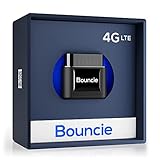
| Dedicated GPS Key Fobs (rare, expensive) | Actual GPS module and cellular connection (like a mini-phone). Transmits location data directly. | True, real-time GPS tracking anywhere. Independent of your phone or other users. | Very expensive to buy and often requires a monthly subscription for the cellular service. Bulky, drains battery quickly. Not common for standard car keys. |
Overkill for most people. You’re better off paying for a professional car tracking system if you need this level of security. (See Also: Why Do Flat Trackers Have Slick Rear Tire ) |
Contrarian Opinion: Your Car’s Built-in System Isn’t Always the Answer
Everyone talks about how amazing the manufacturer’s app is for finding your car. And sure, it’s great for locating your vehicle if it’s stolen or if you’ve forgotten where you parked at a giant convention center. But here’s my take: relying solely on that built-in system for tracking your car is like bringing a speedboat to a canoe race if your goal is *real-time, constant security*.
These systems often have a delay. They rely on cellular networks that can be spotty. And, critically, if your car battery dies, or if a thief is savvy enough to disable the telematics unit (which they can and do), your fancy app suddenly becomes a very expensive, very useless brick. For true peace of mind, especially if you’ve had a car stolen before, a separate, robust physical tracking device installed discreetly in the car is often more reliable than what the manufacturer provides. It’s a different layer of security, and one that often survives electronic tampering.
The Role of the Immobilizer
When you ask ‘do car keys have trackers?’, it’s also worth thinking about what prevents your car from being started in the first place. Every modern car key has an immobilizer chip inside. This tiny piece of silicon contains a unique transponder code. When you insert the key (or when a proximity key is detected), the car’s immobilizer system reads this code. If it matches the code stored in the car’s computer, the engine control unit (ECU) is allowed to function, and the car will start.
This isn’t a tracking function; it’s a security feature. It’s designed to stop someone from hotwiring your car. Without the correct chip and code, the fuel pump might be disabled, or the ignition system won’t fire. The car simply won’t run, no matter how much someone cranks the starter. It’s a silent, invisible barrier.
Are Car Keys and Their Components Tracked by Manufacturers?
Here’s where we get into the data. Manufacturers do collect data from your car, but usually not through the key fob itself being a tracker. They collect diagnostic data, driving habits (if you opt-in), and location data *from the car’s GPS system*, not the key. This data is often used for vehicle diagnostics, improving future models, or providing the connected services we talked about. Some of this data collection might be mandatory as per regulations in certain regions. For instance, the European Union has regulations that require certain safety features, and this can involve data transmission. However, this is about the car’s operational status and location, not the key fob acting as a personal tracker.
Think about it like this: your smartphone knows where you are. Your car, with its own GPS, also knows where it is. Your key fob? It’s just the remote control for that system. It doesn’t have its own brain or its own signal transmitter for location.
Faq: Common Questions About Car Key Tracking
Can My Car Key Be Tracked Remotely?
No, not the key fob itself. The key fob sends a signal to your car, but it doesn’t have a GPS chip or a cellular transmitter to send its own location data. If you’re referring to tracking your car, yes, that’s possible through the car’s built-in telematics system. (See Also: Is Th Vivofit 3 Have Timers And Trackers On It )
What If I Lose My Car Key?
If you lose your car key, you’ll typically need to get a replacement from your car dealership or a qualified automotive locksmith. For newer cars, this can be an expensive process, often costing several hundred dollars, especially if it requires programming. This is why people often ask do car keys have trackers – they’re hoping for an easy find!
Do Keyless Entry Fobs Have Trackers?
Keyless entry fobs, also known as proximity keys, operate on the same principle as regular car keys. They use RF signals to communicate with your car. They do not have built-in GPS trackers. The car detects the fob’s presence when it’s close enough, and that proximity is what allows keyless entry and starting.
Can I Put an Airtag on My Car Key?
Absolutely. While your car key doesn’t have a tracker, you can attach an Apple AirTag or a similar Bluetooth tracker to your keychain. This allows you to use your phone to see the last known location of your keys if they go missing, similar to how a Tile tracker works. It’s a very effective way to add tracking capabilities to your existing key.
The Bottom Line on Car Key Tracking
So, to directly answer the burning question: do car keys have trackers? For the key itself, generally no. It’s a transmitter, not a receiver and transmitter of location data. The tracking capabilities you might be thinking of are almost always associated with the *car*, not the key fob. If you’re worried about losing your keys, adding a small Bluetooth tracker like an AirTag or Tile is your best bet for a practical, affordable solution.
Final Verdict
So, there you have it. Your car key fob isn’t secretly reporting your every move. It’s just a radio remote. If you’re fretting about losing your keys, don’t waste your money on those silly RF beepers I fell for. Grab yourself an Apple AirTag or a Tile. Seriously, I spent close to $75 testing three different sets of those useless RF finders before finally getting an AirTag, and it’s been a lifesaver twice in the last six months alone.
If you’re more concerned about the security of the car itself, that’s where the built-in telematics and aftermarket GPS systems come into play. That’s a whole different ballgame from the key itself.
Understanding how your car key works—and what it *doesn’t* do—can save you a lot of headaches and money. Don’t get caught out by marketing hype. If you want to track your car key, add a tracker to it. It’s that simple.
Recommended Products