I remember the first time I replaced my own struts. It was on my old Civic, a car that had seen better days and probably some questionable DIY fixes. I’d watched enough YouTube videos to feel like a seasoned pro, slapping on new KYBs like I was born with a wrench in my hand. Everything seemed tight, solid. But a few weeks later, every bump felt…off. A clunking noise started, a vague feeling of looseness that made me second-guess every single bolt I’d tightened. So, do I need to torque strut bolts? It’s a question that gnaws at you when you’re faced with that torque wrench sitting there, looking all official and demanding.
Honestly, for a long time, I just cranked them down. ‘Tight is tight,’ I figured. But that clunking taught me a hard lesson about torque specs. They aren’t just suggestions from some engineer who’s never gotten greasy. They’re about making sure your car doesn’t decide to spontaneously self-disassemble at 70 mph.
Why Nobody Tells You the Real Story About Torque Specs
Let’s cut to the chase: do I need to torque strut bolts? Yes.
And here’s why the casual DIYer, myself included for way too long, often skips this step. It’s not always laziness; sometimes it’s a lack of clear information or just sheer intimidation. When you’re wrestling with a stubborn bolt on a spring compressor, the last thing you want to do is pull out a fussy torque wrench, find the exact spec (which, by the way, can be surprisingly hard to nail down for certain vehicles), and then precisely set it. It feels like an extra layer of complication when you’re already deep into a job that’s physically demanding and potentially dangerous if you mess up the spring compression.
I’ve spent hours covered in dirt and sweat, only to have the torque wrench feel like the final boss I wasn’t ready for.
The reality is, torque specifications aren’t arbitrary. They dictate how much clamping force you’re applying to a fastener. Too little, and the bolt can vibrate loose, leading to all sorts of nasty noises and potential failure, just like I experienced. Too much, and you risk stripping the threads, snapping the bolt head off, or, in the case of suspension components, even deforming the metal parts you’re attaching.
This is especially true for the strut mount bolts that pass through the body or the top of the strut assembly. They’re holding important suspension geometry together. My first strut replacement on that old Civic ended up costing me more in diagnostic time and a follow-up professional tightening than if I’d just done it right the first time.
I ended up with a persistent rattle that no amount of re-tightening by hand could fix, until a shop finally put a torque wrench on them and sorted it out.
What Exactly Are Strut Bolts Doing There Anyway?
Before we dive deeper into the nitty-gritty of torque, it’s worth understanding the role of those strut bolts. Struts are a fundamental part of your car’s suspension system. They combine the shock absorber function with a structural role, often supporting the vehicle’s weight and maintaining the alignment of the wheels. The bolts you’re concerned with typically attach the top of the strut assembly to the vehicle’s chassis, usually through a strut tower under the hood or in the trunk.
These bolts are literally holding your car’s corners to its body. The torque applied to these bolts is designed to make sure a secure, vibration-resistant connection that can withstand the immense forces encountered during driving – acceleration, braking, cornering, and, of course, all the bumps and potholes that make driving less than pleasant.
The number of bolts can vary, but it’s common to see three or four at the top mount. Each one needs to be tightened to a specific tension. Think of it like bolting on a bicycle wheel. (See Also: Do You Need Torque Caliper Bolts )
You don’t just twist it until it feels snug; you tighten the lug nuts in a star pattern to make sure even pressure and a secure fit. Strut bolts are similar, but the stakes are significantly higher. They also need to maintain their tightness over time, enduring constant cycles of compression and extension, shock loads, and temperature changes.
If they loosen, you get noise, misalignment, and potentially a catastrophic failure of the suspension. I’ve seen cars with visibly loose strut mounts; it’s not a pretty sight and definitely not something you want happening while you’re on the highway.
When ‘good Enough’ Isn’t Good Enough: The Torque Wrench Dilemma
This is where the contrarian view often creeps in. Some folks will tell you, ‘Just get it really tight.’ And for some very basic, non-important fasteners on a car, that might be ‘good enough’ in a pinch. But for suspension components, especially strut bolts, ‘good enough’ is a gamble with your safety and your car’s integrity. The common advice that’s often wrong is that you can just feel when a bolt is tight enough. My hands are strong, and I’ve worked on cars for years, but ‘feeling’ is subjective and varies with tool condition, bolt lubrication, and even your own fatigue. What feels ‘super tight’ to me might be significantly under the manufacturer’s specification, or worse, over it.
I learned this the hard way. After my first strut job, I went back and tried to tighten the bolts further by hand. They didn’t budge much. I figured I’d done a good job.
Weeks later, the clunking started. It wasn’t a loud, catastrophic failure, but a constant, irritating reminder that something was wrong. It was the sound of those bolts subtly working themselves loose. A proper torque wrench takes the guesswork out.
It’s a tool that measures the rotational force applied. For strut bolts, getting the torque right is about achieving the correct clamping force without damaging the threads or the surrounding metal. It makes sure that the strut assembly is firmly seated, able to do its job of dampening vibrations and supporting your vehicle without shifting or coming loose.
It’s not about brute strength; it’s about precision engineering. The difference in feel and sound after correctly torquing the bolts is night and day.
The Real Lowdown: How to Torque Strut Bolts Like a Pro (or at Least, Not a Klutz)
Okay, so you’re convinced you need to torque them. Great.
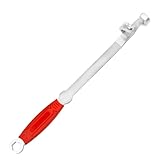
Now, how do you actually do it? First, you need the right tool: a calibrated torque wrench. Don’t use that rusty old one you found in your dad’s garage that hasn’t been touched in twenty years.
Get a decent click-type or digital torque wrench. Then, you need the specifications. (See Also: Do I Need Special Replacement Bolts For Car Engines )
This is often the trickiest part for DIYers. Your car’s service manual is the gold standard.
If you don’t have it, online forums dedicated to your specific make and model can be a treasure trove, but verify information from multiple sources if possible. Sometimes, the torque specs are printed on the component itself or within the accompanying documentation for new parts. If all else fails, and you’re really stuck, you can sometimes find general guidelines for similar fasteners, but always prioritize OEM specs.
Here’s a common process, though it can vary slightly by vehicle:
- Identify the bolts: These are usually at the very top of the strut assembly, often accessible from under the hood or in the trunk.
- Clean the threads: Make sure the bolt threads and the receiving threads are clean. A little bit of anti-seize lubricant can be recommended by some manufacturers for certain bolts, while others specify dry threads. Always check your manual.
- Install bolts finger-tight: Get all the bolts started by hand to avoid cross-threading.
- Snug them up: Use your wrench (not the torque wrench yet) to gently snug them down.
- Torque in stages (if specified): Some applications require torquing in multiple stages, increasing the torque value incrementally. For strut bolts, it’s often a single final torque value.
- Set your torque wrench: Dial in the specified torque value.
- Torque the bolts: Apply smooth, steady pressure until the torque wrench clicks (or beeps/reads the target value on a digital one). If you’re torquing multiple bolts, follow the manufacturer’s recommended pattern (often a star pattern, similar to lug nuts, to make sure even clamping).
Don’t yank on the wrench. A steady pull is what’s needed. Over-torquing can be just as bad as under-torquing. I once accidentally over-torqued a different suspension bolt, and it stripped the threads in the control arm. Replacing that cost me a pretty penny and a lot of embarrassment. Precision is key here.
Common Mistakes and What to Watch Out For
The biggest mistake, as I’ve confessed, is not using a torque wrench at all. But there are other pitfalls.
One is using the wrong torque spec. I’ve seen people grab a general automotive fastener torque chart and apply it to suspension components, which is a risky move. Suspension parts are engineered to very specific tolerances.
Another common error is how the torque wrench is used. Jerking the wrench can lead to an inaccurate reading. You want a smooth, continuous pull.
If your torque wrench is old or hasn’t been calibrated, its readings can be way off. I sent mine for calibration after a questionable job, and it was off by nearly 15 ft-lbs. That’s a huge difference on a important fastener.
Forgetting to re-torque after a certain mileage is another oversight. While strut bolts are designed to stay put, temperature fluctuations, road vibrations, and the sheer stress of daily driving can cause them to settle. Many manufacturers recommend re-torquing important suspension fasteners after a short period, say 50 to 100 miles, especially after a new component installation. This is another step I skipped on that initial Civic job, and I’m pretty sure it contributed to the loosening.
Lastly, improper thread preparation is a big one. If the threads are dirty, damaged, or if you use the wrong lubricant (or too much), your torque reading will be inaccurate. Some bolts are designed to be torqued dry, others with a specific thread locker or anti-seize. (See Also: Can You Use A Torque Wrench To Break Bolts Loose )
Always, always check your service manual or the part manufacturer’s recommendations. It’s these little details that separate a job done ‘okay’ from a job done right.
Strut Bolt Torque Specs: A Quick Comparison (opinions Included)
Finding exact torque specs for every car is impossible in a general article, but here’s a table showing typical ranges for common strut mounting bolts and my own take on them. Remember, these are general estimates. Your specific vehicle may vary significantly. Always consult your service manual!
| Location | Fastener Type | Typical Torque Range (ft-lbs) | My Verdict/Notes |
|---|---|---|---|
| Upper Strut Mount (Chassis Side) | Nuts/Bolts (e.g., M8-M12) | 30-60 ft-lbs | This is the most important area. Go by the book here. Under-torquing leads to noise and looseness; over-torquing can strip threads or deform the mount. I’ve seen many DIYers guess, and it often comes back to bite them with rattles or worse. Stick to the spec. |
| Lower Strut Bolt (to Knuckle) | Large Bolt (e.g., M14-M16) | 70-120 ft-lbs | This is a substantial bolt handling serious load. Missing the spec here can lead to wheel alignment issues and dangerous handling. Make sure the threads are clean. Some require threadlocker. |
| Sway Bar Link to Strut | Small Nut/Bolt (e.g., M10) | 20-40 ft-lbs | Less important for structural integrity but important for sway bar function. Easy to over-tighten and snap the stud if it’s a stud-type link. |
Looking at these numbers, you can see why ‘tight’ is so vague. A 30 ft-lb difference on the upper mount bolts is massive. It’s the difference between a secure mount and one that’s begging to loosen. When I first started, I’d probably have just cranked until my arm got tired. Now, seeing these ranges, I understand the precision required. It’s not about how much muscle you have; it’s about applying the right measured force. The lower strut bolt, especially, requires a significant amount of torque because it’s a primary connection point for the wheel hub assembly to the suspension. Getting that wrong is just asking for trouble.
Faq: Answering Your Burning Questions
Do I Need a Torque Wrench for Strut Bolts?
Absolutely, yes. While some may get away with ‘feeling’ it, it’s a risky gamble for important suspension components. A torque wrench makes sure the bolts are tightened to the manufacturer’s specification, preventing looseness, damage to threads, and making sure the suspension functions correctly and safely. Guessing the torque is one of the most common mistakes DIYers make, leading to rattles, premature wear, or even component failure.
What Happens If Strut Bolts Are Too Loose?
If strut bolts are too loose, you’ll likely experience a range of issues, starting with clunking or rattling noises from the suspension, especially over bumps or when turning. This looseness can also lead to misalignment of your wheels, causing uneven tire wear and affecting steering. In severe cases, significantly loose bolts could allow the strut assembly to shift or even detach, which is a major safety hazard leading to loss of control.
What Happens If Strut Bolts Are Too Tight?
Over-tightening strut bolts can strip the threads on the bolt or in the receiving component (like the strut tower or knuckle), making it impossible to properly secure the part later. It can also deform or crack the strut mount or the surrounding metal, compromising the integrity of the entire assembly. In some cases, excessive torque can even snap the bolt head off entirely, leaving you with a broken bolt that’s difficult to remove and requires extensive repair. It puts undue stress on the components.
Can I Just Tighten Strut Bolts with a Regular Wrench?
You can use a regular wrench to initially snug up the bolts or to remove them, but for the final tightening, a torque wrench is key. A regular wrench relies on feel and strength, which are highly subjective and inconsistent. Torque specifications are precise engineering requirements to make sure the fastener provides the correct clamping force without damaging the parts. Relying on a regular wrench for final tightening is basically guessing, and with suspension components, guessing can be dangerous.
Do I Need to Torque Strut Bolts After They’ve Been Replaced?
Yes, it’s highly recommended to torque strut bolts after they have been replaced or adjusted. This makes sure they are secured to the correct tension required by the vehicle manufacturer. Many manufacturers also recommend a re-torque procedure after a certain mileage (e.g., 50-100 miles) following installation. This allows the new components to settle in and makes sure the bolts maintain their proper tightness under normal driving conditions. Skipping this step can lead to loosening over time.
Conclusion
So, to circle back to the big question: do I need to torque strut bolts? The answer, from my years of wrenching and learning the hard way, is a resounding yes. Skipping this step is like playing Russian roulette with your suspension. I’ve wasted time and money on the consequences of not doing it right the first time, and I’m not eager to repeat that mistake. Investing in a decent torque wrench and taking the time to find and apply the correct specifications is one of the most important steps you can take for a safe and reliable suspension job.
It’s not about being a show-off mechanic; it’s about understanding that these aren’t just any bolts. They are holding important parts of your car together, dealing with forces you can’t even imagine when you’re just cruising down the road. The slight extra effort involved in torquing properly pays dividends in peace of mind and the longevity of your repair. Don’t let ‘good enough’ be your mantra when it comes to your car’s safety.
Next time you’re tackling struts, or any important fastener for that matter, grab that torque wrench. It’s your best friend in the garage. What’s the most annoying car repair you’ve done that was made worse by a small overlooked step?