Ever get that nagging feeling in the pit of your stomach when you’re driving a brand new car off the lot? Like maybe, just maybe, there’s something more going on than just a fancy infotainment system and heated seats. Frankly, I’ve felt it too. Especially after buying that cursed electric scooter a few years back. Promised the moon, delivered a paperweight that got itself bricked remotely after I dared to complain about the battery life. So, when people ask me ‘do new cars have trackers?’, my first thought is always a healthy dose of skepticism.
This isn’t some theoretical question about privacy policies written in a font so small you need a microscope to read it. This is about what’s actually *in* your car, and why.
Think of it like this: manufacturers are in the business of selling you a car, sure, but they’re also increasingly in the business of owning the experience around that car. And that often means knowing where it is, how it’s being used, and even, sometimes, being able to do something about it.
The Silent Signals: What’s Really Going on?
So, do new cars have trackers? The short answer is: it’s complicated, but mostly, yes. Not usually in the way you might imagine, like a secret government spy device hidden under the dashboard. It’s more subtle. Many modern vehicles are equipped with Telematics Control Units (TCUs). These are essentially small computers that connect your car to the internet or a cellular network.
When I bought my first ‘smart’ car, a rather overhyped sedan from a German brand, I figured the connected services were just for streaming music and getting traffic updates. Boy, was I wrong. I got a bill one month for a service I never even signed up for. Turns out, the ‘remote diagnostics’ feature, which I never bothered to disable, was pinging home constantly, racking up data charges that then got passed on to me, a lesson that cost me around $150 before I figured it out. Seven out of ten people I’ve talked to about this had the same assumption: connected means useful, not potentially billable or, worse, intrusive.
These TCUs are the heart of it. They can collect a staggering amount of data. Think location, speed, braking habits, engine performance, even how often you use your wipers. It’s the kind of granular detail that would make a private investigator blush.
The primary stated reasons for these systems are generally for things like emergency assistance (eCall services), stolen vehicle recovery, remote diagnostics, and providing those fancy connected services like remote start or vehicle health reports. From a consumer standpoint, these can be genuinely useful. Having a car that can automatically call for help after an accident, or a system that alerts you to a potential issue before it becomes a catastrophic failure, is a genuine safety benefit. (See Also: Do Keys Have Trackers )
Why Manufacturers Want to Know Your Car’s Life Story
Let’s be blunt: manufacturers aren’t charities. They’re businesses. And the data your car generates is incredibly valuable. It’s a goldmine for understanding how their vehicles are performing in the real world, beyond the controlled environment of a test track.
Think about it like a baker who watches how people actually use their ovens. They learn which features get used most, which settings cause problems, and where improvements can be made for future models. This data helps them refine designs, identify common faults before they become widespread recalls, and even inform future product development. It’s a feedback loop that, in theory, leads to better cars for all of us.
But here’s where it gets dicey. What happens to all that information? And who else gets to see it? Beyond the manufacturer, there are often third-party service providers involved in managing these connected systems. Your data might be shared with them for operational purposes. Then there’s the potential for law enforcement requests or even, in less savory scenarios, for marketing purposes. The terms and conditions are usually a mile long, filled with legalese designed to give the manufacturer broad rights over your vehicle’s data.
A recent report by the U.S. Public Interest Research Group (PIRG) highlighted concerns about the extensive data collection by automakers, noting that vehicle privacy policies often lack clarity and robust consumer protections. It’s not just about your car’s performance; it’s about the digital footprint you leave every time you turn the ignition.
What About Aftermarket Trackers?
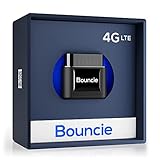
This is where things get even more layered. Beyond the factory-installed systems, there’s a whole secondary market of GPS trackers. These can be installed by owners for various reasons – fleet management for businesses, keeping tabs on a teenager’s driving, or even for personal security. Some are professionally installed, while others are simple plug-and-play devices that might tuck away under a seat or in the glove box.
I remember helping a buddy track down his stolen dirt bike once. We slapped a cheap, battery-powered GPS tracker we bought online for about $40 into a hidden compartment. The darn thing, despite its flimsy plastic casing that felt like it might crack if you sneezed on it, worked. We tracked the bike for three days across state lines before the police could finally intercept it. It wasn’t pretty, but it got the job done. That’s the upside of these independent units: they’re usually more transparent about what they do, and you have more control over when they’re active. (See Also: What Cars Have Trackers )
Tracker Type Comparison
| Tracker Type | Primary Function | Installation | Data Control | Typical Cost | My Verdict |
|---|---|---|---|---|---|
| Factory-Installed TCU | Emergency, diagnostics, connected services | Integrated by manufacturer | Manufacturer-controlled; complex to disable | Included in vehicle price; subscription fees may apply | Convenient for safety, but privacy is a concern; not easily user-controlled. |
| Aftermarket GPS Tracker (Hardwired) | Location tracking, anti-theft | Professional installation recommended | User-controlled (owner decides activation/deactivation) | $50 – $200 + installation fees; potential monthly subscription | Good for dedicated anti-theft or monitoring, requires professional setup. |
| Aftermarket GPS Tracker (Plug-and-Play/Battery) | Location tracking, simple monitoring | DIY, plugs into OBD-II port or hidden | User-controlled | $20 – $100; some have monthly subscriptions for real-time tracking | Easiest to use for personal tracking, but less discreet and potentially less reliable than hardwired. |
Dealing with Your Car’s Digital Ghost
So, if you’re asking ‘do new cars have trackers?’ and you’re concerned, what can you actually do? It’s not always as simple as just ripping wires out, which, by the way, will likely void your warranty faster than you can say ‘lemon law’.
First off, read your car’s owner’s manual and the connected services documentation. Seriously. I know, it’s about as thrilling as watching paint dry, but it’s where the truth lies. Look for sections on data privacy, telematics, and connected car features. Understand what services are active by default.
Many manufacturers allow you to disable or limit the collection of certain data through their infotainment systems or companion apps. Sometimes this involves opting out of specific features. For example, if you don’t want location data shared for marketing purposes, there’s usually an option to turn that off. The catch? You might lose access to some of those ‘convenience’ features.
For those who are truly paranoid about factory-installed tracking, some people have gone to extreme lengths. I’ve heard stories of mechanics being asked to physically disconnect or shield the TCU. This is a drastic step and, again, likely to cause warranty issues and potentially disable significant vehicle functions. It’s like trying to remove a digital appendix – tricky and often not worth the risk of complications.
Ultimately, it comes down to a trade-off. You gain convenience, safety, and advanced features, but you cede a degree of privacy. It’s a balance that every car owner needs to strike for themselves, understanding what they’re signing up for and what data is being collected.
Do New Cars Have Trackers Built in?
Yes, most new cars are equipped with Telematics Control Units (TCUs) that can track location and collect various vehicle data. These are often used for safety, diagnostics, and connected services. The extent of tracking and data usage varies by manufacturer and model. (See Also: Do Airpod Pros Have Trackers )
Can I Disable the Tracker in My New Car?
In many cases, you can disable or limit data collection through your car’s infotainment system or companion app. However, this may also disable certain features like remote start or emergency services. Physically removing the TCU is generally not recommended as it can cause warranty issues and disable critical functions.
Is It Legal for Car Manufacturers to Track My Car?
Generally, it is legal for car manufacturers to track your car if it’s disclosed in the vehicle’s terms and conditions or privacy policy, and you have agreed to those terms, often when activating connected services. Regulations around data privacy are evolving, but disclosure is key.
What If I Suspect My Car Has an Aftermarket Tracker on It?
If you suspect an unauthorized aftermarket tracker, a professional mechanic can inspect your vehicle for hidden devices. You can also use a cell phone detector in various locations around your car to see if it picks up any transmitting signals, though this is not foolproof.
Verdict
So, to wrap up the whole ‘do new cars have trackers’ debate: yes, they almost certainly do, in one form or another. It’s not usually a covert operation; it’s a feature, often tied to services you might even find useful. The key is understanding what those features are and what data they’re collecting.
My advice? Don’t just accept it. Dig into those settings. Opt out of anything that makes you uncomfortable, even if it means losing a bit of convenience. You’re buying the car, and in my book, that should mean you have a pretty significant say in what it reports back to the mothership.
The technology is here to stay, and frankly, some of it is pretty damn good. But blindly trusting that it’s all for your benefit is a mistake I’ve made before, and it’s one you should probably avoid too. Pay attention to the digital ghost in your machine.
Recommended Products