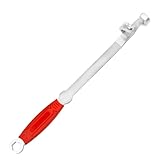
I remember the first time I really messed up a bolt. It was a simple A307, connecting a bracket on an old tractor. I just cranked on it until it felt tight, figured that was good enough. Later that week, the whole assembly vibrated loose and took a chunk of metal with it. Cost me more in downtime and busted parts than a torque wrench would have set me back. So, does a307 bolt required to be torqued? Hell yes, if you don’t want your stuff falling apart.
It’s not just about ‘tight.’ It’s about how tight. Too loose, and things wiggle free. Too tight, and you stretch the bolt, weaken it, or even strip the threads. For a common workhorse like the A307, understanding this middle ground is key, and most people just guess.
When ‘tight Enough’ Isn’t
Look, nobody wants to spend hours meticulously torquing every single bolt on a project unless you’re building a rocket ship or a high-performance engine. For a lot of everyday stuff, people just grab a wrench and go until it feels solid. I’ve been there. My first few projects, especially anything involving wood or basic metal fabrication for a shed, I never even thought about torque specs. Just… snug. Maybe a quarter turn more for good measure. It’s a habit that’s hard to break because, for a while, it seems to work.
But here’s the rub: A307 bolts are defined by their material properties and their intended use, and often that use involves vibrations, stress, and dynamic loads. They’re generally made of low-carbon steel, meaning they’re not designed for extreme tensile strength or elasticity like some higher-grade bolts. They’re meant for general construction and structural applications where they hold things together reliably under normal conditions. The problem is, ‘normal conditions’ can be surprisingly rough on fasteners that aren’t properly seated.
When you don’t torque a bolt, you’re basically leaving its clamping force to chance. Clamping force is what holds bolted joints together. It’s the tension in the bolt that squeezes the parts it’s connecting. Without the right amount of this squeeze, vibrations can gradually loosen the bolt over time. Think of it like a loose tooth – it wiggles more and more until it falls out. In a mechanical context, that wiggle can lead to fatigue failure of the bolt or the surrounding material, or simply the parts separating.
The common advice I used to follow was ‘tighten it until it resists, then give it another 1/8 to 1/4 turn.’ That’s a recipe for inconsistency. How much does it ‘resist’ on any given day? How much is 1/8th of a turn on a greasy bolt versus a clean one? It’s too subjective. This is where the question of whether an A307 bolt requires torquing really comes into play. For anything carrying significant load, experiencing vibration, or safety-important, relying on ‘feel’ is a gamble I learned not to take anymore. It’s not about being overly cautious; it’s about understanding the engineering behind why things stay together.
The ‘why’ Behind the Torque Wrench for A307
So, why is this whole torque business so important, especially for a bolt that seems pretty basic like an A307? It boils down to preload, which is the clamping force applied to the joint by tightening the bolt. When you tighten a bolt, you’re stretching it ever so slightly. This stretch creates tension, and that tension is what squeezes the parts together. This squeeze, or preload, is what prevents the joint from loosening under vibration or shear stress.
For an A307 bolt, which is typically used in structural applications like framing, guardrails, or general industrial assemblies, consistent preload is key. If the preload is too low (under-torqued), the joint might not have enough clamping force to resist vibration. This is a classic scenario for fatigue failure. The bolt can start to oscillate, the threads can wear down, and eventually, it can fail completely. I saw this happen on a DIY trailer hitch assembly once. I used A307s, didn’t torque them, and after a few bumpy trips, the whole thing started to sag. Luckily, it didn’t detach, but it was a terrifying wake-up call.
On the flip side, over-torquing can be just as bad, if not worse. A307 bolts are not high-strength fasteners. They have a minimum tensile strength, sure, but they aren’t designed to be stretched to their elastic limit. If you crank on an A307 too hard, you can exceed its yield strength.
This means the bolt permanently deforms. It might still feel tight, but it’s lost its ability to provide consistent clamping force. In some cases, you can even strip the threads, either on the bolt itself or in the mating part, rendering the connection useless. I once tried to tighten a bolt on a piece of farm equipment that was clearly seized.
I kept going, and with a sickening crack, the head just snapped off. Talk about a bad day. (See Also: Do You Need Torque Caliper Bolts )
The sweet spot for torque makes sure that you achieve the designed preload without damaging the bolt or the joint. This is where a torque wrench becomes indispensable. It takes the guesswork out of tightening. Instead of relying on feel, you’re applying a specific, measured amount of rotational force. For A307 bolts, while specific torque values can vary based on the application, thread size, and lubrication, the principle remains the same: achieve consistent and adequate preload.
Common Torque Values for A307 Bolts (general Guidance)
| Bolt Diameter | Torque (ft-lbs) – Dry | Torque (ft-lbs) – Lubricated | Opinion |
|---|---|---|---|
| 1/4 inch | 6.0 | 4.5 | Low load, but needs to be snug. Over-torquing easily strips threads. |
| 5/16 inch | 12.0 | 9.0 | Starts to matter more. Vibration is a real concern here. |
| 3/8 inch | 22.0 | 16.5 | Getting into serious structural territory. Torque is important for holding power. |
| 7/16 inch | 35.0 | 26.0 | Definitely needs proper torque. Don’t guess. |
| 1/2 inch | 50.0 | 37.5 | Standard structural size. Consistent preload is a must for safety. |
| 5/8 inch | 100.0 | 75.0 | Heavy-duty applications. Torque prevents loosening under load. |
| 3/4 inch | 170.0 | 128.0 | Serious structural work. Over-torquing risks bolt failure or thread damage. |
*Note: These values are approximate and based on general engineering guidelines for A307 bolts. Always consult specific engineering drawings, manufacturer recommendations, or relevant standards (like those from the American Society of Mechanical Engineers – ASME) for precise torque specifications for your application. Lubrication significantly reduces friction, meaning less torque is needed to achieve the same clamping force.
When ‘good Enough’ Is Actually Dangerous
Here’s the contrarian take: Everyone acts like torque is some mystical science reserved for aerospace engineers. I say that’s a load of BS for most everyday applications. For a simple shelf bracket into a stud or a basic fence post, I’m still going to use my wrench and my judgment. My dad, who built houses for 40 years, never owned a torque wrench for anything other than car tires. He always said, ‘If it feels loose, tighten it. If it’s stuck, it’s tight enough.’ And you know what? Most of his work is still standing. That’s my honest opinion about A307 bolts in very low-stress situations.
But – and this is a huge BUT – that’s where it ends. The moment you step up from basic, low-vibration, non-safety-important jobs, ‘feel’ becomes a liability. The reason why this question, ‘does a307 bolt required to be torqued,’ even comes up is because there are many applications where it absolutely is. Think about anything supporting weight that could fall and hurt someone, anything attached to a vehicle that moves, or anything subject to constant jarring or high winds. That’s where your dad’s ‘feel’ method goes out the window.
I learned this the hard way when I was building a rather ambitious set of outdoor furniture. I used A307 bolts for the main structural supports of a large picnic table. I tightened them all with my trusty wrench, feeling pretty good about how solid it all seemed. A couple of months later, after a few lively family gatherings and the inevitable kids climbing on it, one of the legs started to feel wobbly. I checked the bolts, and sure enough, they were noticeably looser than when I first put them on. It wasn’t catastrophic, but it was a clear sign that my ‘tight enough’ approach wasn’t cutting it under dynamic stress.
The problem is, even a small degree of under-tightening can initiate movement. Once a joint starts to move, even microscopically, it creates a chain reaction. The friction between the mating surfaces is reduced, making it easier for the bolt to vibrate and back itself out. Furthermore, the stress distribution in the bolt changes, leading to increased fatigue on specific points. It’s a slow, insidious failure mode that can go unnoticed until it’s too late. So, while I’m not going to throw away my regular wrench for every single bolt I ever touch, I have a much greater respect for torque specifications, especially for A307 bolts in anything that moves or carries significant load.
A307 Bolts in Real-World Applications: Beyond the Shop Floor
When you look at where A307 bolts are actually used, you start to understand why torque matters. They are the backbone of countless structural assemblies in construction: connecting beams in low-rise buildings, securing guardrails on bridges and walkways, fastening components in pre-fabricated structures, and even holding together playground equipment. In these scenarios, failure isn’t just an inconvenience; it can be a serious safety hazard. The loads they’re subjected to can be constant, intermittent, or dynamic, and any loosening can compromise the integrity of the entire structure.
Consider the simple act of building a deck. The joist hangers, the ledger board attachment to the house, the railings – all these components often rely on bolts, and many of them might be A307 grade for general fastening. If those bolts aren’t torqued correctly, the deck can develop flex, squeaks, and eventually, a dangerous instability. The vibration from people walking on it, the settling of the ground, and the forces of wind all contribute to loosening. This is why building codes often specify minimum fastener requirements and, implicitly or explicitly, the need for proper installation, which includes correct tightening.
I’ve seen this play out firsthand in some commercial landscaping projects I’ve helped with. We were installing large planter boxes and benches that were bolted to concrete pads. The bolts themselves were solid, but the connection points required careful attention. If the bolts holding the frames together weren’t properly torqued, the constant exposure to weather, temperature fluctuations, and the weight of soil and plants would cause everything to shift and warp over time. It looked shoddy, but more importantly, it was a potential failure point.
The key takeaway here is that A307 bolts are not just generic fasteners; they are specified for a reason. Their material properties are a balance of strength, ductility, and cost that makes them suitable for a vast range of applications where high tensile strength isn’t the primary requirement, but reliable clamping and structural integrity are. And achieving that reliable clamping force is directly tied to applying the correct torque. It’s about making sure that the bolt does its job of holding everything tightly together, resisting the forces that would otherwise try to pull it apart, and doing so consistently over its intended lifespan. (See Also: Do I Need Special Replacement Bolts For Car Engines )
Mistakes People Make (and How to Avoid Them)
The biggest mistake I see people make, and one I’ve certainly made myself, is assuming that all bolts are created equal and that ‘tight’ is always the goal. With A307 bolts, this is a dangerous assumption. Here are a few common blunders and how you can steer clear:
1. The ‘Lefty-Loosey, Righty-Tighty’ Guesswork: This is the most obvious one. Relying purely on feel. You tighten until it feels right. This is subjective and varies wildly. What feels tight on a cold morning might be different on a hot afternoon. What feels tight with a greasy hand is different from a dry one. To avoid this: Use a torque wrench. It’s the single best tool to make sure consistent tightness. For A307 bolts, even a basic click-type torque wrench is a massive upgrade over guesswork.
2. Ignoring Thread Condition: Dirty, rusty, or damaged threads create inconsistent friction. This means you can apply a certain torque value, but the actual clamping force achieved can be significantly lower (or higher!) than intended. A bolt that’s hard to thread into a nut or tapped hole is a red flag. To avoid this: Clean threads with a wire brush. Chase or re-tap threads if they are damaged. Lightly lubricate threads (where appropriate for the torque spec) to make sure smooth tightening and accurate torque application.
3. Forgetting About Lubrication: This one is tricky. Many torque specifications are given for dry threads. If you lubricate the threads (which is often recommended to prevent seizing and make tightening easier), you drastically reduce friction.
This means you need to apply less torque to achieve the same clamping force. Conversely, if the spec is for lubricated threads and you install them dry, you’ll get much higher clamping force, potentially stretching or breaking the bolt.
To avoid this: Know whether your torque value is for dry or lubricated threads. If in doubt, err on the side of caution or consult a reliable source. For A307 bolts, a little bit of anti-seize or oil can be beneficial, but you must account for it in the torque value.
4. Using the Wrong Tool for the Job: Trying to tighten a large bolt with a small, flimsy wrench can lead to rounding off the bolt head or nut. Over-tightening with an impact wrench without proper torque control is another common pitfall, especially with softer bolts like A307. To avoid this: Use appropriately sized wrenches and sockets. For important applications, consider using a torque-limiting extension or a torque wrench with an impact adapter, although a standard torque wrench is usually best for precision.
5. Not Re-Torquing (When Necessary): Especially in dynamic applications or with new assemblies, bolts can sometimes settle or stretch slightly after initial installation. Some applications call for a re-torque after a certain period or number of cycles. To avoid this: Check the engineering requirements for your specific application. If there’s any doubt, it’s a good practice to check the tightness after a few hundred miles, a few weeks of use, or after the initial break-in period.
The Practicalities: Getting It Right with A307
So, how do you actually put this into practice without becoming an over-caffeinated engineer? It’s simpler than you think. First off, if you’re working on something where failure could cause injury or significant damage, invest in a decent torque wrench. You don’t need a top-of-the-line digital one for most A307 applications; a good click-type wrench that goes up to at least 150 ft-lbs is usually sufficient. You can find decent ones for around $50-$100. That’s a small price to pay for peace of mind.
Second, find out what the torque spec is. This is often the hardest part for DIYers. If you’re working from a plan, a manual, or an assembly diagram, the torque values should be listed. If you’re improvising or repairing something where you don’t have documentation, you have to make an educated guess based on bolt size and application. The table I included earlier gives general figures, but it’s always best to find a more specific reference if possible. Some manufacturers provide torque charts on their websites, or you can find engineering handbooks with fastener data. For A307 bolts, look for general structural bolting torque charts. Remember, the values can change based on the specific mating materials and any coatings. (See Also: Can You Use A Torque Wrench To Break Bolts Loose )
Third, prepare your fasteners. Cleanliness matters. If the threads are rusty or dirty, your torque readings will be all over the place. A quick clean-up with a wire brush is usually enough. Decide if you’re using lubricant. If the torque spec is for dry threads and you’re going to lube them, you need to reduce the torque value. A common rule of thumb is to reduce it by about 20-30% for standard lubricants like anti-seize or engine oil. This is important. I once torqued a bunch of bolts with oil on them to the dry spec and ended up stretching two bolts so badly they were compromised. Expensive lesson learned.
Finally, the tightening process itself. Don’t just yank on the wrench. Apply steady, smooth pressure. If you’re using a click-type wrench, bring it up to the set torque, and stop as soon as it clicks. Don’t “add a little extra” after the click; that defeats the purpose and can lead to over-tightening. For multiple bolts in a pattern (like on a flange or a wheel), tighten them in stages. Snug them all up first, then go back and apply half the final torque, then apply the full torque in a star or circular pattern. This helps to seat the parts evenly and distribute the clamping force properly.
There’s a subtle art to it, but it’s not rocket science. It’s about being deliberate and understanding that the force you’re applying with the wrench translates to a specific tension in the bolt, which is what does the real work of holding things together. For A307 bolts, getting that tension right means your work will last longer and be safer.
People Also Ask Section
Do A307 Bolts Need to Be Torqued?
Yes, for most structural and load-bearing applications, A307 bolts should be torqued. While ‘tightening to feel’ might suffice for very low-stress situations, torque makes sure consistent clamping force, which is vital for preventing loosening due to vibration and maintaining joint integrity. Without proper torque, bolts can fail prematurely, leading to safety hazards or equipment damage.
What Torque Should I Use for a 1/2 Inch A307 Bolt?
For a dry 1/2 inch A307 bolt, a general torque specification is around 50 ft-lbs. If the threads are lubricated, this value should be reduced, typically to around 37.5 ft-lbs. It’s always best to consult specific engineering drawings or manufacturer guidelines, as environmental factors and specific application needs can alter these values.
Can You Overtighten A307 Bolts?
Absolutely. A307 bolts are made of low-carbon steel and are not designed for high tensile strength or significant stretching. Overtightening can lead to exceeding their yield strength, causing permanent deformation, or even stripping the threads. This compromised bolt will not provide adequate clamping force and can fail unexpectedly.
What Is the Difference Between A307 and A325 Bolts?
The primary difference lies in their material strength and intended use. A307 bolts are general-purpose, lower-strength bolts suitable for many structural applications where high tensile stress isn’t the main concern. A325 bolts, on the other hand, are high-strength bolts designed for structural connections in bridges and buildings, capable of handling much greater loads and stresses before yielding or failing.
Final Verdict
So, to cut to the chase, does a307 bolt required to be torqued? If you’re building a birdhouse, maybe not. If you’re building anything that moves, carries weight, or could hurt someone if it fails, then yes, absolutely. Torque isn’t some fancy gimmick; it’s the difference between a joint that holds and one that slowly shakes itself apart.
My own screw-ups have taught me that investing a little time and a few bucks in a torque wrench saves a lot of headaches and potential disasters down the line. It’s about understanding the forces at play and making sure your fasteners are doing their job correctly, not just feeling ‘tight.’
Next time you’re assembling something with A307 bolts, take a moment. Find the spec, clean your threads, and use that torque wrench. Your future self, and anyone relying on your work, will thank you for it.