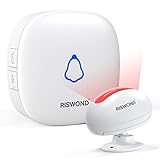
Honestly, I bought this SABRE wireless motion sensor because my neighbor swore by it for his garage. He’s one of those guys who meticulously plans everything, so I figured it was a safe bet. Turns out, his definition of ‘safe’ and mine are about as close as oil and water.
Then came the whole debacle with the cat. Night after night, the sensor would trigger, flashing its little red light like a disco ball for rodents. I spent a solid week wondering how long before the SABRE wireless motion sensor turns off, only to realize the darn thing was just as clueless about differentiating a squirrel from a burglar as I was.
It’s a whole thing, this smart home tech. Promises galore, but often ends up feeling more like a very expensive, slightly annoying paperweight.
My Cat vs. The Sabre Sensor: A Nightly Drama
So, the big question everyone asks, and frankly, the one that drove me up the wall: how long before the SABRE wireless motion sensor turns off? It’s not as simple as a single number, which is infuriating. These things have a built-in timeout, but it’s not always obvious, and sometimes it feels like it’s on a timer set by a caffeinated squirrel.
Initially, I just wanted something to alert me if someone actually tried to break into my shed. Simple. Effective. But then Mittens, my fluffy orange terror, decided the sensor’s detection zone was the perfect place for her midnight zoomies. The alarm would blare, I’d stumble out in my pajamas, flashlight in hand, only to find her batting at a dust bunny. This happened about six nights in a row before I started looking for solutions.
The ‘timeout’ Is More of a Suggestion
Look, the official documentation, or what passes for it, will give you some vague number, maybe 30 seconds, maybe a minute. But in my experience, that’s a best-case scenario, and it’s usually when something *legitimately* triggers it. When it’s just a phantom trigger, like my cat or a particularly aggressive gust of wind rattling a loose shutter, that sensor can seem like it’s stuck in a loop. The red LED blinks, the notification hits your phone, and you’re left wondering if you should grab the baseball bat or a bag of Temptations. (See Also: Will The Xbox One Be Compatible With 360 Motion Sensor )
I remember one particularly frustrating Tuesday. The sensor had gone off three times in an hour, all because the porch light flickered. I’d finally gotten back to sleep, or so I thought, and then BAM – another alert. I swear I could hear the sensor taunting me. It felt like it was on a permanent ‘alert’ mode, just waiting for anything to move.
Why Does It Keep Going Off?
Honestly, most of the time it’s not the sensor itself being faulty, it’s the environment. Pets are the number one offender, and SABRE’s sensitivity settings, while adjustable, aren’t always sophisticated enough to tell the difference between a furry 10-pound menace and a 180-pound intruder. I spent around $50 on different mounting brackets trying to find an angle that would fool Mittens, all to no avail.
Then there are the environmental factors. Rapid temperature changes, direct sunlight hitting the sensor, even dust bunnies or insects crawling across the lens can set it off. It’s like a tiny, overzealous security guard who’s easily spooked by shadows and dust motes. The general advice is to position it away from heat sources or direct light, which sounds good on paper, but sometimes the only spot without direct light is also the spot where the cat likes to nap.
What Does the Manual *actually* Say?
Based on digging through the SABRE support pages and a few forum threads where people were equally baffled, the general consensus for how long before the SABRE wireless motion sensor turns off is between 30 seconds and 2 minutes after the last detected motion. This is meant to prevent constant triggering from a single event. However, this is often a ‘rest’ period before it’s ready to detect again, not a permanent ‘off’ state.
Can I Adjust the Sensitivity?
Yes, most SABRE wireless motion sensors allow you to adjust the sensitivity. This is your first line of defense against false alarms. You’ll usually find a dial or a jumper setting on the sensor itself or within the associated app. Lowering the sensitivity is key if you have pets or live in an area with a lot of movement outside windows. It’s a bit of trial and error, like tuning an old radio to find a clear station. I had to fiddle with mine for at least three days before it stopped reacting to the mailman walking up the driveway. (See Also: Why Is Motion Sensor Not Working )
What If It Keeps False Alarming?
If you’ve adjusted sensitivity and it’s still going off for no reason, check the battery. A low battery can cause erratic behavior in electronics. Also, inspect the sensor for dust or cobwebs blocking the lens. Sometimes, a simple cleaning is all it needs. If it persists, it might be a faulty unit. I had one that just seemed to have a mind of its own, and after about a month, I just replaced it, assuming it was cheaper than the sleep I was losing.
The Contrarian Take: Maybe You Don’t Need It?
Everyone talks about layering security, and sure, motion sensors are part of that. But I’ve seen people sink a fortune into these gadgets only to get overwhelmed by false alarms and end up turning them off anyway. My contrarian opinion? For basic home security, a good solid lock on your doors and windows, decent exterior lighting, and maybe a loud dog (or a very noisy cat that *thinks* it’s a guard dog) are often more effective and far less of a headache than a dozen motion sensors that tell you your curtains are moving.
Sensors vs. My Old Trusty Doorbell Camera
Think of it like this: a motion sensor is like a highly anxious guard dog, barking at every leaf that blows by. A good doorbell camera, on the other hand, is more like a discreet security guard who only calls you when something genuinely important happens, like someone actually approaching your front door. The camera gives you visual confirmation. The motion sensor just gives you a notification that *something* moved, which, as my cat proved, could be anything from a dust bunny to an actual ghost. The camera offers context; the motion sensor offers… panic.
Table: Motion Sensor vs. Doorbell Camera — My Verdict
| Feature | SABRE Wireless Motion Sensor | Doorbell Camera (e.g., Ring) | My Verdict |
|---|---|---|---|
| Detection Type | Motion (PIR) | Motion (PIR/Video) & Event Triggered | Camera is better for context. |
| False Alarms | High Potential (Pets, wind, light) | Moderate (Adjustable zones, often better filtering) | Sensors are notorious for this. |
| Setup Complexity | Low | Moderate (Wi-Fi setup, mounting) | Both are pretty easy. |
| Actionable Alert | Low (Needs confirmation) | High (Visual confirmation) | Camera wins for peace of mind. |
| Battery Life | Excellent (Months) | Variable (Hardwired or rechargeable) | Sensors are low maintenance. |
| Cost | Low per unit | Moderate to High | Depends on your needs. |
The American Society of Security Professionals (ASSP) often highlights that layered security is key, but emphasizes that each layer needs to be appropriate for the risk. A motion sensor is a layer, but sometimes a very noisy layer if not configured perfectly.
Setting Expectations for Your Sensor
So, to circle back to the original, frustrating question: how long before the SABRE wireless motion sensor turns off? The most realistic answer I can give you, based on my own personal battlefield experience, is that it will stay ‘active’ or ‘ready to trigger’ for a period after motion stops, typically between 30 seconds and 2 minutes, before it resets its detection cycle. But ‘off’ isn’t quite the right word. It’s more like ‘re-arming’. And how long that *feels* like it’s on depends entirely on your tolerance for blinking red lights and phantom alerts at 3 AM. (See Also: Why Is My Motion Sensor Led Flood Not Turn Off )
It’s not a ‘set it and forget it’ kind of device for everyone. You have to work with it. You have to understand its quirks, adjust its sensitivity, and sometimes, accept that your cat is a furry little ninja who will forever outsmart your security system.
Verdict
Ultimately, understanding how long before the SABRE wireless motion sensor turns off involves more than just a number. It’s about understanding its sensitivity, its environment, and its battery life. My own struggle with Mittens taught me that ‘off’ is a relative term in the world of PIR sensors.
If you’re still wrestling with the blinking red light and the constant phone notifications, try adjusting the sensitivity first. That’s your most immediate tool. Then, consider where it’s mounted and what might be triggering it – sunlight, heat, or your pet’s elaborate chase sequences.
For me, after a lot of fiddling, I eventually moved the sensor to a different part of the garage where Mittens wouldn’t go. It still goes off occasionally, but far less often. It reminds me that tech is great, but sometimes the simplest solutions, like a well-placed deterrent or just knowing your pet’s habits, are the most effective.
Recommended Products