
I remember the first time I cracked my iPhone screen. Panic. Then came the thought: “How hard can this be to fix?” Famous last words. It felt like a treasure hunt, meticulously pulling apart a device that seemed designed by a mad jeweler. The real question looming wasn’t just about getting it back together, but understanding the sheer number of tiny components involved. So, how many screws in iPhone 6? It’s more than you’d think, and frankly, it’s a bit of a pain.
When you’re staring at a pile of minuscule metal bits, the anxiety ramps up. Forget the official guides; they gloss over the sheer fiddliness of it all. My first attempt was a disaster, a blend of dropped screws and misplaced pentalobes. This isn’t about bragging rights or becoming an overnight phone surgeon. It’s about practical realities and not wasting your Saturday morning wrestling with Apple’s miniature hardware.
Let’s cut to the chase: it’s not a simple number you can just glance at. It’s a surprisingly intricate dance of engineering, and if you’re planning a DIY repair, you need to know what you’re getting into. This isn’t for the faint of heart, or for anyone who easily loses small objects.
The Pentalobe Plot: Why Apple Likes Special Screws
Okay, let’s talk about the elephant in the room, or rather, the tiny star-shaped screw at the bottom of your iPhone 6: the pentalobe. Apple went with these specifically to make life a little more… interesting… for third-party repairers and, let’s be honest, for us enthusiasts. The common advice you’ll find everywhere is that you need a ‘pentalobe screwdriver’. That’s technically true, but it’s like saying you need a ‘car’ to drive. What kind of pentalobe screwdriver? For the iPhone 6, you’re looking for a P2 size. Mess this up, and you’ll strip those delicate screw heads faster than you can say ‘voided warranty’.
I learned this the hard way. I bought a cheap kit that claimed to have ‘all the screwdrivers’. It had a pentalobe, alright, but it was slightly too big. Turning it felt gritty, and by the third screw, I could see the star pattern starting to round off. That was a moment of pure dread. The screen was still attached, but now I had a screw that wouldn’t budge and was mangled beyond recognition. This is where the ‘hands-on experience’ really kicks in – the kind you get when you’ve actually screwed up. You end up spending more time and money trying to fix your own mistake, often ending up with a phone that’s still not quite right.
The number of these specific pentalobe screws on the iPhone 6 is just two. They flank the charging port. They are the very first ones you encounter when trying to open the device. Their primary function is to keep the bottom edge of the display assembly securely attached to the main body.
It sounds simple, but their unique design is a significant barrier. Many DIY repair guides will tell you to get a ‘kit,’ and while that’s often sound advice, the quality of that kit matters more than you’d think.
Cheap bits can turn a simple task into a frustrating ordeal. It’s not just about having the right tool; it’s about having a tool that works without damaging the device. This is why, when looking at ‘how many screws in iPhone 6’, the pentalobes are the most talked about, and for good reason. They represent the initial gatekeeping for any repair attempt.
Beyond the Pentalobes: The Internal Screw Menagerie
Once you’ve navigated the pentalobe hurdle, the real internal screw party begins. The iPhone 6, like most Apple devices of its era, is packed tighter than a sardine can. Every component, from the battery to the logic board, is secured by screws. And not just one type of screw, oh no. Apple loves to mix it up. You’ll find tiny Phillips head screws, and then there are the infamous Y-type (or tri-point) screws, which are even more specialized. The iPhone 6 mostly sticks to Phillips and the Y-type ones on internal brackets, but the sheer variety is what trips people up.
My biggest surprise when I first took apart an iPhone 6 was the sheer number of screws just holding down the logic board shields. It felt like a hundred, but it was probably closer to a dozen. Each shield had its own set of tiny Phillips screws, and they weren’t all the same length. (See Also: Are All Laptop Screws The Same )
This is the important part: if you mix up screw lengths, you can cause serious damage. A screw that’s too long can pierce the logic board or a battery, causing short circuits or, worse, a fire hazard. I’ve seen horror stories online where people have done just that.
It’s not an exaggeration to say that paying attention to screw length is one of the most important (and often overlooked) aspects of a phone repair. It’s why having a magnetic mat with labeled compartments is basically a must if you’re serious about this.
The internal screw count is where it gets substantial. You’ve got screws holding down the battery connector, display connectors, speaker assemblies, the charging port assembly, and various metal shields protecting sensitive components. It’s a meticulous process.
If you’re asking specifically about the total number of screws inside the iPhone 6 that are not the pentalobes, you’re looking at a range. Most teardowns place this number somewhere between 15 and 20. These are the Phillips and Y-type screws that keep everything locked in place internally. The key takeaway here is not just the number, but the variety in size and type.
Each one has a specific job and a specific place. Getting them wrong is a recipe for disaster.
It’s a testament to Apple’s engineering, but a headache for anyone trying to fix it.
The Grand Total: How Many Screws in iPhone 6, Really?
So, let’s nail this down. When you combine the external pentalobe screws with the internal Phillips and Y-type screws, the total count for an iPhone 6 is surprisingly consistent across reputable teardowns. You’re looking at a grand total of 17 screws. That’s two P2 pentalobe screws on the outside, and fifteen internal screws (a mix of Phillips and Y-type) that hold down brackets, shields, and components.
Why is this number important? Because it dictates the level of preparedness you need. If you’re just looking to swap a battery, you’ll encounter most of these. If you’re replacing the screen, you’re dealing with the pentalobes and a good chunk of the internal ones to disconnect the display assembly. My own experience with battery replacement on a friend’s iPhone 6 highlighted this. I thought, “It’s just one battery, easy.” Then I remembered the tiny bracket over the connector, held by two Y-type screws. Then the shield over that, with four Phillips screws. Suddenly, my “easy” battery swap was turning into a multi-screw operation. It’s these smaller components that add up.
This number, 17, is often cited by repair sites and enthusiasts. It’s a pretty firm figure. (See Also: Can Saxaophone Ligatures Have Screws On The Right )
However, it’s important to remember that this is for a standard iPhone 6. Specific models or slight manufacturing variations could theoretically exist, but for all practical purposes, 17 is the number you should work with. This is the number that tells you whether you need a proper toolkit or if you can probably wing it with a dental pick and a prayer (spoiler: you can’t).
The accuracy of this count is vital for anyone planning a DIY repair; it’s the first step in assessing the complexity of the task ahead. For anyone asking ‘how many screws in iPhone 6’, this is the definitive, practical answer.
Let’s put this into perspective with a quick comparison:
| Component/Area | Screw Type | Quantity | Opinion/Verdict |
|---|---|---|---|
| Bottom Edge (External) | P2 Pentalobe | 2 | The gatekeepers. Key for opening, but prone to stripping if wrong driver is used. |
| Logic Board Shields | Phillips, Y-Type | ~8-10 | These protect vital components. Mix-ups can be catastrophic. Precision is key. |
| Internal Connectors/Components | Phillips, Y-Type | ~5-7 | Secures everything from battery to speakers. Tiny, easily lost, important for reassembly. |
| Total (Approximate) | N/A | 17 | The magic number that dictates your toolkit needs. |
The Tools of the Trade: What You Actually Need
Alright, you know the number: 17. Now, what does that mean for your toolbox? Forget the novelty keychain screwdrivers. For an iPhone 6 repair, you need precision. I’ve wasted money on cheap kits that had soft metal bits that rounded off after a few screws. It’s infuriating and can cost you more in the long run when you have to replace the damaged screws or the tools themselves. Invest in a decent repair kit. These usually come with magnetic tips, which are an absolute godsend when dealing with screws this small. Dropping one into the abyss of a phone’s internals is a special kind of hell.
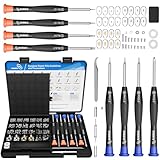
What constitutes a “decent” kit? It needs to reliably handle P2 pentalobes, Phillips #000, and Y-type (TR2 or Y000) screws. Many good kits will also include spudgers (plastic prying tools), tweezers, and sometimes even suction cups for lifting the screen. I personally prefer kits that have a dedicated magnetic mat with screw guides. Trying to keep track of which screw came from where is a nightmare without one. I made the mistake once of not having one for a tablet repair, and spent nearly an hour trying to figure out why a screw wouldn’t go back in properly. Turned out I had used one from the wrong section of the casing. It was a humbling experience.
The common advice is to get a kit from iFixit or similar reputable brands. While they can be pricier, the quality of the bits is usually far superior. For the iPhone 6, specifically, you’ll be using those tiny Phillips and Y-type screws most frequently once you’re inside. The pentalobes are only at the bottom. The Y-type screws are often found securing brackets that cover ribbon cable connectors. If you see a tiny, three-pronged screw, that’s a Y-type. Get the right driver for it, or you risk damaging the screw head and the connector it’s attached to.
A good kit for the iPhone 6 should set you back somewhere between $20 and $40. It might seem like a lot for what are basically tiny screwdrivers, but when you consider the cost of professional repair or the potential damage from using the wrong tools, it’s a small price to pay. Plus, once you have it, you’ll have it for a lot of other small electronics too. It’s an investment in not having a bad day. A truly reliable kit means less frustration and a much higher chance of success when you’re tackling that 17-screw puzzle.
Common Mistakes and What Not to Do
Let’s talk about screw-ups, because I’ve had my share. The most common mistake, hands down, is mixing up screw lengths. I touched on this before, but it bears repeating because it’s that important. The iPhone 6 has screws of different lengths, even within the same category (like Phillips). If you force a screw that’s too long into a hole, you can crack the logic board, puncture the battery, or damage the internal casing. This isn’t a ‘minor inconvenience’; this can render your phone completely dead or even unsafe. I saw a friend’s iPhone 6 puff up slightly after a botched battery replacement because a screw had pierced the casing near the battery. It was a stark reminder.
Another common pitfall is using the wrong screwdriver bit. Forcing a Phillips head into a Y-type screw or using a bit that’s too large or too small for a Phillips screw will strip the head. Once a screw head is stripped, it’s incredibly difficult to remove. You end up resorting to brute force or specialized (and often destructive) methods to get it out, which is how you end up needing more replacement parts than you originally intended. This is precisely why I’m so blunt about the P2 pentalobe and the Y-type screws; they require specific drivers. (See Also: How Do You Get A Computer Screw Out )
Over-tightening is also a big one. These screws are going into aluminum or plastic threads. They don’t need Herculean effort. Tighten them until they are snug, then stop. Overtightening can strip the threads within the phone’s chassis, meaning the screw will no longer hold anything securely. It also puts undue stress on the components. I’ve seen people put screws back in with the same amount of force they’d use to attach a tire to a car. Relax! Gentle but firm is the mantra.
Finally, don’t rush. This is the biggest mistake of all. The question of ‘how many screws in iPhone 6’ is less about the number and more about the patience required to deal with each one. Lay them out, label them, take pictures if you need to. Treat each screw like it’s the most important one. Rushing leads to mistakes with screw lengths, stripped heads, and damaged components. It’s a marathon, not a sprint. My first few DIY repairs were rushed, and I paid the price with extra trips to the parts store and more time spent than I ever anticipated. Learned my lesson the hard way.
People Also Ask: Answering Your Burning Questions
It’s not just you wondering about the nuts and bolts of iPhone repairs. The questions people ask often reflect the very anxieties and challenges I’ve encountered. For instance, the concern about getting the right tools is huge, which is why I’ve stressed the importance of a good kit.
What Tools Do I Need to Open an iPhone 6?
For an iPhone 6, you absolutely need a P2 pentalobe screwdriver for the two bottom screws. Internally, you’ll encounter Phillips #000 and Y-type (TR2 or Y000) screws, so a kit containing these is key. Beyond screwdrivers, a plastic spudger for prying connectors and a set of tweezers for handling tiny screws are invaluable. A suction cup can help lift the screen, and a magnetic mat with screw diagrams will save you immense frustration.
Can I Use a Regular Phillips Screwdriver on an iPhone 6?
No, you really can’t. While the iPhone 6 uses Phillips screws internally, they are very small (#000 size). More importantly, the two screws at the bottom are not Phillips; they are P2 pentalobe screws. Using a regular Phillips screwdriver on them will strip the heads, making removal extremely difficult. Even for the internal Phillips screws, using a regular-sized one is too large and can damage the screw head or surrounding components.
How Do I Reassemble an iPhone 6 Without Losing Screws?
The best way is preparation. Before you start, get a magnetic project mat with screw compartments or simply use a piece of paper and draw out the layout of the phone. As you remove each screw, place it in its corresponding spot on the mat or drawing. Take clear photos at each step of disassembly, especially noting where screws go. This visual reference is a lifesaver during reassembly. Don’t try to guess; methodical placement is key to avoid losing screws or using the wrong ones.
What Happens If I Use the Wrong Size Screw in an iPhone 6?
Using the wrong size screw, particularly a longer one, can cause significant damage. A screw that’s too long can puncture the logic board, damage delicate internal components, or even pierce the battery, posing a fire hazard. Using a screw that’s too short might mean a component isn’t secured properly, leading to malfunctions. It’s important to use the exact screw that came from that specific hole. This is why keeping track of all 17 screws is so vital.
Verdict
So, there you have it. The grand total for ‘how many screws in iPhone 6’ boils down to 17. It’s not an overwhelming number in the grand scheme of things, but each one demands respect and the right tool. My journey with these little metal bits has taught me that patience and preparation are more important than any fancy gadget.
If you’re thinking about diving into a repair yourself, remember: get the right kit, keep track of every single screw, and don’t force anything. It might seem like a lot of effort for a few tiny screws, but the cost of mistakes can be far higher than the cost of a proper toolkit or a professional repair.
Next time you hold your iPhone 6, or any other small electronic device, you’ll have a new appreciation for the intricate engineering held together by these minuscule components. Will you be brave enough to tackle that 17-screw challenge, or will you leave it to the pros?
![AXTH 25-in-1 Small Precision Screwdriver Set, Professional Magnetic Mini Repair Tool Kit for Phone, Computer, Watch, Laptop, Macbook, Ring Doorbell, Eyeglass, Electronic, [Bearing Steel] Screw Driver](https://m.media-amazon.com/images/I/518YlLmPTcL._SL160_.jpg)
