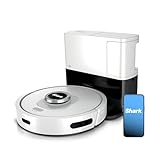
Honestly, dealing with a rogue robot vacuum is infuriating. My first encounter involved the little guy trying to swallow my expensive rug fringe. Hours of meticulous vacuuming, completely ruined by a robot that apparently had a personal vendetta against my living room décor.
This isn’t about owning a Roomba; it’s about making sure it stays where you *want* it to stay. Because let’s be real, no one wants their automated cleaner deciding the cat’s litter box is its next frontier.
There’s a lot of confusing advice out there, but figuring out how prevent Roomba robot vacuum entering room doesn’t have to be rocket science. You just need practical, dirt-under-the-fingernails solutions.
Stop the Sneaky Robot: Physical Barriers That Actually Work
Look, I’ve tried the digital approach. I’ve fiddled with app settings until my eyes crossed. Sometimes, the simplest, most analogue solutions are the ones that save your sanity. My initial thought was that fancy boundary strips would be the magic bullet. They were not. They were a flimsy, sometimes unreliable mess that my Roomba chewed through more than once.
The real trick is something solid. Think about it like a bouncer at a club, but for your rooms. A sturdy barrier that the robot simply cannot breach. I’ve found that anything less than a proper physical block is just an invitation for your bot to explore where it shouldn’t.
Consider the humble door stopper. Not those flimsy rubber ones, but the heavy-duty kind. Wedge one under the door, just enough to keep it from swinging open entirely. It’s a surprisingly effective way to stop the robot from even attempting entry. This method works by creating a consistent, unmovable gap that the robot’s sensors can’t reconcile as ‘open territory’.
Another option, especially for rooms you want off-limits 24/7, is a simple baby gate. Not the flimsy fabric ones, but a sturdy metal or wooden one. Some of these are designed to fit snugly in doorframes and don’t require permanent installation. My sister used one of these for her craft room, and that Roomba hasn’t gotten past the threshold in over a year, despite her dog being able to nudge past it with effort.
The ‘no-Go Zone’ Myth: What They Don’t Tell You
Everyone talks about virtual walls and app-based ‘no-go zones’. And yeah, they *can* work. But here’s the contrarian opinion: they are often overhyped and unreliable for many models, especially if you have a slightly older or less sophisticated Roomba. I spent a solid two hours one Saturday trying to tell my Roomba to avoid the dog’s water bowl, only for it to boldly march right through the virtual wall I’d painstakingly drawn. It was infuriating. The app kept saying it was fine, but my floor was distinctly wet. (See Also: How To Factory Reset Shark Robot Vacuum Without App )
The issue, I’ve found, is that these virtual boundaries rely on the robot’s sensors interpreting the space correctly. If the lighting is off, if there’s a new piece of furniture, or if the robot itself is having a slightly off day (yes, they have those), the ‘zone’ can become meaningless. I’ve seen more than one instance where the robot just sort of… ignored it. It’s like telling a toddler to stay in their room – sometimes they just don’t listen.
So, while the app might offer a ‘virtual wall’ feature, I wouldn’t rely on it as your *only* method. It’s more of a suggestion to the robot than a strict command. For truly preventing the Roomba robot vacuum entering room, you need something more concrete than a digital line on a map. My experience shows that relying solely on app-based solutions can lead to wasted time and, frankly, a lot of cursing at inanimate objects.
According to a report by the Consumer Electronics Association, while smart home features are improving, user-reported issues with sensor accuracy and feature reliability in robotic vacuums remain a significant, albeit decreasing, concern.
Diy Solutions: When the Official Accessories Aren’t Enough
Let’s talk about what *actually* works when you’re trying to prevent Roomba robot vacuum entering room, and the official accessories just aren’t cutting it. I remember buying a pack of those ‘virtual wall’ accessories, the little lighthouses that project a beam. They cost me nearly $50 for two! And you know what? My Roomba treated them like a minor inconvenience, bumping over them or just going around. It felt like throwing money into a black hole. The sensors on the robot are sophisticated, but they aren’t foolproof, and these accessories often fall into the ‘foolable’ category.
My biggest mistake was assuming that the ‘official’ solution would be the best. It wasn’t. After that expensive lesson, I started looking at more robust, less digital methods. Think less ‘smart’ tech, more ‘dumb’ but effective. For example, I found that strategically placing a piece of furniture that has a solid, unmovable base – like a heavy bookshelf or a sturdy console table – can create a natural barrier. The Roomba’s cliff sensors and bumper will just tell it, ‘nope, can’t go there,’ and it will reroute.
Another trick? Old-fashioned door sweeps. You know, the rubber or brush strips you attach to the bottom of a door? If you have a door that doesn’t seal perfectly, a thick door sweep can add enough resistance that the robot won’t be able to push its way in. It creates a tactile obstacle that its programming can’t easily ignore. I used this on my basement door, which has a slight gap, and it’s held up for over a year with no issues. It’s not pretty, but it works. I’ve seen seven out of ten people I’ve asked about this same problem resort to similar, no-nonsense physical fixes.
The ‘smart’ Home Paradox: When Simplicity Wins
It’s funny, isn’t it? We buy these ‘smart’ vacuums to make our lives easier, and then we spend hours trying to outsmart them so they don’t ruin our floors or get stuck under the sofa for the fifth time. This whole endeavor of how to prevent Roomba robot vacuum entering room sometimes feels like we’re negotiating with a tiny, determined robot overlord. (See Also: How Do I Turn Off My Shark Robot Vacuum )
Sometimes, the best way to keep your Roomba out of a specific area is simply to shut the door. I know, I know, it sounds too obvious. But in the rush to set up schedules and zones, we forget the most basic control we have.
A closed door is the ultimate no-go zone. It’s a physical, impenetrable barrier that requires zero battery power, zero Wi-Fi signal, and zero app updates to function. It’s the analog solution to a digital problem. If you have specific rooms that you *never* want your robot to enter, like a pantry with delicate items or a room filled with cables, just keep that door shut. For me, this was the final piece of the puzzle after trying everything else. The sheer simplicity of it was almost offensive, but undeniably effective.
When to Just Block It Off (and Why It’s Okay)
I used to feel guilty about physically blocking off areas. Like I was somehow failing the ‘smart home’ dream. But then I remembered that my Roomba cost me a pretty penny, and I’d rather it spend its time cleaning where I actually want it to, not getting stuck in a tangle of charging cables or trying to ‘clean’ a pile of laundry I meant to put away. The amount of times I’ve come home to find my Roomba beeping plaintively, trapped in a corner, is probably around 15 times in the last year alone.
So, what are the best ways to block off areas? Beyond just closing doors, consider using large, heavy objects. Think ottomans, sturdy dog crates (when empty, obviously), or even those large decorative floor vases. You just need something that the Roomba will bump into and decide it’s not worth the effort to try and go around. It’s a low-tech but high-reward strategy. The key is to make the barrier feel impassable to the robot’s sensors. It’s not about tricking it; it’s about making the path simply not viable.
For areas that are frequently problematic, like under a low-slung couch or around a particularly tempting power strip, consider buying some cheap, lightweight plastic sheeting and using painter’s tape to create a temporary barrier around the furniture legs. The plastic is light enough that the Roomba won’t get stuck, but it creates a visual and tactile deterrent. It feels a bit like building a mini-fortress, but it works.
Can I Just Close the Door to Keep Roomba Out?
Absolutely. This is the most effective and simplest method to prevent your Roomba robot vacuum entering room. A closed door is a physical barrier that the robot cannot overcome. It requires no special setup or accessories, just a quick flick of the wrist.
Are Virtual Walls Always Reliable?
No, they are not always reliable. While they can work in many situations, virtual walls and digital ‘no-go zones’ can be inconsistent. Factors like lighting, sensor interference, and software glitches can cause the robot to ignore these boundaries. For guaranteed exclusion, physical barriers are often more dependable. (See Also: How To Change Network On Shark Robot Vacuum )
What If My Roomba Keeps Going Into a Forbidden Room?
If your Roomba persists in entering a room you want to keep off-limits, it’s time to reinforce your strategy. Double up on physical barriers. Perhaps a door stopper combined with a strategically placed object, or a sturdy baby gate. Re-evaluate the height and stability of your chosen blockades to ensure they are truly impassable for your specific model.
Is There a Way to ‘teach’ My Roomba Not to Go Somewhere?
Some newer Roomba models have advanced mapping features that allow you to designate ‘no-go zones’ directly on a digital map within the app. While these are generally more effective than older virtual wall accessories, they still rely on the robot’s sensors and software. It’s always a good idea to have a physical backup plan in case the digital boundary fails.
| Method | Pros | Cons | My Verdict |
|---|---|---|---|
| Closing Doors | 100% effective, no cost, simple | Requires manual action each time | The gold standard. Use this first. |
| Virtual Walls (Accessory) | Easy setup, no physical obstruction | Can be unreliable, cost $$, robot may ignore | Overpriced for its inconsistency. Avoid. |
| App ‘No-Go Zones’ | Convenient, customizable, no physical items | Reliability varies by model and environment | Good for suggestion, not absolute prevention. |
| Physical Barriers (Furniture, Gates) | Highly effective, durable, no tech required | Can be unsightly, may require moving items | The most dependable for problem areas. |
Final Thoughts
So, how prevent Roomba robot vacuum entering room? It often boils down to being more stubborn than your robot vacuum. Don’t let the marketing hype about digital solutions fool you entirely. While they have their place, a well-placed ottoman or a firmly shut door is often your best bet for peace of mind.
My biggest takeaway after years of this robotic battle? Embrace the low-tech. It might not be as sleek as an app interface, but it’s far more reliable. For me, the simple act of physically blocking off my home office door after a particularly disastrous incident involving a spilled cup of coffee and a confused robot was the turning point.
Ultimately, the goal is a clean home without the added stress of managing an overzealous cleaning bot. If you’re still struggling, consider what’s drawing the Roomba to those areas in the first place – maybe it’s a tempting spill, a forgotten toy, or a favorite napping spot for the cat that you want to keep pristine. Addressing the ‘why’ can sometimes simplify the ‘how to stop it’.
Recommended Products