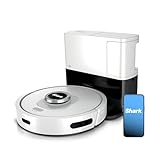
Honestly, sometimes I think these robot vacuums are designed to make you feel stupid. Mine, a Shark model I’ve had for about eighteen months, decided one Tuesday morning that it was done cleaning and just… stopped. Wouldn’t move, wouldn’t respond to the app, and the thought of how to power off shark robot vacuum felt like a riddle designed by a sadist.
Wasted literally twenty minutes fiddling with buttons that did nothing but make little chirping sounds, like it was mocking me.
It took me way too long, and frankly, a mild existential crisis, to figure out the simplest damn thing.
Why My Shark Just Sat There Like a Dead Bug
So, you’ve got your Shark robot vacuum, right? It’s chugging along, doing its thing, maybe even avoiding the dog’s water bowl for once. Then, poof. It freezes. Dead in its tracks. Lights on, but nobody home. This isn’t a ‘clean error code’ situation; this is a ‘what the hell is wrong with this thing’ moment. You’ve probably tried pressing the big ‘Clean’ button again, hoping for a miracle. I know I did. Then maybe you jabbed the ‘Home’ button, envisioning it gracefully gliding back to its dock. Nope. Nothing. Zip. Nada. Just a silent, plastic disc of frustration.
Look, I’ve been there. I once spent about $150 on a fancy UV sanitizing wand that promised to make my entire house germ-free. Turns out, a good bleach wipe and some elbow grease do the same job for pennies. This whole ‘smart home’ thing can feel like a trap sometimes, can’t it? Where you pay a premium for something that requires more troubleshooting than a vintage VCR.
The ‘turn It Off and on Again’ Fallacy for Robots
Everyone, and I mean *everyone*, tells you to power cycle electronics. ‘Turn it off and on again!’ they chirp. For a toaster? Sure. For a smart speaker that’s gone rogue? Usually. For a complex piece of automated machinery like a robot vacuum that’s essentially a tiny, wheeled computer? It’s not always that simple. Shark, bless their hearts, doesn’t exactly make this process intuitive. They want you to think it’s all about the app and the buttons on top. But when it truly bricks itself, you’re left staring at it, wondering if you’ve accidentally purchased a very expensive coaster.
I remember one particularly aggravating Saturday morning. My Shark had decided to just stop dead in the middle of the living room, its little brush spinning uselessly like a hamster on a wheel. No error messages, no helpful beeps. Just… stopped. I’d already spent three days prior wrestling with its docking station, which seemed to have developed a personal vendetta against actually charging the damn thing. The instruction manual, a document I’m convinced was written by someone who has never actually used the product, offered zero help. It was like trying to get advice from a robot butler who only speaks in riddles. (See Also: Do Shark Robot Vacuum Map Your House )
This is where everyone else online will tell you to look for a ‘power button.’ Spoiler alert: there isn’t one in the way you’re probably thinking. No big, red, satisfying ‘OFF’ switch. It’s more of a sneaky, hidden maneuver. I was convinced I’d have to call customer service and endure a thirty-minute hold only to be told to unplug it. Which, by the way, is part of the solution, but not the whole damn story.
The Real Way How to Power Off Shark Robot Vacuum (no, It’s Not Obvious)
Okay, deep breaths. When your Shark robot vacuum is completely unresponsive, and I mean utterly defiant, here’s what you actually need to do. Forget the top buttons for a moment. You need to get to its underside. Most Shark robot vacuums have a battery compartment or a way to access the battery. On my model, it’s a panel on the bottom that requires a small coin or even a flat-head screwdriver to gently pry open. You’re looking for the power source. It’s like trying to perform emergency surgery on a delicate piece of tech; you need to be precise but gentle.
Once you locate the battery connector, you need to physically disconnect it. This isn’t just unplugging it from the wall. This is cutting the power *to the robot itself*. For some models, this might involve unclipping a wire harness. For others, it might be a battery pack that slides out. The key is to physically interrupt the flow of electricity from the battery to the main board. It feels drastic, I know, like you’re voiding some imaginary warranty. But sometimes, a hard reset is the only thing that breaks a stubborn electronic funk. Think of it like rebooting your brain after a long, confusing meeting. You just need a clean slate.
After you’ve disconnected the battery, leave it that way for at least sixty seconds. Maybe ninety, just to be safe. This allows any residual charge to dissipate, ensuring a complete power cycle. Don’t rush this. You’ve already spent enough time being frustrated; a little extra patience now will save you more later. The silence in the room, without the faint hum of a robot that *should* be working but isn’t, is surprisingly loud.
Then, reconnect the battery. Make sure it’s seated properly. You should hear a little click or feel it snap into place. Once reconnected, the robot should reset itself. You might see a brief flicker of lights, or it might just return to its default standby state. It’s like waking up from a coma. Now, try powering it on using the buttons on the unit or the app again. If you’re lucky, it’ll spring back to life. If it’s still dead, you might have a more serious hardware issue, but this process—the physical battery disconnect—is the ultimate way how to power off shark robot vacuum when all else fails.
A Contrarian View on ‘smart’ Cleaning
Everyone keeps pushing these ‘smart’ devices, touting convenience. And yeah, when they work, they’re great. But the amount of time I’ve spent troubleshooting my robot vacuum, setting up Wi-Fi networks that are supposed to be ‘simple,’ and updating firmware makes me wonder if we’re not just trading one set of chores for another, more technically demanding set. (See Also: How To Clean Brush Roll On Shark Robot Vacuum )
People say robot vacuums give you more free time. I disagree. They give you *different* time. Time spent diagnosing why it’s stuck under the sofa again, or why it’s mapping your kitchen floor as an open ocean. It’s like owning a classic car; it looks cool, but you spend more time tinkering than driving. My old corded vacuum, bless its noisy heart, never needed a firmware update or a Wi-Fi password. You plugged it in, and it just *worked*. Sometimes, the old ways are better, even if they lack the ‘smart’ label.
Understanding the ‘why’ Behind the Freeze
Why does this even happen? Well, these little robots are essentially tiny computers on wheels. They have sensors, processors, and battery management systems. Sometimes, a software glitch can occur, much like your laptop freezing up. This isn’t necessarily a defect, but more like an unexpected hiccup in the complex code that runs the device. I’ve seen it happen after a power surge, or even just a random glitch during a cleaning cycle. The operating system gets confused, and it needs a hard reset to clear its memory. The physical battery disconnect is the equivalent of yanking the power cord on your PC when the screen locks up.
Consumer Reports has done extensive testing on robot vacuums, and while they often praise the convenience, they also highlight the importance of user-friendliness and reliability. A machine that requires you to perform minor surgery to reset it isn’t exactly ‘user-friendly’ in the traditional sense. It’s a trade-off, and sometimes the ‘smart’ features come with a hidden cost of complexity.
| Method | Ease of Use | Effectiveness | My Verdict |
|---|---|---|---|
| App/Button Reset | ★★★☆☆ | ★☆☆☆☆ | Rarely works when truly frozen. Mostly for minor errors. |
| Unplugging from Wall | ★★★★☆ | ★★☆☆☆ | Good for initial power cycle, but not a deep reset. |
| Physical Battery Disconnect | ★★☆☆☆ | ★★★★★ | The only reliable way to fix a complete freeze. Annoying, but it works. |
Will Turning Off My Shark Robot Vacuum Erase My Map?
Disconnecting the battery for a hard reset will likely erase any temporary mapping data or cleaning history that hasn’t been synced to the app or cloud. However, if you’ve saved your map in the Shark app, it should be preserved. It’s always a good idea to ensure your maps are saved before performing a hard reset if you have a model that supports mapping.
How Do I Reset My Shark Robot Vacuum Without the App?
If your robot is responsive to its physical buttons, you can often initiate a reset or send it home via those. But if it’s completely frozen, the physical battery disconnect is the primary way to reset it without the app being functional. Once reconnected, you can then try using the physical buttons to start or dock it.
What If My Shark Robot Vacuum Won’t Charge After I Power It Off?
If it won’t charge after you’ve done the battery disconnect and reconnect, the issue might be with the charging dock itself, the charging contacts on the robot, or potentially the battery. Clean the charging contacts on both the robot and the dock with a dry cloth or an electronics-safe cleaner. Ensure the dock is properly plugged in and receiving power. If it still doesn’t charge, the battery might be depleted or failing, or there could be an internal issue with the robot’s charging circuitry. (See Also: How To Set Up Eufy Robot Vacuum )
Can I Leave My Shark Robot Vacuum Unplugged All the Time?
While you can leave it unplugged, it’s generally not recommended for daily use. Robot vacuums are designed to be left on their charging docks so they are ready for their scheduled cleaning cycles. Leaving it unplugged for extended periods might cause the battery to self-discharge too much, potentially shortening its lifespan. Only unplug it for troubleshooting or if you’re storing it for a long time.
Is There a ‘secret’ Power Button on Shark Robot Vacuums?
No, there isn’t a single, obvious ‘secret’ power button like you’d find on other electronics. The ‘off’ state is achieved by it being on the dock and inactive, or by disconnecting the battery for a full power cycle when it’s unresponsive. The design prioritizes a clean look over easily accessible manual controls for a full shutdown.
Final Thoughts
So yeah, that’s the real deal on how to power off shark robot vacuum when it decides to stage a silent protest. It’s not elegant, it’s not something the marketing brochures brag about, but it’s the only thing that’s consistently worked for me when my Shark has gone completely brain-dead. Don’t be afraid to get your hands a little dirty and flip that plastic over.
It’s a frustrating quirk, for sure. Makes you appreciate the simplicity of a broom sometimes, doesn’t it?
Next time yours freezes, try the battery disconnect. If it still doesn’t wake up after that, you might be looking at a more serious issue, and then it’s time to make that dreaded call to customer support, armed with the knowledge that you’ve already tried the ultimate reset.
Recommended Products