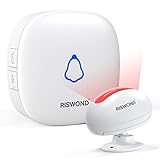
Cracked the plastic on the last one trying to pry it open. Sound familiar? This whole ‘smart home’ thing can feel less like a technological leap and more like a ridiculously expensive hobby in constant repair mode. Especially when those outdoor motion sensors decide to take a permanent vacation, leaving your porch light on all night or, worse, letting critters saunter through your yard undetected.
It’s infuriating, right? You paid good money for a system that’s supposed to keep an eye on things, and now it’s about as useful as a chocolate teapot. This isn’t some esoteric tech problem only Elon Musk can fix; often, it’s something you can sort out yourself. Figuring out how to reset outdoor motion sensor is not sensitive should be a quick win, not a week-long research project.
Honestly, I’ve spent more time fiddling with these damn things than I care to admit, usually at 2 AM when a rogue squirrel triggers a phantom alert. The sheer amount of garbage advice online is staggering. Let’s cut through the noise and get straight to what actually works.
When the ‘smart’ Sensor Goes Dumb: Initial Troubleshooting
So, your motion detector just isn’t picking up anything. No cars driving by, no delivery people approaching, not even a dog waltzing through. First off, don’t immediately assume it’s broken. Most of the time, it’s a simple setting or an environmental factor you’ve overlooked. Think of it like a faulty light switch – sometimes it just needs a firm flick.
Check the obvious: Is it actually powered on? Sounds stupid, I know, but I’ve been guilty of this. Batteries dead? Solar panel caked in grime? If it’s hardwired, is the breaker tripped? Visual inspection is your friend. Look for any obvious physical damage, corrosion on the contacts, or debris blocking the sensor lens. Sometimes, a good wipe-down with a microfiber cloth is all it takes. Seriously, I once spent $80 on a new sensor only to find out the old one was just covered in a thick layer of pollen. Felt like an idiot.
Remember that time I thought my new video doorbell was faulty because it wasn’t detecting anyone walking past? Turns out, I’d accidentally set the ‘motion sensitivity’ to zero. A classic rookie error. It’s easy to get lost in the app settings, tweaking things you don’t fully understand.
Environmental Factors: The Unseen Saboteurs
Outdoor sensors are beasts, but they’re susceptible to the whims of Mother Nature. Extreme temperatures can mess with the internal components. I’ve had sensors go wonky in the dead of winter, only to miraculously spring back to life when the thaw hit. Similarly, intense summer heat can sometimes cause temporary hiccups. It’s not always a permanent failure; sometimes it’s just the environment giving it a temporary headache.
What about light? Direct sunlight hitting the sensor head-on during certain times of the day can create ‘false positives’ that confuse the system into thinking there’s no motion to detect, or it can overwhelm the sensor’s optical input, causing it to ignore actual movement. Think of it like staring directly into a bright light – your vision gets temporarily impaired. Adjusting the angle of the sensor can sometimes solve this. You want it pointing at the area you want to monitor, not the sun’s direct path. (See Also: How To Turn Off Nest Thermostat Motion Sensor )
Also, consider obstructions. Over time, bushes grow, leaves fall, and spiderwebs appear. These aren’t just unsightly; they can physically block the sensor’s view or trigger false alarms. My neighbor’s overgrown azalea bush was consistently blocking the view of his driveway camera’s motion sensor for about three weeks until I pointed it out. He thought the whole system was broken.
The Actual Reset: How to Reset Outdoor Motion Sensor Is Not Sensitive
Alright, let’s get to the nitty-gritty. When you’ve exhausted the simple checks and environmental tweaks, it’s time for a proper reset. This isn’t just about turning it off and on again; it’s about clearing the internal memory and starting fresh. The exact method varies wildly between brands, so always, *always* consult your manual or the manufacturer’s website first. But generally, you’re looking for one of these approaches:
Battery Removal: The simplest form of reset. For battery-powered units, just take out the batteries. Wait for at least 60 seconds – some manufacturers suggest up to five minutes for a full discharge. This effectively cuts all power and lets any residual charge dissipate, clearing the memory. Reinsert the batteries and see if it behaves.
Power Cycle (for wired units): If your sensor is hardwired into your home’s electrical system, you’ll need to find the circuit breaker that controls it. Flip it off, wait the recommended minute or two, and then flip it back on. It’s like rebooting your computer when it freezes up. This is often the most effective method for getting things back in order without a factory reset.
Physical Reset Button: Many devices have a small, often recessed, button. You might need a paperclip or a pen tip to press it. Look for a tiny hole labeled ‘Reset’ or ‘R’. You’ll usually need to press and hold this button for 10-30 seconds while the device is powered on. This forces a factory reset, returning all settings to their default state. Be warned: you’ll have to reconfigure everything afterwards, including Wi-Fi passwords and motion zones. I once spent an entire Saturday re-setting up my entire smart security system after one sensor went offline, only to realize later I could have just removed the battery for a minute. Lesson learned: don’t overcomplicate it when a simple fix exists.
App-Based Reset: Some smart systems allow you to perform a reset directly through their mobile app. This might be a ‘factory reset’ option or a ‘re-pairing’ mode. This is often the most convenient if your system is heavily integrated.
After any of these reset procedures, you’ll almost certainly need to re-pair the sensor with your hub or Wi-Fi network. This is where having your network password handy becomes important. (See Also: How Do I Pair Wyze Bulb With Motion Sensor )
Re-Pairing and Re-Calibration: Getting It Back Online
Once you’ve performed a reset, the sensor is essentially like new. That means it doesn’t remember your Wi-Fi network or its connection to your security hub. Think of it like a new phone; you have to set it up from scratch. This process is usually called ‘pairing’ or ‘adding a device’.
Typically, you’ll put your hub or app into ‘pairing mode’ and then trigger the sensor to ‘announce’ itself. This often involves pressing a button on the sensor, or sometimes just inserting the batteries starts the process. The sensor will broadcast a signal, and the hub will detect it and establish a connection. It’s a bit like a blind date where both parties have to find each other in a crowded room.
After pairing, you’ll need to calibrate the motion detection. This is where you fine-tune the sensitivity. Most systems allow you to adjust this through the app. Start with a medium setting and test it. Walk in front of the sensor at different distances and speeds. If it’s too sensitive, you’ll get false alarms from passing cars or blowing leaves. If it’s not sensitive enough, it’ll miss actual intruders. It’s a delicate balance, and it often takes a few tries to get it just right.
The American Association of Home Security Specialists recommends a multi-zone approach for optimal motion detection, adjusting sensitivity for each zone based on expected activity. This isn’t just about picking a number; it’s about understanding the environment. For example, a sensor facing a busy street will need a different sensitivity setting than one guarding a quiet backyard gate.
When All Else Fails: Replacing the Unit
If you’ve tried every reset method, checked the power, adjusted the angle, and still have a completely dead sensor, it’s probably time to face facts: it’s kaput. I once spent three weeks chasing a phantom issue with a particular brand of outdoor camera motion sensor. I tried everything – factory resets, firmware updates, even contacting support who gave me the runaround for days. Turns out, the internal PIR (Passive Infrared) sensor had simply failed. It was a manufacturing defect, plain and simple.
When looking for a replacement, consider the environment it’s going into. Is it exposed to heavy rain? Intense sun? Extreme cold? You need a unit with a good IP rating (Ingress Protection) for water and dust resistance. For example, an IP65 rating means it’s protected against dust ingress and low-pressure water jets from any direction, which is usually sufficient for most outdoor applications. An IP67 or IP68 would be overkill and likely more expensive.
Also, think about the type of detection. PIR sensors detect heat signatures, making them great for detecting warm-blooded intruders but less reliable in very hot weather or for detecting cold objects. Dual-tech sensors combine PIR with microwave or ultrasonic sensors, which can reduce false alarms but are often more expensive and complex to install. My first foray into outdoor sensors involved some cheap PIR-only units that would trigger every time a cloud passed overhead. Never again. (See Also: How To Install Motion Sensor Light Above Garage )
Consider the battery life if it’s battery-powered. Some claim to last a year or more, but in reality, with frequent motion detection or in colder climates, you might be swapping them out every few months. It’s like buying a printer that promises cheap ink; the upfront cost might be low, but the ongoing expense is what gets you.
| Sensor Type | Pros | Cons | My Verdict |
|---|---|---|---|
| PIR (Passive Infrared) | Cheap, low power consumption, good for detecting heat | Can be triggered by heat sources (sun, animals), less effective in extreme temps | Good for basic security, but expect occasional false alarms. |
| Dual-Tech (PIR + Microwave/Ultrasonic) | Reduced false alarms, more reliable detection | More expensive, higher power consumption, complex setup | Worth the extra cost if you have a persistent false alarm problem. |
| Video Analytics | Highly accurate, can distinguish people from pets/vehicles, provides video proof | Most expensive, requires stable Wi-Fi, higher power needs | The ‘gold standard’ if budget is no object and you want the best intelligence. |
Why Is My Outdoor Motion Sensor Not Sensitive?
It’s usually a combination of factors. The most common culprits are incorrect sensitivity settings, environmental interference (like direct sunlight or extreme temperatures), physical obstructions blocking the sensor’s view, or a need for a simple power cycle or factory reset. Sometimes, the batteries are just dead, or the device itself has failed.
How Often Should I Reset My Outdoor Motion Sensor?
You shouldn’t need to reset your motion sensor regularly. It’s a troubleshooting step for when it stops working correctly. If you find yourself resetting it every week, there’s likely a deeper issue, either with the device itself, its power source, or its environment that needs addressing.
How Do I Adjust the Sensitivity of My Outdoor Motion Sensor?
Sensitivity is typically adjusted through the device’s companion mobile app or, in some cases, via physical dials on the sensor itself. You’ll want to experiment with these settings. Start with a medium level, test its detection range, and then increase or decrease sensitivity until you find a balance that catches actual motion without triggering on wind or small animals.
Verdict
So, you’ve gone through the steps, and hopefully, your outdoor motion sensor is finally behaving itself. It’s usually a simple fix once you know what to look for. Don’t just assume the worst when it stops being sensitive.
If you’re still scratching your head after trying a reset, double-check that the sensor is properly paired with your system and that the sensitivity settings in the app haven’t been accidentally nudged. I’ve found that sometimes just re-pairing the device after a reset can resolve latent communication glitches.
Honestly, learning how to reset outdoor motion sensor is not sensitive is a small victory in the ongoing battle with smart home tech. Keep an eye on those environmental factors and don’t be afraid to consult the manual – it’s your best friend when these gadgets act up.
Recommended Products