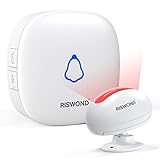
Honestly, I’ve spent more money than I care to admit on gadgets that promised the moon and delivered… well, a blinking light and a bill. You buy a motion sensor, thinking it’ll be a set-and-forget kind of deal, and then BAM! Your cat sets it off from three rooms away, or a stiff breeze triggers it. That’s why understanding how to turn down sensitivity on the HSR501 motion sensor is actually pretty important if you don’t want a constant stream of false alarms.
Years ago, I bought a whole system that claimed to be ‘smart’. It was anything but. I spent about $300 testing different brands, all of them acting like hyperactive toddlers, triggering at shadows. It took me a solid two weekends of fiddling and frankly, a lot of cursing, to figure out that sometimes the most advertised features are just noise.
This little HSR501 can be a bit… enthusiastic right out of the box. So, let’s get this sorted so your lights don’t go off every time a moth flies by.
Adjusting the Hsr501 Sensitivity Dial
Right on the face of the HSR501, you’ll find it: a small, often red or blue, dial. This is your primary control for the sensor’s sensitivity. It’s usually marked with a ‘+’ or ‘HIGH’ at one end and a ‘-‘ or ‘LOW’ at the other. Don’t just spin it wildly. Think of it like tuning an old radio; you need to find the sweet spot, not just crank it until it stops making noise. I remember my first attempt involved just turning it all the way down, thinking less was more. That resulted in the sensor completely ignoring me walking right in front of it. Not ideal.
Start by turning the dial towards the ‘-‘ or ‘LOW’ setting. A common mistake is assuming the lowest setting is always best, but sometimes it’s too low, making the sensor effectively blind. You want to find a point where it reliably detects human motion at a reasonable distance without picking up every passing car or even a strong gust of wind. The actual physical dial is tiny, so you might need a small, flathead screwdriver or even a firm fingernail to make adjustments. Be gentle; these things aren’t built like tanks.
Testing and Fine-Tuning
This is where the real work happens. You can’t just set it and forget it. After you make an adjustment, you need to test it. Walk in front of the sensor at different distances and angles. See if it triggers when it should. Then, try to trick it. Wave your hand vigorously a few feet away. If it triggers, turn the sensitivity down a bit more. If it doesn’t trigger when you walk normally, turn it up slightly.
I found that walking back and forth about 10-15 times, each time varying my speed and distance from the sensor, gave me a good baseline. Honestly, it took me about seven different attempts over two days to get it right in my hallway. What worked for my living room was completely useless in the garage where there’s more ambient temperature fluctuation. (See Also: Will The Xbox One Be Compatible With 360 Motion Sensor )
Pro Tip: Pay attention to the environment. If the sensor is pointed towards a window that gets direct sunlight for hours, or near a heating vent, you’re asking for trouble. This is why the American Society of Heating, Refrigerating and Air-Conditioning Engineers (ASHRAE) recommends careful placement of sensors to avoid environmental triggers.
What to Do When It’s Still Too Sensitive
Sometimes, even on the lowest setting, the HSR501 is still a little too eager. This is where you might have to get a bit more creative, or perhaps consider if this sensor is even the right tool for the job. I ran into this problem with a sensor near my pet’s favorite napping spot. No matter how I turned the dial, he’d set it off just by stretching. It was maddening.
One trick that sometimes works, and this is more of a DIY hack than an official recommendation, is to slightly obstruct the sensor’s lens. You can use a small piece of dark tape, applied *very* carefully, to cover a small portion of the lens. This effectively reduces the sensor’s field of view and its sensitivity to motion at a distance. Think of it like putting blinders on a horse; it helps it focus on what’s directly in front.
Another angle to consider is the sensor’s physical mounting. Is it angled too far down, catching motion from people further away than you want? Sometimes just tilting the unit up slightly can make a difference. It’s like adjusting the rearview mirror in your car – a small change in angle can dramatically alter what you see (or in this case, what the sensor detects).
Hsr501 Sensitivity vs. Other Sensors
It’s easy to get bogged down with one specific model, but understanding how the HSR501 fits into the broader world of motion detection is useful. Most PIR (Passive Infrared) sensors, like this one, work by detecting changes in infrared radiation. Small, warm objects moving across their field of view are what set them off. This is why pets, warm air currents, or even direct sunlight can sometimes cause false triggers.
| Feature | HSR501 (Adjusted) | Other High-Sensitivity PIRs | Verdict |
|---|---|---|---|
| Sensitivity Range | Moderate (Adjustable) | High to Very High | HSR501 is fine for general use; others might be overkill. |
| Pet Immunity | Poor without careful adjustment | Often built-in, but not foolproof | Neither is perfect for stubborn pets. |
| Ease of Adjustment | Simple dial, but requires testing | Can be complex, some have digital controls | HSR501 is easier to tweak initially. |
| Environmental Impact | Susceptible to heat/light | Also susceptible, maybe more so | Placement is key for all PIRs. |
Compared to some of the ‘industrial’ grade sensors I’ve seen, the HSR501 is pretty basic. Those can cost upwards of $70 and have multiple adjustment knobs for range, time delay, and sensitivity. But for most home applications, like turning on a porch light or an indoor security light, you don’t need that complexity. The HSR501 is designed for simplicity, which is why understanding how to turn down sensitivity on hsr501 motion sensor is so vital. (See Also: Why Is Motion Sensor Not Working )
When to Consider a Different Sensor
Look, I’m all for making existing tech work. I spent about $40 on different types of tape trying to fix that pet issue. But sometimes, you’re fighting a losing battle. If you have pets that are particularly active or large, or if your installation area has a lot of environmental variables (like constant temperature swings from a poorly insulated room or direct sunlight hitting it for hours), you might need a different type of sensor.
Dual-technology sensors, which combine PIR with microwave or ultrasonic detection, are often less prone to false alarms. They require two different types of motion to be detected before triggering, making them much more reliable in tricky environments. They’re also typically more expensive, which is why the HSR501 is popular – it’s budget-friendly. But budget-friendly doesn’t always mean problem-solved, especially if you’re constantly wrestling with false positives.
Can I Adjust the Hsr501 Sensitivity Remotely?
No, the HSR501 is a purely manual device. You have to physically access the sensor and turn the adjustment dial. There are no app controls or wireless adjustments for this model. This is one of its limitations compared to more modern smart home sensors.
How Do I Know If My Hsr501 Is Too Sensitive?
If your HSR501 motion sensor is triggering when there’s no apparent reason – like a car driving by, a pet moving, or even just a strong gust of wind – then it’s likely too sensitive. False alarms are the primary indicator that the sensitivity needs to be turned down.
Will Turning Down Sensitivity Affect the Detection Range?
Yes, absolutely. Turning down the sensitivity on the HSR501 will reduce its effective detection range. You are essentially making the sensor less prone to picking up subtle movements from farther away. You’ll need to find a balance between reducing false triggers and maintaining a useful detection zone.
Is There a ‘correct’ Setting for the Sensitivity Dial?
There isn’t one universal ‘correct’ setting. The ideal sensitivity level for your HSR501 motion sensor depends entirely on its specific environment, what you want it to detect, and what you want it to ignore. It requires a bit of trial and error to dial it in perfectly for your situation. (See Also: Why Is My Motion Sensor Led Flood Not Turn Off )
Verdict
So, wrestling with the HSR501 sensitivity isn’t the end of the world, but it does require patience. My biggest takeaway from all this fiddling? Don’t assume the factory setting is the final word. Spend some time with that dial. I’d say my own experience involved at least five distinct tuning sessions before I felt comfortable.
If you’re finding that even on its lowest setting, how to turn down sensitivity on hsr501 motion sensor is still triggering your lights for no good reason, consider what’s actually going on around it. Is a heater blasting? Is the sun beating on it? Sometimes the fix isn’t the sensor itself, but its placement.
Ultimately, the goal is a sensor that does its job without becoming a nuisance. It’s a bit like having a guard dog – you want it alert, but not barking at every leaf that blows across the lawn. Keep tweaking, and you’ll get there.
Recommended Products