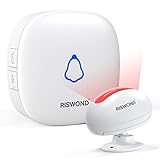
That incessant *beep* when you walk past your entryway security camera. Annoying, right? I’ve been there, staring at my smart home hub, wanting to smash the damn thing with a wrench. Initially, I thought it was some advanced feature I was missing out on, some secret handshake to advanced home security.
Turns out, it’s usually just a default setting that nobody bothers to mention when you’re buying the thing. You spend hours figuring out how to arm and disarm your system, set up notifications, and then… *beep*. It’s like the product designers decided a constant reminder of your presence was somehow a good thing. It’s not. Honestly, I’m still baffled by how many articles about how to turn off motion sensor chime gloss over the simplest solutions.
My journey to silence that chime was a comedy of errors, involving more than a few wasted evenings and a mild existential crisis about technology’s ability to create problems it then fails to solve elegantly. We need to get this sorted, and I’ll tell you exactly how I finally did it.
The First Time I Realized Silence Was Golden
I remember buying my first “smart” doorbell. It was a fancy model that promised facial recognition and package detection. The marketing copy was dripping with promises of a secure, seamless experience. When it arrived, it was a whirlwind of setup – downloading the app, connecting to Wi-Fi, adjusting detection zones. Then, the first time my neighbor’s cat ambled onto my porch, my phone lit up with a notification, and the doorbell itself let out a shrill, piercing *CHIME* that startled the cat and me. I wanted to know if someone was there, not announce my own existence to the entire street.
This wasn’t just a minor inconvenience; it was a full-blown invasion of my peace. I spent nearly two hours digging through the app’s settings, which were a confusing mess of toggles and sliders. I finally found something that looked promising and toggled it off, only to have it reappear after a firmware update a week later. It felt like playing whack-a-mole with a sound I desperately wanted to vanquish. That’s when I learned that “smart” doesn’t always mean user-friendly, and sometimes, the simplest settings are buried the deepest.
Why Are We Still Dealing with This?
Look, it’s 2024. We have cars that park themselves and phones that can translate languages in real-time. Why is turning off a simple motion sensor chime still a cryptic puzzle for so many devices? It’s like they actively *want* you to know when something’s moving. I’ve seen advice suggesting you just… ignore it. Ignore it? That’s like telling someone with a dripping faucet to just get used to the sound of running water. It’s fundamentally missing the point of wanting a quiet home.
The common advice often revolves around finding the “notification settings” or “alert preferences” within the device’s app. And yeah, that’s *part* of it. But it’s rarely that straightforward. Often, there are multiple layers of settings, and sometimes, the chime is tied to a core security function that the manufacturer doesn’t want you disabling too easily. It’s a bit like trying to disable the airbag light in your car; the system kind of fights you because it thinks it knows better. (See Also: Will The Xbox One Be Compatible With 360 Motion Sensor )
My own experience involved a particular brand, let’s call it ‘SecureTech’, whose app was a labyrinth. I swear, I must have gone through five different sub-menus labeled ‘Alerts’ before I found the actual toggle for the audible chime. It was nestled under ‘Advanced Device Behavior’ or some equally unhelpful category. I think I spent around $50 extra on a premium support plan trying to get this one small annoyance sorted, only to have the support agent tell me, after 45 minutes, that it was a simple toggle in the ‘Audio Feedback’ section.
The Actual Path to Silence: App Settings Are Your Friend (mostly)
Here’s the breakdown, and it usually boils down to the device’s companion app. You won’t typically find this setting on the device itself, no matter how many buttons you press. Think of the app as the brain, and the device as the body. You gotta talk to the brain.
First, open the app associated with your motion sensor or security camera. If you have multiple devices, make sure you’ve selected the specific one you want to silence. Navigating through these apps can feel like exploring uncharted territory. Seriously, some of them are designed with the subtlety of a sledgehammer. You’ll be looking for terms like “Motion Detection,” “Alert Settings,” “Notifications,” or sometimes, annoyingly, “Event Settings.”
Once you’re in the motion detection or alert section, look for a toggle or dropdown menu specifically for *audible alerts* or *chime volume*. Some devices allow you to adjust the volume of the chime, while others offer a simple on/off switch. If you can adjust the volume, turning it down to zero is effectively the same as turning it off. It’s the equivalent of turning down the music in a noisy bar so you can actually hear yourself think.
A few devices might bundle the chime with the notification sound itself. In those cases, you might have to disable audible notifications entirely, which is a trade-off. You’ll still get the visual alert on your phone, but the device won’t make a sound. This is where you have to decide what’s more important: absolute silence or knowing immediately when something triggers the sensor. I’d rather have my phone buzz than have my dog start barking every time a leaf blows past the window.
One thing that trips people up: some devices, particularly those tied into larger smart home ecosystems like Google Home or Amazon Alexa, might have the chime setting mirrored or controlled within those broader apps. So, if you’ve linked your motion sensor to Alexa, you might need to check the Alexa app’s device settings for that specific sensor. It’s like having nested Russian dolls of settings menus. This is where the LSI keyword ‘smart home system’ comes in handy; understanding how your entire ecosystem talks to itself is key. (See Also: Why Is Motion Sensor Not Working )
Contrarian Opinion: The Chime Isn’t Always the Enemy
Everyone says to turn off the motion sensor chime. It’s the standard advice. I disagree, and here is why: for some specific use cases, a subtle chime can actually be a lifesaver, provided you can control its volume and frequency. Consider a home with elderly residents who might have impaired hearing or are prone to falls. A gentle chime when motion is detected in a specific area, like the hallway at night, could be a non-intrusive way for a caregiver to know if someone is awake and moving around. It’s not about annoying beeps; it’s about situational awareness. My neighbor, bless her heart, has a tiny terrier that barks at absolutely everything, so an audible chime on the door sensor would be lost in the chaos. But for someone else, that little sound could be a vital alert.
When Apps Fail: Firmware Updates and Resetting
Sometimes, after a firmware update, those sneaky chime settings can revert themselves. It’s infuriating. If you’ve gone through the app multiple times and the chime still insists on announcing every passing squirrel, try a full reset of the device. This often involves pressing a small, recessed button on the device itself for a set amount of time (usually 10-30 seconds). You’ll need a paperclip or a similar tool. Then, you’ll have to go through the entire setup process again, including reconfiguring your motion detection settings. It’s a pain, like re-entering your Wi-Fi password on every device after a router reboot, but it sometimes clears out stubborn glitches.
After resetting, the default settings are usually quite basic, meaning the chime might be off by default. If it’s not, you know exactly where to look in the app this time. This has saved me more than once when a device decided to act like a personal DJ without my permission. I’ve had to do this maybe three times in the last two years with different smart devices, which tells you something about the reliability of these ‘smart’ updates.
Faq: What If It’s Still Beeping?
Why Does My Motion Sensor Chime After I Turned It Off?
This is often due to a recent firmware update that reset the settings to default. It can also happen if the device is part of a larger smart home system (like Google Home or Alexa) and the chime is controlled or mirrored within that system’s app, not just the manufacturer’s app. Double-check both the device’s native app and your smart home hub’s app.
Can I Turn Off the Chime on a Wired Security Camera?
Yes, usually. Wired security cameras, like their wireless counterparts, will almost always have their settings managed through a companion app or a web interface accessible via a computer. Look for ‘audible alerts’, ‘speaker settings’, or ‘motion detection feedback’ within the camera’s configuration menu.
My Motion Sensor Is for My Smart Lights, and It Chimes. How Do I Stop That?
Motion sensors that trigger smart lights often have a chime or audible feedback as part of their setup or diagnostic process. The setting to disable this is typically found within the motion sensor’s specific settings in its app. It might be labeled as ‘audible status indicator’ or ‘setup chime’. The goal is to find where the motion detection event itself is configured and see if there’s an associated sound output. (See Also: Why Is My Motion Sensor Led Flood Not Turn Off )
Is There a Way to Turn Off Motion Sensor Chime Without an App?
For most modern smart devices, the answer is a hard no. The app is the primary interface for controlling these functions. Some very old or basic motion detectors might have a physical switch or dial on the unit itself, but this is exceedingly rare for anything described as a ‘smart’ device. If you can’t access an app or web interface, you likely can’t change the settings. Think of it like trying to control your smart TV without the remote; it’s not designed that way. For devices that connect to a central hub, sometimes the hub’s interface might have some controls, but the app is usually the most direct route. This is a common point of frustration when dealing with connected devices and ‘smart home system’ integration.
| Device Type | Likely Setting Location | My Verdict |
|---|---|---|
| Smart Doorbell | Device App -> Motion Detection -> Audible Alerts | Usually straightforward, but firmware updates can mess with it. |
| Indoor Security Camera | Device App -> Event Settings -> Notification Sounds | Can be buried deep. Look for anything related to ‘beeps’ or ‘alarms’. |
| Outdoor Motion Detector (for lights) | Device App -> Motion Sensor Settings -> Status Indicator | Often just a simple toggle, but sometimes overlooked. |
| Whole Home Security System Sensor | System App/Hub Interface -> Sensor Settings -> Chime/Audible Feedback | This is where it gets complex. May require checking both the device app AND the hub app. |
Trying to decipher these settings can feel like trying to understand ancient hieroglyphs sometimes. The naming conventions are all over the place. One manufacturer might call it an ‘event chime,’ another a ‘status beep,’ and yet another might hide it under ‘advanced configurations.’ It’s not like a standard operating manual for a toaster; it’s a constant battle of interpretation.
Verdict
So, there you have it. The frustrating, often circuitous, path to silencing that darn motion sensor chime. It usually boils down to digging into the device’s app, sometimes multiple apps if you’re in a complex smart home system. Don’t expect a single, obvious button labeled ‘Turn off Chime’ on most devices.
If you’ve tried everything and it’s still beeping, a factory reset is often your last resort, followed by meticulously reconfiguring your settings. It’s a manual process, sure, but it’s far better than living with a sound that drives you up the wall every time a fly lands on your windowpane.
Ultimately, the goal is peace and quiet, and that’s achievable. Just remember to check your notifications settings, your event preferences, and whatever other jargon the app throws at you until you find that elusive toggle. Knowing how to turn off motion sensor chime is a small victory in the ongoing war for a less-noisy existence.
Recommended Products