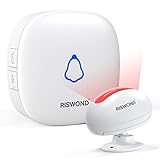
Honestly, most people just shove their new motion-activated light into a corner and hope for the best. That was me for years. I bought this ridiculously over-engineered garden light set, promising dusk-to-dawn brilliance. Turns out, the motion sensor was practically asleep, only waking up if a rogue badger did a dance routine right in front of it. Took me three evenings of fumbling in the dark, convinced the whole thing was broken.
Figuring out how to turn on motion sensor technology effectively shouldn’t feel like cracking a safe. It’s usually a lot simpler, but the instructions are often written by engineers who forgot what it’s like to just want the porch light to come on when you get home.
So, let’s bypass the marketing fluff and get down to brass tacks. You want the darn thing to work, right?
The Stupidly Simple Switch
Alright, first things first. Forget fancy apps for a second. Most motion-sensing devices, whether it’s a security light, a security camera, or even some smart plugs, have a physical switch or a setting that’s buried deeper than a pirate’s treasure. You’ve got to find it. Sometimes it’s a tiny little toggle on the back, other times it’s a dial that looks like it controls the volume on an old radio. I once spent a solid hour trying to get a new outdoor camera to detect anything, only to realize I hadn’t flipped the ‘motion detection’ switch from ‘OFF’ to ‘ON’. It was right there, about the size of my thumbnail, practically begging to be pushed.
Look for labels like ‘Motion’, ‘Motion On/Off’, ‘Sensor’, or sometimes just a little icon that looks like a person walking. Don’t be afraid to gently prod and poke. Just don’t, you know, break it. That’s an expensive mistake.
Now, if your gadget has an app – and let’s be honest, most do these days, promising the moon and stars – this is where things can get a bit more involved. Opening the app is usually the first step, that’s a given. Then you’re going to be hunting for a ‘Settings’ menu. It might be a gear icon, three little dots, or a line of text that says ‘More Options’. Once you’re in there, you’re looking for anything that screams ‘Motion Detection’, ‘Activity Zones’, ‘Detection Settings’, or ‘Alerts’.
This is where you can really fine-tune things. Some apps let you set specific ‘zones’ where the sensor should pay attention. So, if your porch camera is also looking at a busy street, you can tell it to ignore cars and only alert you if someone walks up your driveway. It feels like you’re training a very specific, very patient dog. You tell it ‘no cars, yes people’, over and over, until it (hopefully) gets it. The difference between a passive infrared (PIR) sensor and a radar-based one can be significant here; PIR is more sensitive to body heat changes, while radar can detect movement through thinner materials. (See Also: Will The Xbox One Be Compatible With 360 Motion Sensor )
I remember buying a smart doorbell that advertised its ‘intelligent motion detection’. Turns out, ‘intelligent’ meant ‘alerting me to every single falling leaf and passing pigeon’. It was like having a paranoid squirrel living in my phone, constantly chirping about nothing. I finally fiddled with the sensitivity settings, cranking it down from ‘Extremely High’ to ‘Just Right’, and the false alarms dropped by about 95%. It took me three evenings, a lot of caffeine, and nearly uninstalling the app out of sheer frustration.
Sensitivity Is Key
Most modern motion sensors, especially those tied to smart home systems, allow you to adjust the sensitivity. This is often displayed as a slider or a numerical scale. Too high, and you’ll get alerts for a moth fluttering past your window. Too low, and you’ll miss actual events. It’s a balancing act, and honestly, sometimes the default settings are just plain wrong. You’ll likely need to experiment a bit to find that sweet spot.
What About Schedules?
Some systems let you schedule when motion detection is active. This is super handy if you only want alerts at night, or when you’re away from home. Think about it: do you really need your front door camera to be hyper-vigilant when you’re sitting on the couch watching TV? Probably not. Setting up a schedule means the sensor is only ‘on duty’ when it truly matters, saving battery life and your sanity.
The ‘why Isn’t This Working?’ Troubleshooting Steps
Okay, you’ve flipped the switch, you’ve tweaked the app settings, and still nothing. What gives? There are a few common culprits. First, check the power source. Batteries dead? Wire loose? Seems obvious, but you’d be surprised how many times I’ve overlooked the simplest thing. I spent nearly $200 on a fancy new security light because I swore the old one was faulty. Turns out, the new one just needed a stronger Wi-Fi signal to connect to the app, something the manual vaguely alluded to in the fine print.
Second, consider environmental factors. Is the sensor blocked? Is it facing a heat source like an air vent or a window that gets direct sunlight? These can all trigger false positives or, conversely, prevent detection. For example, a motion sensor pointing directly at a sun-drenched wall might struggle to differentiate between the ambient heat and actual movement. The National Institute of Standards and Technology (NIST) has guidelines on sensor placement for accurate environmental monitoring, which, while technical, highlights how external factors can mess with even basic sensors.
Third, interference. Other electronic devices nearby can sometimes cause issues, though this is less common with modern tech. Think of it like trying to have a quiet conversation next to a rock concert – sometimes the noise just drowns everything out. If you’re using a wireless motion sensor, check its connection strength. A weak signal is often the culprit behind delayed or missed detections. (See Also: Why Is Motion Sensor Not Working )
Sensor Type Matters
It’s worth noting there are different types of motion sensors. Passive Infrared (PIR) sensors detect changes in infrared radiation (body heat). These are common in security lights. Microwave sensors emit microwaves and detect changes in the reflected waves. Ultrasonic sensors emit sound waves and detect changes in the reflected waves. Knowing what type you have can help you understand its limitations. A PIR sensor, for instance, might not pick up movement behind glass.
Common Motion Sensor Mishaps
I’ve seen people install motion-activated lights in places where they’re constantly triggered by things that don’t matter. Think of a busy sidewalk right outside your front door. Every single person walking by sets it off. Is that useful? Not usually. It’s like having a smoke alarm that goes off every time you toast bread. You’ll just end up ignoring it.
Another common mistake is expecting too much from cheap, no-name brands. I bought a pack of six cheap motion-activated closet lights once for about $15. They worked for about two weeks, then one by one, they just… stopped. The motion detection became so unreliable it was basically a regular light that only turned on if you practically hugged it. Stick to reputable brands, especially for security or critical applications. The extra $10-$20 is usually worth avoiding the headache.
| Device Type | Typical Setup | My Verdict |
|---|---|---|
| Outdoor Security Light | Physical dial/switch; App for sensitivity and scheduling | Find the sweet spot for sensitivity, or you’ll be annoyed. |
| Indoor Smart Camera | App-based settings, activity zones, notification frequency | Activity zones are your best friend against false alarms. |
| Battery-Powered Closet Light | Usually a single switch (On/Auto/Off) | Works fine for closets, but don’t expect miracles. |
| Smart Doorbell | App-based, highly configurable motion detection | Crucial to get the settings right, or you’ll go nuts. |
The Faq Zone
How Do I Know If My Motion Sensor Is on?
Many motion sensors have an indicator light, often a small LED, that shows their status. This light might turn red or blue when motion is detected, or stay solid green when active. Some devices also send a notification to your smartphone app when motion is detected, which is a pretty clear sign it’s working. If neither of those is an option, you might have to just test it by walking past it.
Can I Adjust How Far the Motion Sensor Detects?
Yes, in most cases. This is usually controlled by a ‘sensitivity’ setting in the device’s app or on a physical dial. Higher sensitivity means it can detect movement from further away, but also increases the chance of false alarms. Lower sensitivity means it needs to be closer to the object to trigger. Think of it like adjusting the volume on a microphone – you want it loud enough to hear, but not so loud it picks up everything.
My Motion Sensor Light Keeps Turning on and Off. What’s Wrong?
This is often a sensitivity issue. The sensor might be too sensitive and picking up minor environmental changes like wind blowing leaves, or even the temperature fluctuating. Alternatively, it could be positioned where it’s detecting something consistently in its range, like a tree branch swaying. Try lowering the sensitivity or repositioning the sensor to face away from anything that moves or fluctuates in temperature. (See Also: Why Is My Motion Sensor Led Flood Not Turn Off )
How to Turn on Motion Sensor for a Security Camera?
For most security cameras, you’ll need to access the device’s settings within its dedicated mobile app. Look for options like ‘Motion Detection’, ‘Activity Zones’, or ‘Detection Settings’. From there, you can usually enable motion detection, adjust its sensitivity, and sometimes even define specific areas where you want the camera to monitor for movement. Some cameras also have a physical switch, but app control is far more common for advanced features.
Final Thoughts
So, there you have it. Figuring out how to turn on motion sensor features on your gadgets is rarely rocket science, but it does require a little patience and a willingness to poke around. Don’t get discouraged if it doesn’t work perfectly on the first try. You’re not alone; I’ve wasted hours on this stuff.
Most of the time, it boils down to finding that one hidden switch or tweaking the sensitivity setting in an app. Pay attention to those environmental factors too – they’re sneaky.
If you’re still stuck after checking the power and the settings, and you’ve ruled out a faulty unit, consider looking up your specific model online. Sometimes, a quick search for ‘my [brand] motion sensor not working’ will bring up forums or manufacturer FAQs that have the exact fix you need. It’s always worth a shot before you declare the whole thing a lost cause.
Recommended Products