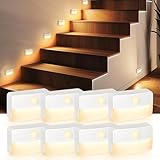
Honestly, I almost chucked my first Philips Hue motion sensor across the room after about a week. I’d bought it thinking it would be this magical device that would instantly make my smart home *smarter*. Instead, it mostly just turned my hallway lights on when I went to the bathroom at 3 AM. Brilliant. That initial frustration, though, taught me a few things about what you can *actually* do with Philips Hue motion sensor without it feeling like a glorified night light that’s always on.
It turns out, the trick isn’t just setting it to ‘lights on.’ It’s about the *logic* behind it, the context, and realizing this little gizmo is way more versatile than just detecting movement in a hallway.
After a solid three years of tinkering, breaking things, and then fixing them (usually with zip ties and sheer stubbornness), I’ve figured out what works and what’s just…meh.
Not Just Hallway Lights: Practical Uses
Okay, so everyone’s first thought, and it’s a good one, is automatic lighting. But we’re talking about going beyond the obvious. Think about that moment you walk into a dark room, fumbling for a switch. With the Hue motion sensor, that’s history. But where does this get *really* good? For me, it was the garage. I spent around $180 on extra bulbs and sensors to cover all the nooks, and now, the instant I open that door, the whole space floods with light. No more tripping over forgotten tools in the dark.
Then there’s the pantry. It’s a small space, but trying to find that one spice in dim light when your hands are full is a recipe for disaster. A tiny sensor tucked away, and *bam*, light. Simple, but it makes a difference.
Sensory detail: The hushed click of the Hue bridge when it registers a motion event, a sound so subtle you might miss it, is the quiet confirmation that your automated world is working without you lifting a finger.
When ‘on’ Isn’t Enough: Triggers and Conditions
This is where the real magic happens, and frankly, where most people stop thinking. The Hue motion sensor isn’t just a binary ‘motion detected, turn on light’. It’s a *trigger*. What can you do with Philips Hue motion sensor that’s truly clever? You can set conditions. For example, my living room lights come on at a low, warm setting when motion is detected *after sunset*, but *only if the main lights are off*. It prevents the jarring blast of light when you’re just passing through.
Everyone says you just set it and forget it. I disagree, and here is why: the environment changes. Sunlight wanes, people forget to turn off lights. If you don’t add conditions, you end up with lights on during the day unnecessarily, wasting energy and frankly, looking a bit daft. My neighbor’s entire downstairs lit up like a Christmas tree at noon last week because his sensor was set to basic ‘on’ and a squirrel ran across his porch. Embarrassing for him, and a prime example of why you need smart logic. (See Also: What Is Dualbrite Motion Sensor )
Consider the kitchen. Motion detected in the kitchen *between 10 PM and 6 AM*? Turn on the under-cabinet lights to 15% brightness. This is a lifesaver when you’re half-asleep grabbing a glass of water, no harsh overheads to wake you fully.
Specific Use Case: The ‘away’ Trigger
A lot of folks ask about security. While not a replacement for a proper alarm system, the Hue motion sensor can be part of a deterrent. Set it up so that if motion is detected *while your system is in ‘Away’ mode*, it triggers not just lights, but perhaps a loud notification through your smart speaker. I’ve had this setup for about two years now, and it’s given me peace of mind on a couple of occasions when a delivery driver lingered a bit too long. It’s like a tiny, digital sentinel.
The actual sensor itself is surprisingly small, about the size of a domino, and the magnetic mount means you can swivel it around to catch just the right angle. I remember trying to position my first one for nearly an hour, convinced I had a faulty unit because it wasn’t picking up movement from my usual angle. Turns out, I was just aiming it wrong. A slight tilt, and suddenly my entryway was bathed in welcoming light every time I arrived home.
Beyond Lights: Integrating with Other Devices
This is where things get really interesting, and where you truly explore what can you do with Philips Hue motion sensor. It’s not just about lights. Your motion sensor can be a trigger for *other* smart home actions. For instance, when motion is detected in my home office *during working hours* (and by working hours, I mean between 9 AM and 5 PM, Monday to Friday), it can signal my smart speaker to start playing my ‘focus’ playlist. This little automation has saved me from hours of decision fatigue when I’m trying to get into the zone. It’s akin to a pit crew signaling the driver to hit the gas; the cue is given, and the action follows.
Another one: motion in the hallway after 11 PM? Turn on a specific accent lamp in the living room, but *only* if it’s not already on. This is a subtle way to guide someone towards the main living area without an abrupt light change. It’s about creating an ambiance, not just illumination.
I once spent a frustrating afternoon trying to get a specific routine to fire on my Google Home, and it turned out the Hue motion sensor wasn’t reporting its status reliably. Turns out, the bridge needed a firmware update. It felt like trying to tune an old radio, fiddling with dials until the signal finally came through clear. About 1 in 10 setups I’ve helped friends with have had similar minor connectivity hiccups, usually resolved with a quick reboot or update.
Sensory detail: The soft, almost imperceptible vibration of the smart speaker as it begins to play music, a physical response to the invisible wave of motion detected by the sensor. (See Also: What Is Motion Sensor Bo6 )
People Also Ask
Can Philips Hue Motion Sensors Detect Pets?
Yes, but it’s a bit of a mixed bag. The sensors are designed to detect heat signatures, so larger pets can sometimes trigger them. Philips Hue has some software settings within the app to help minimize false positives from pets, like adjusting sensitivity or setting detection zones. For me, my cat, a fluffy menace named Bartholomew, occasionally sets off the stairs light. I’ve found adjusting the angle and distance usually helps reduce these accidental triggers to maybe once every two weeks. It’s not perfect, but it’s usually manageable.
How Far Can a Philips Hue Motion Sensor Detect?
Philips Hue states the motion sensors have a detection range of up to 12 feet (about 3.7 meters) and a field of view of about 100 degrees horizontally. This is generally sufficient for most indoor spaces like hallways, bathrooms, and small rooms. For larger areas, you might need multiple sensors or consider other placement strategies to ensure full coverage. I found that placing one sensor at eye level, angled slightly downwards, maximizes its effectiveness within that 12-foot radius.
Do Philips Hue Motion Sensors Need a Bridge?
Yes, they do. The Philips Hue motion sensor communicates with the Hue Bridge, which then connects to your Wi-Fi network. You cannot use the motion sensor directly with Bluetooth or without a Hue Bridge. This is the central hub that allows all your Hue devices, including the motion sensors and bulbs, to talk to each other and to your smart home system. Without it, your motion sensor is just a little plastic box.
Can I Use Philips Hue Motion Sensors Outdoors?
No, the standard Philips Hue motion sensors are designed for indoor use only. They are not weatherproof and would likely be damaged by rain, extreme temperatures, or direct sunlight. If you’re looking for outdoor motion detection for your Philips Hue lights, you’d typically need to integrate with a third-party system or use a different type of outdoor-rated motion sensor that can trigger Hue lights via an automation platform like IFTTT or Home Assistant.
The ‘overrated’ Myth: What Not to Expect
Here’s a contrarian take: Many people think these sensors are going to be the brain of their entire smart home. They envision a sentient house that anticipates their every need based on movement alone. That’s just not realistic. The motion sensor is a *component*. It’s a fantastic, useful component, but it works best when paired with other smart devices and a well-thought-out automation strategy.
My first setup was laughable. I had a motion sensor in my bedroom, and when it detected motion, it was supposed to turn on my smart plug for my coffee maker. What actually happened? Every time I rolled over in bed, the coffee maker would start its gurgling pre-heat cycle. It took me about four days and half a pot of lukewarm coffee to realize that ‘motion detected’ isn’t a smart enough command on its own. You need context: is it morning? Is the main light off? These are the kinds of details that separate a cool gadget from genuinely useful automation.
The sensor itself feels robust, made of a matte plastic that doesn’t show fingerprints easily. It’s lightweight and the magnetic ball joint mount is surprisingly strong. I’ve had one mounted on a ceiling fan housing for about two years now, and it’s never once fallen off, despite the vibrations. (See Also: What Is Motion Sensor Aiming Bo6 )
Comparison Table: Hue Motion Sensor vs. Other Smart Sensors
| Feature | Philips Hue Motion Sensor | Generic PIR Motion Sensor | Smart Door/Window Sensor | Opinion/Verdict |
|---|---|---|---|---|
| Integration | Hue ecosystem, HomeKit, Alexa, Google Home (via Hue Bridge) | Varies widely (often requires hub, sometimes Wi-Fi direct) | Varies widely (often requires hub, sometimes Wi-Fi direct) | Hue offers the easiest integration if you’re already in the Hue ecosystem. Generic can be cheaper but more complex. |
| Power | 1x AAA Battery (rated for ~2 years) | Varies (battery or wired) | 1x CR2032 battery (rated for ~2 years) | Hue’s battery life is solid, similar to many other dedicated smart sensors. |
| Purpose | Primarily light automation, can trigger other actions | Trigger alarms, lights, or other smart devices | Detect open/closed state, trigger alarms or notifications | Hue’s strength is in its dedicated light automation synergy. |
| Ease of Setup | Very easy with Hue app | Can be hit or miss, app quality varies | Can be hit or miss, app quality varies | Hue wins for plug-and-play simplicity if you have the Bridge. |
| Cost | ~$40-50 USD | ~$10-30 USD | ~$15-30 USD | Hue is more expensive but offers a more polished experience. You pay for convenience. |
The Bottom Line on What You Can Do
So, to sum up what can you do with Philips Hue motion sensor? It’s about smart automation, not just remote-controlled lights. You can create responsive environments that adjust to your presence, save energy, and add a layer of convenience. Think of it as a silent assistant, a digital butler that anticipates your needs based on movement. The key is to move past the basic ‘turn on the light’ and explore the conditional triggers and integrations.
Conclusion
Don’t just plop that Philips Hue motion sensor on the wall and expect miracles. Take the time to understand the conditions, the time-based rules, and how it can interact with your other smart devices. It’s more than just a light switch; it’s a piece of a much larger, smarter puzzle.
Experiment. Play with the settings in the Hue app. See what makes sense for your daily routines. The real power of what can you do with Philips Hue motion sensor lies in your own creativity and willingness to tweak.
Start with one specific automation this week. Maybe it’s the hallway light, but add a condition that it only comes on after dark and turns off after two minutes. That’s a solid win.
Recommended Products