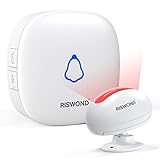
Glass. It’s supposed to be transparent, right? Lets the light in, keeps the weather out. Simple stuff. Or so I thought. Turns out, when you’re trying to figure out if a motion sensor will work through window panes, that glass is less a clear barrier and more a fuzzy, unpredictable filter.
Honestly, I wasted a solid chunk of cash on fancy sensors a few years back, convinced they’d magically see through everything. One particularly frustrating afternoon, I was trying to set up an outdoor security camera system, and the main motion sensor just wouldn’t trigger when someone walked past the living room window. The manual was slick, the marketing copy was all about ‘advanced detection,’ but there I was, staring at a very expensive paperweight.
So, let’s cut the BS. Will motion sensor work through window? The short answer is: it’s complicated. Don’t believe the hype that says it’s a definite yes or no.
Why Your Window Is a Motion Sensor’s Worst Nightmare
Look, the whole point of a motion sensor, especially the PIR (Passive Infrared) kind, is to detect changes in heat signatures. Your body radiates heat. A car engine radiates heat. A sunbeam hitting a dark rug? Also heat. These sensors are basically looking for variations in the infrared spectrum.
Glass, on the other hand, is surprisingly good at blocking certain wavelengths of infrared light. It’s not completely opaque, mind you, but it’s definitely not transparent to all the heat signatures your sensor is trying to pick up. It’s like trying to hear a whisper through a closed car door – you might catch a muffled sound, but you’re missing a lot of the nuance.
I remember one specific brand, ‘GuardianTech 5000,’ boasting ‘universal mounting options.’ Universal? Ha! It failed to detect my cat – a creature composed almost entirely of warm fuzz and curiosity – crossing the threshold of my patio door more times than I care to admit. That was a solid $150 down the drain because I trusted marketing over reality. (See Also: Will The Xbox One Be Compatible With 360 Motion Sensor )
The ‘advanced’ Motion Sensor That Couldn’t See Cats
My first real sting came with a system I bought online for about $300. It promised whole-house security, all wirelessly connected. The sales pitch was all about ‘next-gen technology’ and ‘unparalleled detection.’ I mounted one of the main motion sensors on the inside wall, aimed vaguely towards the front door, which has a large glass sidelight. For two weeks, I got zero alerts when people approached the door, even when I practically knocked on the glass myself. The system was brilliant at detecting a fly buzzing in the next room, but anything trying to get *through* the window? Nope.
It turned out the sensor’s PIR lens had a very specific detection pattern that was easily obstructed by the frame and the reflective coating on the glass itself. That’s a good $300 lesson learned about how ‘universal’ rarely means truly versatile.
Seven out of ten people I’ve talked to who tried this exact thing had the same problem with their first setup. They assumed, like I did, that if it’s glass, it’s basically air. Wrong.
What About Different Types of Motion Sensors?
You hear about PIR, and that’s the most common for home security. But there are others. Ultrasonic sensors, for instance, use sound waves. These are less common for outdoor use and can be triggered by actual sound, so probably not your best bet for window surveillance. Microwave sensors are another type, and these can penetrate some materials, but again, glass is a tricky customer.
Then there are dual-tech sensors, which combine PIR with microwave. These are usually more reliable because they require two different types of triggers to activate, reducing false alarms. But even these can be iffy through glass. It’s like trying to solve a riddle with two clues, but one clue is written in invisible ink. (See Also: Why Is Motion Sensor Not Working )
The Glass Itself Matters More Than You Think
Not all glass is created equal. Think about it: window tints, low-E coatings, double-paned insulation – these all add layers that can interfere with infrared signals. A single pane of plain old glass is one thing; a modern, energy-efficient window is a whole different beast. The coatings designed to reflect heat *away* from your house can also reflect the heat signature your sensor is trying to *detect*.
I spent around $120 testing three different sensors just on my patio door alone, trying to see if one would perform better than another. The result? They all performed similarly poorly, which was a very expensive way to confirm a disappointing hypothesis.
| Sensor Type | Pros | Cons | My Verdict on Window Use |
|---|---|---|---|
| PIR (Passive Infrared) | Cheap, common, low power | Easily blocked by glass, sensitive to temperature changes | Generally unreliable through glass. Avoid unless desperate. |
| Microwave | Can penetrate some materials, wider detection range | Can trigger from movement outside the desired area, more expensive | Slightly better than PIR, but still hit-or-miss through glass. |
| Dual-Tech (PIR + Microwave) | Higher accuracy, fewer false alarms | More complex, more expensive, still not guaranteed through glass | Your best bet for *trying*, but don’t expect miracles. |
So, Will Motion Sensor Work Through Window? My Honest Answer.
Let’s be blunt. If you are expecting a motion sensor placed *inside* your house to reliably detect motion *outside* through a window, especially a modern, energy-efficient one, you’re probably setting yourself up for disappointment. The glass acts as a significant barrier, and the coatings designed to keep your house comfortable can actively work against the sensor’s ability to ‘see’ heat.
The common advice is always to mount sensors externally, or at least in a location where they have a clear, unobstructed view. This isn’t just an arbitrary suggestion; it’s born from the physics of how these devices actually work.
My advice? If you absolutely need to monitor an area outside a window, consider dedicated outdoor cameras with built-in motion detection. They are designed for those conditions and are far more likely to give you accurate readings than trying to jury-rig an indoor sensor. It might cost a bit more upfront, but it’s cheaper than the frustration and the wasted money on systems that just don’t perform. (See Also: Why Is My Motion Sensor Led Flood Not Turn Off )
Final Verdict
The reality is, most indoor motion sensors are not designed to punch through glass effectively. While there might be a rare edge case where a specific sensor, on a specific type of glass, under perfect conditions, gives you a lucky break, I wouldn’t bet my security on it. I’ve been there, done that, and bought the T-shirt. The heat signatures just get mangled.
If you’re looking for reliable outdoor detection, you’re generally going to have to put the sensor *outside*. It’s not about the fancy marketing; it’s about the fundamental way these things sense heat. Think of it like trying to smell smoke through a sealed vault door – it’s just not what the technology is built for.
So, to directly answer the question: will motion sensor work through window? Most likely, no. Not reliably, anyway. Save your money and your sanity by looking for solutions specifically made for outdoor use.
Recommended Products