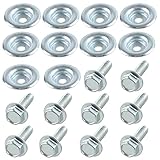
I remember the first time I saw a truly gnarly piece of hardware that looked like it could anchor a battleship. It was some kind of industrial-looking nut and bolt combo, and honestly, it made my usual garage finds look like they belonged in a dollhouse. Turns out, a lot of those beefy fasteners aren’t just for show; they’re designed for specific, demanding jobs. Take the humble 307 steel bolt. It’s not something you’ll find holding your Ikea bookshelf together, that’s for sure. But if you’re working on something that needs serious staying power, understanding what this particular bolt is good for can save you a world of hassle – and potential failure.
For years, I just grabbed whatever bolt looked strong enough. Big mistake. You learn pretty quick that strength isn’t a one-size-fits-all deal. Different materials, different grades, different applications. It’s a whole rabbit hole. So, let’s talk about this specific guy: the 307 steel bolt.
So, What Exactly Makes a 307 Steel Bolt Different?
Alright, let’s cut to the chase. When we’re talking about a 307 steel bolt, we’re usually talking about a specific type of coarse-threaded fastener. The ‘307’ isn’t some fancy marketing term; it refers to a specification, often related to its material composition and intended use. In the world of fasteners, especially for automotive and general construction, you’ll see designations like Grade 2, Grade 5, and Grade 8.
These grades tell you a lot about the bolt’s tensile strength – how much pulling force it can withstand before breaking. A Grade 5 bolt, for instance, is pretty common and strong enough for a lot of everyday applications. Grade 8 is significantly stronger.
The ‘307’ designation, however, often points towards a bolt with a specific set of properties that might not neatly fit into those common SAE (Society of Automotive Engineers) grades. It often implies a general-purpose steel bolt that offers a decent balance of strength and ductility, meaning it can bend a bit before snapping.
Think of it like this: you wouldn’t use a tiny drywall screw to hold an engine block in place, and you wouldn’t use a massive, heavy-duty bolt to assemble a birdhouse. Each has its place. The 307 steel bolt generally falls into the category of ‘strong enough for many common load-bearing tasks, but not the absolute toughest kid on the block.’
Its metallurgy is often optimized for moderate stress applications where some shock absorption is beneficial. This means it’s less likely to fracture catastrophically under sudden impact compared to some of the higher-strength, more brittle grades. I’ve personally seen bolts that looked incredibly solid shear off like a dry twig because they were the wrong grade for the job, and that’s a lesson you don’t forget. The specific alloys in a 307 bolt are chosen to give it that reliable middle ground.
The key takeaway here is understanding that ‘steel bolt’ is a broad category. The specific designation, like 307, is what gives you clues about its intended performance. It’s less about being ‘super strong’ and more about being ‘appropriately strong for its designed purpose.’
For many DIY projects, repairs, and even some professional applications in general manufacturing or automotive repair, a 307 steel bolt hits a sweet spot. It’s not overkill like a massive industrial anchor bolt, but it’s a solid step up from your basic hardware store fare.
It’s the kind of bolt you’d trust to hold a suspension component, a trailer hitch bracket, or a piece of machinery where vibration and moderate loads are expected. It’s a workhorse, not a show pony.
Where Does a 307 Steel Bolt Actually Get Used?
You won’t typically find a 307 steel bolt listed in a high-performance racing manual or specified for aerospace applications. Those fields demand specialized materials with extreme tolerances and certifications.
However, in the vast universe of general mechanical applications, these bolts are surprisingly common. Think about your average pickup truck or a sturdy piece of farm equipment. Many of the fasteners holding various components together, especially in areas that experience regular road vibration or moderate strain, could very well be 307 steel bolts. They’re a workhorse for a reason: they provide a good, reliable level of strength without the premium cost associated with the absolute highest grades.
I once had a trailer hitch start to wobble ominously after a long trip, and upon inspection, I found a couple of the original bolts had started to stretch and deform slightly. Replacing them with a slightly beefier grade, which my local parts guy identified as being in a similar strength class to what a 307 would offer, completely stabilized it. That experience hammered home for me that sometimes ‘good enough’ is actually ‘just right,’ and the 307 designation often signifies that ‘just right’ quality for many common tasks.
One area where they often shine is in automotive repair, particularly for non-important suspension components, exhaust system hangers, or even certain engine mounting brackets where extreme temperatures aren’t the primary concern. They are also prevalent in general manufacturing, used on assembly lines for attaching guards, brackets, and various machine parts. You might also see them used in agricultural machinery, construction equipment, and even some more solid types of furniture or shelving systems that need to withstand more than just light loads.
The common advice you’ll hear is to just buy the strongest bolt you can find. I disagree with that wholesale. (See Also: Are All Honda Atv Bolt Patterns The Same )
Sometimes, over-specifying a bolt can lead to problems. A bolt that’s too strong and brittle might snap under shock, whereas a slightly more ductile bolt, like a 307, might bend and give you a warning before catastrophic failure.
It’s about matching the fastener to the load and the environment. I’ve seen perfectly good projects fall apart because someone used a bolt that was too hard and brittle and just snapped under vibration, when a slightly softer, more forgiving bolt would have held up fine for years.
The beauty of a 307 steel bolt lies in its versatility and cost-effectiveness for its intended applications. It’s not glamorous, but it gets the job done reliably for a huge range of everyday mechanical needs. It’s the bolt you reach for when you need something more substantial than a hardware store bolt but don’t need the specialized engineering of aerospace-grade fasteners. They’re often sold in bulk packs for mechanics and fabricators, which tells you something about their widespread utility. It’s the unsung hero of many mechanical assemblies, providing that dependable connection that keeps things from falling apart.
What to Look for: Beyond Just ‘steel’
When you’re eyeing up a 307 steel bolt, or any bolt for that matter, it’s not just about the material being ‘steel.’ There are a few key things you need to check to make sure you’re getting the right thing for your job. First off, the head markings. While ‘307’ might be a designation, you’ll often see other markings on the bolt head that indicate its grade or specific properties.
These can be dots, lines, or numbers. For SAE bolts, Grade 5 is typically marked with three radial lines, and Grade 8 with six. The ‘307’ designation might not always have a universal marking system like SAE grades, but understanding what the manufacturer or supplier specifies is most important. Always check the packaging or product description.
If it’s just labeled ‘steel bolt,’ walk away. You need to know its intended strength and application.
Next, consider the threading. Is it coarse or fine thread?
Most general-purpose bolts, including those likely classified as 307, will have coarse threads. These are easier to thread and less prone to damage from vibration. Fine threads offer greater tensile strength in a smaller diameter but can be more susceptible to stripping and vibration loosening.
For a bolt intended for general use and moderate loads, coarse threads are usually the way to go. Also, pay attention to the length and diameter. These are standard measurements, but make sure they match your application precisely.
A bolt that’s too short won’t engage enough threads in the mating part, severely compromising its holding power. Too long, and it might interfere with other components or require excessive tightening. I once tried to make do with a bolt that was only a few threads shorter than what was specified.
It seemed fine at first, but after a few months, the constant vibration of my old truck shook the connection loose. It was a nagging rattle that finally led me to pull over and realize the bolt had worked its way almost completely out.
Lesson learned: precise fit matters, especially with load-bearing fasteners.
Finally, think about coatings. Are you working in a moist environment or somewhere that might see rust?
Many 307 steel bolts will come with a zinc coating (often called ‘zinc-plated’ or ‘galvanized’) for corrosion resistance. This is usually sufficient for most outdoor applications. If you need extreme corrosion resistance, you might look for stainless steel, but that’s a different ballgame entirely and often comes with its own set of strength characteristics and cost implications. (See Also: Are Ak Bolts Interchangeable )
For a standard 307 steel bolt, a basic zinc coating is a good indicator that it’s meant for general-purpose use where a bit of protection against the elements is desired. It’s not about picking the shiniest bolt; it’s about picking the one that has the right specifications for the job you’re about to do.
Common Mistakes When Using Bolts Like These
I’ve made my fair share of blunders in the workshop, and fastener mistakes are a classic. The most common pitfall with a bolt like a 307 steel bolt is simply underestimating its purpose or, conversely, overestimating it. People often grab a bolt that looks strong, assuming that’s all that matters.
They might pick one that’s too large in diameter for the hole, forcing it in, which can deform the mating surfaces and weaken the connection. Or, they’ll use a bolt that’s of a much higher grade than necessary, which can be more brittle and might snap under vibration when a slightly more flexible bolt would have held fine. I remember trying to replace a few bolts on the frame of an old garden trailer.
I ended up using some heavy-duty ones I had lying around, thinking ‘more is better.’ Turns out, they were so stiff that the trailer frame itself started to crack around the bolt holes under load.
The original bolts, probably something akin to a 307, had a bit of give that allowed the frame to flex slightly without stressing the metal around the fastener. I had to go back and replace them with the correct, less rigid bolts to stop the frame from tearing.
Another huge mistake is improper tightening. Overtightening is a killer. It can strip the threads in the bolt or the mating part, it can stretch the bolt beyond its elastic limit (making it weaker), and it can even deform the components you’re joining.
Undertightening is just as bad, leading to looseness, vibration, and eventual failure. You need to use the correct torque specification for the bolt’s grade and size. Many people just crank on it with a wrench until it ‘feels tight,’ which is a recipe for disaster.
Investing in a torque wrench for important applications is one of the best moves you can make. It’s not just about brute force; it’s about controlled tension. I learned this the hard way after a wheel came loose on a go-kart I was building as a teenager.
I thought I had tightened the lug nuts plenty, but I hadn’t used a torque wrench and clearly hadn’t applied even, correct pressure. It was a scary moment, and a very expensive lesson in proper fastener technique.
Finally, don’t ignore the environment. Using a standard zinc-plated steel bolt in a highly corrosive environment, like near saltwater or in industrial chemical plants, is asking for trouble. The bolt will rust away, losing its strength and eventually failing. While a 307 steel bolt might be suitable for many outdoor applications, it’s not a universal solution for extreme conditions. For those, you need specialized materials like stainless steel or even titanium, which come with their own price tags and installation considerations. Always consider where and how the fastener will be exposed to the elements.
A Quick Look at Fastener Grades and Their Typical Uses
To really nail down what a 307 steel bolt is good for, it helps to see how it stacks up against common SAE fastener grades. This isn’t an exhaustive list, but it gives you a general idea of where things generally sit in terms of strength and typical applications. Remember, the ‘307’ designation might not fit perfectly into these SAE categories, but it generally occupies a space that’s solid for general use without being a specialty fastener.
| Fastener Designation (Example) | Tensile Strength (Approximate, psi) | Typical Use Cases | My Verdict |
|---|---|---|---|
| SAE Grade 2 | Up to 60,000 | Light-duty applications, furniture, general hardware where load is minimal. | Barely adequate for anything structural. Fine for shelves, maybe. |
| SAE Grade 5 | Around 74,000 – 80,000 | General construction, automotive (non-important), machinery frames, moderate loads. | The workhorse for many DIY projects. Good all-rounder. |
| SAE Grade 8 | Around 120,000 – 150,000 | Heavy-duty automotive (suspension, steering), structural applications, high-stress areas. | Serious strength, but can be brittle. Use where you absolutely need it. |
| 307 Steel Bolt (General) | (Varies, but typically between Grade 2 and Grade 5, with good ductility) | General automotive repair, trailer components, machinery mounting, moderate load-bearing tasks. | A reliable, versatile option for many everyday mechanical jobs. Good balance. |
As you can see, the 307 steel bolt often fits into a niche that bridges the gap between everyday hardware store bolts and the more specialized high-strength fasteners. It’s chosen for applications where you need more than just a basic bolt but don’t require the extreme performance (or cost) of something like a Grade 8. The ductility is a key factor often associated with these general-purpose classifications; it means the bolt can deform slightly before failing, which is often preferable in dynamic situations with vibrations or occasional shock loads. I’ve seen too many projects where a Grade 8 bolt, while incredibly strong, snapped clean under impact because it lacked that little bit of flex. The 307 offers a more forgiving solution in those scenarios, providing sufficient strength without the brittleness.
Practical Tips for Using 307 Steel Bolts
So, you’ve got a project that calls for something like a 307 steel bolt. Here are a few practical tips to make sure you’re using them correctly and getting the most out of them.
First off, always clean your threads. Whether it’s the bolt itself or the threads in the nut or tapped hole it’s going into, dirt, debris, or old rust can affect the torque readings and the final clamping force. A wire brush is your best friend here. (See Also: Are All Bolt Patterns The Same )
Just a quick clean-up can make a big difference. If you’re using them in a situation with a lot of vibration, consider using a thread-locking compound. Blue Loctite is good for most applications; it holds firm but can be disassembled with reasonable force.
Red Loctite is for permanent bonds and should be used with extreme caution, if at all, on anything you might need to take apart later. I learned that the hard way when I permanently bonded a pulley that I later needed to replace.
When you’re tightening, use the right tool and, as mentioned before, a torque wrench whenever possible. Don’t just guess. Look up the recommended torque specifications for the size and grade of bolt you’re using.
If you can’t find specific data for a ‘307’ bolt, use the specs for a comparable SAE Grade 5 bolt as a starting point, but err on the side of caution and check for any signs of stress or deformation. Tighten in stages, especially on assemblies with multiple bolts. Go around a few times, tightening each bolt a little bit at a time, rather than tightening one bolt all the way down.
This makes sure even pressure across the mating surfaces, which is important for preventing leaks or warping. I had a manifold leak on an old engine once because I tightened the bolts unevenly. A slow, gradual tightening process, torquing them in a star pattern, solved the problem.
Finally, store them properly. If you buy them in bulk, keep them in a clean, dry place. Moisture is the enemy of steel, even with protective coatings. Use small containers or bags to keep them organized by size and type. Nothing is more frustrating than needing a specific bolt and having to dig through a jumbled mess of mixed fasteners. Having a well-organized collection of reliable fasteners, including your 307 steel bolts, will save you time and headaches on future projects. It’s a small thing, but it pays off in the long run. Good fasteners are the backbone of any solid mechanical assembly.
What Is the Difference Between a Grade 5 and a Grade 8 Bolt?
Grade 5 bolts are a common medium-strength fastener, typically made from medium carbon steel. They have a tensile strength around 74,000 to 80,000 psi and are marked with three radial lines on the head. Grade 8 bolts are significantly stronger, made from medium carbon alloy steel, with a tensile strength around 120,000 to 150,000 psi. They are marked with six radial lines on the head and are used in high-stress applications like important suspension components.
Are 307 Steel Bolts Considered High-Strength?
Generally, no. While they are stronger than basic hardware store bolts (like SAE Grade 2), they are not typically classified as ‘high-strength’ in the same way SAE Grade 8 or higher-performance fasteners are. They offer a good balance of strength and ductility for general-purpose applications where extreme loads or stresses are not the primary concern.
Can I Use a 307 Steel Bolt for Structural Projects?
For most common structural projects that don’t involve extreme loads or safety-important components, a 307 steel bolt might be sufficient. However, for important structural applications, it’s always best to consult engineering specifications or use fasteners explicitly rated for structural use, such as SAE Grade 5 or Grade 8, depending on the load requirements. Always err on the side of caution for structural integrity.
What Is the Tensile Strength of a 307 Steel Bolt?
The tensile strength of a ‘307 steel bolt’ can vary as it’s not as universally standardized as SAE grades. It generally falls into a range that provides good strength for general use, often sitting between SAE Grade 2 and SAE Grade 5 in terms of raw strength, but with potentially better ductility. Always refer to the manufacturer’s specifications if available, as there isn’t a single, fixed tensile strength value for all ‘307’ bolts.
Final Verdict
So, there you have it. A 307 steel bolt isn’t some exotic piece of hardware reserved for rocket scientists. It’s a reliable, workhorse fastener designed for a wide range of everyday mechanical tasks where you need more than just your average bolt, but don’t need the overkill of the highest-strength options. Understanding its place in the fastener hierarchy, paying attention to markings, and using it with proper technique will save you from a lot of headaches down the road.
Don’t be the person who over-engineers a simple fix or, worse, under-specifies a important connection. A little knowledge about fasteners like the 307 steel bolt goes a long way. Next time you’re at the hardware store or ordering parts, take a moment to think about what you’re actually buying and why. It might just prevent a costly mistake or a frustrating failure later on.
What’s the most bizarre fastener situation you’ve ever encountered and had to fix?