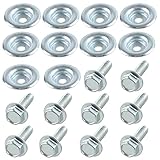
I remember the first time I tried to assemble a cheap flat-pack bookshelf. Everything looked straightforward, until I hit the part where you had to, you guessed it, screw in a bolt. I grabbed what I thought was the right size wrench, a 15mm, and started cranking. It felt loose, the bolt head started to get chewed up, and I was getting seriously frustrated. That’s when I realized that while technically, a 15mm wrench can be used to screw in a bolt, it’s often the wrong tool for the job, and that’s a lesson learned the hard way.
This whole thing about whether a 15mm wrench is used to screw in a bolt seems simple, but there’s more to it than just grabbing a tool and turning. It’s about understanding sizes, types of fasteners, and the sheer pain of stripping a bolt head when you’re only halfway done.
When the 15mm Wrench Gets Its Chance
Alright, let’s get this straight. Can a 15mm wrench be used to screw in a bolt? Yes, sometimes. But the real question is, should it be? Most of the time, the answer is probably not, unless you’re in a pinch or dealing with a very specific, often metric, fastener. Think about it like this: you can hammer a screw into wood if you absolutely have to, but you’re going to regret it. It’s the same principle here. A 15mm wrench is designed for fasteners that have a head measuring 15 millimeters across the flats. This isn’t the most common size for bolts you’ll find in your average DIY project or household repair, which is why the initial confusion arises.
The vast majority of bolts you’ll encounter in the US, especially in older equipment or anything imperial-sized, will use SAE (Society of Automotive Engineers) measurements. Think 7/16ths, 1/2 inch, 9/16ths, and so on.
These don’t translate directly to neat metric millimeters. Metric bolts, on the other hand, are sized in millimeters.
So, a metric bolt with an M8 thread might have a head that takes a 13mm wrench, and an M10 bolt might need a 17mm wrench. Where does the 15mm fit in? It’s a bit of a middle child in the fastener world. You’ll see it on some specific metric machine screws, some electrical components, and occasionally on imported furniture or equipment where metric fasteners were chosen for cost or manufacturing reasons.
I’ve had my fair share of moments staring at a bolt head, wrench in hand, wondering if I’ve got the right tool. Once, I was trying to tighten up a bracket on my old motorcycle. It was an import, and I was pretty sure it used metric fasteners.
I grabbed my 15mm socket, and it almost fit. I forced it a bit, and heard that awful grating sound. Turns out it was a 17mm, and I’d managed to round off the corners just enough that neither wrench would get a good grip anymore.
That was a frustrating hour spent trying to get that bolt out without damaging the surrounding metal. So, while a 15mm wrench can engage a bolt, it’s the fit that matters, not just the nominal size.
The Pitfalls of the ‘almost Right’ Wrench
This is where things go south, fast. Using a wrench that’s even a little bit too big for the bolt head is like trying to have a conversation with someone across a crowded room – you’re just not going to get a clear signal. Forcing a 15mm wrench onto a bolt head that’s just slightly larger, say 15.5mm or even 16mm, puts stress on the corners of both the wrench and the bolt. What happens? You get what we call ’rounding’ or ‘stripping’ the bolt head. (See Also: Are All Honda Atv Bolt Patterns The Same )
Instead of the wrench gripping the flat sides of the bolt head securely, it starts to slip and grind against the corners. This makes the bolt head progressively rounder, and the wrench flats become more worn. Soon, neither tool can get enough purchase to turn the bolt. This is infuriating when you’re trying to tighten something, but it’s a downright nightmare when you’re trying to loosen it.
You end up needing specialized bolt extractors, which are a pain in the backside and often damage the surrounding material. I once spent a solid two hours trying to remove a single stripped bolt from a lawnmower engine because I’d initially used a slightly too-large wrench.
The sheer amount of swearing that occurred during that process could have powered a small city.
The opposite problem, using a wrench that’s too small, is also a disaster. A 15mm wrench on a bolt head that’s actually meant for a 14mm wrench will just spin uselessly or, worse, might slip and gouge the bolt head.
The common advice you’ll find is to always use the ‘snuggest’ fit. And I agree, but with a caveat: that snug fit needs to be correct. Relying on a 15mm wrench when you should be using a 17mm, just because it feels almost right, is a recipe for stripped bolt heads and wasted time. This is why having a good set of metric wrenches, covering a range of sizes, is so important.
You shouldn’t have to guess; the right size should be obvious.
When a 15mm Wrench Actually Makes Sense
So, if a 15mm wrench isn’t the go-to for most bolts, when does it actually get used properly to screw in a bolt? As I mentioned, it’s primarily for metric fasteners where the head size is indeed 15mm. This often pops up in applications like assembling certain types of furniture, particularly from European manufacturers who standardize on metric. You might also find them on some smaller engine components, bicycle parts, or certain automotive sensors and brackets. It’s not unheard of for certain types of plumbing fittings or even some electrical conduit connectors to use a 15mm nut or bolt head.
Another common area where you’ll encounter a 15mm bolt head is in some automotive applications, especially on older Japanese or European vehicles. Many accessory brackets, clamps, or even some fluid reservoir caps might use a 15mm bolt. When I worked in a small auto repair shop years ago, we’d always have a good selection of metric wrenches, and the 15mm was used more often than you might think for certain makes and models. It’s also a size that sometimes shows up on specialized tools or equipment, not necessarily the tools themselves, but things they attach to.
Here’s a contrarian take for you: some people swear by using adjustable wrenches for everything. I disagree, vehemently. An adjustable wrench, while versatile, is notoriously bad at providing a solid, non-slipping grip, especially on metric sizes. The jaws can flex, and it’s far too easy to round off a bolt head, even if you have the ‘correct’ size adjustment. For any bolt that’s anything more than finger-tight, a fixed-size wrench or socket is always the better, safer choice. If you’re going to use a 15mm wrench on a bolt, make sure it’s a 15mm wrench and not an adjustable one that’s just ‘close enough’. (See Also: Are Ak Bolts Interchangeable )
What to Look for: Beyond the Millimeter Mark
When you’re facing a bolt and wondering if your 15mm wrench is the right tool, don’t just look at the number printed on the wrench. You need to look at the bolt head itself and understand the context. First, check if the bolt head is rounded or hex-shaped. Most common bolts are hex-headed. Then, try to visually estimate the size. Does it look significantly larger or smaller than your typical SAE bolt heads? If it looks like it might be metric, grab your metric wrench set. Try the 14mm, then the 15mm, then the 17mm. The one that slides on with minimal play, but without needing to be forced, is your winner.
It’s not just about the wrench size matching the bolt head size; it’s about the type of fastener. Are you dealing with a standard hex bolt, a carriage bolt (which has a smooth, domed head and a square neck), a lag bolt (which looks like a screw with a hex head), or a nut? A 15mm wrench is typically used for hex bolts and nuts. If you’re trying to tighten a carriage bolt, you might need a wrench on the nut on the backside, or if it’s a specific type of carriage bolt with a hex recess, you might need an Allen key or Torx bit. For lag bolts, you’d use a wrench on the head, but they are less common in metric sizes.
A practical tip: always buy tools in sets. While individual wrenches can be tempting, a decent 15-piece or 22-piece metric wrench set will give you all the common sizes (and some less common ones) you’ll need. This way, you’re not left scrambling or forcing the wrong tool. Investing in a good set of combination wrenches, which have both an open-end and a box-end on each size, is a smart move. The box-end offers a much more secure grip than the open-end, which is exactly what you want when dealing with potentially finicky metric fasteners.
Common Mistakes and How to Avoid Them
The biggest mistake, as we’ve covered, is using the wrong size wrench. This leads to stripped bolt heads, damaged tools, and immense frustration. Another common error is trying to overtighten bolts. Just because you can keep turning doesn’t mean you should. Overtightening can strip the threads in the material you’re screwing into, or even snap the bolt itself. This is especially true with softer materials like aluminum or plastic. Always tighten until snug, then give it maybe another quarter or half turn, depending on the application. If a torque specification is available, use a torque wrench – it’s the only way to be absolutely sure you’re not over or under-tightening.
Relying on worn-out tools is another pitfall. If your 15mm wrench has seen better days, with rounded edges on the box-end, it’s time to retire it. Using a worn tool is almost as bad as using the wrong size. Invest in quality tools that will last.
For a 15mm wrench to be used properly to screw in a bolt, both the wrench and the bolt need to be in good condition. I’ve seen people try to make do with a beat-up socket set, and it’s always a struggle. I once bought a cheap set of metric sockets for about $45, and within six months, the 15mm and 17mm sockets were noticeably rounded. Lesson learned: spend a bit more on decent quality tools.
Here’s a table summarizing some common wrench-related mistakes:
| Mistake | Consequence | How to Avoid | Verdict |
|---|---|---|---|
| Using a wrench too large/small | Stripped bolt head/nut, damaged tool | Use the correct size fixed wrench or socket. | Avoid at all costs. |
| Overtightening | Stripped threads, broken bolt, damaged material | Tighten until snug, then add a small additional turn. Use a torque wrench if spec is available. | Common, but easily preventable. |
| Using worn-out tools | Poor grip, potential for slipping and damage | Inspect tools regularly. Replace worn wrenches and sockets. | False economy. |
| Using an adjustable wrench for tight fasteners | High risk of stripping bolt head/nut | Always use a fixed-size wrench or socket for anything beyond finger-tight. | Use only for emergencies or low-torque applications. |
Real-World Scenarios and Practical Tips
Let’s talk about a practical scenario. You’ve bought some IKEA furniture. It’s a good bet that some of the hardware will be metric. You unpack the box, and there’s a bag of bolts. You identify the ones that look like they need a wrench. You grab your 15mm wrench. Does it fit snugly onto the hex head? Does it turn the bolt without slipping or requiring excessive force? If yes, then congratulations, a 15mm wrench is being used correctly to screw in that bolt. If it’s loose, grab a 14mm. If it’s too tight, grab a 17mm. IKEA is notorious for using a mix of sizes, so having a complete metric set is almost mandatory.
Another example: you’re working on an older bicycle that uses some non-standard metric components. Many brake calipers, derailleur adjustments, or even water bottle cage mounts might use bolts that require a specific metric wrench. A 15mm wrench might be the exact size needed for a particular lock nut or adjustment bolt on that bike. The key is to always have the right tool for the job. Trying to improvise with a wrench that’s ‘close enough’ is how you end up with damaged parts and a project that takes twice as long. (See Also: Are All Bolt Patterns The Same )
Here are a few practical tips: 1. Always identify the fastener type and size before you start. Look for markings on the bolt head (though these can be worn). 2. Invest in a good quality set of metric combination wrenches. Brands like GearWrench, Craftsman (the good ones, not the super-cheap stuff), or even some of the mid-range lines from Husky or Kobalt are generally reliable. 3. Keep your tools clean and organized. A wrench that’s gummed up with grease or dirt might not seat properly on a bolt head. 4. If you’re ever unsure, err on the side of caution. It’s better to spend a few extra minutes finding the right size than to spend hours fixing a stripped bolt.
People Also Ask:
What Size Bolt Does a 15mm Wrench Fit?
A 15mm wrench is designed to fit a bolt head that measures 15 millimeters across its flats. This size is most commonly found on metric fasteners, such as certain machine screws, nuts, and bolts used in European or Japanese manufactured equipment, furniture, or vehicles. It’s not a universally common size like 10mm or 13mm, so you’ll encounter it in specific applications rather than as an everyday fastener.
Can I Use a 15mm Wrench on a 1/2 Inch Bolt?
Generally, no, you should not use a 15mm wrench on a 1/2 inch bolt, or vice versa. A 15mm wrench is for metric fasteners, and a 1/2 inch bolt head measures approximately 12.7mm. While this is close, the difference is significant enough that a 15mm wrench will likely be too large, leading to a poor fit, slipping, and the high probability of stripping the bolt head or nut. Stick to matching metric wrenches with metric bolts, and SAE wrenches with SAE bolts.
What Is the Most Common Metric Wrench Size?
The most common metric wrench sizes you’ll encounter are typically 10mm, 12mm, 13mm, and 17mm. These sizes are widely used across a variety of applications, from automotive repairs and household appliances to furniture assembly. While other metric sizes are necessary, these four will likely be the ones you reach for most frequently in a general DIY context.
Why Is a 15mm Wrench Sometimes Loose?
A 15mm wrench might feel loose if the bolt head it’s intended for has slightly worn down, or if the wrench itself has seen extensive use and its internal dimensions have broadened. More commonly, a 15mm wrench will feel loose because the bolt head is actually a slightly larger metric size, such as 15.5mm or 16mm, or it’s an imperial size that’s close but not a perfect match. Always seek a snug, secure fit without needing to force the wrench.
Final Verdict
So, while the question of whether a 15mm wrench is used to screw in a bolt has a technical ‘yes,’ it’s rarely that simple in practice. It’s about finding the right fit, not just a tool that vaguely engages. Forcing a wrench onto a bolt head is a shortcut that almost always leads to longer, more frustrating repairs down the line. My advice? Invest in a decent set of metric wrenches. When you need that 15mm, you’ll know it’s there, and you’ll be able to use it confidently without worrying about rounding off the bolt.
The real takeaway is understanding fastener sizes and using the appropriate tool. Don’t let the allure of a ‘close enough’ fit cost you time and potentially damage your project. Always aim for precision, especially when dealing with metric sizes where the tolerances are often tighter than with their imperial counterparts.
Next time you’re faced with a bolt, take a moment to identify the size and type. If it looks like a metric fastener, start with your metric wrench set. If you find yourself reaching for that 15mm wrench, make sure it’s a snug fit and that you’re not having to force it. That’s the only way you’ll get the job done right.