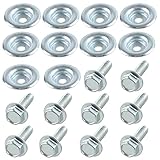
I remember staring at a pile of nuts and bolts at the hardware store, completely lost. I needed to replace a busted bracket on my old lawnmower, and the manual was useless. It just said ‘M14 bolt’. What the heck was M14? Back then, I thought metric and US units were basically interchangeable if you squinted hard enough. Turns out, that’s a great way to end up with a pile of stripped threads and a project that’s gone sideways. Knowing that a 14 millimeter bolt is 0 5512 inches in us decimal is the first step to not buying the wrong damn fastener.
It’s not just about bolt sizes; this confusion pops up everywhere. Plumbing fittings, wiring gauges, even some drill bit sizes can make you feel like you’re back in grade school trying to figure out fractions.
But honestly, for most of us tinkering in the garage or tackling DIY projects, it boils down to whether you need the red wrench or the blue one. And that often means understanding how metric measurements translate to the imperial system we grew up with.
Why Your “close Enough” Metric Socket Didn’t Fit
Let’s cut to the chase: trying to force a metric bolt into an imperial nut, or vice versa, is a fool’s errand. I learned this the hard way trying to fix a friend’s bicycle. He insisted the wheel bearing felt ‘a little loose’ and handed me a metric socket set. I spent a solid twenty minutes grunting and swearing, convinced the tool was defective. Turns out, the bike was built with imperial fasteners, and my ‘close enough’ metric socket just rounded off the bolt head.
The core issue is that metric and imperial threads are designed with different pitches and diameters. A 14mm bolt, for instance, has threads that are spaced and sized according to the metric system. When you try to mate it with an imperial thread, the grooves simply won’t line up. You might get a few turns in, but it will bind up, strip the threads, and leave you with a useless piece of metal.
This is why knowing the exact conversion, like understanding that a 14 millimeter bolt is 0 5512 inches in us decimal, is so important. It’s not just an academic exercise; it’s practical.
The difference between 14mm and, say, 9/16ths of an inch (which is 0.5625 inches) might seem tiny, but it’s enough to cause major headaches.
Think of it like trying to speak two different languages at once. You might get some words across, but the grammar and meaning get lost, leading to total miscommunication. For fasteners, that miscommunication means stripped threads and project delays. The metric system uses millimeters for diameter and a specific pitch (distance between threads) denoted by a number (e.g., M14x1.5, where 1.5mm is the pitch). The imperial system uses inches for diameter and a thread count per inch (e.g., 9/16″-12, where 12 is the number of threads per inch).
My other memorable screw-up involved a shower door frame. The instructions were in broken English and listed ‘M6 screws’. Easy enough, right? I grabbed my M6 screws and went to work. They went in okay, but the door kept popping out of its track. Turns out, the frame was designed for fine-thread M6 screws (M6x0.75), and I’d used standard ones (M6x1.0). The extra play in the threads was just enough to let the door wobble. It’s those subtle differences, the specific pitches and diameters, that truly matter. Don’t just assume ‘metric’ means ‘one size fits all’.
The Painful Reality of Imperial vs. Metric Tool Sets
Anyone who’s ever walked into a garage or workshop has seen the classic divide: the gleaming chrome metric socket set and its slightly rustier imperial counterpart. For years, I stubbornly stuck with my dad’s old Craftsman imperial set.
It was all I knew, and frankly, I thought metric was just a passing fad for fancy European cars. Then came the day I had to assemble a piece of IKEA furniture that, against all odds, called for Allen keys (hex keys) in millimeters. My trusty imperial Allen keys were just slightly too big, chewing up the bolt heads.
I ended up having to make an emergency run to the store for a cheap metric set, which, predictably, felt flimsy and bent after a few uses.
That’s the trap. You think you can get by with one system, but eventually, you’ll hit a project that demands the other. And the cheap sets? They’re often made of softer metal, meaning they strip out fasteners or break under moderate pressure. I’ve lost count of the times I’ve rounded off a hex bolt head with a subpar Allen key. It’s infuriating because it wastes not only your time but also the fastener. And when you’re trying to get a bolt out that’s seized up, a rounded-off head is a one-way ticket to cutting it off with an angle grinder, which is rarely the neat solution you hoped for. (See Also: Are All Honda Atv Bolt Patterns The Same )
Here’s a contrarian take: everyone says you need both a full metric and a full imperial set. I disagree, and here’s why. For most home DIYers, you’ll find yourself leaning heavily towards one system depending on what you work on. If you’re mostly fixing older American cars or doing general carpentry, imperial might be your bread and butter.
If you’re into modern motorcycles, European cars, or electronics, you’ll likely use metric far more. My advice? Get a decent quality set of the system you use 80% of the time. Then, buy a small, specialized set of the other system for those specific jobs.
For me, that meant a solid set of metric sockets and wrenches, and a small 10-piece imperial set for the few times I encounter them. It saves space and money, and you end up with better quality tools for the bulk of your work. Just make sure you know your conversions; a 14 millimeter bolt is 0 5512 inches in us decimal, and that kind of knowledge saves you from buying the wrong wrench in the first place.
Common Bolt and Nut Size Confusion
It’s a common point of confusion, especially for those transitioning between systems or working on diverse projects. People often wonder about the differences in common fastener sizes. For instance, a 10mm bolt is roughly 0.394 inches, while a 3/8 inch bolt is 0.375 inches. The slight difference means they are not interchangeable.
When Inches and Millimeters Don’t Line Up
The core of the issue lies in the fundamental differences in their measurement systems. Metric fasteners are standardized globally and are highly precise. Imperial fasteners, on the other hand, have a long history and can sometimes be less standardized, especially with older hardware.
The Conversion Cheat Sheet: Beyond Just 14mm
Look, I’m not a math whiz. I don’t have a slide rule memorized.
When I need to convert something, I want it quick and dirty, preferably on a piece of paper stuck to my toolbox. The whole ‘a 14 millimeter bolt is 0 5512 inches in us decimal’ thing is just one data point, but it’s a useful one. It means if you’re holding a bolt that’s labeled ‘M14’, you know it’s just a hair over half an inch in diameter. This is important when you’re trying to figure out what size wrench or socket you need, especially if your tool collection is primarily imperial.
A 9/16 inch wrench is the closest imperial size, but it’s still not a perfect fit and can lead to slippage. A 14mm socket or wrench is the correct tool.
But what about other common sizes? Here’s a quick rundown that’s saved my bacon more than once:
Common Metric to Imperial (Approximate):
This table is for quick reference. Remember, threads matter too, not just the diameter!
| Metric Diameter (mm) | Approximate Imperial Diameter (inches) | Closest Imperial Wrench/Socket Size (inches) | Verdict on Fit |
|---|---|---|---|
| 6mm | 0.236 | 1/4″ (0.250) | Can work, but 1/4″ is slightly larger. 6mm socket is best. |
| 8mm | 0.315 | 5/16″ (0.3125) | Very close, 5/16″ often works. 8mm socket is ideal. |
| 10mm | 0.394 | 3/8″ (0.375) | Close, but 3/8″ is smaller. 10mm socket is definitely needed. |
| 12mm | 0.472 | 15/32″ (0.46875) or 1/2″ (0.500) | 15/32″ is very close. 1/2″ is too large. 12mm socket is best. |
| 14mm | 0.551 | 9/16″ (0.5625) | 9/16″ is slightly larger. 14mm socket is the correct fit. |
| 16mm | 0.630 | 5/8″ (0.625) | 5/8″ is slightly smaller. 16mm socket is the correct fit. |
Notice how ‘close enough’ often isn’t. The 14mm to 9/16″ example is a classic. That 0.0115-inch difference might not sound like much, but it’s enough to make a wrench slip or feel sloppy. It’s why having the correct metric tools, or at least knowing the precise conversion, is so important. I learned to keep a small metric socket set in my car for roadside emergencies, just in case I encountered something unexpected. It’s paid for itself more than once. (See Also: Are Ak Bolts Interchangeable )
For the imperial side, you’ll see fractions like 1/4″, 3/8″, 1/2″, and 9/16″. These are standardized. When you see a metric size, like M14, you’re looking at a diameter of 14 millimeters. To convert that to inches, you divide by 25.4 (since 1 inch = 25.4 millimeters). So, 14mm / 25.4 mm/inch = 0.55118… inches. Rounding that gives you the 0.5512 inches in us decimal. It’s a simple calculation, but knowing it, or having a cheat sheet, saves you from buying the wrong tools.
The Thread Pitch Factor: Why Diameter Isn’t Everything
Here’s where things get really fun. You can have two bolts with the exact same outer diameter, say 14mm, but if their thread pitches are different, they won’t thread into the same nut. This is the bane of many a DIYer’s existence. Everyone focuses on the diameter – the ’14mm’ part of ‘M14’ – and forgets the pitch. The pitch is the distance between the crests of the threads. In the metric system, it’s usually measured in millimeters.
A standard M14 bolt typically has a pitch of 2.0mm. However, there’s also a fine thread version, M14x1.5, which has a pitch of 1.5mm. They look almost identical, but trying to screw an M14x2.0 bolt into a nut designed for an M14x1.5 thread (or vice versa) is like trying to put a square peg in a round hole, only more frustrating.
You might get a few threads to catch, feel that familiar binding, and then realize you’ve picked the wrong fastener. This is why ‘M14’ is only half the story. The full designation, like ‘M14x2.0’ or ‘M14x1.5’, tells you both the diameter and the thread pitch.
For imperial fasteners, this is indicated by the number of threads per inch (TPI). For example, a 1/2″-13 bolt has 13 threads per inch, while a 1/2″-20 bolt has 20 threads per inch.
I once spent an entire Saturday trying to figure out why a particular piece of machinery I was repairing kept vibrating loose. All the bolts looked the same, and they were all roughly the correct diameter. It wasn’t until I painstakingly counted the threads per inch on a known good fastener and compared it to the ones I was using that I discovered the mismatch.
The ‘standard’ fasteners I’d bought at the local auto parts store had a different TPI than the original equipment manufacturer (OEM) bolts. That realization hit me like a ton of bricks.
It wasn’t just about the diameter; it was the subtle, often overlooked, thread pitch that made all the difference. So, when you see a bolt labeled ’14mm’, and you know it’s 0.5512 inches in us decimal, remember that the pitch is just as vital for a secure fit. It’s the hidden detail that separates a secure connection from a future failure.
What Does ‘m’ Stand for on Bolts?
The ‘M’ designation on metric bolts and screws stands for ‘Metric’. It signifies that the fastener’s dimensions, including its diameter and thread pitch, are based on the metric system of measurement, using millimeters as the unit. This is a global standard, making sure consistency across different manufacturers and countries for metric fasteners.
Practical Tips for Avoiding Fastener Fiascos
Okay, so we’ve established that imperial and metric fasteners are not interchangeable, and even within metric, thread pitch matters. How do you avoid common mistakes? First, and most obviously, read the damn label or manual. If it says M14, don’t guess. If you’re unsure, buy the correct metric tool. A 14mm socket will set you back maybe $5-$10 for a decent individual one, which is far cheaper than replacing a damaged bolt or, worse, a damaged component.
Second, invest in a decent set of both metric and imperial sockets and wrenches. You don’t need Snap-On quality for most home projects, but avoid the absolute cheapest sets that feel like pot metal. Brands like GearWrench, Tekton, or even some of the better-value lines from Craftsman or DeWalt offer good quality without breaking the bank. A good set will have the correct sizes, including those specific metric sizes like 14mm. Having the right tools makes the job go from frustrating to manageable.
Third, keep a reference guide handy. I have a laminated card on my workbench with common metric-to-imperial conversions, including thread pitches. It’s saved me from guessing more times than I can count. Knowing that a 14 millimeter bolt is 0 5512 inches in us decimal is a good starting point, but having charts for other common sizes (like M5, M6, M8, M10, M12) is invaluable. You can find these online easily. Print one out and stick it somewhere visible. (See Also: Are All Bolt Patterns The Same )
Fourth, when in doubt, take the old fastener with you. If you’re removing a bolt or nut, put it in a plastic bag and take it to the hardware store. Match it up visually and by thread feel. This is especially important for older equipment where original specifications might be hard to find or where non-standard parts may have been used. It’s a foolproof method to make sure you get the exact replacement you need. I’ve done this countless times, and it’s never failed me. It beats the ‘guess and hope’ method every single time.
When to Use a Torque Wrench
A torque wrench is an indispensable tool for making sure fasteners are tightened to the manufacturer’s specified tension. Overtightening can strip threads or break the fastener, while undertightening can lead to vibrations and component failure. Always consult the repair manual for the correct torque specifications for your specific application, especially for important components like engine parts or suspension systems.
The “metric System Is Easier” Debate: A Pragmatist’s View
I hear it all the time: “The metric system is so much simpler!” And yeah, when you’re talking about basic conversions, it is. Everything is in powers of 10. Easy peasy. But when you’re elbow-deep in a project and need to know that a 14 millimeter bolt is 0 5512 inches in us decimal, the ‘simplicity’ argument starts to feel a bit abstract. The reality is, most of us grew up with one system or the other, and our brains are wired to think in those terms.
My own experience is a bit of a hybrid. I learned to drive, cook, and measure things in feet, pounds, and Fahrenheit. But my first computer was built with metric screws, and modern appliances often use metric fasteners. So, I’ve had to learn to switch gears. The metric system’s standardized pitches and diameters make it logical for engineering and manufacturing. It’s less ambiguous. You don’t have the confusing array of thread counts per inch like you do in the imperial system for seemingly similar bolt sizes.
However, the US customary system, despite its quirks, is deeply ingrained in many industries and everyday life here. For someone who’s spent decades thinking in inches and fractions, switching entirely to metric overnight isn’t realistic or necessarily beneficial. The pragmatic approach is to understand both and to have the tools and knowledge to work with whichever system a particular project demands. It’s not about which system is ‘better,’ but about being competent with the tools and measurements you encounter. My toolbox is a testament to that pragmatism – a mix of metric and imperial, chosen for functionality rather than ideological purity. And knowing those key conversions, like 14mm to 0.5512 inches, is just part of the practical toolkit.
What Is the Most Common Bolt Size?
This question is tricky because ‘most common’ depends heavily on context (automotive, construction, electronics, etc.) and region (metric vs. imperial dominance). However, in the metric system, M6 (6mm diameter) and M8 (8mm diameter) are incredibly common for general-purpose applications, appearing in everything from furniture assembly to household appliances. In the imperial system, 1/4-inch and 3/8-inch bolts are ubiquitous.
People Also Ask
What Is the Closest Us Decimal to 14mm?
The closest US decimal equivalent to 14 millimeters is approximately 0.5512 inches. This conversion is derived by dividing 14mm by 25.4 (the number of millimeters in an inch). While 9/16 of an inch is a common imperial size, it measures 0.5625 inches, making 0.5512 inches the more precise decimal conversion.
How Do I Convert Metric Bolts to Imperial?
To convert a metric bolt’s diameter to imperial, divide the millimeter measurement by 25.4. For example, a 14mm bolt becomes 14 / 25.4 = 0.5512 inches. For thread pitch, metric uses millimeters (e.g., M14x1.5 means 1.5mm pitch), while imperial uses threads per inch (TPI). You’ll need to find the equivalent TPI for the metric pitch, which often requires a specific conversion chart or knowing the standard TPI for that metric size.
What Is the Standard Pitch for a 14mm Bolt?
The standard coarse thread pitch for a 14mm metric bolt is 2.0mm. This means there are 2.0 millimeters between each thread crest. There is also a fine thread option for 14mm bolts, designated as M14x1.5, which has a pitch of 1.5mm. Always check the full designation of the bolt (e.g., M14x2.0 or M14x1.5) as the pitch is important for proper fitment.
Is 14mm the Same as 9/16 Inch?
No, a 14mm bolt is not the same as a 9/16 inch bolt, although they are very close in diameter. A 14mm bolt is approximately 0.5512 inches, while a 9/16 inch bolt is 0.5625 inches. This small difference means that while a 9/16 inch wrench might fit onto a 14mm bolt head, it will be slightly loose and can potentially slip or round off the bolt head. Conversely, a 14mm socket is the correct tool for a 14mm bolt.
Conclusion
So there you have it. That seemingly simple number, that a 14 millimeter bolt is 0 5512 inches in us decimal, is the key to opening a whole lot of ‘aha!’ moments when you’re wrestling with hardware. It’s not about memorizing every conversion, but understanding the principle and knowing where to find the information when you need it.
Don’t be the person who strips out a bolt head because they tried to use the ‘almost right’ wrench. Keep a basic metric set, a basic imperial set, and a handy conversion chart. Your projects, your tools, and your sanity will thank you.
Next time you’re at the hardware store staring at a fastener that looks like Greek to you, take a breath. Grab your phone, do a quick search, or pull out that laminated card. A few seconds of diligence can save you hours of frustration and a trip back to the store.