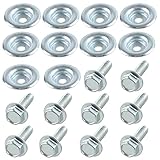
I remember staring at that pile of hardware, a knot forming in my stomach. I needed one specific piece, a 3 4 10 32 bolt loop, for a project that absolutely could not wait. Hours later, I was still digging, feeling like a fool for not having one stashed away. It’s funny how these seemingly simple fasteners can become the bane of your existence when you need them most.
Look, I’m not going to give you a flowery, corporate-speak rundown. I’ve bought too many fancy widgets that promised the moon and delivered a damp napkin. My experience is hands-on, often messy, and always honest. So, let’s talk about what you actually need to know about a 3 4 10 32 bolt loop.
The Nuts and Bolts of a 3/4-10 X 32 Bolt Loop
Alright, let’s break down what we’re actually dealing with here. When someone mentions a ‘3 4 10 32 bolt loop,’ they’re talking about a specific kind of fastener, and the numbers are the key. Forget jargon; this is practical stuff. The ‘3/4′ refers to the diameter of the bolt’s shank – that’s the solid rod part. So, it’s three-quarters of an inch wide. Then you have ’10’, which is the thread count per inch. This is a coarse thread, meaning the threads are spaced further apart. It makes for faster installation and is generally more forgiving if you cross-thread it a little, though you should always be careful.
The ’32’ part is where things get a bit less common for standard bolts. In the context of a bolt loop, it’s highly probable this ’32’ is referring to the thread size of the hole in the loop itself, or perhaps a smaller screw that attaches to the loop. It’s not a standard bolt thread size you’d typically see paired directly with a 3/4-10 bolt in a single unit. More often, you’d see a bolt loop with a 3/4-10 threaded hole to accept a 3/4-10 bolt, or a loop with a simple unthreaded hole for a bolt to pass through.
The ’32’ might indicate a metric thread, like M3.5 (which is very close to 32 TPI, but not identical), or it could be a typo, or it could refer to a specific industrial application where a smaller, finer thread is used for a secondary purpose on the loop component itself. For clarity, most commonly a ‘bolt loop’ is a U-shaped piece of metal with holes or threaded bosses designed to attach something to a larger bolt or structure.
It’s basically an anchor point.
The ‘loop’ part is straightforward. It’s the U-shaped feature that allows you to pass another bolt, a cable, a rope, or a carabiner through it. Think of it as a convenient attachment point. In my experience, these are often used in rigging, securing loads, or as part of a custom bracket system. They’re not usually something you find in your average home improvement store bin. You’re more likely to stumble across them in specialty hardware suppliers, marine supply stores, or industrial catalogs.
I once bought a set of what I thought were standard U-bolts, only to find the loop had a bizarre thread size I’d never encountered. It took me ages to figure out what it was, and in the meantime, my project sat idle. Lesson learned: always double-check those numbers, especially when they seem a bit off the beaten path. The ‘loop’ itself can vary wildly in thickness and material, from simple stamped steel to heavy-duty forged metal.
What to Actually Look for (and What to Ignore)
When you’re hunting for a 3 4 10 32 bolt loop, or even something similar where those numbers might be slightly different in practice, don’t get distracted by shiny packaging or fancy descriptions. Focus on the materials and the construction. If you’re using this in an environment where it’ll be exposed to the elements – think outdoors, near salt water, or in a workshop with chemicals – you need corrosion resistance. Stainless steel is your best friend here. I’ve seen perfectly good fasteners rust into oblivion within a year because someone cheaped out on the material. It’s not worth the headache of replacing it later, or worse, having it fail when you need it most.
The thickness of the metal used for the loop is also most important. Does it feel solid?
Can it handle the load you intend to put on it? If it feels flimsy, it probably is. (See Also: Are All Honda Atv Bolt Patterns The Same )
Manufacturers often list weight ratings or load capacities for their hardware. If you can’t find that information, consider it a red flag. For example, I was building a custom rack for my dirt bike, and I needed strong attachment points.
I ended up going with forged steel loops rated for thousands of pounds. Overkill? Maybe.
But I wasn’t about to have my bike fall off the trailer because I skimped on a $5 piece of hardware. That would be a stupid way to waste money and potentially damage my bike.
Now, about that ’32’ number again. If you’re finding hardware where the 3/4-10 bolt size is clear, but the ’32’ is confusing, here’s my advice: clarify. Is it a thread for a separate screw? Is it a metric equivalent?
Or is it part of a specific manufacturer’s code? If you’re buying online, look for detailed diagrams or ask the seller directly. If you’re in a brick-and-mortar store, bring a caliper and measure everything. Don’t assume.
I’ve wasted money on the wrong fasteners more times than I care to admit because I made assumptions based on vaguely similar product names. The common advice is to always buy a little extra, but I say, buy the right extra. Figure out exactly what you need first.
What should you ignore? Overly technical marketing terms that don’t translate to actual performance. Claims of ‘superior strength’ without any data to back them up. Anything that seems too cheap to be true probably is. You’re looking for a functional, durable piece of hardware, not a piece of art. Stick to reputable brands if you can, but even then, always inspect the product itself. A good bolt loop is a workhorse; it doesn’t need to be fancy.
Common Mistakes That Cost You Time and Money
Let’s talk about screw-ups, because I’ve made plenty. The biggest mistake people make with any specialized fastener, including the elusive a 3 4 10 32 bolt loop, is assuming it’s a standard item and grabbing the first thing that looks close. This is how you end up with a drawer full of mismatched hardware and a project that’s stalled. The ‘3/4-10′ part is relatively common for larger bolts, but the ’32’ designation, as we’ve discussed, is the wild card. If you’re not paying attention to that specific detail, you’re setting yourself up for disappointment.
Another common pitfall is buying the wrong material for the job. I learned this the hard way with some marine hardware I used on a trailer. I thought galvanized steel would be fine, but the constant exposure to road salt and moisture turned them into rusty blobs within two seasons. I ended up having to cut them off and replace them with stainless steel. That’s double the cost and double the labor. So, if your application involves moisture, salt, or harsh chemicals, just bite the bullet and go for stainless steel from the get-go. It’s a classic case of ‘buy it nice or buy it twice.’
Overlooking the load rating is another big one. People see a loop, assume it’s strong, and attach it to something. What they don’t realize is that the loop might be rated for a few hundred pounds, while the bolt going through it or the structure it’s attached to can only handle a fraction of that. This is where catastrophic failure happens. Always consider the entire system. If you’re jury-rigging something and aren’t sure about the load capacity, err on the side of caution. Better to have a piece of hardware that’s stronger than you need than one that snaps when you least expect it. I’ve seen cheap eye bolts fail under surprisingly light loads, and it’s never a pretty sight. (See Also: Are Ak Bolts Interchangeable )
Finally, and this might sound obvious, but not having the right tools. Trying to tighten a 3/4-inch bolt with an adjustable wrench that’s slipping is a recipe for frustration and stripped bolt heads. Invest in a decent socket set or wrenches that fit snugly. It makes the job go from agonizing to manageable. I remember trying to install some heavy-duty anchor points on my truck bed. The bolts were tight, and my old adjustable wrench was just spinning uselessly. I had to make a run to the hardware store for a proper socket set. That little trip added hours and expense to what should have been a quick job.
A Quick Comparison of Bolt Loop Styles
| Style | Description | Pros | Cons | My Verdict |
|---|---|---|---|---|
| U-Bolt with Loop Nut | A U-shaped bolt with threaded ends, secured by a loop-shaped nut. | Common, versatile, good for securing pipes or rods. | Nut can be bulky, requires precise threading. | Good for general purpose, but might not be what you mean by a ‘bolt loop’. |
| Forged Eye Bolt (with loop) | A solid bolt with a welded or forged loop at the head. | Extremely strong, reliable for overhead lifting/heavy loads. | Can be expensive, loop orientation is fixed. | Top-tier for serious loads. If it says ‘heavy duty’, it usually means it. |
| Welded Eye Bolt | A bolt with a separate loop welded onto the head. | Less expensive than forged, good for moderate loads. | Weld can be a weak point if not done properly. | Decent budget option, but inspect that weld closely. |
| Custom Fabricated Loop | A piece of metal shaped into a loop, often with a threaded boss or a hole. | Can be made to exact specifications. | Requires custom fabrication, can be costly. | Only if you absolutely can’t find what you need off-the-shelf. |
Real-World Applications and When to Use Them
So, where does a piece of hardware like a 3 4 10 32 bolt loop actually show up? It’s not usually the star of the show, but it’s a vital supporting actor. Think about security and attachment. On vehicles, for instance, these can be used as anchor points for tie-down straps.
If you haul motorcycles, ATVs, or even just furniture, having solid attachment points is a must. A standard tie-down loop with a 3/4-inch diameter bolt size and a solid thread pitch like 10 TPI (Threads Per Inch) is going to hold up better than a flimsy piece of stamped metal.
The ’32’ part, again, is the wildcard, suggesting a very specific application, perhaps a smaller accessory bolted to the main loop, or an uncommon metric thread.
In marine environments, you’ll find similar hardware used for mooring lines, securing dinghies, or attaching safety equipment. Saltwater is brutal on metal, which is why stainless steel is almost always the material of choice. A heavy-duty eye bolt or a specifically designed bolt loop with a large diameter and coarse threads (like 3/4-10) provides the strength needed to withstand waves, wind, and the constant strain of lines.
I also see these kinds of heavy-duty loops used in industrial settings. Think about suspending equipment, creating rigging points for construction, or even in workshop setups for holding tools or workpieces. If you’re building a custom workbench with a vise or a jig, having a strong, reliable anchor point that’s threaded for a substantial bolt is incredibly useful. I’ve even used them in my home gym to mount resistance bands or heavy bag hangers, making sure they can handle dynamic forces without failing. It’s all about creating secure connection points that can handle more than you think you’ll throw at them.
The key is matching the hardware to the load. A 3/4-inch diameter bolt suggests a need for significant strength. The 10 TPI thread is coarse, meaning it’s designed for quick installation and good holding power under stress. The anomalous ’32’ thread size likely points to a secondary fastening or a very specialized setup, rather than being part of the main load-bearing connection for the 3/4-inch bolt. If you’re unsure, always consult with someone knowledgeable or look for hardware explicitly rated for your intended use. Don’t guess when safety or valuable equipment is on the line.
Let’s address the elephant in the room: the ’32’ in ‘a 3 4 10 32 bolt loop’. As established, this isn’t a standard pairing for the main bolt diameter. So, what gives? In my experience, this usually falls into a few categories.
First, it could be a specific industrial or specialized product where a smaller, finer thread (perhaps metric like M3.5, which is roughly 0.138 inches in diameter, or a #6-32 or #8-32 UNC thread, which are standard smaller screw sizes in the US) is used for a secondary attachment point on the loop itself. Imagine a bracket that attaches to the loop, or a cap that screws onto it.
This secondary thread wouldn’t be carrying the main load but would be there for ancillary purposes. (See Also: Are All Bolt Patterns The Same )
Second, it might be a typo or a misremembered specification. People often get fastener sizes mixed up. If you’re trying to source this exact item, and ’32’ keeps popping up with ‘3/4-10’, double-check your source. Could it be a 3/8-inch bolt with a 10-32 thread? Or a 3/4-10 bolt with a different loop attachment? Precise measurement and verification are your best friends here. Use calipers, thread gauges, and even a magnifying glass if necessary.
Third, it could be an older or obsolete specification. Manufacturing standards change, and sometimes specific, niche items fall out of common production. In such cases, you might need to look at custom fabrication or find a very specialized supplier. I once needed a specific type of retaining ring for an old piece of machinery. It wasn’t listed anywhere standard. I ended up having to get it custom-machined, which was expensive but ultimately the only way to get the exact part.
If you’re faced with this ’32’ conundrum and need a reliable loop for a 3/4-10 bolt, the most practical advice is to focus on finding a quality 3/4-10 bolt loop with the appropriate load rating and material. If the ’32’ threaded hole (or whatever it signifies) is absolutely important and cannot be substituted, then you’re in for some detective work. You might need to contact manufacturers directly, scour industrial surplus sites, or even consider modifying a standard part if you have the skills and tools.
What Is the Primary Function of a Bolt Loop?
The primary function of a bolt loop is to provide a secure and convenient attachment point. It allows another bolt, cable, rope, or securing mechanism to be passed through it, thereby connecting two items or creating an anchor point for tensioning or suspension. They are basically designed to help the creation of strong, reliable connection points in various applications.
Are 3/4-10 Threads Considered Coarse or Fine?
The ’10’ in ‘3/4-10’ signifies 10 threads per inch. For bolts, threads with fewer threads per inch (meaning the threads are spaced further apart) are considered coarse. Therefore, a 3/4-10 thread is a coarse thread. Coarse threads are generally easier to start, install faster, and are more resistant to cross-threading than fine threads.
Can a 3/4-10 Bolt Loop Be Used for Lifting?
Yes, but only if it is specifically designed and rated for lifting applications, such as a forged eye bolt intended for overhead lifting. Standard bolt loops or U-bolts might not have the proper design, material strength, or safety factors required for lifting, which can be extremely dangerous. Always check the manufacturer’s specifications and load ratings for lifting hardware.
What Does the ’32’ Likely Refer to in ‘a 3 4 10 32 Bolt Loop’?
The ’32’ in this context is unusual for a primary bolt thread size paired with a 3/4-inch diameter bolt. It most likely refers to a secondary, smaller thread size (like a #6-32 or #8-32 UNC screw thread, or a metric equivalent such as M3.5) on the loop component itself, used for attaching accessories or covers. Alternatively, it could be a specific manufacturer’s designation or even a typo. It’s not a standard thread count for the main 3/4-inch bolt.
Final Thoughts
So, you’re looking for a 3 4 10 32 bolt loop. It’s not the most common piece of hardware out there, especially with that peculiar ’32’ designation. But understanding the numbers – 3/4 inch diameter, 10 threads per inch – gives you a solid foundation. The ’32’ is your wildcard, likely pointing to a specialized use or a secondary feature on the loop itself, rather than the main bolt connection.
My advice? Don’t waste time chasing down obscure part numbers unless you absolutely have to. Focus on finding a solid 3/4-10 bolt loop made from the right material (stainless steel if it’s going to see any abuse) that has a load rating sufficient for your task. If that ’32’ thread is a dealbreaker, be prepared for some serious digging or custom fabrication.
At the end of the day, good hardware makes life easier. Get the right piece, install it properly, and move on to the actual project. It’s rarely worth the frustration of settling for less.