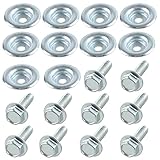
I remember staring at a bewildering array of tiny metal things in a hardware store years ago, trying to fix a wobbly shelf. The label for what I thought was the right fastener read like a chemistry exam: M5x16. I grabbed a handful, got home, and promptly discovered they were useless. Not the right thread, not the right length – basically, a waste of my time and money. That’s why I’m telling you about a 5mm diameter by 16mm long by 80 pitch bolt. It’s specific, and knowing its quirks can save you a headache.
This isn’t about fancy, over-engineered gizmos. It’s about getting the right darn bolt for the job, the first time. You’ve probably been there, holding a part in your hand, needing a specific screw and feeling like you’re deciphering ancient hieroglyphs at the hardware store.
Why the Heck You Need to Know Your Threads: A 5mm Diameter by 16mm Long by 80 Pitch Bolt
Look, nobody gets excited about bolts. I get it. But when you’re elbow-deep in a project, whether it’s assembling flat-pack furniture that seems designed by sadists, fixing a rattling bike chain, or putting together a custom rig in your garage, the right fastener is the difference between a job done and a job that makes you want to throw your tools across the room. I’ve been there. I’ve bought the wrong stuff, convinced myself it would probably work, only to find out it stripped the hole or just wouldn’t bite. A 5mm diameter by 16mm long by 80 pitch bolt is a specific breed, and understanding its identity is key.
What does all that mean? Diameter (5mm) is pretty straightforward – it’s the thickness. Length (16mm) is the shank length, not including the head.
The real magic, and where most DIYers get tripped up, is the ‘pitch.’ That 80 pitch number is important. It refers to the threads per inch (TPI).
For metric fasteners like this, the pitch is usually given as a distance between threads, but the 80 pitch is an old designation that often implies an Imperial thread form mixed into metric sizes or a very fine specific metric pitch. For a 5mm bolt, an 80 pitch is unusually fine. Most common metric coarse threads for M5 are 0.8mm pitch, and fine threads are often 0.75mm or 0.5mm.
An 80 TPI thread would translate to roughly 0.3175mm pitch, which is extremely fine for a 5mm bolt. This suggests it might be a specialized application, or potentially confused with a UNC (Unified National Coarse) thread, which is a completely different beast, though those are typically measured in TPI and don’t use the ‘M’ designation. Let’s assume for practical purposes you’re looking for a very fine-pitched metric thread.
If you’re dealing with something that calls itself an M5x16 80 pitch bolt, be very careful. It’s likely designed for something specific, like optics mounts or certain electronics where precise adjustment is needed, or it could be a mislabeled Imperial thread. I once tried to force an SAE bolt into a metric hole because I was in a hurry. Big mistake.
The threads looked similar enough to my tired eyes to make me think it would work. It didn’t. It mangled both the bolt and the hole, costing me way more than a few extra minutes at the store would have.
The key takeaway here is that ‘M5x16′ alone usually implies a standard coarse thread (0.8mm pitch). Adding the ’80 pitch’ makes it a much more specialized item. If you’re buying this bolt, make sure the packaging or the seller explicitly states the thread pitch in millimeters (e.g., 0.3175mm or its metric equivalent if it’s a strange hybrid). Don’t just guess. A standard M5x16 bolt will NOT fit a hole tapped for an M5x16x0.3175mm thread, and vice-versa. This level of specificity matters when you’re building or repairing something that can’t tolerate looseness or misalignment.
When You Absolutely Need Precision: Common Applications and Why They Matter
So, where would you even find a bolt with such a specific, fine thread pitch like a 5mm diameter by 16mm long by 80 pitch bolt? Honestly, you’re not going to see these at your local big-box hardware store unless they have a truly exceptional specialty fasteners section. These are the kinds of bolts you find in niche industries or for specific hobbyist applications.
Think about anything that requires extremely precise adjustment or where vibration could be an issue and you need a fastener that’s less likely to back out. For instance, in the world of amateur astronomy, mounting a telescope bracket or adjusting fine-focus mechanisms often involves very fine-threaded screws to allow for minute movements.
Similarly, some high-end camera equipment, 3D printer components, or even specialized laboratory equipment might use fasteners with exceptionally fine pitches to achieve very precise positioning. I recall working on a custom 3D printer build where the lead screws needed to be incredibly smooth and precise, and the associated nuts were designed with a very fine thread to match.
It wasn’t a standard M5, but the principle of needing a specific pitch for precise linear motion is the same. (See Also: Are All Honda Atv Bolt Patterns The Same )
The 16mm length is also quite specific. It’s long enough to get a decent grip in most materials but not so long that it becomes unwieldy. It’s a common length for mounting components where you don’t need to go all the way through a thick piece of material. The 5mm diameter offers a good balance of strength for its size, suitable for applications where you don’t need the beefiness of a 6mm or 8mm bolt but want more holding power than a 3mm or 4mm fastener.
The potential confusion with the ’80 pitch’ is a real issue. If you are indeed looking for a metric M5 bolt with a pitch of 0.8mm (the standard coarse pitch), then calling it an ’80 pitch’ bolt is misleading, as 80 TPI translates to a much finer pitch (about 0.3175mm). However, some manufacturers might use ’80 pitch’ as a shorthand for a very fine metric thread, or it could be a legacy designation.
If you’re buying online, look for the specific metric pitch (e.g., M5 x 0.3mm or similar) to be absolutely sure. I’ve learned the hard way that if a description is vague, it’s usually a red flag. I once bought what I thought was a standard M6 bolt, but it turned out to be a specialized fine-thread variant.
It looked right, felt right, but wouldn’t thread into the tapped hole. I spent an hour trying to force it before realizing my error.
A simple call to the supplier or a more detailed spec sheet would have saved me the frustration and the cost of replacing both the bolt and the damaged tapped component. For anything important, always verify the pitch in millimeters.
If you are genuinely looking for a metric M5 bolt with a pitch that is extremely fine, close to what 80 TPI implies (around 0.3175mm pitch), you’re venturing into territory where standard taps and dies might not be readily available. This is why knowing the exact specifications is not just a good idea; it’s mandatory for successful assembly. When in doubt, consult the documentation for the equipment or project you’re working on. The manufacturer’s specifications will be your best guide.
Contrarian Take: Are You Sure You Need That Fine a Thread?
Alright, here’s my unpopular opinion on this: most people who think they need a super-fine thread on a common bolt size like 5mm probably don’t. Everyone says you need the perfect thread pitch for maximum precision. I disagree, and here’s why: the vast majority of applications for a 5mm bolt – fixing a cabinet hinge, attaching a bracket, assembling basic furniture – are perfectly happy with a standard metric coarse thread (M5x0.8). You’re likely to find those everywhere, they’re cheap, and they’re solid enough for the job. Spending extra time and money hunting down a specialized bolt with a fine pitch like 0.3mm (or whatever that ’80 pitch’ translates to) is often overkill.
My personal experience supports this. I’ve built shelves, assembled computer cases, and even done some minor automotive repairs where I’ve used standard M5 bolts. They’ve held up perfectly fine.
The only time I’ve genuinely needed a finer thread was in a very specific optical alignment setup where I was adjusting a lens mount with a microscope. Even then, it was an M4, not an M5.
For general use, if you’re confused by an ’80 pitch’ designation on an M5 bolt, step back. Ask yourself: why do I think I need this? Is the standard thread truly failing?
If the answer is no, save yourself the trouble and go for the standard M5x16 coarse thread. It’s readily available, cheaper, and far less likely to cause confusion. If you’re looking at something that specifies an 80 TPI or equivalent fine metric pitch, then by all means, get it, but don’t assume you need it just because it sounds ‘more precise’.
Precision often comes from the mechanism, not just the bolt.
The danger with overly fine threads on common sizes is also stripped threads. A finer thread has less material supporting each thread crest. If you cross-thread it even slightly, or over-torque it, you can strip it out much more easily than a coarser thread. This is especially true if you’re working with softer materials like aluminum or plastic. Stick with the standard unless you have a very compelling, documented reason not to. It’s like using a micrometer to measure the length of a garden hose; sometimes, a tape measure is all you need, and it’s a lot less fiddly. (See Also: Are Ak Bolts Interchangeable )
What to Look for (and What to Avoid) When Buying
When you’re on the hunt for a 5mm diameter by 16mm long by 80 pitch bolt, or any bolt for that matter, clarity is your best friend. Here’s a quick rundown of what I always check:
| Specification | What to Look For | Why it Matters | My Verdict |
|---|---|---|---|
| Diameter | 5mm (M5) | Makes sure it fits the hole size and has adequate strength. | Standard, clear. |
| Length | 16mm | Determines how deep it needs to go without being too short or too long. | Specific, check against your needs. |
| Pitch/Threads Per Inch (TPI) | ’80 pitch’ needs clarification. Ideally, specified as metric pitch (e.g., 0.3175mm or its metric equivalent). A standard M5 coarse is 0.8mm. | THIS IS THE MOST IMPORTANT PART. Mismatching pitch ruins the connection. | HUGE RED FLAG IF UNCLEAR. Verify! |
| Material | Stainless Steel (A2/304 or A4/316), Zinc-Plated Steel, Black Oxide, Brass, etc. | Affects strength, corrosion resistance, and appearance. Stainless is usually best for general use. | Stainless steel for most things. |
| Head Type | Hex (Allen/socket head), Pan head, Button head, Flat head, etc. | Determines the tool needed and how the bolt sits against the surface. | Hex/socket head is versatile. |
| Grade/Strength | e.g., Class 8.8, 10.9, 12.9 for steel; A2/A4 for stainless. | Indicates how much load the bolt can withstand before deforming or breaking. | Higher grade for important loads. |
What to avoid? Anything labeled vaguely. If it just says ‘M5 screw’ and doesn’t specify length and pitch, walk away. If it says ’80 pitch’ without clarifying if that’s TPI or a metric equivalent, be very suspicious. I once bought a pack of screws online that were advertised as M4, but the pitch was completely wrong, and they were slightly too large in diameter. It was a total waste. Always check the seller’s reputation and look for detailed specifications. For specialized bolts like the one we’re discussing, it’s often best to buy from a specialized fastener supplier rather than a general hardware store. They’re more likely to have accurate descriptions and the correct inventory.
Common Mistakes and How to Dodge Them
Let’s talk about screw-ups. We all make ’em, but some are just plain avoidable with a little common sense and a quick check.
The biggest blunder when it comes to a 5mm diameter by 16mm long by 80 pitch bolt is, without a doubt, the thread pitch mismatch. I mentioned it before, but it bears repeating.
You buy a bolt, you think it looks right, you try to thread it in, and it just… won’t. It’s not that it’s too tight; it’s that the threads don’t line up. This can happen if you accidentally grab a standard coarse thread (M5x0.8) when you needed a fine thread (like what ’80 pitch’ might imply), or worse, if you mix metric and Imperial threads. An M5 bolt has a metric thread.
Trying to force an Imperial thread of similar size (like a 10-24 or 10-32, which are close in diameter) into an M5 tapped hole is a recipe for disaster. They have different thread angles and pitches.
The common advice is to just “buy the right bolt.” That’s true, but how do you buy the right bolt? You need to know the pitch.
Another common mistake is assuming length is just length. Sometimes, the head of the bolt counts. If you need a bolt to sit flush or slightly below a surface, you need to account for the head height.
A 16mm shank length bolt with a chunky hex head might effectively be 18-19mm long from surface to tip. Always measure from the underside of the head to the tip for the effective length in many applications. I made this mistake when I was building a custom enclosure for some electronics. I needed the bolts to be flush with the outer panel.
I bought 16mm long bolts, but the pan head was so tall that they stuck out about 2mm, making the panel look sloppy. I ended up having to buy shorter bolts with flat heads.
Over-tightening is another classic. Especially with finer threads or softer materials, you can strip the threads on the bolt or in the mating component (like a plastic housing or an aluminum bracket).
The rule of thumb for hand-tightening is usually snug plus a quarter-turn. For machine screws, especially smaller ones, you don’t need Hulk-level strength. Use the right tool for the job.
A cheap, poorly fitting Allen key can round off the head of a bolt, making it impossible to remove later. This happened to me with a set of M4 socket cap screws on a motorcycle fairing. The Allen key just spun. (See Also: Are All Bolt Patterns The Same )
I had to get a bolt extractor kit, which was a pain and cost extra money. Stick with decent quality tools, and don’t be afraid to use a bit of lubricant or anti-seize compound where appropriate, especially if you might need to remove the bolt later.
Finally, don’t just grab the cheapest option. While I’m all for saving money, the cheapest bolts often have poor quality control, inconsistent threading, or are made from weak materials that will corrode quickly. A slightly more expensive, good-quality stainless steel bolt will last longer and cause fewer headaches than a cheap, zinc-plated steel one that rusts after a few months. For specialized fasteners, paying a bit more from a reputable dealer is almost always worth it.
Real-World Uses and Practical Tips
Let’s get down to brass tacks. Where might you actually encounter or need a 5mm diameter by 16mm long by 80 pitch bolt? As I’ve hinted, it’s not your everyday hardware store item for fixing the leaky faucet. Think more along the lines of precision equipment.
If you’re into astrophotography, you might use bolts like this for mounting small guide scopes or attaching accessories to your telescope’s mounting rings. The fine pitch allows for very subtle adjustments to align your camera perfectly. In high-end audio equipment, some internal components or mounting brackets might use these for their precise fit and reduced vibration transmission. I’ve also seen them used in certain types of custom lighting fixtures where precise positioning of LEDs or diffusers is required.
For someone building a custom computer case, you might need specific bolts for mounting motherboards, SSDs, or fan brackets where space is tight and precise alignment is necessary. However, remember my contrarian point: often, a standard M5x16 coarse thread is perfectly adequate here too. The ’80 pitch’ designation is the real differentiator, suggesting a need for extremely fine control. If you’re working on something like a scientific instrument or a piece of lab equipment, these specialized bolts could be part of the original design. Always refer to the manufacturer’s parts list or technical drawings if you’re repairing or replicating such items.
Here are a few practical tips to keep in mind:
- Thread Gauge is Your Friend: If you have a thread gauge (a simple tool with different notches for measuring thread pitch), use it. It’s the definitive way to confirm you have the right pitch before you buy.
- Buy Extras: For specialized fasteners, it’s often wise to buy a few more than you need. They can be hard to source later, and losing one can halt your project.
- Lubrication is Key (Sometimes): For fine threads, especially in metal, a tiny drop of appropriate lubricant (like a light machine oil or even WD-40 for temporary use) can make threading much smoother and prevent galling. For important applications where vibration is a concern, consider thread locker (like Loctite blue for medium strength) instead, but always test first.
- Clean the Threads: Before you try to thread a bolt, especially a fine-threaded one, make sure both the bolt threads and the receiving threads (or nut) are clean. Any debris can cause cross-threading or make it difficult to start. A quick blast of compressed air or a wipe with a clean cloth can do wonders.
- Start by Hand: Always try to thread the bolt in by hand for at least a few turns. This is the best way to make sure it’s starting straight and that the threads are engaging correctly. If it doesn’t thread easily by hand, stop. Don’t force it.
When dealing with anything that has a specific pitch like this, patience is not just a virtue; it’s a necessity. Rushing will almost always lead to mistakes, stripped threads, and a trip back to the store.
People Also Ask:
What Is the Standard Thread Pitch for M5 Bolts?
The standard coarse thread pitch for an M5 bolt is 0.8mm. This is the most common thread you’ll find for M5 fasteners. There are also fine thread options available for M5 bolts, such as 0.75mm and 0.5mm pitch, but these are less common than the coarse thread. If a bolt is simply labeled ‘M5’, it’s almost always referring to the 0.8mm coarse pitch unless otherwise specified.
What Does 80 Pitch Mean on a Bolt?
’80 pitch’ typically refers to 80 threads per inch (TPI), which is a measurement used for Imperial (SAE) fasteners, not metric ones. A bolt with 80 TPI has an extremely fine thread. For a 5mm bolt, if ’80 pitch’ is used, it’s either an indication of a very fine metric thread that’s being ambiguously labeled, or it’s referring to an Imperial thread that coincidentally has a similar diameter. You must verify the exact metric pitch in millimeters to avoid confusion and make sure proper fit.
How Do I Know If I Have a Metric or Imperial Bolt?
Metric bolts are typically labeled with an ‘M’ followed by the nominal diameter in millimeters (e.g., M5, M8). They also have their pitch specified in millimeters (e.g., M5x0.8, M8x1.25). Imperial bolts are usually measured in inches for diameter and have TPI (threads per inch) listed (e.g., 1/4-20, 10-32). Look for markings on the bolt head; metric bolts often have a grade marking (like 8.8, 10.9), while Imperial bolts might have a series of radial lines. When in doubt, measure the diameter and count the number of threads within a specific length (like 1 inch or 25mm) to determine the pitch.
Verdict
So, there you have it. A 5mm diameter by 16mm long by 80 pitch bolt. It’s not your average fastener, and that’s precisely why you need to be paying attention. Most of the time, you’ll be perfectly fine with standard M5 bolts, but if your project demands that specific, fine thread, knowing what to look for will save you a world of pain. Don’t just assume ‘close enough’ will work; it rarely does, especially with threads.
My advice? If you’re staring at a description that includes ’80 pitch’ for an M5 bolt, and you’re not working on a highly specialized piece of equipment like an astronomical mount or a precision instrument, double-check if you really need it. Chances are, a standard M5x16 coarse thread will do the job just fine and be much easier to find. If you do need it, source it from a reputable supplier and confirm the exact metric pitch specification before you buy. A few extra minutes of research now can save you hours of frustration later.
Next time you’re in the hardware aisle, armed with this knowledge, you’ll be less likely to bring home the wrong piece of metal and more likely to finish your project successfully. Happy building, and try not to strip any threads!