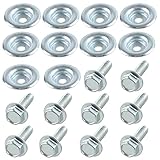
I remember the first time I needed a specific fastener, and my toolbox looked like a graveyard of mismatched screws and bolts. I’d bought a whole kit online, promising the moon, and ended up with a pile of junk that didn’t fit anything. That’s how I learned that sometimes, the simplest things are the ones you need to get right. Like figuring out precisely what a 3/4 10 32 bolt wire is supposed to do.
It sounds like a mouthful, and honestly, it can be confusing. But once you break it down, it’s just a specific type of hardware for a specific job.
Forget the fancy jargon. Let’s talk about what actually works and why you might need this particular piece of metal.
What the Heck Is a 3/4 10 32 Bolt Wire Anyway?
Alright, let’s decode this. When you see ‘3/4 10 32 bolt wire,’ it’s not actually describing a bolt and a wire in one. It’s usually a shorthand for a bolt that has a specific thread pitch and diameter, and the ‘wire’ part might be referring to how it’s packaged or sometimes a very fine thread that might look like wire if you squint. Most commonly, this designation points to a bolt with a 3/4 inch nominal diameter, 10 threads per inch (TPI), and the ’32’ is likely a typo or misunderstanding, as a 3/4 inch bolt wouldn’t typically have 32 TPI.
Standard coarse thread for 3/4 inch is 10 TPI (often designated as 3/4-10). Fine thread for 3/4 inch is 16 TPI (3/4-16). A 32 TPI is incredibly fine and usually found on much smaller diameter bolts.
So, if you’re seeing ‘3/4 10 32′, it’s almost certainly a 3/4-10 bolt, and the ’32’ is either extraneous information or a confusion.
The important bits are the diameter (3/4 inch) and the thread count (10 threads per inch). This combination tells you a lot about the bolt’s strength and its intended use.
A 3/4-10 bolt is a stout piece of hardware. That 10 TPI means it has fewer, coarser threads compared to a fine thread bolt. Coarse threads are generally easier to start, less prone to cross-threading, and often considered more shock-resistant. This makes them a workhorse for a lot of general construction, machinery, and heavy-duty applications where speed of assembly and durability are key.
Think about putting together a workbench, attaching a heavy bracket, or securing something that’s going to see a lot of vibration. You don’t want fine threads that can strip easily under stress.
The ‘wire’ part is where it gets murky. Sometimes, manufacturers will package bolts in coils of wire, especially smaller ones, for dispensing. However, for a bolt as large as 3/4 inch, this is highly unlikely. It’s more probable that ‘wire’ is a misinterpretation, or perhaps it’s referring to a specific type of bolt that uses a wire retainer or something similar in its application, but that’s not standard terminology for the bolt itself. My best guess? You’re looking for a standard 3/4-10 bolt, and any mention of ‘wire’ is a red herring or a packaging detail that has no bearing on the bolt’s function.
I’ve spent way too much time sifting through hardware bins, trying to decipher cryptic labels. A few years back, I was building a deck and needed some serious lag bolts. The store had a confusing array, and I ended up with a box of what I thought were the right ones. Turns out, I grabbed bolts with the wrong TPI. They looked similar, but when it came to tightening them into the joists, they just wouldn’t bite properly. It was a frustrating afternoon wasted, trying to backtrack and find the correct hardware. That’s why understanding these basic measurements is so darn important. It saves you time, money, and a whole lot of swearing.
So, for clarity: the 3/4 10 32 bolt wire scenario almost certainly boils down to a 3/4-10 bolt. Focus on that diameter and thread count. Everything else is likely noise.
People Also Ask: What is the difference between 3/4 10 and 3/4 16?
The difference between 3/4-10 and 3/4-16 bolts lies in their thread pitch. The ’10’ in 3/4-10 means there are 10 threads per inch, giving it a coarser thread. The ’16’ in 3/4-16 means there are 16 threads per inch, resulting in a finer thread. Coarse threads (like 3/4-10) are generally stronger in lower-grade materials, easier to assemble, and more resistant to vibration damage. Fine threads (like 3/4-16) offer slightly more precise adjustments and can be stronger in high-strength materials due to the increased thread engagement. For a 3/4 inch bolt, 3/4-10 is far more common for general heavy-duty use.
Understanding Thread Pitch: The Heart of the Matter
Let’s get down to brass tacks. The thread pitch is everything when it comes to fasteners. For a 3/4 10 32 bolt wire, if we’re assuming it’s a 3/4-10 bolt, that ‘10’ signifies 10 threads per inch. (See Also: Are All Honda Atv Bolt Patterns The Same )
This is considered a coarse thread for a bolt of this diameter. Why does this matter?
Well, imagine trying to screw a bolt with tiny, squished-together threads into a piece of wood or metal versus one with wider, more spaced-out threads. The coarser threads (fewer per inch) are generally easier to engage, less likely to strip out, and can handle more vibration without loosening. They’re the workhorses for construction, heavy machinery, and any application where you need a solid, dependable connection that won’t wiggle loose easily.
Contrast this with a fine thread, like a hypothetical 3/4-16. That ‘16’ means 16 threads per inch. You’ve got more threads packed into the same inch of bolt length. Fine threads can be advantageous in certain situations. They allow for finer adjustments, which is great for precision equipment or where you need to torque something down just so. They can also be stronger in high-tensile strength materials because there’s more surface area for the threads to grip. However, they’re also more delicate. They cross-thread more easily if you’re not careful, and they can be more susceptible to damage from impact or vibration. For most general-purpose heavy-duty applications, the coarse thread is the way to go.
My own experience hammered this home when I was assembling a custom bookshelf unit. I needed bolts that would hold a lot of weight, and I figured finer threads would mean a stronger connection. Boy, was I wrong. I used a bunch of 3/4-16 bolts, and while they went in, they felt less secure. One of the shelves started to sag a bit, and I noticed one of the bolts had backed out slightly. I ended up having to replace them all with 3/4-10 bolts. The difference was immediate. They felt rock-solid, and I haven’t had a single issue since. That’s when I really learned that the “finer is better” mentality doesn’t always apply, especially with large fasteners.
The ‘32’ in your query is the outlier here. As I mentioned, 32 TPI is exceptionally fine for a 3/4 inch bolt. It’s more common on smaller screws. If you’re actually seeing a specification that includes 3/4-32, you need to be incredibly careful.
It might be a specialized fastener for a very specific piece of equipment, not something you’d find at your local hardware store for general use. It’s far more likely that the ‘32’ is a mistake in the description or a misunderstanding. Always double-check the actual product or the context in which you’re seeing this specification.
Rely on the diameter and the common thread pitches (10 or 16 for 3/4 inch) unless you have a very good reason not to.
People Also Ask: What is the strength of a 3/4 inch bolt?
The strength of a 3/4 inch bolt depends heavily on its material grade and type. For example, a standard A325 structural bolt (often used in construction) has a minimum tensile strength of around 90,000 pounds per square inch (psi), meaning a 3/4 inch bolt could withstand tens of thousands of pounds of force before failing. High-strength bolts like A490 can be even stronger. However, for common hardware store bolts, the strength is often indicated by markings on the bolt head (like dots or lines) corresponding to ASTM or SAE standards. A Grade 5 bolt is moderately strong, while a Grade 8 is significantly stronger. Always check the bolt head for these markings to understand its load-bearing capacity.
Material Matters: Steel, Stainless, and Beyond
When you’re dealing with a beefy fastener like a 3/4-10 bolt, the material it’s made from is just as important as its dimensions. Most commonly, you’ll find these bolts made from steel. Steel is strong, relatively inexpensive, and readily available.
However, standard carbon steel can rust, especially if it’s exposed to moisture or chemicals. This is where the grade of steel comes in.
You’ll see designations like Grade 2, Grade 5, and Grade 8. A Grade 2 bolt is your basic hardware store bolt, good for light-duty applications. Grade 5 is stronger, often identified by three radial lines on the bolt head, and is suitable for many automotive and general construction tasks.
Grade 8, marked with six radial lines, is the strongest of the common steel grades and is used for heavy-duty applications where high clamping forces and resistance to vibration are needed.
If rust is a concern, or if the application involves corrosive environments, then stainless steel is your go-to. Stainless steel bolts, while typically a bit more expensive than their carbon steel counterparts, offer excellent corrosion resistance. (See Also: Are Ak Bolts Interchangeable )
The most common grades you’ll encounter are 304 and 316. 304 stainless steel is good for most general outdoor and marine applications. 316 stainless steel is even more resistant to corrosion, especially from saltwater and certain chemicals, making it ideal for harsh marine environments or food processing equipment. However, it’s worth noting that stainless steel, while resistant to rust, isn’t always as strong as high-grade carbon steel.
So, if you need extreme tensile strength and corrosion resistance, you might need to look at specialized alloys or coatings.
I learned this the hard way when I used regular steel bolts for a garden gate. It looked great for about a year, then the heads started to rust and crumble. Trying to get them out was a nightmare. I ended up having to cut them off. Since then, for anything exposed to the elements, I’ve made it a rule to use stainless steel. It costs a bit more upfront, but the longevity and peace of mind are totally worth it. I’ve seen too many projects fail prematurely due to rust-induced fastener failure.
Beyond steel and stainless steel, you might encounter other materials for specialized needs, like brass or bronze for decorative or non-magnetic applications, or titanium for extreme strength-to-weight ratios, but these are far less common for a standard 3/4-10 bolt. For most practical purposes, you’ll be choosing between different grades of carbon steel or stainless steel based on your strength requirements and environmental conditions. Always check the bolt head for markings indicating its grade or material type. It’s your best bet for making sure you’re using the right fastener for the job and avoiding future headaches.
People Also Ask: What is the difference between Grade 5 and Grade 8 bolts?
The primary difference between Grade 5 and Grade 8 bolts lies in their material composition and heat treatment, which dictates their strength. Grade 5 bolts are typically made from medium carbon steel and have a tensile strength of around 120,000 psi. They are usually identified by three radial lines on the bolt head. Grade 8 bolts are made from medium carbon alloy steel, are heat-treated, and have a significantly higher tensile strength of around 150,000 psi. They are identified by six radial lines on the bolt head. This makes Grade 8 bolts considerably stronger and more suitable for applications requiring higher load capacities and greater resistance to shock and vibration.
Common Mistakes and How to Avoid Them
Okay, let’s talk about the screw-ups I’ve seen and made myself. The biggest mistake with a bolt like a 3/4-10 is simply not getting the right type for the job. It’s easy to grab something that looks like it’ll work, especially if the packaging is confusing, like that ‘wire’ part we discussed. You might get the wrong thread pitch (like accidentally grabbing a fine thread when you need coarse, or vice-versa if that’s even possible for a 3/4 bolt), the wrong material grade (using a low-grade bolt where a high-strength one is needed), or the wrong length. A bolt that’s too short won’t engage enough threads to be secure, and one that’s too long can cause issues with clearance or might require excessive washers.
Another common pitfall is using the wrong tools. Trying to tighten a 3/4 inch bolt with a cheap, worn-out wrench is a recipe for disaster. You’ll round off the bolt head, making it incredibly difficult to tighten or remove later. Always use a high-quality socket or wrench that fits snugly. For a bolt this size, you’ll often need a substantial wrench or a socket with a breaker bar to get adequate use. I’ve been guilty of using the wrong size socket and stripping the head on a bolt more times than I care to admit, usually when I’m in a hurry.
Cross-threading is another big one, especially if you do end up with fine threads or are working with slightly damaged threads on the bolt or in the hole. This happens when you start screwing the bolt in at an angle. Instead of the threads smoothly engaging, they grind against each other, damaging both the bolt and the receiving threads. Always start a bolt by hand, making sure it turns smoothly for at least a few revolutions before you even think about using a tool. If it feels tight or resists, back it out immediately and try again, making sure it’s perfectly perpendicular to the mating surface.
Over-tightening is also a problem. While it seems like tighter is always better, you can actually strip the threads in the material you’re screwing into, or even snap the bolt head off, especially if it’s not a high-grade bolt. Learn the appropriate torque for the application if possible, or at least tighten it until it feels snug and secure, then give it just a little bit more. For important applications, using a torque wrench is a must. I once over-tightened a bolt on a trailer hitch attachment and heard a sickening crack. Had to replace the entire mounting bracket. Expensive lesson.
Finally, don’t neglect the environment. Using a standard steel bolt in a constantly wet environment will lead to rust and eventual failure. I’ve seen people use the wrong type of stainless steel, too, thinking all stainless is created equal. If you’re working near the ocean, you need 316, not just any old 304. Understanding the conditions the fastener will endure will save you headaches down the line. Always consider corrosion, temperature, and vibration when selecting your hardware.
People Also Ask: How do I know if a bolt is cross-threaded?
You’ll know a bolt is cross-threaded if it becomes very difficult to turn by hand after only a few rotations, or if it starts to bind and requires excessive force to move. It might feel gritty or make a scraping sound as you try to turn it. If you encounter this resistance early on, stop immediately. Do not force it. Back the bolt out completely and inspect both the bolt threads and the threads in the hole for damage. Starting the bolt by hand for several turns before using a wrench is the best way to prevent cross-threading.
Practical Uses for a 3/4-10 Bolt
So, where would you actually use a heavy-duty bolt like a 3/4-10? These aren’t your everyday machine screws; they’re built for serious work. One of the most common applications is in heavy construction and structural framing. Think about building decks, pergolas, retaining walls, or even framing out a sturdy shed. These bolts are strong enough to hold together large wooden beams or attach them to concrete foundations with the right anchor hardware. (See Also: Are All Bolt Patterns The Same )
They’re also prevalent in industrial machinery and equipment. If you’re assembling a large metal fabrication, setting up heavy machinery, or building sturdy workbenches and stands for tools, a 3/4-10 bolt will likely be part of the assembly. They provide the solid fastening needed to withstand the stresses and vibrations of industrial use. I used a few of these when I was building a custom welding cart for my shop. It needed to be solid, carry a lot of weight, and not wobble around while I was maneuvering it, and these bolts were perfect for the frame.
Automotive applications also make use of bolts this size, particularly in chassis work, suspension components, or trailer hitches. When you need a fastener that can handle significant shear and tensile loads, a 3/4-10 bolt is often specified. You’ll also find them in heavy-duty trailer frames, boat docks, and any situation where you’re joining substantial pieces of metal or wood that need to bear significant weight or withstand external forces.
Another area is agricultural equipment. Tractors, plows, and other farm machinery often use large, solid fasteners to hold together the heavy-duty components that are subjected to rough terrain and significant operational stress. If you’re repairing or building something for farm use, you’ll likely encounter these.
Basically, if you have two substantial components that need to be joined securely and reliably, and they’re not going to be subjected to extreme, rapid temperature changes or highly corrosive, specific chemicals (where exotic alloys might be needed), a 3/4-10 bolt is probably a solid choice. It’s the go-to for making things stay put when they really matter. The coarse threads make them forgiving enough for field repairs or assembly where precision might be secondary to sheer strength and ease of installation.
A Quick Comparison: Bolt Types for Heavy Duty
When you’re looking at fasteners for serious work, it’s not just about size and thread. Different types of bolts serve slightly different purposes. Here’s a quick rundown, focusing on what you might consider alongside a 3/4-10 bolt.
| Bolt Type | Description | Pros | Cons | Verdict |
|---|---|---|---|---|
| Hex Bolt (e.g., 3/4-10) | Standard bolt with a hexagonal head, designed to be turned with a wrench or socket. Available in various grades and materials. | Strong, versatile, widely available, easy to tighten with standard tools. Coarse threads are forgiving. | Can require significant torque, head can be a clearance issue in tight spots. | The go-to for most heavy-duty applications due to balance of strength, availability, and ease of use. |
| Carriage Bolt | Features a smooth, dome-shaped head and a square neck under the head to prevent it from turning when the nut is tightened. | Prevents turning without needing a secondary tool. Smooth head is less snag-prone. | Lower tensile strength compared to hex bolts of the same size. Square neck can damage softer materials. Less common in 3/4 inch. | Good for specific applications where you need to bolt through softer materials and prevent rotation from one side. Not ideal for pure load-bearing. |
| Lag Screw/Bolt | Basically a large wood screw with a hex head, designed to screw directly into wood. Often has a coarser thread than machine bolts. | Excellent for wood-to-wood or wood-to-metal connections without pre-drilled tapped holes. Easy to install with a socket. | Requires a pilot hole, can split wood if not drilled correctly. Not a true machine bolt; primarily for wood. | Best for structural wood connections where maximum holding power into the wood is needed. |
| U-Bolt | A U-shaped bolt with both ends threaded, used to fasten pipes or rods to a support. Comes with a backing plate and nuts. | Excellent for clamping round objects. Provides a strong, secure grip. | Very specific application. Not a general-purpose fastener. | Indispensable for its intended purpose of clamping round items securely. |
What Is a 3/4 10 Bolt Used for?
A 3/4-10 bolt, with its 3/4 inch diameter and 10 threads per inch (coarse thread), is used for heavy-duty applications where strength and durability are most important. This includes structural framing in construction (decks, sheds), industrial machinery assembly, heavy-duty workbenches, automotive chassis components, and trailer hitches. Its coarse threads make it easier to install and more resistant to vibration compared to fine threads, making sure a secure connection for substantial loads.
Can I Use a 3/4 10 Bolt for a Fence Post?
Yes, a 3/4-10 bolt can be used for reinforcing fence post connections, especially for heavy-duty or large fence structures. It’s ideal for attaching wooden posts to metal brackets or concrete bases where significant structural integrity is needed. For purely wood-to-wood connections in fencing, a lag screw might be more appropriate, but if you’re joining a post to a metal bracket or a substantial base, a 3/4-10 bolt provides the necessary strength and reliability to withstand wind loads and general wear.
What Is the Meaning of 10 32 on a Bolt?
The ’10’ in a ’10-32′ bolt specification refers to the thread count per inch, meaning there are 10 threads per inch. The ’32’ refers to the nominal diameter of the bolt, which is 32/64 of an inch. However, standard bolt sizing doesn’t typically use ’32’ for diameter in this way. A more common understanding for small bolts is a thread designation like ’10-32′ meaning a size 10 bolt with 32 threads per inch. If you see ’10 32′ as a bolt size, it’s likely referring to a smaller bolt size (closer to 3/16 inch diameter) with 32 threads per inch, indicating a fine thread for that diameter.
Is a 3/4 10 Bolt Stronger Than a 1/2 Inch Bolt?
Yes, a 3/4-10 bolt is significantly stronger than a 1/2 inch bolt, assuming both are made of the same material and grade. The larger diameter (3/4 inch vs. 1/2 inch) means the bolt has a greater cross-sectional area, allowing it to withstand much higher tensile and shear forces before failure. While thread pitch (10 TPI for the 3/4 bolt) also plays a role, the sheer increase in diameter is the primary factor contributing to the superior strength of the 3/4 inch bolt.
When “good Enough” Isn’t
I’ve always believed in buying tools and hardware that do the job right the first time. It might cost a bit more upfront, but the frustration, wasted time, and potential for project failure from using the wrong fastener is never worth it. Trying to cut corners on bolts, especially for anything structural or load-bearing, is a gamble you don’t want to take.
When you’re facing a project that demands real strength and reliability, don’t second-guess the specifications. If you need a 3/4-10 bolt, get a 3/4-10 bolt. Understand what those numbers mean, choose the right material grade for the environment, and use the correct tools.
It’s about making sure that whatever you’re building or fixing stays together, safely and securely, for years to come. That’s the real value in getting your hardware right.
Final Verdict
So, when you’re wrestling with the idea of a 3/4 10 32 bolt wire, take a deep breath and focus on the practicalities. It’s almost certainly a 3/4-10 bolt you need – strong, reliable, and built for heavy lifting. The ‘wire’ part is a distraction; the diameter and thread pitch are what matters.
Don’t be the guy who learns the hard way, like I did with that deck project. Investing a little time in understanding your hardware saves you a lot of pain later. Check the grade, consider the environment, and always use the right tools.
Next time you’re at the hardware store, or ordering online, you’ll know exactly what to look for and why. And that’s a win in my book.