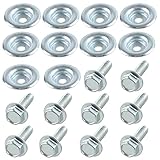
I remember the first time I saw a specification sheet that listed “a 5104015 bolt.” My brain just sort of… short-circuited. What kind of arcane designation was that? Was it some kind of secret military hardware? A prototype part from a sci-fi movie? It took me longer than I care to admit to realize it was just a part number, a specific identifier for a fastener that, in the grand scheme of things, is pretty darn ordinary. But the confusion it caused was real, and it’s a prime example of how seemingly simple components can have surprisingly complex or opaque labeling systems.
This isn’t about some fancy, niche aerospace component. This is about a bolt. A common fastener, yet its designation, a 5104015 bolt, can make you scratch your head.
Let’s cut through the noise.
The Mundane Reality of ‘a 5104015 Bolt’
Look, I’ve spent more hours than I’d like to count wrestling with parts lists, trying to find the exact screw or bolt that will make a repair possible. There’s nothing quite like having a whole project stalled because you can’t source a single, seemingly insignificant fastener.
That’s where designations like ‘a 5104015 bolt’ come into play. For most of us, this isn’t a part you’d find at your local hardware store under a bin labeled ‘Miscellaneous Bolts.’
This is a specific industrial or OEM (Original Equipment Manufacturer) part number. Think of it like a specific model number for a car part, or a SKU for a particular electronic component. It identifies one exact item within a manufacturer’s catalog or a system designed for tracking replacements.
What does it actually mean? Usually, it’s a proprietary identifier assigned by the company that makes or uses the bolt. The ‘a’ prefix might denote a certain series, a material type, a plating, or even just a batch designation within their system. The ‘5104015’ is the unique numerical identifier. So, when you see ‘a 5104015 bolt,’ you’re not looking at a description of its physical properties in plain English. You’re looking at a barcode, a serial number, for a fastener. This is why searching for it on a general hardware site might yield nothing useful. You’re more likely to find it through an industrial supplier, an OEM parts dealer, or a specialized fastener distributor.
The frustration comes when you need to replace one and don’t have the original part number. Then, you’re back to the drawing board, trying to reverse-engineer what you need based on its appearance, thread pitch, length, and material. It’s a pain in the neck, and frankly, a lot of manufacturers could do a better job of making their parts more universally identifiable, especially for common items. But that’s the reality of proprietary numbering systems. It works for them internally, but it can be a headache for the end-user trying to keep something running.
Decoding the Specs: What to Actually Look For
Since ‘a 5104015 bolt’ is just a number, the real work is figuring out what physical characteristics that number represents. If you have the old bolt, or the equipment it came out of, this is your treasure trove. You need to become a mini-detective. The most important things to identify are the thread size, thread pitch, length, material, and head type. Get any of these wrong, and it simply won’t fit, or worse, it might work but fail prematurely.
Let’s break it down. First, thread size. This is usually expressed as a diameter. For metric bolts, it’ll be something like M6, M8, M10, indicating a 6mm, 8mm, or 10mm nominal diameter. For imperial (SAE) bolts, it’ll be something like #10, 1/4″, 5/16″, 3/8″, etc. You can often measure the diameter with a caliper or even a ruler, but be precise. A fraction of a millimeter or an inch can make a huge difference. (See Also: Are All Honda Atv Bolt Patterns The Same )
Next is thread pitch. This is the distance between the threads. For standard imperial coarse threads, it’s implied by the size (e.g., 1/4″ bolt has 20 threads per inch). For fine threads, or metric threads, you need to be more specific. Metric fine threads will have a number after the diameter, like M10x1.25, meaning a 10mm diameter with a 1.25mm pitch. For imperial, you might see something like 1/4″-20 (coarse) or 1/4″-28 (fine). You can measure this with a thread gauge, which is a cheap and invaluable tool for any DIYer. Just lay the gauge over the threads until you find one that slots in perfectly without wobbling.
Length is usually measured from the underside of the head to the tip of the bolt. Be consistent. Some manufacturers measure differently, but for most applications, this is the standard. Make sure you’re measuring the same way the original was meant to be.
Material and strength are important. Most common bolts are steel. You’ll see designations like Grade 5, Grade 8 for imperial, or strength classes like 8.8, 10.9 for metric. Higher numbers mean stronger bolts. If the original bolt was hardened steel, you don’t want to replace it with a soft, low-grade one, especially for anything load-bearing. Look for markings on the head; these often indicate the grade. For example, Grade 8 bolts typically have six radial lines on the head.
Finally, the head type. Is it a hex head? A socket head (Allen)? A button head? A countersunk head? This needs to match for the tool you have to work and for the component to sit flush or clear whatever it needs to clear.
If you can’t find the original part number, you’re going to need these details. Having a few basic measuring tools – a caliper, a thread gauge, a ruler – will save you a ton of guesswork and wasted money.
Common Mistakes and How to Avoid Them
Alright, let’s talk about where people screw up when dealing with specific fastener numbers like ‘a 5104015 bolt,’ or even just trying to replace a bolt they don’t have a number for. The most common mistake? Assuming all bolts are the same. This is a recipe for disaster, and I’ve been there.
I once tried to ‘make do’ with a slightly wrong bolt on a piece of equipment, and it cost me dearly. The bolt looked similar, seemed to thread in okay, but it wasn’t the right strength. A few weeks later, under load, it sheared.
Not only did I have to replace the bolt, but the vibration and stress from the failing fastener damaged the surrounding components, turning a simple $2 fix into a $200 repair job.
So, here are the big pitfalls to watch out for: (See Also: Are Ak Bolts Interchangeable )
1. Thread Pitch Mismatch: This is huge. You might get the diameter and length right, but if the threads per inch (TPI) or the metric pitch is off by even a little, the bolt either won’t thread in at all, or it will thread in loosely and won’t hold. It’s tempting to just force it, but DON’T. If it feels like it’s fighting you, stop. You’re probably stripping the threads on the mating part or the bolt itself.
2. Incorrect Strength Grade: As I mentioned, replacing a high-strength bolt with a low-strength one is asking for trouble, especially in automotive, machinery, or anything structural. Always match or exceed the original strength rating. If you can’t find markings on the old bolt, err on the side of caution and go for a higher grade if you’re unsure.
3. Material and Corrosion Resistance: Is the original bolt stainless steel or plated? Using a standard zinc-plated steel bolt in an environment where the original was stainless (like near saltwater or in humid conditions) is asking for rust and premature failure. Stainless steel bolts are more expensive, but sometimes they’re a must for longevity and appearance.
4. Head Style Interference: The head of the bolt needs to fit. A hex head needs clearance for a wrench. A socket head needs space for an Allen key. A countersunk head needs a specific countersunk hole to sit flush. If you use a different head style, you might find your tool won’t fit, or the head will stick out where it shouldn’t, causing interference with other moving parts or just looking terrible.
5. Buying Too Few: This is more of a practical mistake. If you need a specific bolt like ‘a 5104015 bolt’ and you find a supplier, order a few more than you need. Fasteners get lost, dropped, or sometimes you realize you needed a few more for a related part of the job. Having spares on hand saves you another trip or a frustrating call later.
The best way to avoid these is patience and accurate measurement. Don’t guess. Don’t assume. Measure twice, order once.
Real-World Use Cases for Specific Fasteners
So, where do you actually encounter a bolt designated like ‘a 5104015 bolt’? Mostly, it’s in the world of original equipment manufacturing and replacement parts. Think about appliances, vehicles, industrial machinery, specialized tools, and even some higher-end consumer electronics. These manufacturers have their own internal part numbering systems to manage millions of components.
Let’s say you own a specific model of commercial espresso machine. The manufacturer might use a part number like ‘a 5104015 bolt’ for a important component that holds a heating element in place. This bolt might have very specific material requirements (like being food-grade or high-temperature resistant) and precise threading to make sure a perfect seal and prevent leaks. When that bolt inevitably needs replacing due to vibration or wear, you’re not going to find it at the local hardware store. You’ll need to go to an authorized parts dealer for that espresso machine brand. They’ll look up ‘a 5104015 bolt’ in their system, and out pops the exact spec.
Another example could be in automotive repair. While many car parts use standardized SAE or metric designations, some manufacturers use proprietary numbers for specific brackets, engine components, or even trim pieces. If a mechanic needs to replace a bracket holding a sensor on a particular model of car, they might need a specific bolt that has a number like ‘a 5104015 bolt’ in their service manual’s parts diagram. This makes sure they use a bolt with the correct head recess for access, the right thread to avoid damaging the aluminum engine block, and the appropriate corrosion resistance for under-the-hood conditions. (See Also: Are All Bolt Patterns The Same )
Or consider a high-end exercise bike. A key pivot point might use a specialized bolt that needs to be exceptionally strong and smooth-operating. The manufacturer, to make sure quality control and prevent the use of inferior substitutes, assigns it a unique number. Trying to find that exact bolt requires going through their official parts channel. It’s frustrating when you just need a simple fastener, but for the manufacturer, it’s about quality assurance and making sure their product performs as designed for its entire lifespan. It’s a trade-off between ease of sourcing and guaranteed compatibility and performance.
Ultimately, when you see a specific, odd-looking part number for a bolt, it’s usually because it’s designed for a particular purpose within a specific product. It’s not just a generic bolt; it’s the bolt specified for that exact application by the original designer.
When the Original Part Number Is Lost: A Practical Guide
So, the unthinkable has happened. You’ve lost the bolt, or the part number is smudged beyond recognition. Now what? Don’t panic. This is where your detective skills and basic tools come in. This is basically what I had to do when I first encountered ‘a 5104015 bolt’ without context. First, try to identify the product it came from. Is it a piece of furniture? A car part? An appliance? Knowing the product can help you narrow down the search for original documentation or compatible parts.
If you have the mating part (the nut or the threaded hole), that’s your best friend. You can try threading different common bolt sizes into it by hand. As mentioned, a thread gauge is invaluable here. You can also carefully measure the diameter of the hole or the nut’s inner diameter. Then, you can use online resources that list common thread sizes for different bolt diameters and pitches. For example, a 1/4-inch bolt commonly has a 20 TPI (coarse) or 28 TPI (fine) thread.
Step-by-Step Replacement Process (Without the Original Part Number):
- Identify the Source: What product did this bolt come from? What was its function? Was it under high stress?
- Examine the Mating Part: If you have the nut or the threaded hole, examine it closely. Can you see any thread markings? Can you measure its diameter precisely?
- Measure the Old Bolt (If Available): If you still have the old bolt, measure its overall length, shank diameter, and head height. Use a caliper for accuracy.
- Determine Thread Type and Pitch: This is the hardest part without a gauge. For SAE, count the number of threads in one inch. For metric, measure the distance between two adjacent crests of the threads using a caliper and divide by the number of threads within a convenient measurement (e.g., 10mm). Alternatively, use a thread gauge.
- Identify Material and Strength (if possible): Look for any markings on the bolt head. Consult online resources for common bolt head markings if you’re unsure.
- Determine Head Type: Hex, socket, button, pan, countersunk? Make sure it matches the clearance and tool access needed.
- Consult Online Resources or Suppliers: Once you have your measurements, you can search generic fastener sites or industrial suppliers. Instead of searching for ‘a 5104015 bolt’, you’ll search for “M8x1.25x30mm Hex Bolt Grade 8.8” or
Final Thoughts
So, when you encounter a designation like ‘a 5104015 bolt,’ don’t let it intimidate you. It’s just a label, a specific identifier for a fastener that has precise dimensions and specifications. The real task is to understand those specifications – thread size, pitch, length, material, and head type – and then find a bolt that matches. It’s a common frustration in the world of repairs and maintenance, but with a bit of patience and the right tools, you can often find suitable replacements.
Don’t be afraid to trust standard fasteners if you can verify the important measurements. For many common applications, a good quality standard bolt is often the most sensible choice. The key is accurate measurement and understanding what you actually need, rather than just chasing an obscure part number.
🔥 Read More:Next time you’re faced with a mysterious fastener, grab your caliper and thread gauge, and you’ll be well on your way to a successful repair.