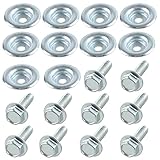
I remember the first time I saw a product touting ‘a 490 bolts’ as a key feature. My eyes practically rolled out of my head. Another marketing buzzword, I thought, designed to make you think you’re getting something revolutionary when it’s probably just a slightly different shade of blue. Years of tinkering, assembling, and frankly, wasting money on ‘innovations’ that turned out to be snake oil have made me cynical. So, when it came to a 490 bolts, I approached it with a healthy dose of skepticism, ready to call out the hype.
But sometimes, just sometimes, the hype is… well, not entirely fake. This isn’t about some magical cure-all; it’s about understanding what’s actually going on under the hood, what works, and where you’re likely to get fleeced.
Why I Nearly Walked Away From a 490 Bolts
Let’s be blunt: the world of fasteners can feel like a black hole of jargon and inflated claims. When I first stumbled into the rabbit hole of projects requiring specific bolt types, I was overwhelmed. My initial thought was, ‘Just give me a bolt that holds things together!’
But then came the specialized projects, the ones where a standard bolt just wouldn’t cut it, and I started encountering terms that sounded more like sci-fi than hardware. ‘a 490 bolts’ was one of those terms that immediately set off my BS alarm.
It sounded like something designed to sound fancy but offer no real advantage. I’d spent good money on ‘high-tensile’ screws that snapped on me like twigs, and ‘self-tapping’ bolts that stripped out before they even bit into the material.
So, when I saw ‘a 490 bolts’ advertised, my immediate reaction was ‘here we go again.’ I’d probably tried three different types of ‘special’ bolts for a garden shed project just last year, each costing a ridiculous premium, and none performed noticeably better than the generic galvanized ones I ended up using. I almost didn’t bother digging deeper into what a 490 bolts actually meant because I’d been burned too many times by overhyped hardware.
What the Heck Even Is a 490 Bolts?
Alright, let’s get down to brass tacks about a 490 bolts. Forget the marketing fluff. At its core, the ‘490’ in this context usually refers to the tensile strength of the bolt, measured in thousands of pounds per square inch (psi).
So, a 490 bolt is designed to withstand approximately 490,000 psi before it’s expected to yield or break. This is a significant figure. For perspective, standard hardware store bolts are often in the 60,000 to 120,000 psi range. This means a 490 bolt is engineered for applications where immense stress and load-bearing capacity are absolutely most important.
Think structural engineering, heavy machinery, aerospace, or any situation where failure isn’t just inconvenient; it’s catastrophic. The material science behind these bolts is pretty intense, often involving specialized alloys and heat treatments to achieve that extreme strength without becoming brittle.
It’s not just about making a bolt thicker; it’s about the internal structure of the metal itself. I learned this the hard way when I tried to use some supposedly ‘heavy-duty’ bolts from a discount supplier for a trailer hitch modification. They looked beefy, but I later found out their actual tensile strength was way lower than advertised, and they bent like a pretzel under load.
That’s when I realized that the numbers, like the ‘490’ designation, actually mean something tangible if they’re accurate.
Material and Construction Nuances
So, what makes a bolt hit that 490 psi mark? It’s usually a combination of high-grade steel alloys – think chromium, molybdenum, and vanadium – subjected to rigorous heat treatments like quenching and tempering. This process refines the grain structure of the metal, making it incredibly strong and resilient.
It’s not a one-size-fits-all deal. Different manufacturing processes can affect the final properties.
For instance, cold forging can improve strength, while hot forging might be used for larger bolts. The threading is also important; it needs to be precise to make sure consistent engagement and avoid stress concentrations that could lead to failure. I once bought a batch of bolts that looked identical, but one set had slightly rougher threads. They seemed to work fine initially, but under sustained vibration, they loosened much faster. (See Also: Are All Honda Atv Bolt Patterns The Same )
This showed me the importance of not just the material, but the quality of the manufacturing itself. The surface finish, the thread pitch accuracy – all of it matters when you’re pushing the limits of material science.
When a 490 Bolts Is Overkill (and When It’s Not)
Here’s where I often see people making expensive mistakes with hardware: assuming ‘stronger is always better.’ For most DIY projects, like assembling furniture, building a deck railing, or mounting a TV, a 490 bolt is laughably overkill.
You’d be spending a premium for strength you’ll never even come close to using. A standard grade 5 or grade 8 bolt from your local hardware store will do the job perfectly fine, and at a fraction of the cost. I learned this the hard way when I over-specced the bolts for a simple garden planter box. I used some aerospace-grade titanium fasteners I’d scavenged, convinced they were the ultimate solution.
They looked cool, sure, but they cost me an arm and a leg, and the wood rotted out around them long before the bolts showed any sign of strain. The planter box fell apart due to wood degradation, not fastener failure.
Where a 490 bolt does shine is in highly specialized, demanding applications. Think race car suspension components, important structural elements in industrial machinery, or aircraft assemblies where failure could have dire consequences. If your project involves extreme forces, vibrations, temperature fluctuations, or safety is a must, then yes, a bolt engineered to that level of strength might be exactly what you need. It’s about matching the fastener’s capability to the actual demands of the job, not just buying the most ‘industrial’ looking thing you can find.
Common Mistakes When Buying and Using a 490 Bolts
People get tripped up with hardware like this in a few predictable ways. The most common mistake is buying them because they sound impressive, without understanding the application. You see ‘490’ and think ‘wow, that must be strong enough for anything!’
Wrong. It’s like buying a jet engine to power your lawnmower. It’s astronomically more powerful than needed and will likely cost you a fortune. Another pitfall is the source.
Unless you’re buying from a reputable industrial supplier or a manufacturer known for quality, you might be getting bolts that are mislabeled or poorly manufactured. I’ve heard horror stories of people buying ‘high-strength’ bolts online that turned out to be significantly weaker in reality, leading to catastrophic failures. Always, and I mean always, buy from sources you trust for important applications.
A mistake here isn’t just about wasting money; it can be dangerous. I once had a friend who tried to save a few bucks on bolts for a custom motorcycle frame. He used some unbranded, suspiciously cheap ‘high-strength’ bolts he found on a marketplace. Within 500 miles, under normal riding conditions, one of the frame bolts sheared off.
Thankfully, it didn’t cause an accident, but it was a stark reminder that quality and proper certification matter immensely when dealing with safety-important components. Don’t be afraid to ask for specifications or certifications if you’re unsure. A good supplier will have them readily available.
The ‘cheap vs. Quality’ Trade-Off
This is where I see my own past mistakes reflected in others. You’re looking at a bolt that needs to perform under duress. You see the premium price tag on something labeled ‘a 490 bolts’ and then you see a generic bolt that looks similar for half the price. The temptation to go cheap is huge.
I’ve fallen for it. I bought a batch of what were advertised as high-strength bolts for a heavy-duty gate hinge.
They looked and felt substantial. A few months later, the gate started sagging noticeably. Closer inspection revealed that the cheaper bolts had stretched and deformed under the constant load. (See Also: Are Ak Bolts Interchangeable )
They hadn’t snapped, but they had permanently yielded, meaning they were no longer holding the load effectively. This is a classic example of the trade-off. The ‘490’ designation implies a certain level of material integrity and manufacturing precision that simply isn’t present in cheaper, unrated fasteners. You might save money upfront, but you’re gambling with the long-term integrity and safety of your project.
For applications where failure is a serious risk, paying for genuine, certified a 490 bolts is not an extravagance; it’s a necessity. It’s the difference between a project that lasts and one that fails, potentially dangerously, down the line.
A Real-World Scenario: My Trailer Hitch Fiasco
So, I’m building a custom trailer hitch for a small utility trailer. I wanted it to be bombproof. I’d seen some trailer hitch failures online, and the thought of losing a trailer on the highway genuinely scared me. I went to a specialty metal supplier and asked for the strongest bolts they had.
They pointed me towards some hefty-looking, black-oxide coated bolts. They looked impressive, felt heavy, and the guy assured me they were ‘industrial grade.’ I paid a pretty penny for them, thinking I was being prudent.
I torqued them down exactly to the recommended specs for the trailer frame material. Everything seemed solid. I loaded up the trailer with some landscaping supplies – dirt, rocks, the usual heavy stuff. About 20 miles down the road, I started hearing a weird clunking sound.
Then a sickening creak. I pulled over, heart pounding. The hitch assembly was visibly drooping.
The bolts hadn’t snapped, but they had bent. They had stretched and deformed under the load, completely compromising the integrity of the hitch. I had to limp home, trailer partially dragging. I ended up having to buy actual, certified trailer hitch hardware, which, while also expensive, actually met the load requirements.
The ‘industrial grade’ bolts I bought were just… regular strong, not ‘490’ strong. It was a costly lesson in understanding what the specifications actually mean and not being swayed by appearance or vague assurances. That experience cemented my belief that for important load-bearing applications, you need to know the actual tensile strength rating, and ‘a 490 bolts’ is a designation you can trust if it’s from a legitimate source.
Table: Bolt Strength Showdown (my Opinionated Verdict)
| Bolt Type/Specification | Typical Tensile Strength (psi) | Best Use Cases | My Verdict |
|---|---|---|---|
| Standard Hardware Store Bolts (e.g., Grade 2) | ~60,000 psi | Light-duty furniture, basic assembly, non-load-bearing tasks. | Fine for drawer pulls, but don’t trust them with anything serious. Cheap and cheerful. |
| Grade 5 Bolts | ~120,000 psi | General construction, automotive repairs, moderate load-bearing applications. | The workhorse for most DIY. Reliable for most jobs around the house. |
| Grade 8 Bolts | ~150,000 psi | Heavy-duty construction, suspension components, high-stress automotive parts. | Good step up when you need more than Grade 5. Worth the extra cost for important parts. |
| ‘a 490 bolts’ (Hypothetical/Specialty) | ~490,000 psi | Aerospace, heavy industrial machinery, safety-important structural applications. | Only for the most extreme, safety-important jobs. Massive overkill (and cost) for 99% of people. Don’t buy if you don’t absolutely need it. |
Practical Tips for Buying and Using Bolts Correctly
So, you’ve decided you might need something stronger than your average bolt. How do you avoid ending up with junk? First, know your application. What forces will this bolt be under?
What kind of environment will it be in (corrosion, extreme temps)? If you’re unsure, talk to an engineer or a reputable supplier. Don’t guess. Second, always buy from a known, trusted source.
For important applications, this means industrial suppliers, established fastener companies, or manufacturers with good reputations. Avoid sketchy online marketplaces or discount stores for anything safety-related. Third, look for markings. Reputable bolts will have markings indicating their grade and manufacturer.
For ‘a 490 bolts’, you’d expect clear certification or documentation. If it’s bare, unmarked, and cheap, walk away. Fourth, understand torque specifications. Just having a strong bolt doesn’t mean you can just crank it down with all your might.
Over-tightening can damage the bolt or the material it’s going into. Use a torque wrench and follow the recommended specifications for your materials. I learned this when I stripped the threads on a cast iron manifold trying to use overly powerful bolts without respecting the torque limits. Finally, consider the material of the bolt itself. (See Also: Are All Bolt Patterns The Same )
Stainless steel for corrosion resistance, alloy steel for strength, etc. Match the material to the environment and the load.
Understanding Bolt Markings
This is your first line of defense against buying duds. Most bolts, especially those rated for higher strength, will have markings on the head. For standard US bolts, you’ll often see dots or lines indicating the grade.
For example, Grade 5 bolts typically have three radial lines, and Grade 8 bolts have six. If you’re looking at metric bolts, the system is different, using numbers like 8.8, 10.9, or 12.9, which relate to tensile strength.
A ‘490’ designation isn’t a standard SAE or Metric grade, so it’s likely a manufacturer’s specific rating or a custom specification. This is where you really need to trust your supplier.
If they claim ‘a 490 bolts,’ ask them for the accompanying specifications that prove it meets that tensile strength. A reputable company will provide data sheets or have it clearly listed in their catalog.
I once bought some bolts that were supposedly high strength, but they had no markings at all. I should have known better. They performed like cheap hardware store bolts, and I ended up having to replace them. Don’t be afraid to ask questions, and don’t buy anything that looks like it’s trying to hide its identity.
Faq: Your Burning Questions About a 490 Bolts
What Is the Main Difference Between a Standard Bolt and a 490 Bolt?
The primary difference lies in their tensile strength. Standard bolts, like Grade 2 or Grade 5, have much lower tensile strength ratings, typically ranging from 60,000 to 120,000 psi. A 490 bolt, conversely, is engineered to withstand an exceptionally high tensile load of approximately 490,000 psi. This makes it suitable for applications requiring extreme load-bearing capacity, far beyond what standard bolts can handle.
Are 490 Bolts Always Made of Special Alloys?
Yes, generally. Achieving a tensile strength of 490,000 psi requires more than just standard carbon steel. These bolts are typically constructed from high-performance alloy steels, incorporating elements like chromium, molybdenum, and vanadium. These alloys, combined with precise heat treatments such as quenching and tempering, are key for developing the extreme strength and durability required for such high-stress applications.
Where Would I Typically Find a 490 Bolt Being Used?
You’ll find bolts with such high tensile strengths in highly specialized and important industries. This includes aerospace engineering for aircraft components, heavy industrial machinery where immense forces are at play, high-performance racing vehicles for important suspension or chassis parts, and in specialized structural engineering projects where safety margins are extremely tight. They are not for general consumer use.
Can I Use a 490 Bolt for a Simple DIY Project?
Absolutely not. For the vast majority of DIY projects, including furniture assembly, basic construction, or even moderate automotive repairs, a 490 bolt is massive overkill. You would be paying a significant premium for strength you’ll never use, and it could even be detrimental if not properly handled. Standard bolts like Grade 5 or Grade 8 are more than sufficient and much more cost-effective for typical home and hobbyist applications.
How Do I Know If a Bolt Labeled ‘490’ Is Legitimate?
Legitimacy is key and relies heavily on the supplier. You should only purchase from reputable industrial suppliers or manufacturers known for quality. Always ask for specifications, data sheets, or certifications that verify the tensile strength. Unmarked, suspiciously cheap bolts claiming to be ‘490’ are almost certainly not legitimate and should be avoided, especially for any application where failure is a risk.
Final Thoughts
Look, the takeaway here is pretty simple: ‘a 490 bolts’ isn’t a marketing gimmick, but it’s a designation for a very specific, high-performance product. For the average person, the vast majority of projects will never even sniff the need for this kind of strength. You’ll spend a fortune on bolts that are designed for fighter jets or skyscraper construction and get absolutely zero benefit from it.
My own trailer hitch debacle taught me that just looking strong isn’t enough. You need to know what that number actually means and, more importantly, if you actually need it. Stick to the appropriate grades for your jobs – Grade 5 or 8 for most anything that needs a bit more grunt, and leave the ultra-high-strength stuff to the engineers who truly need it.
If you find yourself in a situation where you think you might need something like a 490 bolts, do your homework. Buy from a reputable source, get the specs, and understand the torque requirements. Otherwise, you’re just throwing money away on hardware that’s meant for a completely different universe of stress.