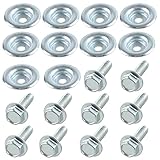
I remember staring at a pile of bolts for a deck project, completely overwhelmed. The guy at the hardware store was rattling off grades and alloys like he was reciting poetry. I just needed something strong enough to hold up a couple of hundred pounds of wood and people, something that wouldn’t rust into oblivion after the first rain. That’s when I first really thought about a 4 stainless bolt strength – not just the number, but what it actually means for my project.
So much of what you read online makes it sound like rocket science. They throw around terms like ‘tensile strength’ and ‘shear strength’ without ever really explaining what they mean in plain English. Forget the marketing jargon; let’s talk about what actually keeps your stuff together.
We’ve all bought hardware that looked good but failed miserably. This isn’t about that. This is about getting the right bolt the first time.
Understanding Stainless Steel Bolt Grades
Look, when we talk about a 4 stainless bolt strength, we’re really talking about a few things, and the ‘4’ part isn’t as simple as you might think. Most people hear ‘stainless steel’ and think it’s all the same. It’s not. There are different types, and they behave differently under stress. The most common stainless steel you’ll find for bolts is 18-8, which is technically an Austenitic stainless steel. This is the stuff that’s pretty good at resisting rust and corrosion, which is why it’s everywhere. It’s a solid choice for general outdoor use, like that deck I was building, or for anything exposed to moisture.
Now, the ‘strength’ part. This is where it gets a bit more nuanced than just picking a shiny bolt.
Stainless steel bolts are often categorized by their mechanical properties, like tensile strength (how much pulling force it can take before breaking) and shear strength (how much force it can take to cut it sideways). You’ll see numbers like Grade 2, Grade 5, or Grade 8 for regular carbon steel bolts, but stainless steel uses a different system, often related to its specific alloy composition and heat treatment.
For instance, a Grade 316 stainless bolt is generally stronger and more corrosion-resistant than a Grade 304. But for a standard 1/4-inch bolt used in most home improvement projects – say, attaching a bracket or a gate hinge – the difference between a good quality 18-8 and a slightly tougher alloy might be overkill, or it might be the difference between a job done right and one that needs redoing.
I once had a bracket holding up a fairly heavy outdoor light fixture. I used what I thought were good stainless bolts, probably 18-8. After about two years, the bracket started to sag, and the bolts looked a bit stressed. I swapped them out for some higher-grade stainless, maybe a 316, and the difference was noticeable immediately.
The new bolts felt more solid, less prone to flexing. It wasn’t a massive engineering feat, but it was enough to make me pay more attention to the specifics. For most everyday tasks, a decent quality 18-8 stainless bolt will be perfectly adequate for a 4 stainless bolt strength application, offering a good balance of corrosion resistance and holding power. Don’t get bogged down in the really high-end aerospace grades unless you’re building a rocket.
The ‘4’ in 4 Stainless Bolt Strength: What Does It Mean?
Let’s cut to the chase: that ‘4’ in ‘a 4 stainless bolt strength’ usually refers to the diameter of the bolt, measured in inches. So, a ‘4’ means a quarter-inch diameter bolt. It’s a common size, used in countless applications. When you’re looking at a box of bolts, you’ll see markings like 1/4-20, where ‘1/4′ is the diameter and ’20’ is the number of threads per inch (TPI). A coarser thread (lower TPI, like 20) is generally easier to install and has decent strength, while a finer thread (higher TPI, like 28) can offer slightly more clamping force and is less likely to vibrate loose, but it can be more susceptible to cross-threading.
The strength of that 1/4-inch bolt isn’t solely determined by its diameter, though. As I mentioned, the grade of stainless steel (like 18-8 or 316) plays a huge role. Then there’s the bolt’s design itself. (See Also: Are All Honda Atv Bolt Patterns The Same )
Is it a fully threaded bolt or a partially threaded bolt? A partially threaded bolt has a shank of unthreaded metal below the head, which can be important for certain applications where you want a snug fit against a surface without threads digging in. The head style also matters – hex heads are common and easy to grip with a wrench, while button heads or socket heads offer a cleaner look or a way to get a flush finish.
But for sheer holding power on a 1/4-inch bolt, the material grade and the quality of the threads are your main concerns.
I learned this the hard way when I was assembling a heavy-duty shelving unit in my garage. I bought a pack of what I thought were identical 1/4-inch bolts. Some of them, when tightened, just kept spinning, even though I was sure I was tightening them properly. Turns out, a couple of the bolts had slightly worn or poorly formed threads.
It wasn’t a grade issue; it was a manufacturing quality issue. It meant I had to stop, go back to the store, and hand-pick individual bolts, checking the threads on each one.
A simple 1/4-inch bolt, but the quality varied wildly. This experience hammered home that for a 1/4-inch bolt, quality of manufacture and the correct stainless grade are most important to achieving reliable a 4 stainless bolt strength.
| Bolt Size | Common Stainless Grade | Typical Use Case | Opinion/Verdict |
|---|---|---|---|
| 1/4-inch (1/4-20 TPI) | 18-8 (304) | General outdoor hardware, furniture, light brackets, deck railings | Great all-rounder for most DIY. Good corrosion resistance, decent strength. Unless you’re in a super harsh marine environment, this is usually fine. |
| 1/4-inch (1/4-20 TPI) | 316 | Marine applications, coastal areas, harsher chemical environments, higher load-bearing outdoor structures | Superior corrosion resistance, especially to salt. Worth the slight extra cost if your project is near the sea or exposed to aggressive elements. |
| 1/4-inch (1/4-28 TPI) | 18-8 (304) | Applications where vibration is a concern, finer adjustments needed, or where a slightly more secure fit is desired | Finer thread can offer a more secure hold. Good for things that might shake loose, but be careful not to cross-thread. |
Tensile Strength vs. Shear Strength: What’s the Difference?
When you’re looking at the specs for a bolt, you’ll often see ‘tensile strength’ and ‘shear strength.’ Understanding these two is key to not over or under-specifying your hardware. Tensile strength is pretty straightforward: it’s the maximum stress a material can withstand while being pulled or stretched before it breaks or deforms permanently. Imagine hanging a weight from a bolt – the tensile strength is what prevents the bolt from snapping.
Shear strength, on the other hand, is the force that tends to cause parts of an object to slide relative to one another. Think about two pieces of metal bolted together, and you try to slide one piece off the other. The shear strength of the bolt is what resists that sliding motion. For a 1/4 stainless bolt strength, both are important, but they’re not the same. A bolt might have very high tensile strength but relatively lower shear strength, or vice versa, depending on its alloy and how it’s manufactured.
Most bolt strength charts will give you approximate values. For example, a common 1/4-inch 18-8 stainless steel bolt might have a tensile strength of around 70,000 psi (pounds per square inch) and a shear strength of maybe 40,000 psi. A 1/4-inch 316 stainless bolt will have similar numbers, sometimes slightly higher, but its real advantage is its superior corrosion resistance in salty environments. This is why people sometimes recommend Grade 316 for marine use; it’s not just about being ‘stronger,’ it’s about maintaining its strength and integrity over time in harsh conditions.
I once had to repair a garden gate that kept sagging. The original bolts were standard steel, and they had corroded so badly they were almost fused to the hinges. When I replaced them, I used 1/4-inch stainless bolts. I figured stainless was strong enough.
What I didn’t fully appreciate was the shear force involved in holding the weight of the gate. The bolts I used were decent 18-8, but they were partially threaded. The unthreaded shank was the part taking most of the shear load. After a few months, I noticed the gate was sagging again, and the bolts were slightly bent where they passed through the hinge plates. (See Also: Are Ak Bolts Interchangeable )
I ended up having to replace them with fully threaded bolts and a slightly higher grade of stainless to get the job done right. It was a good lesson: understand what kind of stress the bolt will actually be under.
Tensile Strength vs. Shear Strength: Key Differences
Tensile strength measures resistance to pulling apart. Shear strength measures resistance to forces that try to slice or slide the bolt. For a 1/4 stainless bolt, both are important for holding power, but their relative values depend on the material and design. Most common applications are well within the limits of standard stainless steel bolts, but understanding the difference helps in selecting the right hardware for specific loads and stresses.
Common Mistakes When Buying Stainless Bolts
Here’s where people really mess up, and it’s usually not because they’re dumb, but because they’re not given clear information. The biggest mistake I see is assuming all stainless is created equal. People see ‘stainless’ and think ‘rust-proof forever.’ While it’s highly corrosion-resistant, especially compared to plain steel, it’s not invincible. In extremely corrosive environments, like constant saltwater spray or exposure to certain chemicals, even stainless can pit or corrode over time. That’s why, for coastal or marine applications, Grade 316 is often recommended over the more common Grade 304 (which is what 18-8 usually is). It’s a small price difference for a big gain in longevity in those specific situations.
Another mistake is buying cheap, unbranded stainless bolts. You can find bulk packs of stainless hardware for pennies on the dollar online, and a lot of it is junk. The threads might be weak, the material might not be true stainless steel (sometimes they’re just plated steel that looks like stainless), or the manufacturing tolerances are so loose that they don’t hold as well as they should. I bought a massive box of 1/4-inch stainless bolts once for a project, and maybe one in ten was actually usable because the threads were so poorly cut.
It was infuriating and a complete waste of money. Always buy from a reputable hardware store or a known fastener supplier if you can.
The slightly higher cost is worth the peace of mind.
People also sometimes overthink the grade for simple applications. For building a basic bookshelf or attaching a doorknob, you don’t need aerospace-grade titanium-infused unobtanium. A standard 18-8 (304) stainless bolt will be more than strong enough. You’re just wasting money and potentially making the project harder than it needs to be by selecting something unnecessarily specialized. Conversely, under-specifying is also a problem. Using a tiny machine screw when a 1/4-inch bolt is clearly needed for structural integrity is a recipe for disaster. Always consider the load the fastener will bear.
Finally, not checking the thread pitch for the application. While 1/4-20 is very common, some applications might call for a finer thread (like 1/4-28). Using the wrong thread pitch means the bolt won’t thread into the nut or the pre-tapped hole properly, or it might strip the threads easily. It’s a simple detail that can cause big headaches if overlooked. Always double-check what you need.
Common Stainless Bolt Mistakes
- Assuming all stainless steel is equally rust-proof (consider Grade 316 for harsh environments).
- Buying unbranded or extremely cheap hardware online (quality varies wildly).
- Over-specifying for simple tasks (18-8 is usually fine for most home use).
- Under-specifying for structural needs (always consider the load).
- Not checking the thread pitch (1/4-20 vs. 1/4-28, for example).
Real-World Applications for 1/4-Inch Stainless Bolts
So, where do you actually see these 1/4-inch stainless bolts being used? Everywhere, honestly. For a homeowner, they’re your bread and butter for a lot of projects. Think about attaching those sturdy metal brackets to hang shelves or support heavier items on a wall. They’re perfect for assembling outdoor furniture that needs to withstand the elements. Hinges on gates, shed doors, or even internal cabinet doors often use 1/4-inch bolts. If you’re doing any kind of woodworking or metal fabrication for outdoor use, these are your go-to.
I recently helped a friend build a custom outdoor kitchen island. We used 1/4-inch 18-8 stainless bolts extensively to connect the frame components, attach the countertop supports, and even mount some of the accessories. They held up perfectly, didn’t rust through the multiple rainy seasons we’ve had since, and kept the whole structure feeling solid. It’s the kind of fastener that you can rely on without constantly worrying about it. (See Also: Are All Bolt Patterns The Same )
Another common use is in automotive applications, particularly for non-important components or where corrosion is a concern. Think about mounting accessories, replacing old, rusted bolts on a classic car, or even in boat trailers. In marine environments, especially on smaller boats or docks, 1/4-inch 316 stainless bolts are invaluable for attaching cleats, railings, or any hardware that’s constantly exposed to saltwater. It’s the quiet workhorse of the fastener world for anything that needs to be durable, strong, and resistant to corrosion without being overly expensive or complicated.
One area where I’ve seen them used effectively is in building DIY hydroponic systems. The water and nutrient solutions can be corrosive, so using stainless steel bolts for the frame and structure prevents rust from contaminating the system or weakening the supports. It’s a practical application where the corrosion resistance really shines, making a 4 stainless bolt strength a genuinely good choice for longevity and system integrity.
Practical Tips for Using Stainless Bolts
- Lubricate Threads: Always use a small amount of anti-seize compound or even a bit of wax on the threads before tightening. Stainless steel can gall (seize up) more easily than regular steel, especially if it’s being tightened into stainless nuts or tapped holes.
- Use Washers: For most applications, use washers (preferably stainless steel ones too!) under the bolt head and the nut. This distributes the clamping force over a larger area, preventing the head or nut from digging into the material and improving the seal.
- Don’t Overtighten: While you want a secure fit, overtightening stainless bolts can strip the threads or even weaken the bolt. Tighten until snug, then give it a small extra turn. For important structural applications, consult torque specifications if available, though for common 1/4-inch bolts, ‘snug plus a bit’ is usually sufficient.
- Match Materials: Try to use stainless steel nuts and washers with your stainless bolts. Using a plain steel nut on a stainless bolt can lead to galvanic corrosion, where the less noble metal (the steel nut) corrodes faster, and it can seize the bolt.
Faqs About a 4 Stainless Bolt Strength
Can I Use Regular Steel Bolts Instead of Stainless for Outdoor Projects?
For most outdoor projects, especially those exposed to moisture or salt spray, using regular steel bolts is a bad idea. They will rust quickly, weakening the fastener and staining your project. While they might be cheaper upfront, the premature failure and need for replacement make them more expensive in the long run. Stainless steel, even the common 18-8 grade, offers far superior corrosion resistance, making sure your project stays strong and looks good for years.
How Do I Know If My Stainless Bolts Are Good Quality?
Look for reputable brands and suppliers. Avoid generic, unbranded bulk packs, especially from unknown online sources, as the quality can be very inconsistent. Check for clean, well-formed threads and consistent head shapes. If the price seems too good to be true, it probably is. Buying from a trusted local hardware store or a specialized fastener supplier is usually a safer bet for making sure you get genuine stainless steel of the correct grade.
Is Grade 316 Stainless Steel Always Better Than Grade 304 (18-8)?
Not always ‘better,’ but superior in specific environments. Grade 304 (often referred to as 18-8) is excellent for general use and offers good corrosion resistance. Grade 316 has molybdenum added, which makes it significantly more resistant to pitting and corrosion from chlorides, like salt. So, for marine, coastal, or heavily chlorinated environments, 316 is the better choice. For general indoor or mild outdoor use, 304 is perfectly adequate and more cost-effective.
What Does It Mean If a Stainless Bolt Feels ‘soft’ or Bends Easily?
If a stainless bolt feels significantly softer than expected or bends easily under normal tightening force, it’s likely either a low-quality material that isn’t truly stainless steel, or it’s a very low-strength grade. True stainless steel bolts, even common grades, should have a respectable amount of tensile and shear strength. Bending or deforming easily is a sign of poor material or manufacturing, and it should not be used for any load-bearing application.
Can I Drill a Hole and Use a 1/4 Stainless Bolt as a Structural Support?
For light-duty structural support, yes, a 1/4-inch stainless bolt can be sufficient, provided the load is within its tensile and shear strength limits and it’s properly secured. However, for significant structural loads (like supporting a heavy beam or a important part of a building’s frame), you would almost certainly need larger diameter bolts (e.g., 3/8-inch, 1/2-inch) and potentially a higher grade of steel or specific structural bolts designed for those purposes. Always consult engineering guidelines or a professional for important structural applications.
Final Verdict
So, the next time you’re looking for a 4 stainless bolt strength, remember it’s not just about the shine. It’s about the diameter, the grade of stainless steel, and the quality of the manufacturing. For most of us tackling DIY projects around the house, a good quality 1/4-inch 18-8 stainless bolt will get the job done perfectly well. Don’t overspend on fancy alloys unless you’re dealing with serious corrosion, and definitely avoid those suspiciously cheap online packs.
The goal is always to use a fastener that’s strong enough for the job and won’t fail you down the line. A little bit of knowledge goes a long way in preventing those frustrating trips back to the hardware store. Pay attention to the details, and your projects will thank you for it.
Next time you’re at the store, take a moment to actually read the packaging. You might be surprised what you learn, and you’ll definitely be better equipped to pick the right bolt for the job.