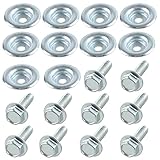
I remember the first time I tried to source a specific type of bolt for a DIY project. It felt like navigating a maze designed by someone who hated clear signage. You’d think a simple fastener would be easy, right? Wrong. Especially when you’re looking for something as niche as a ‘a and l bolt lafayette la’, which, let’s be honest, sounds like it belongs in a secret handshake or a particularly obscure hardware catalog.
I’ve spent more hours than I care to admit digging through bins, squinting at tiny labels, and politely (or not so politely) asking staff who seem more interested in their lunch break than my missing screw.
This isn’t about fancy tools or complex machinery. This is about the backbone of any build: the humble, yet utterly vital, fastener. And sometimes, finding the right one feels like a quest.
Hunting Down the Elusive ‘a and L Bolt Lafayette La’
Let’s cut to the chase: finding a specific bolt like the ‘a and l bolt lafayette la’ isn’t like picking up a standard Phillips head from your local mega-mart. These aren’t sitting in a prominent display next to the drywall screws. This is where the real treasure hunt begins, and frankly, a lot of the advice out there is just… useless. It’s either too generic, telling you to ‘check your local hardware store’ (duh), or it’s buried in jargon that makes you feel even more lost.
I’ve been there, standing in aisle 7, feeling like I needed a degree in metallurgy just to identify a bolt. The first time I needed something specific, I wasted nearly a whole Saturday.
Drove to three different stores, talked to four different people, and left with three wrong parts. It’s enough to make you want to just glue everything together, isn’t it?
The truth is, if you’re looking for something like ‘a and l bolt lafayette la’, you’re likely dealing with a more specialized need. This could be for a specific piece of equipment, an antique restoration, or a project where exact specifications matter. Generic advice just won’t cut it. You need to be a bit more Sherlock Holmes about it.
Think about where such a bolt might originate or be commonly used. Is it for a particular brand of machinery? A specific type of vehicle? Even knowing the general era of a project can sometimes narrow down the possibilities.
I once needed a specific type of lag bolt for an old deck restoration, and it turned out the original manufacturer had a proprietary thread pattern. Nobody at the big box stores knew this; I had to track down a specialty fastener supplier that dealt with vintage hardware. It was a revelation, and honestly, a massive time-saver once I knew where to look.
The key here is understanding that ‘a and l bolt lafayette la’ isn’t a standard catalog number you’ll find in every binder. It’s more likely a description, a brand identifier, or a local designation. So, your approach needs to be less about finding a product on a shelf and more about finding a source or a solution.
This often means talking to people who actually know fasteners – not just stock boys, but people who’ve been in the industry for decades, or even the manufacturers themselves if it’s a specific component. Many smaller, independent hardware stores, especially those that have been around for generations, are goldmines for this kind of knowledge.
They might not have it on the shelf, but they’ll likely know who does or how to get it. Don’t be afraid to ask them about ‘a and l bolt lafayette la’ directly, even if it sounds odd. They’ve probably heard stranger things and might recognize it.
My First Fastener Fiasco: I was building a custom workbench a few years back and needed some hefty bolts to secure the legs. I thought I knew what I was doing, grabbed what looked right from the hardware store, and got to work.
About halfway through, I realized the threads weren’t quite biting properly. They were close, but not right. (See Also: Are All Honda Atv Bolt Patterns The Same )
I spent the rest of the day driving to three more stores, trying to find a match, and ended up using a less-than-ideal solution that wobbled for months until I finally sourced the correct ones. That lesson cost me a day and a lot of frustration. Lesson learned: when in doubt, be precise, or get help from someone who is.
What to Look for (beyond the Obvious)
When you’re hunting for something specific, like ‘a and l bolt lafayette la’, the label on the bin isn’t always your best friend. You need to develop an eye for the details that truly matter.
This means understanding the anatomy of a bolt and what each part signifies. We’re talking head type (hex, carriage, socket, etc.), thread pitch (fine, coarse), material (steel, stainless, brass), and any coatings (zinc, black oxide). Each of these has a purpose and impacts how the bolt performs. For instance, a coarse thread is good for quick assembly in softer materials, while a fine thread offers more strength and precision in harder metals.
Stainless steel is your go-to for outdoor or corrosive environments, but it’s also softer and more expensive than standard steel.
Don’t get bogged down in corporate jargon about ‘superior materials’ or ‘enhanced durability’. What you need to know is this: will it hold? Will it rust in a week?
Will the head strip after two turns? For a bolt like ‘a and l bolt lafayette la’, the ‘A&L’ might indicate the manufacturer, and ‘Lafayette LA’ could be a regional distributor or even where it was originally manufactured. This kind of information is gold. If you can find out who ‘A&L’ is, you can often go directly to their website or contact their support to find out where their products are sold or if they have a specific designation for that bolt.
I’ve had to do this for obscure tractor parts before, and it’s always a direct line to the right information.
Another common mistake is assuming all steel bolts are the same. They’re not. You’ll see grades of steel bolts, like Grade 2, Grade 5, and Grade 8. These grades indicate strength. A Grade 8 bolt is significantly stronger than a Grade 2. If your project requires high tensile strength, using the wrong grade is a recipe for failure. Think of it like using a toothpick to hold up a car – it just won’t cut it. When you’re unsure, look for the markings on the bolt head. Grade markings are usually stamped right there. If there are no markings, it’s likely a lower grade, and you should be cautious using it for anything load-bearing.
Contrarian View: Most people obsess over the head type of a bolt. I disagree. While important, the thread and the material grade are far more important for structural integrity. I’ve seen plenty of fancy socket cap bolts fail because they were made of soft steel or had the wrong thread pitch for the application. Focus on what holds the joint together first, then worry about the aesthetics or ease of installation with the head type. If a hex head gets the job done reliably and safely, I’m using a hex head.
Key Bolt Characteristics to Check
| Characteristic | What to Look For | My Verdict/Why it Matters |
|---|---|---|
| Material | Steel (various grades), Stainless Steel, Brass, Aluminum | Stainless for corrosion resistance is often worth the extra cost. Standard steel is fine for dry indoor use. Brass for electrical conductivity or aesthetics. |
| Thread Type | Coarse (UNC), Fine (UNF) | Coarse is faster, better for softer materials. Fine is stronger, better for metals and vibration resistance. Match the existing thread if possible. |
| Head Type | Hex, Socket (Allen), Pan, Round, Flat, Carriage | Depends on tool access and desired finish. Hex is common and versatile. Socket heads allow for higher torque. Carriage heads are snag-free. |
| Grade (Steel Bolts) | Grade 2, Grade 5, Grade 8 | Grade 8 is heavy-duty. Grade 5 is a good middle ground. Grade 2 is for light-duty applications. Always check if your project needs a specific grade. |
| Length | Measured from under the head (for most bolts) | Important for proper engagement. Too short and it won’t hold. Too long and it might interfere or not be fully seated. |
Common Mistakes When Sourcing Fasteners
I’m going to be blunt: most people make at least three mistakes when they’re trying to buy bolts, especially when they’re hunting for something specific like ‘a and l bolt lafayette la’. The first, and most common, is not bringing the old part or a precise measurement. You’ll stand there, holding a picture on your phone or trying to describe the thread pitch with your fingers, and the person behind the counter will just nod vaguely. It’s a recipe for disaster.
If you’re replacing a bolt, take the damn thing with you. If you can’t, at least measure the diameter and the length, and try to figure out the thread pitch. You can buy a cheap thread gauge for a few bucks online, and it’s saved me more headaches than I can count.
That little piece of metal is worth its weight in gold when you’re trying to avoid a wasted trip.
The second big mistake is assuming that brand matters more than specification. I see people looking for a specific brand name bolt when the generic equivalent with the exact same material, thread, and size would work perfectly fine and be half the price. Unless ‘A&L’ is a specific, patented design that you absolutely need for warranty or a unique function, focus on the specs. (See Also: Are Ak Bolts Interchangeable )
For most general applications, especially for something like ‘a and l bolt lafayette la’ where the name might be regional, the generic equivalent is the way to go. You’re paying for the name, not necessarily a better bolt. I’ve fallen for this trap myself, paying a premium for a brand I’d never heard of, only to find out the local hardware store had an identical, cheaper option.
Third, and this ties into the first, is not understanding thread pitch. People often think ‘bolt size’ is enough. They’ll say ‘I need a half-inch bolt.’ Well, is that a half-inch diameter with 13 threads per inch (coarse) or 20 threads per inch (fine)? They are not interchangeable. Trying to force a coarse thread into a fine thread hole, or vice versa, will strip the threads on both the bolt and the receiving nut or hole. It’s infuriating and ruins the parts. Always, always verify the thread pitch. If you’re buying online, and the listing doesn’t specify coarse or fine (or UNC/UNF), move on. It’s not worth the gamble.
Real Use Case – The Wobbly Shelf: I had a shelving unit where one of the support bolts kept loosening. I kept tightening it, but it would just get wobbly again. Turns out, I had a slightly stripped bolt hole in the frame and was using a standard coarse thread. I should have switched to a fine thread bolt with a locking nut, or even better, drilled and tapped the hole for a slightly larger bolt.
Instead, I kept adding more washers and tightening it, making the problem worse. Finally, I just replaced the bolt and nut with a nylon locking nut, and it’s been solid ever since. Sometimes the simplest fix is the best, but you have to identify the real problem first.
When your quest for a specific fastener like ‘a and l bolt lafayette la’ takes you beyond the aisles of your local hardware store, you’re entering the world of specialty suppliers and the vast, sometimes overwhelming, online marketplace. This is where you can often find exactly what you’re looking for, but it requires a different kind of diligence. Specialty fastener shops, the kind that don’t just sell screws but understand them, are invaluable. They often carry a much wider range of materials, thread pitches, and obscure sizes than general retailers. They’re the places that might actually recognize ‘A&L’ as a manufacturer or distributor.
When you find one of these shops, treat them like a resource. Ask questions. Explain your project. The staff there usually have years of experience and can guide you. I once needed a specific type of metric bolt for a motorcycle repair, and the guy at the specialty shop didn’t just sell me the bolt; he explained why that particular alloy was used and recommended a specific grade of locking nut to go with it. That’s the kind of service you don’t get at a big box store.
Online, the world opens up. Websites like McMaster-Carr, Bolt Depot, Fastenal (which also has physical stores), and even Amazon (with caution) are great resources. McMaster-Carr, in particular, is legendary for its detailed catalogs and excellent product descriptions.
If you can find the spec for your ‘a and l bolt lafayette la’ – diameter, length, thread pitch, material, head type – you can almost certainly find it on one of these sites. The key is being precise with your search terms.
Don’t just type ‘bolt’. Type ‘M8 x 1.25 x 50mm socket head cap screw stainless steel’.
The more specific you are, the better your results will be. Be aware of minimum order quantities on some sites, and always factor in shipping costs and delivery times.
Personal Anecdote – The Metric Marvel: I was rebuilding a vintage European car, and I quickly discovered that half the fasteners were metric, and the other half were imperial, with some bizarre combinations thrown in. My local hardware store was a bust. I ended up ordering a huge assortment of metric bolts, nuts, and washers from an online specialty supplier.
It cost me around $180 across four orders to get everything I needed, but it meant I wasn’t scavenging mismatched parts. That investment in the right fasteners saved me countless hours of frustration and potential structural issues down the line. The ‘a and l bolt lafayette la’ might be an oddity, but online, there’s a good chance someone stocks it or something functionally identical.
Practical Tips for Your Fastener Hunt
Let’s boil down this whole fastener-finding ordeal into some practical advice. First, identify your needs precisely. (See Also: Are All Bolt Patterns The Same )
Before you even think about going to a store or searching online, know what you’re looking for. Get a description, take measurements, or even better, bring the old part. If you’re hunting for something specific like ‘a and l bolt lafayette la’, try to find out why it’s called that.
Is ‘A&L’ a brand? Is ‘Lafayette’ a location? Does it refer to a specific function or type? This information can open search results that generic terms won’t.
If you can’t find the exact phrase, try breaking it down into its components: what kind of bolt head is it? What’s the thread like? What’s the material?
Second, know your sources. Don’t waste your time at a general big-box store if you need something specialized. Identify local independent hardware stores that have been around for ages – these are often run by people with deep knowledge. For online purchases, bookmark reputable specialty fastener suppliers. Read reviews. Look for sites with detailed product specifications and clear images. If you’re buying on Amazon or eBay, be extra cautious. Check the seller’s reputation and read the product descriptions very carefully. Sometimes, the cheapest option is a trap; it might be low-quality material or incorrect specifications.
Third, **don’t be afraid to ask for help, but ask the right people**. Approach staff at specialty shops or experienced mechanics/tradespeople. They can often point you in the right direction, even if they don’t have the part themselves. Share what you know about the bolt – what it’s used for, where it came from, any markings on it. This context is important for someone trying to help you identify it. Remember that ‘a and l bolt lafayette la’ might be a local identifier or a very specific product line, so the more context you can provide, the better your chances of success.
Finally, consider alternatives cautiously. Sometimes, the exact fastener you need is discontinued or prohibitively expensive. In these cases, you might need to consider a suitable alternative. This is where understanding the function of the original bolt becomes important. Is it purely for holding something together, or does it have load-bearing requirements? Is corrosion resistance important? Can you use a slightly larger bolt with a different thread, or perhaps a different type of fastener altogether, like a rivet or a weld? This is advanced territory and requires a solid understanding of mechanics, so if in doubt, consult an expert or stick to finding the original spec.
Where Can I Find Specific Bolts Like ‘a and L Bolt Lafayette La’?
For highly specific bolts, your best bet is to start with independent, long-standing hardware stores that cater to tradespeople. If that fails, look for online specialty fastener suppliers. These companies often have extensive catalogs and can source obscure items. Don’t underestimate the power of calling a manufacturer directly if you can identify them.
What If I Can’t Find the Exact Bolt I Need?
If an exact match is impossible, you’ll need to find a functional equivalent. This means matching the diameter, thread pitch, length, and material grade for structural integrity. You might also need to consider a different fastening method if a direct replacement isn’t feasible. Always prioritize safety and structural soundness over aesthetics.
How Do I Identify the Thread Pitch of a Bolt?
The most reliable way is to use a thread gauge, a small tool with different sized threads to test against. Alternatively, you can count the number of threads within a given length (e.g., threads per inch for imperial, or threads per centimeter for metric). If you have the old bolt, you can try to match it at a hardware store or use online resources that show common thread pitches for different bolt sizes.
Is It Okay to Use a Bolt That’s Slightly Longer Than the Original?
It can be, but you need to be careful. A bolt that’s too long might protrude too far, creating a snag hazard or interfering with other components. If it’s significantly longer, you might need to cut it down or use it with a thicker nut or washer to make sure proper thread engagement without over-penetration. Always make sure the bolt is securely threaded for its full intended depth.
Conclusion
So, you’re on the hunt for something specific, like a ‘a and l bolt lafayette la’. It’s not going to be as simple as grabbing a carton of milk. It requires a bit of detective work, a willingness to ask questions, and the patience to sift through options. Don’t get discouraged by the generic advice you’ll find everywhere. Your best allies are often the people who’ve been dealing with fasteners for decades and the detailed catalogs of specialty suppliers.
Remember to bring measurements, know your thread pitch, and focus on the important specs rather than just a brand name unless that brand name is truly integral to the function. It’s about finding what works reliably and safely for your specific need. That little piece of metal is the backbone of your project, so it’s worth the effort to get it right.
Next time you’re staring down a bin of fasteners, think about the story behind the bolt. Is it a standard off-the-shelf item, or is it a unique character like the ‘a and l bolt lafayette la’ that requires a bit more of a personal introduction?