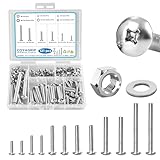
I remember staring at a pile of shiny bolts in my garage after a particularly frustrating clutch job. The parts store had handed me a generic ‘clutch bolt kit,’ and as I tried to thread them into the flywheel, something felt… off. Not all of them seemed to want to go in right, and I started to wonder: are auto and manual flywheel bolts the same 5 4?
It’s a question that’s probably crossed more than a few DIYer’s minds when faced with a seemingly simple part that just doesn’t fit. The truth is, while some might look identical, there are nuances that can land you in hot water, and potentially costly mistakes.
This isn’t about reinventing the wheel; it’s about knowing what actually matters under the hood.
Why You Can’t Just Grab Any Old Bolt
Look, the flywheel is basically the heavy disc that connects your engine’s crankshaft to the transmission’s clutch. It’s spinning at engine speed, and when you engage the clutch, it’s this connection that transfers power. That means the bolts holding it on have a pretty important job. They experience a lot of torque, vibration, and temperature changes. So, thinking ‘a bolt is a bolt’ is a recipe for disaster. I’ve seen engines shake themselves apart because of something as simple as the wrong fastener. It’s not just about the thread pitch; it’s about material strength, length, and sometimes even the head design.
The core question, ‘are auto and manual flywheel bolts the same 5 4?’, often comes up because many vehicles share the same basic engine and transmission architecture. For example, a lot of smaller inline-four engines found in everyday sedans might have both automatic and manual transmission variants. On the surface, the flywheels themselves might look strikingly similar, and so do the bolts. You might even find that a bolt from an automatic transmission’s flexplate looks like it will thread into a manual transmission’s flywheel.
But here’s the kicker: the torque requirements and the rotational forces are different. An automatic transmission doesn’t have a clutch pedal that a driver is slamming or feathering. The engagement is managed by hydraulic pressure and torque converters.
This difference in how power is transmitted and controlled can influence the design and specifications of the fasteners used.
I once spent an entire Saturday chasing a phantom vibration. Turned out, one of the bolts I’d reused from an old automatic setup on a manual flywheel was slightly shorter. It wasn’t enough for me to notice by hand, but under load, it allowed just enough flex and play to create a high-frequency shudder that drove me absolutely mad. I was convinced it was a balancing issue with the flywheel itself, or worse, the crankshaft. After pulling it all apart again, I noticed the slight gap where that one bolt was supposed to be flush. Lesson learned the hard way: don’t assume.
The sheer number of fasteners in a car can be overwhelming. From the tiny screws holding your dashboard trim to the massive ones holding your suspension together, each has a purpose. Flywheel bolts are particularly important because they’re at the heart of the powertrain. Get them wrong, and you’re not just looking at a potential breakdown; you’re looking at potential damage to the crankshaft, the transmission input shaft, or even the engine block itself. That’s why understanding the specific requirements for your vehicle, whether it’s an automatic or manual, is a must.
The Devil’s in the Details: What to Look For
So, if you can’t just eyeball them, what are you actually looking for? It breaks down into a few key areas. First, there’s thread pitch and diameter. This is the most basic compatibility check.
You need to make sure the bolt threads into the flywheel holes cleanly. If it’s forcing its way in, stop. You’re stripping threads, and that’s a whole other headache.
Second, and often overlooked, is the bolt’s grade and material. Flywheel bolts are typically high-strength alloy steel, often rated 10.9 or 12.9 (metric grades). (See Also: Can I Buy A Full Auto Bolt Carrier )
These grades indicate tensile strength. Using a weaker bolt means it could stretch or even break under load. I’ve seen cheaper aftermarket bolts made from softer material that would deform slightly, leading to the same vibration issues I mentioned earlier.
It felt like bending tin foil when I tried to torque them down properly.
Then there’s the length and shank design. Some flywheel bolts are fully threaded, while others have a smooth shank section. The smooth shank acts like a locating pin, making sure the flywheel is perfectly centered.
Using a fully threaded bolt where a shanked one is specified can lead to eccentric wear over time. The length is also important.
Too short, and you won’t get enough thread engagement. Too long, and it might bottom out in the crankshaft hole, preventing the flywheel from seating properly, or worse, it could interfere with other rotating components. I once grabbed what I thought was the right length bolt, but it was about 3mm too long. It looked like it was seated, but when I torqued it down, the flywheel was slightly proud of the crankshaft flange.
Took me ages to figure out why the pilot bearing felt stiff.
Finally, consider the bolt head style and size. Most are standard hex heads, but some might be flanged bolts or even Torx heads for specific applications. The flange can help distribute clamping force over a larger area, which is important for preventing the flywheel from cracking. The size of the hex head will dictate the size of the socket or wrench you need. This might seem trivial, but trying to torque a bolt with the wrong size wrench is a good way to round off the head, making removal a nightmare later.
Here’s a quick look at some common differences you might encounter, though remember this is a general guide and your specific vehicle manual is king:
| Feature | Automatic Transmission Flexplate Bolts (Typical) | Manual Transmission Flywheel Bolts (Typical) | Verdict |
|---|---|---|---|
| Thread Pitch/Diameter | Often similar, but variations exist. | Often similar, but variations exist. | Must match exactly. |
| Material Strength Grade | Can be lower (e.g., Grade 8 equivalent or metric 8.8/10.9). | Often higher (e.g., Grade 9.8, 10.9, or 12.9). | Higher strength is generally preferred for manual flywheels. |
| Length | Can vary significantly. | Can vary significantly. | Must be exact. |
| Shank vs. Full Thread | May be fully threaded or have a shorter shank. | Often feature a longer locating shank. | Shank is important for centering and consistent clamping. |
| Head Style | Typically hex head, sometimes flanged. | Often flanged hex head for increased surface contact. | Flanged heads are common for better load distribution. |
| Torque Spec | Generally lower than manual. | Generally higher than automatic. | Important for proper seating and safety. |
The ‘5 4’ in your question often refers to a specific thread size like 5/16 inch or metric M5 and a length of 4 inches, or perhaps a specific bolt grade designation. Without knowing the exact context, it’s hard to say for certain, but even within those broad categories, differences can exist.
Contrarian Corner: Why ‘good Enough’ Isn’t
Now, here’s where I might step on some toes. You’ll find plenty of forums and even some less-than-reputable parts suppliers that will tell you, ‘Yeah, you can swap them,’ or ‘They’re all basically the same.’ They might even claim that for older, simpler vehicles, the bolts are interchangeable. I disagree, and here’s why: the automotive industry spends millions on engineering and testing to get these specs just right. When a manufacturer specifies a particular bolt grade, length, and thread for a manual transmission flywheel versus an automatic transmission flexplate, they’re doing it for a reason. It’s not just about holding the part on; it’s about how that part behaves under specific operating conditions.
The torque specification for flywheel bolts is usually quite high, and it’s often a multi-step process involving tightening in a specific pattern. This makes sure the flywheel is pulled down evenly and securely onto the crankshaft flange. An automatic transmission flexplate, while also bolted to the crankshaft, is typically lighter and doesn’t have to handle the direct, abrupt engagement forces that a manual clutch does. Think about the difference between a smooth, controlled engagement of an automatic versus the sudden, high-torque jolt when you drop the clutch in a manual, especially at low RPMs. That difference in shock loading is significant. (See Also: Are Mercruiser 5 7 Engines Four Bolt Mains )
Furthermore, the materials used in manual flywheels are often different from automatic flexplates, and the way they interface with the crankshaft can vary. Using a bolt that’s not specifically designed for the manual flywheel’s material and mounting surface could lead to fretting corrosion, bolt loosening, or even stress fractures in the flywheel itself over time. You might get away with it for a while, especially on a mild-mannered commuter car. But on a performance application, or just a car you plan on keeping for a long time, cutting corners on something as fundamental as flywheel bolts is asking for trouble. I’ve seen vehicles where the wrong bolts caused premature wear on the crankshaft pilot bearing, which is a costly fix.
My own experience confirms this. I had a buddy who swore up and down that the bolts from his old automatic transmission were identical to the ones for his manual swap. He reused them. A year later, he was back in the garage, this time with a cracked flywheel and a transmission that was making ominous grinding noises. The bolts had stretched and loosened just enough over time to allow the flywheel to wobble. It wasn’t a catastrophic failure, but it was a $1000 lesson in sticking to OEM specifications or high-quality aftermarket parts designed for the specific application. It’s far cheaper to buy the correct set of bolts once than to deal with the collateral damage later.
Common Mistakes and How to Avoid Them
The biggest mistake, as we’ve touched on, is assuming interchangeability. People see a bolt that looks the same, threads in, and they think they’re golden. This is amplified when dealing with universal aftermarket parts or when trying to save a few bucks by reusing old bolts. Never, ever reuse old flywheel bolts unless the manufacturer explicitly states they are single-use and you are replacing them with new ones of the exact same specification.
Flywheel bolts are often stretch-to-torque bolts, meaning they are designed to be stretched to a precise point to achieve the correct clamping force. Once stretched, they lose their integrity and should be replaced.
I learned this the hard way with head bolts on an engine rebuild, but the principle applies here. Trying to reuse them is like trying to un-stretch a rubber band – it doesn’t work as well the second time.
Another common pitfall is not using a torque wrench or not following the tightening sequence. Flywheel bolts need to be torqued down evenly in a star pattern, just like cylinder head bolts. This makes sure the flywheel seats perfectly flat against the crankshaft. If you just tighten them randomly or guess the torque, you can warp the flywheel, create uneven stress, or not achieve the necessary clamping force. I’ve seen mechanics just ‘eyeball’ torque on important fasteners, and it’s infuriating. You need a calibrated torque wrench for this job. It’s not optional.
A related mistake is not cleaning the mating surfaces properly. The crankshaft flange and the flywheel mounting surface need to be absolutely spotless. Any dirt, rust, grease, or old threadlocker can create a gap, prevent proper seating, or affect the torque readings. I always give both surfaces a good clean with brake cleaner and a lint-free rag. Make sure the bolt holes in the crankshaft are also clean and free of debris. Compressed air is your friend here.
Finally, people often overlook the threadlocker. Many manufacturers specify a particular type of threadlocker (often a medium-strength blue) for flywheel bolts to prevent them from backing out due to vibration. Forgetting this step, or using the wrong type (like red, which is permanent), can cause problems. The blue stuff is designed to hold securely but still allow for removal with reasonable force and heat if needed later. I always err on the side of using the specified threadlocker, or at least a good quality equivalent. It’s cheap insurance against a catastrophic failure.
When Does It Actually Matter: Real-World Scenarios
So, when is the distinction between auto and manual flywheel bolts really going to bite you? It matters most during a clutch replacement on a manual transmission vehicle, or when swapping a manual transmission onto an engine that originally had an automatic. In these scenarios, you’re dealing with the direct forces of manual clutch engagement, which are inherently harsher than the smooth operation of an automatic. If you’re just replacing an automatic transmission in a car that already has an automatic, you’re dealing with the flexplate bolts, which might have slightly different specs but are generally less important than manual flywheel bolts.
Consider a performance build. If you’re taking a car that came with an automatic and converting it to a manual for track use or spirited driving, you’re going to be putting significantly more stress on the flywheel and its mounting bolts. In this case, using the correct, high-strength manual flywheel bolts is absolutely most important. The forces involved in quick shifts, hard acceleration, and aggressive braking are far greater than in daily commuting.
Another scenario is when purchasing used parts. If you’re buying a used flywheel or a donor engine, you have no idea what kind of bolts were used previously. It’s always best practice to buy new, application-specific bolts when installing a flywheel or flexplate. The cost of a new set of flywheel bolts, typically around $30-$60 for a quality set, is negligible compared to the potential damage they can prevent. Some manufacturers, like ARP, make high-performance, high-strength bolt kits specifically for flywheels and flexplates that are a worthwhile upgrade for most applications, manual or automatic, especially if you’re pushing the engine harder than stock. (See Also: Can Am Merverick X3 Max Xrs Wheel Bolt Pattern )
I’ve also seen issues arise when people try to adapt different transmission types. For instance, putting a newer, stronger manual transmission onto an older engine block might require a flywheel that isn’t perfectly interchangeable with the original automatic flexplate. In these hybrid setups, the original flexplate bolts are definitely not going to be suitable for securing the new flywheel. You need to consult the adapter kit manufacturer’s recommendations or research meticulously for correct bolt specifications.
The specific phrase ‘are auto and manual flywheel bolts the same 5 4’ is likely a search term someone uses when they’re trying to figure out if a specific bolt size they have on hand will work for a swap or repair. It’s a good starting point, but it needs to be followed up with verification from a reliable source.
Faq: Your Burning Questions Answered
Are All Flywheel Bolts the Same Size?
No, absolutely not. While some might share similar thread pitches and diameters, there are significant differences in material strength, length, shank design, and head style. Using the wrong size or type of flywheel bolt can lead to improper seating, loosening under stress, or even catastrophic failure. Always verify the exact specifications for your vehicle.
Can I Reuse My Old Flywheel Bolts?
Generally, no. Many flywheel bolts are designed as stretch-to-torque fasteners, meaning they are meant to be used only once. Reusing them can compromise their tensile strength and clamping ability, leading to potential issues. It’s always recommended to use new, application-specific flywheel bolts.
What Happens If I Use the Wrong Flywheel Bolts?
Using the wrong flywheel bolts can result in a range of problems, from minor vibrations and premature wear to severe damage. This can include the flywheel coming loose, damaging the crankshaft or transmission, or the bolt itself breaking under stress. In the worst-case scenario, it could lead to a complete drivetrain failure, which is incredibly dangerous and expensive to repair.
How Do I Know What Torque to Use?
Torque specifications are important and vary by vehicle manufacturer and bolt type. You should always consult your vehicle’s service manual or the specifications provided by the manufacturer of your flywheel or bolts. Torque values are usually listed in foot-pounds (ft-lbs) or Newton-meters (Nm) and often involve a multi-step tightening sequence.
What’s the Difference Between a Flywheel Bolt and a Flexplate Bolt?
While both secure rotating components to the crankshaft, flexplate bolts for automatic transmissions are typically designed for lower stress applications than the bolts used for manual transmission flywheels. Manual flywheel bolts often need to be higher strength, longer, and sometimes have specific shank designs to handle the higher shock loads and engagement forces associated with manual clutches.
Verdict
So, to wrap it all up, the question ‘are auto and manual flywheel bolts the same 5 4?’ is a common one, and the honest answer is: usually not, and it’s not worth the risk to assume they are. The differences in material, length, and intended use are too significant to ignore, especially when you consider the forces involved.
My advice? If you’re doing any work involving your flywheel or flexplate, spend the money on the correct bolts. Check your service manual, consult a reputable parts supplier, or even look up the specific part numbers from the dealership if you have to. It’s a small cost for peace of mind and to avoid a much larger, more expensive problem down the road.
Next time you’re under there, take a good look at what you’re bolting together. That little fastener is carrying a lot of weight, literally and figuratively.