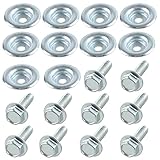
Look, we’ve all been there. You’re in the middle of a project, feeling pretty good about yourself, and then BAM. You’re staring at a stripped bolt hole or a bolt that just won’t seat properly. It’s the small stuff that can derail everything, and the humble a 833 side cover bolts are no exception. I remember my first time trying to replace a few of these on a project bike. Thought it was a ten-minute job. Ended up spending an afternoon wrestling with a bolt that someone had previously cross-threaded into oblivion.
It’s easy to overlook these tiny components, but getting the right ones for your a 833 side cover bolts can save you a world of headache. It’s not about the flashiest upgrade; it’s about the solid foundation. Let’s cut through the noise and talk about what actually matters.
Why the Right a 833 Side Cover Bolts Matter More Than You Think
Seriously, why are we even talking about bolts? Because they are the unsung heroes of any assembly. You can have the fanciest engine or the slickest paint job, but if the fasteners holding things together are garbage, the whole thing is compromised. I learned this the hard way, trying to save a buck on generic bolts for a motorcycle fairing.
They looked identical, felt okay in the hand, but under vibration, one by one, they loosened. Not a catastrophic failure, thank goodness, but a constant, annoying rattle and the nagging worry that something else was about to fall off. It cost me more in time and frustration than the original cheap bolts saved me. For a 833 side cover bolts, this is even more pronounced because they’re often holding important components in place, and the consequences of failure can be significant.
We’re talking about potential leaks, compromised structural integrity, or even damage to the cover itself. It’s not just about aesthetics; it’s about function and longevity. Getting the specs right means you’re less likely to strip the threads in the cover, less likely to have the bolt shear under stress, and less likely to be hunting for replacements at 10 PM on a Saturday.
There’s a whole universe of bolt types out there, and it can be overwhelming. You’ve got your standard hex heads, your Allen (or hex socket) heads, Torx, even those weird security bolts. For the a 833 side cover bolts, you’ll typically find a specific type dictated by the original design, often a hex head for ease of use with standard wrenches or sockets. The material is also a big deal.
Stainless steel is popular because it resists rust, which is a huge plus, especially if your vehicle or equipment is exposed to the elements. However, it can be softer than high-strength steel alloys, so if the bolts are going into high-stress areas or you’re dealing with significant torque requirements, you might need something tougher.
Then there’s the coating – zinc plating is common for corrosion resistance on steel bolts, but it can wear off. Black oxide offers a different look and some protection, while chrome plating is mostly for show and can chip. The key is matching the bolt’s strength rating (like Grade 5 or Grade 8 for steel) and material to the application. For something like a 833 side cover, you’re probably not dealing with aerospace-level torque, but you still need something reliable that won’t corrode or break.
People often ask if they can just grab any old bolt from the hardware store. My answer is usually a resounding ‘no.’ While you might get lucky, the risks are too high.
The thread pitch might be slightly off, leading to cross-threading. The length could be wrong, causing it to bottom out or not engage enough threads for a secure hold. The material might be too weak, leading to stripping or breakage under normal operating conditions.
It’s a false economy. I once tried to use a slightly longer bolt on a different cover when I couldn’t find the exact size. I figured it would just screw in deeper and be more secure.
Wrong. It ended up hitting something it shouldn’t have, causing a different, more expensive problem. For a 833 side cover bolts, sticking to the specified size, thread, and material is most important.
It’s about making sure the integrity of the assembly, not just filling a hole.
What to Look for: Beyond Just ‘bolts’
When you’re hunting for the right replacements for your a 833 side cover bolts, you can’t just walk into a store and ask for “the bolts for that thing.” You need specifics. The most important pieces of information are the thread size, the thread pitch, and the length. For a 833 side cover bolts, these are usually pretty standard for a given model, but you absolutely have to verify.
Thread size refers to the diameter of the bolt’s shank (e.g., 5/16 inch, 8mm). Thread pitch is the distance between the threads – either coarse (fewer threads per inch) or fine (more threads per inch). Using the wrong pitch is a one-way ticket to stripped threads, and trust me, trying to chase threads in an aluminum cover is not a fun afternoon. Length is measured from the point where the bearing surface (the part that sits flush against the cover) begins to the end of the bolt.
Too short, and you won’t get enough thread engagement. Too long, and you risk it hitting something inside or not allowing the cover to seat properly. (See Also: A 10 Thunder Bolt Gas Price )
Beyond the dimensions, the material and any coatings are important. For most automotive or motorcycle applications, stainless steel bolts are a solid choice.
They offer good corrosion resistance, which means they’ll look better for longer and be easier to remove next time. However, they can be a bit softer than hardened steel.
If the original bolts were a higher grade (like Grade 8 steel), you’ll want to match that strength if possible, especially if the cover is under significant stress or vibration. Look for markings on the bolt head. On steel bolts, grade markings are usually stamped. For example, Grade 5 bolts have three radial lines, and Grade 8 bolts have six radial lines.
Stainless steel bolts often have markings like ‘A2’ or ‘A4’ (European standards) or ‘304’ or ‘316’ (AISI designations). Don’t just assume any shiny bolt is good. I once bought a pack of “stainless steel” bolts online that rusted within a month.
Turns out they were plated, and the plating was poor quality. Always buy from reputable sources, especially for important fasteners.
The head type is usually dictated by the original design for ease of tooling. For a 833 side cover bolts, you’ll most commonly see standard hex heads, which are simple and can be turned with a socket or wrench. Some might use Allen (hex socket) heads, which require an Allen wrench. While aesthetically cleaner, Allen heads can be more prone to stripping if you use the wrong size or cheap tools. Torx heads are becoming more common as they offer better engagement and reduce the risk of cam-out. Whatever the original type, it’s generally best to stick with it unless you have a good reason to change and the necessary tools. Consistency is key for straightforward maintenance.
Here’s a quick rundown of what you’re likely looking for:
| Feature | Recommendation | Verdict |
|---|---|---|
| Thread Size & Pitch | Match original EXACTLY. Verify with calipers or a thread gauge. | A must. Wrong pitch = stripped threads. |
| Length | Match original EXACTLY. Measure from bearing surface to tip. | Important. Too short = weak connection. Too long = damage. |
| Material | Stainless Steel (304/A2) is usually a good balance of corrosion resistance and strength. Hardened Steel (Grade 8) if original was high strength. | Good for most. Don’t cheap out. |
| Head Type | Match original (Hex, Allen, Torx). | Stick with original for tool compatibility. |
| Coating | If not stainless, look for good quality zinc plating or a durable aftermarket coating. | Enhances longevity. Avoid cheap plating. |
Common Mistakes When Buying and Installing
Let’s talk about the boneheaded moves that can turn a simple bolt replacement into a multi-day disaster. The most common mistake, hands down, is not verifying the original specifications. People see a bolt that looks about right and just grab it. This often leads to buying bolts with the wrong thread pitch or length.
I’ve seen people force the wrong pitch bolt into a hole, thinking they’re just being strong. What they’re actually doing is mangling the threads in the cover.
Then they’re stuck with a damaged part and a bolt that still doesn’t fit right. It’s a classic case of “measure twice, cut once,” but applied to fasteners. For a 833 side cover bolts, this means getting out a caliper or a proper thread gauge if you’re unsure. Don’t eyeball it.
Another mistake is buying cheap, unbranded bolts. You might save a few bucks upfront, but these often have shoddy thread quality, weak materials, or poor coatings.
I bought a set of “chrome vanadium” bolts once that looked great but were made of soft metal. The heads rounded off with minimal torque, and I had to cut them out.
That was a frustrating afternoon I’ll never get back. Always buy from reputable manufacturers or suppliers. If a deal seems too good to be true for fasteners, it probably is.
And please, for the love of all that is mechanical, use the correct tools. Using a worn-out Allen wrench or an adjustable wrench on a bolt head that needs a specific socket is a recipe for stripping. Stripped bolt heads are the bane of any mechanic’s existence, professional or amateur.
It adds hours to a job that should take minutes. (See Also: Are 50 Cal Bolt Action Single Shot )
Over-tightening is another classic. People think “more is better” and crank down on bolts way past spec. This can strip threads, warp the cover, or even snap the bolt head off. Conversely, under-tightening is also a problem, especially for a 833 side cover bolts where vibration is a factor.
Loose bolts mean leaks and potential damage. Always use a torque wrench if the manufacturer provides torque specifications. If they don’t, research common torque values for the bolt size and material, and err on the side of caution. A little bit of anti-seize compound on the threads can also be your friend, especially on aluminum parts, as it helps prevent galling and makes future removal easier.
Just be sure to use the right kind of anti-seize; some can react with certain metals or coatings.
Finally, don’t mix and match. If you’re replacing a few a 833 side cover bolts, try to get them all from the same batch or manufacturer. Even bolts of the same size and pitch can have slight variations in material hardness or thread depth that can cause uneven stress distribution. It’s usually best to replace all the bolts on a cover at once if possible, rather than just the ones that look bad or are missing.
Real-World Use and Durability Checks
You’ve got your shiny new a 833 side cover bolts, installed them with the care of a brain surgeon. Now what?
How do you know they’re actually going to hold up? The best indicator is often a combination of the bolt’s material quality, its grade (if applicable), and how it performs under normal use. I’ve found that stainless steel bolts from reputable brands, especially those with a good finish, tend to be pretty resilient.
They resist corrosion, which is a big win. I had a set of stainless bolts on a motorcycle engine cover for about five years, exposed to rain, heat, and cold.
When I eventually took the cover off for a rebuild, they still looked great and came out cleanly. No rust, no seized threads. That’s a win in my book.
For steel bolts, the grade is your primary indicator of strength. A Grade 8 bolt is significantly stronger than a Grade 5, and both are much stronger than standard hardware store bolts.
If your original a 833 side cover bolts were high-grade steel, and you’re putting them back into a high-stress area, sticking with that grade or higher is wise. I learned this when I had a set of bolts on a skid plate shear off on a trail. They were just generic steel bolts, not rated for that kind of impact and vibration. After replacing them with properly rated, black oxide coated steel bolts, I haven’t had a single issue.
The vibration is still there, the impacts are still happening, but the bolts hold. It’s about matching the material and grade to the expected load and environment.
Beyond the bolt itself, the installation plays a huge role. Did you use anti-seize? Did you torque them to spec? Did you make sure the threads in the cover were clean?
A perfectly good bolt installed poorly will fail. I’ve found that thread-locking compounds can be useful in high-vibration environments, but you have to use the right type. Red thread locker is permanent and should only be used where the manufacturer specifies or if you’re absolutely sure you won’t need to remove it easily.
Blue thread locker is removable and is a good compromise for many applications. For a 833 side cover bolts, depending on the specific setup and vibration levels, a dab of blue thread locker can be a smart move to prevent them from backing out over time.
One of the best checks is simply to monitor your vehicle or equipment. After a few hundred miles or a few dozen hours of use, give the bolts a quick visual inspection. Are they still tight? Is there any sign of corrosion or damage? Any weeping or leaks around the cover that might indicate a loose bolt? A simple walk-around check can catch potential problems before they become major headaches. It’s about proactive maintenance, not reactive repair. (See Also: Are 7 Bolt Dsms Reliable )
The Faq: Clearing Up Common Questions
What’s the Most Common Thread Size for a 833 Side Cover Bolts?
The most common thread sizes can vary significantly depending on the specific make and model of the 833. However, common metric sizes you might encounter include M6, M8, or M10 for the thread diameter, with corresponding thread pitches like 1.0mm, 1.25mm, or 1.5mm. Inch-based systems might use sizes like 1/4-inch or 5/16-inch with coarse or fine thread pitches. Always measure or consult your service manual to be absolutely sure.
Can I Use Regular Hardware Store Bolts for My a 833 Side Cover?
It’s generally not recommended. While they might look similar, hardware store bolts often lack the specific thread pitch, material strength, or corrosion resistance required for automotive or mechanical applications. Using incorrect bolts can lead to stripped threads, fastener failure, or damage to the cover itself, costing you more in the long run.
How Important Is the Bolt’s Material (e.G., Stainless Steel vs. Regular Steel)?
Material is very important. Stainless steel offers superior corrosion resistance, which is ideal for parts exposed to the elements or moisture. However, it can be softer than hardened steel. Standard steel bolts, especially higher grades like Grade 8, offer greater tensile strength, which is important for high-stress applications. For a 833 side cover bolts, stainless steel is often a good balance, but always consider the original material and the operational stress.
What Happens If I Use a Bolt That’s Too Long for the a 833 Side Cover?
If a bolt is too long, it can bottom out in the threaded hole before the head of the bolt is snug against the cover. This means it won’t properly secure the cover. Worse, the protruding end of the bolt could interfere with moving parts inside the assembly, potentially causing significant damage to the engine or mechanism. It can also prevent the cover from seating flush, leading to leaks.
Should I Use Thread Locker on a 833 Side Cover Bolts?
It depends on the application and the manufacturer’s recommendations. For high-vibration environments, a dab of removable (blue) thread locker can help prevent bolts from loosening over time. However, if the original design didn’t use it, and there’s no indication of loosening, it might not be necessary. Permanent (red) thread locker should only be used if explicitly called for, as it makes future removal very difficult.
My Opinion: Why Paying a Little More for Quality Fasteners Is Smart
Look, I’m as much of a cheapskate as the next guy when it comes to some things. But when it comes to fasteners, especially for something like a 833 side cover bolts where a failure can mean leaks or worse, I’ve learned my lesson.
I used to think all bolts were pretty much the same, and I’d grab whatever was cheapest or looked closest at the local auto parts store. That was a mistake. I’ve spent way more time and money fixing the problems caused by cheap, crap bolts than I ever would have spent buying the right ones from the get-go.
Think about it: a few extra bucks for a quality set of stainless steel bolts that won’t rust or strip versus the cost of a new side cover, a potential oil leak, or even damage to internal components because a bolt failed.
My contrarian take? Everyone talks about buying good quality main components, but they forget the little things that hold it all together. I’d rather have slightly less fancy main parts and rock-solid fasteners than the other way around. The common advice is often to just “get the right size,” but it’s deeper than that.
It’s about the material, the grade, the thread quality. For the a 833 side cover bolts, especially if they’re in an area that gets hot, vibrates, or is exposed to moisture, investing in good quality stainless steel bolts with clean threads is just plain smart.
It’s a tiny investment that pays off big time in reliability and peace of mind. I’ve gone from trying to save $5 on a bolt kit to actively seeking out reputable fastener brands. It’s a maturity thing, I guess.
Knowing that the things holding your machine together won’t let you down is worth a lot more than the minor savings from cheap alternatives.
Final Thoughts
So, there you have it. The humble a 833 side cover bolts. They might seem insignificant, but getting them right is key to a solid, reliable assembly. Don’t just grab the cheapest option or the one that ‘looks about right.’ Take the time to verify the thread size, pitch, and length, and opt for quality materials like stainless steel if possible. Your future self, wrestling with a seized or broken bolt, will thank you.
It’s about building something that lasts, not just something that looks okay for a week. Next time you’re doing any work that involves these fasteners, give them the attention they deserve. It’s a small detail that makes a huge difference in the long run.