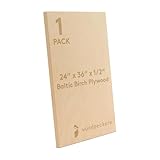
I remember staring at a stack of these materials at the lumberyard, trying to figure out which one wouldn’t make my new deck sag into the earth like a sad, forgotten pancake. The labels looked similar, the prices were in the same ballpark, but the salesperson just shrugged. It felt like a coin flip, and I’m not the gambling type when it comes to my home projects. Understanding the are lvl and plywood difference isn’t just about picking the right thing; it’s about avoiding costly mistakes and making sure your hard work actually lasts.
This isn’t some abstract woodworking puzzle. It’s about the stuff that holds your house up, the shelves that hold your tools, and the floor you walk on every day. Get it wrong, and you’ll be redoing it. I’ve been there, bought the wrong thing, and lived to tell the tale – and more importantly, learned how to tell them apart.
What’s Actually Going on Inside These Panels?
So, you’re looking at lumberyard shelves and seeing these big sheets of wood-like material. You’ve probably heard of plywood, and maybe LVL has popped up too. The core of the are lvl and plywood difference really boils down to how they’re made and what that means for their strength and how they behave. Plywood, the old reliable, is made by taking thin veneers of wood – think of them like really big, flat wood chips – and gluing them together.
The kicker here is that they rotate the grain of each layer. So, one layer might have the grain running north-south, the next east-west, and so on.
This cross-graining is the secret sauce that makes plywood strong in multiple directions and less prone to warping or splitting than a single piece of solid wood. It’s a pretty smart way to use wood resources efficiently. I’ve used it for everything from sheathing walls to making simple furniture carcasses.
It’s generally easy to cut, nails well, and you can get it in a ton of different grades depending on how pretty or structural you need it to be.
LVL, on the other hand, stands for Laminated Veneer Lumber. The name gives it away a bit, but the process is different and, frankly, more industrial. Instead of rotating the grain, with LVL, all the wood veneers are laid parallel to each other and then glued under intense heat and pressure.
It’s basically a giant, engineered beam made from strips of veneer. This parallel orientation is what gives LVL its incredible strength, particularly in one direction – along the grain. Think of it like a super-strong plank of solid wood, but without the natural knots and inconsistencies you find in a real tree. This is why you often see LVL used for beams, headers over windows and doors, and other structural applications where massive strength and stability are most important.
It’s designed to carry heavy loads and resist bending over long spans. I learned this the hard way when I tried to use a piece of LVL as a workbench top, expecting it to be as easy to work with as plywood. It was overkill and a bit of a pain to cut accurately without the right blade, but it was ridiculously strong. For sheer structural integrity, LVL is often the king.
Strength, Stability, and What You Can Actually Rely On
When we talk about the are lvl and plywood difference in terms of performance, it’s all about predictable strength and how they handle moisture and stress. Plywood, with its cross-grained construction, offers good all-around strength. It resists splitting and can handle loads from various angles reasonably well. However, the glue lines can be a weak point, especially if exposed to moisture over time, which can lead to delamination – where the layers start to peel apart.
This is why you’ll often see exterior-grade plywood with special glues and sometimes even a veneer that’s a bit thicker or treated. Interior plywood is fine for most dry applications, but if you’re building something that’s going to get wet, you need to be specific. I once built an outdoor potting bench using standard interior plywood, and after a couple of seasons, the edges started to fray and get mushy. Lesson learned: check the grade and intended use!
LVL, because all its veneers are aligned in the same direction, is incredibly strong along that parallel axis. It’s designed to be a high-performance structural component. This means it has a very predictable and consistent strength rating. Unlike solid lumber, which can have knots or twists that reduce its effective strength, LVL is uniform.
This makes it ideal for engineered beams, ridge beams, and anything that needs to reliably support significant weight over a span. Think of it as a super-beefed-up version of a dimensional lumber joist. However, its strength is primarily in one direction.
You wouldn’t use it for applications where loads come from multiple angles, or where its structural integrity in the cross-grain direction is important. It’s also typically more expensive than standard plywood of similar thickness, and it’s heavier, making it harder to handle on your own. (See Also: Can A 4x8 Plywood Fit In A Honda Pilot )
For structural elements that demand precision and strength, LVL is often the go-to, but it’s overkill and often impractical for general-purpose sheathing or paneling.
| Feature | Plywood | LVL (Laminated Veneer Lumber) | Verdict |
|---|---|---|---|
| Construction | Cross-laminated wood veneers (grain rotated) | Parallel-laminated wood veneers (grain aligned) | Both are engineered, but the grain orientation is key. |
| Strength | Good all-around strength, resists splitting | Extremely high strength along the grain, predictable | LVL for heavy loads in one direction, plywood for general use. |
| Stability | Relatively stable, can warp with moisture if not rated | Highly stable, resists warping due to uniform structure | LVL wins for consistent straightness. |
| Moisture Resistance | Varies by grade (exterior vs. interior); vulnerable to delamination | Generally better than interior plywood, but still wood | Always protect from prolonged moisture, but LVL holds up a bit better structurally. |
| Cost | Generally more affordable | Typically more expensive | Plywood is budget-friendlier for many applications. |
| Workability | Easy to cut and fasten | Can be tougher to cut, requires solid blades | Plywood is more DIY-friendly for general tasks. |
| Primary Use | Sheathing, subflooring, furniture, paneling | Beams, headers, lintels, structural supports | Match the material to the structural demand. |
When to Reach for the Plywood and When Lvl Is Your Only Answer
This is where the rubber meets the road, folks. The are lvl and plywood difference is stark when you consider their intended jobs. Plywood is your workhorse for a thousand tasks that don’t require a superhero level of structural integrity in a single direction. Think subflooring – it provides a stable, flat surface for your finished floor.
Wall sheathing? Yep, plywood adds rigidity to your structure. Built-in bookshelves, workshop benches, cabinet boxes, speaker enclosures – these are all prime candidates for plywood.
It’s versatile, relatively inexpensive, and easy enough for most DIYers to handle. You can get different grades: CDX is common for sheathing, AC or BC for furniture where you want a smoother finish, and marine-grade for where moisture is a bigger concern. The key is to match the grade to the application.
I’ve learned to keep a few sheets of good quality birch plywood around for projects where I want a decent finish without breaking the bank. It sands nicely and takes stain pretty well, making it a step up from the rougher sheathing grades.
LVL, however, is reserved for the heavy hitters. If you’re replacing a load-bearing wall and need a beam to span the gap, or if you’re designing a kitchen with a massive island that needs a super-strong support underneath, LVL is probably what you’re looking at.
It’s often used for headers over garage doors or wide window openings because it can carry substantial weight and resist deflection. In new construction, you’ll see LVL used extensively for floor joists and roof rafters where superior strength and uniformity are needed. It’s basically an engineered lumber product designed to meet specific, high-demand structural requirements. My first encounter with it was when I was framing out a deck.
The plans called for a massive beam to support the outer edge, and it was specified as LVL. It was heavy, straight as an arrow, and felt incredibly solid.
Trying to find an equivalent in solid lumber would have meant sourcing a much larger, more expensive, and potentially more flawed piece of wood. LVL is the engineer’s choice for predictable performance in high-stress situations. You wouldn’t use it for a small jewelry box, but for a major structural element, it’s often the best, safest choice.
People Also Ask: Why Is Lvl Stronger Than Plywood?
LVL is stronger than plywood in specific structural applications because all of its wood veneers are oriented in the same direction. This parallel alignment allows the material to effectively carry heavy loads along the grain, similar to a solid wood beam but without the natural inconsistencies like knots that can weaken solid lumber. Plywood’s strength comes from its cross-graining, which makes it strong in multiple directions, but it’s not designed for the same concentrated, directional load-bearing capacity as LVL.
People Also Ask: Can You Use Lvl as a Subfloor?
While LVL is incredibly strong, it’s generally not the first choice for a standard subfloor in residential construction. Plywood or OSB (Oriented Strand Board) are more commonly used and cost-effective for subflooring. LVL is typically reserved for structural beams, headers, and joists where its specific engineered strength is required to carry significant loads over longer spans. Using it as a subfloor would often be overkill and more expensive than necessary.
Common Mistakes and What to Watch Out For
One of the biggest mistakes I see people make, and I’ve made it myself, is treating all wood-based sheet goods as interchangeable. You’ll see a project calling for plywood, and you grab the cheapest panel you can find.
Or worse, you have leftover LVL from a framing job and think, “Hey, this is strong, I’ll use it for this bookshelf.” The are lvl and plywood difference is important here. Using the wrong material can lead to structural failure, sagging shelves, or worse. I once tried to save a few bucks by using thinner, lower-grade plywood for a workbench top. Within a year, it was noticeably bowing under the weight of my tools. (See Also: Can Bondo Be Applied To Plywood )
I ended up having to rip it out and replace it with a thicker, better-quality plywood. It cost me more in the long run. Another common pitfall is not considering the environment. Using interior-grade plywood for outdoor projects or in damp basements is a recipe for disaster.
The glue will break down, and the wood will swell and rot. Always check the product markings for grade and intended use.
Don’t assume that because it looks like wood, it’ll behave like wood in every situation.
Another mistake is underestimating the working properties of LVL. It’s dense and tough.
Trying to cut it with a standard circular saw blade designed for softer woods can result in a lot of tear-out, slow cutting, and premature blade dulling. You need good quality carbide-tipped blades specifically designed for engineered wood or hardwoods. Also, because it’s so strong and uniform, it can sometimes be harder to nail or screw into consistently without pre-drilling, especially in thicker sections.
People also sometimes over-engineer with LVL. If a project doesn’t require that level of concentrated, directional strength – like a simple closet shelf – using LVL is like bringing a sledgehammer to crack a walnut. It’s expensive, heavy, and harder to work with than necessary.
Stick to plywood for general-purpose shelving, cabinet carcasses, and paneling where its properties are sufficient and more practical.
People Also Ask: Is Lvl More Expensive Than Plywood?
Generally, yes, LVL is more expensive than standard plywood. Plywood is manufactured in large quantities and is cost-effective for a wide range of applications, from sheathing to furniture. LVL, being a specialized engineered product designed for high-strength structural applications like beams and headers, requires a more involved manufacturing process and uses higher-grade veneers, driving up its price point compared to most plywood options.
My Own Dumb Mistakes and What I Learned
Okay, confession time. Years ago, I decided to build a custom built-in entertainment center for my living room.
I wanted it to look solid and substantial, and I thought, “What’s better than solid wood?” Well, I ended up buying what I thought was high-quality plywood. It looked good, smooth finish, nice and flat.
I spent weeks cutting, assembling, and finishing it. It looked fantastic when it was done. Then I started loading it up with books, a heavy old CRT TV (yes, I’m dating myself here), and some other gear. Within a few months, I noticed the shelves starting to sag.
Not dramatically at first, but enough to make me uneasy. The problem was, I’d bought furniture-grade plywood, but it wasn’t rated for the kind of concentrated, long-span load I was putting on it. The veneers, while pretty, weren’t thick enough, and the glue lines were stressed.
I ended up having to reinforce those shelves with steel brackets, which completely ruined the clean aesthetic I was going for. It was a total bummer, and a really expensive lesson. (See Also: Can Cat Plywood Be Used For Exterior Siding )
The second big oops moment involved LVL. I was helping a buddy reframe a window opening in his basement.
The plans called for a specific size LVL header. We sourced it, and I remember thinking how incredibly straight and solid it felt.
We installed it, and it was rock solid. Great.
Fast forward a year, and he decides he wants to install a new, larger window in a completely different wall. He had a leftover piece of that LVL from the first job, and he said, “This stuff is so strong, I’ll just cut it down and use it as the header for this new window.” I, being a bit more experienced by then, strongly advised against it.
Not because the LVL itself wasn’t strong, but because we didn’t know its history. Was it stored properly? Had it been damaged? More importantly, was its strength rating still valid for this new application, considering we’d cut it?
He went ahead and did it anyway, dismissing my concerns. A few months later, there was a noticeable crack developing above the window. Turns out, the piece he used had a hidden defect or had been stressed in a way we didn’t see. We had to tear it out and put in a new, properly sized LVL.
My friend learned that just because a material is strong, doesn’t mean you can just repurpose any old piece without considering its original specs and its current condition. It also reinforced for me that while LVL is solid, it’s not indestructible, and its strength is engineered for specific purposes.
Putting It All Together: Choosing Wisely
Understanding the are lvl and plywood difference boils down to context. If you’re building a sturdy shelf for your garage to hold paint cans, standard plywood (depending on thickness and span) is probably your best bet. It’s economical, easy to work with, and perfectly capable. If you’re building a deck beam that needs to span a significant distance and hold up people, pets, and furniture, LVL is almost certainly what the engineering specs will demand. For wall and roof sheathing, plywood is the standard. For cabinet boxes, plywood is excellent. For structural headers and beams, LVL is often the engineered solution.
Don’t get caught up in the “stronger is better” mentality. Sometimes, overkill is just expensive and difficult. Plywood offers a fantastic balance of strength, stability, and cost for a vast array of common construction and DIY projects. Its cross-grained structure provides good all-around performance.
LVL is a specialist material, engineered for specific, high-stress structural roles where predictable, uniform strength along its length is most important. Always check your plans, consult with someone knowledgeable if you’re unsure, and don’t be afraid to ask the lumberyard staff the hard questions. They might not always have the best answers (as I learned early on), but a good one will point you in the right direction. Choosing the right material from the start saves you headaches, money, and potential structural headaches down the line.
People Also Ask: What Is the Difference Between Lvl and Glulam?
Both LVL (Laminated Veneer Lumber) and glulam (glued laminated timber) are engineered wood products used for structural applications, but they differ in their construction. LVL is made from thin wood veneers that are all oriented parallel to each other and bonded together under heat and pressure. Glulam, on the other hand, is made by bonding together kiln-dried lumber with straight-grained wood, typically 2x4s or larger, which are then layered with their grains running in the same direction. Glulam beams can be made much larger than LVL beams and are often used for very heavy-duty applications, like long-span bridges or large commercial buildings.
People Also Ask: Can Lvl Be Used for Floor Joists?
Yes, LVL can absolutely be used for floor joists, and it’s often specified for this purpose, especially in engineered wood floor systems. Its high strength, stability, and predictable performance make it an excellent choice for joists, particularly when you need longer spans or greater load-carrying capacity than traditional dimensional lumber can provide. When used as floor joists, the LVL is oriented with its depth running vertically, and the parallel veneer grain runs along its length, providing excellent stiffness and strength to support floors.
Verdict
So, the are lvl and plywood difference isn’t just semantics; it’s about understanding a fundamental distinction in how wood is processed and what that means for its performance. Plywood is the versatile all-rounder, great for sheathing, furniture, and general construction where balanced strength is needed. LVL is the high-performance structural specialist, built for serious load-bearing tasks where uniform, directional strength is king.
Don’t waste money buying the wrong material. If you’re framing a wall, plywood is likely your ticket. If you’re spanning a wide opening that needs to hold a lot of weight, look at LVL. Think about the specific demands of your project – not just how it looks, but how it needs to perform under stress.
Next time you’re at the lumberyard, you’ll know exactly why one might be a better fit than the other. Take a moment to consider the grain, the construction, and the intended use before you load it into your truck.