I remember staring at that panel in my first house, a beast of a thing with more switches than I knew what to do with. Smoke was starting to curl from the toaster oven, and the panic was real. My buddy, who’s an electrician, yelled over the phone, “Flip the breaker!” But which way? Up? Down? They all looked the same, and frankly, that’s a question I’d never really thought about until my kitchen was about to become a fire hazard. So, let’s cut the crap: are circuit breakers switches supposed to be up or down?
Most people just assume one way is ‘on’ and the other is ‘off’, and for the most part, they’re right. But the nuance of it, and why it even matters, is something most DIY guides gloss over. It’s not just about flipping a switch; it’s about understanding a tiny piece of your home’s electrical guts.
Up Is Usually on, Down Is Usually Off: The Basic Rule
Okay, let’s get this out of the way because it’s the most common answer you’ll hear, and for good reason: In the vast majority of residential and light commercial electrical panels, the ‘up’ position signifies that the circuit breaker is ON, and the ‘down’ position means it’s OFF. This is the standard convention that electricians and homeowners have relied on for decades. Think of it like a light switch; flipping it up usually turns things on, and flipping it down turns them off. Circuit breakers are designed to follow this intuitive logic.
When a breaker is in the ‘up’ position, it means the circuit is complete, allowing electricity to flow from the main service panel to the devices and appliances connected to that specific circuit. When you flip it ‘down’, you’re physically moving the internal mechanism to interrupt that flow. This breaks the connection, effectively shutting off power to everything downstream of that breaker. It’s a simple mechanical action that serves a vital purpose: controlling the electricity in your home.
I learned this the hard way during a blackout. I was convinced the main breaker was faulty because all the smaller ones were in the ‘up’ position. Turns out, the main breaker itself had tripped, and it was in a slightly different position – not fully up, not fully down. It looked ‘on’ enough to my untrained eye. My uncle, who’s been in construction forever, just chuckled and said, “Son, the main breaker usually goes down to shut off the whole house. You were looking at the wrong thing.” That’s when I realized that even a basic rule like ‘up is on’ has its exceptions and nuances that can trip you up (pun intended).
The reason for this convention comes down to safety and common sense. If you’re standing in front of a panel and need to quickly shut off power to a dangerous situation – say, a faulty appliance or a wet area – you want the action to be obvious and consistent. Having ‘off’ be the downward motion mirrors how many other everyday switches work, making it faster to locate and operate under pressure. It’s a simple ergonomic design choice that has stuck.
What Happens When a Breaker Trips?
This is where things get a little more interesting than just flipping a switch. A circuit breaker isn’t just a glorified on/off switch; it’s a safety device. Its primary job is to protect your home’s wiring and, by extension, your family, from electrical hazards like overloads and short circuits. When either of these conditions occurs, the breaker ‘trips’. Now, ‘trips’ doesn’t just mean it goes to the ‘off’ (down) position. It means the internal mechanism is forcefully activated to break the circuit, often with a distinct ‘snap’ sound, and the handle usually moves to a position that isn’t fully ‘on’ (up) or fully ‘off’ (down).
When a breaker trips due to an overload – meaning too much current is trying to flow through the circuit, like plugging in a space heater, a toaster, and a hairdryer all into one outlet – the heat generated by the excessive current causes a bimetallic strip inside the breaker to bend. This bending action eventually pushes a lever, tripping the breaker. In a short circuit, which is a much more dangerous condition where wires with opposite charges touch, the sudden, massive surge of current causes an electromagnet within the breaker to snap the handle to the tripped position almost instantly. This is a much faster reaction than an overload.
The tripped position is key. It’s typically somewhere in the middle, between ‘on’ and ‘off’. This visual cue is intentional.
It tells you, at a glance, that something happened. It’s not just ‘off’ because you turned it off; it’s ‘tripped’ because of a fault. Trying to reset a tripped breaker by simply pushing it back to the ‘on’ (up) position without understanding why it tripped is a recipe for disaster.
I once had a breaker trip repeatedly in my garage workshop. I kept flipping it back up, and it would trip again within minutes. I finally got fed up and decided to investigate. Turns out, one of my older power tools had a frayed cord. (See Also: Can I Run 12 2 With A 20 Amp Breaker )
If I hadn’t taken the time to figure out what was causing the surge, I might have ignored it, potentially leading to a fire or further damage to the wiring.
Understanding the tripped position also helps diagnose issues. If you flip a breaker off and then back on, and it immediately trips again, you know you have a serious fault on that circuit. If you flip it off, wait a minute, and then turn it on, and it stays on, the problem might have been a temporary surge or a sensitive appliance that just happened to draw a bit too much power at that exact moment. It’s a feedback mechanism built into your electrical system.
Recognizing a Tripped Breaker: Not Always Obvious
This is where a lot of DIYers get it wrong. A tripped breaker isn’t always sitting perfectly in the middle. Sometimes, it looks like it’s still mostly ‘on’, just a little bit off. Other times, it might look almost fully ‘off’. This lack of a perfectly consistent middle position is one of the reasons why many modern breakers have a visual indicator, or the handle itself has a specific shape that clearly shows it’s in the tripped state. However, older panels might not have such clear indicators, forcing you to rely on the feel of the handle and the absence of power.
Here’s a common mistake: You see a breaker that’s slightly out of line with the others, assume it’s off, and flip it up. If it’s actually tripped, you’ve just reset it without addressing the underlying issue.
The circuit could still be overloaded or have a short, and by forcing it back on, you’re bypassing the safety mechanism. The breaker might trip again immediately, or worse, it might stay on and you could end up with overheated wires because the fault is still present but the breaker isn’t functioning correctly.
This is why it’s important to know what a tripped breaker looks like in your specific panel. If you’re unsure, it’s always better to consult the breaker’s manual or a qualified electrician.
The most reliable way to know if a breaker has tripped is to feel for power at the outlets or devices on that circuit. If a room goes dark or an appliance stops working, the first thing you should do is go to the panel.
Look for any breaker that isn’t fully in the ‘up’ position. If you find one, you need to do a ‘full reset’. This means you push the handle all the way to the ‘off’ (down) position first, which makes sure the internal mechanism is fully disengaged. Then, you flip it back up to the ‘on’ position.
This procedure is recommended by many manufacturers because it makes sure the breaker is properly reset and can then react to any fault condition.
I learned this from an old-timer at a hardware store when I was complaining about a breaker that wouldn’t reset. He said, “You ain’t resetting it, son. You’re just pushing it back in the general direction. You gotta shove it all the way off, then pull it on.” It sounded overly aggressive, but I tried it, and lo and behold, it worked. That physical ‘all the way off’ step is vital for some breaker types. (See Also: Can I Join Two Circuit Breakers Together )
Contrarian Opinion: Sometimes ‘up’ Isn’t Actually ‘on’
Now for a bit of heresy. Everyone says ‘up is on’ and ‘down is off.’ And yeah, 99% of the time, they’re right. But here’s the kicker: the physical position of the handle isn’t the absolute definitive indicator of a circuit’s status. Why? Because of the tripped state. As we discussed, a tripped breaker often lands in a position that’s neither fully up nor fully down. If you’re used to seeing a clear middle position, you might miss a breaker that’s only slightly out of the ‘up’ position.
Here’s the situation that made me question the absolute rule: I was working on some wiring in my basement, and I needed to kill power to a specific outlet. I went to the panel, found the breaker that looked like it controlled that outlet, and flipped it down.
I double-checked, and it was definitely in the ‘off’ position. I proceeded with my work, feeling safe. Five minutes later, I got a nasty shock. Turns out, the breaker I thought controlled that outlet was actually for something else, and the outlet I was working on was wired to a different breaker that had tripped.
So, while its handle was almost all the way up, it wasn’t fully engaged in the ‘on’ position due to the prior trip. I had assumed ‘almost up’ meant ‘on’, and that was a painful lesson.
The real ‘on’ state is when the breaker’s internal contacts are securely making a connection. The handle is just the mechanical interface for that. If the breaker trips, the internal mechanism disconnects the contacts, and the handle moves. Even if you push it back up without a full reset (shove down, then up), the internal contacts might not be fully re-engaged, or the fault condition might still be present, causing it to trip again.
So, while ‘up’ is the intended ‘on’ position, a tripped breaker can leave the handle in a misleading state. The best way to confirm a circuit is truly off is to test the outlet or device with a voltage tester. Relying solely on the handle position can be a gamble, especially in older panels or when dealing with a tripped breaker.
Practical Tips for Managing Your Breaker Panel
Dealing with your electrical panel doesn’t have to be intimidating, but it does require a bit of smarts. Here are a few things I’ve learned over the years that make life easier and safer:
- Label Everything. Clearly. Seriously, this is a must. When I bought my current place, the panel was a mess of faded Sharpie marks and scribbles. I spent a whole Saturday relabeling everything. Use a label maker or a clean, bold marker. Be specific: ‘Kitchen Outlets – West Wall’, ‘Master Bedroom Lights’, ‘Garage Receptacles’, ‘Furnace’, ‘Water Heater’. This saves so much time and panic when something goes wrong.
- Test Your Labels. After you label, go around and test each circuit. Turn off a breaker, check that the correct devices or lights go off, and then turn it back on. Verify it. Do this when you’re not in a rush.
- Know Your Panel. Take a picture of your panel with your phone. If you ever need to call an electrician, having a clear photo can help them remotely diagnose or understand what you’re dealing with.
- The Full Reset. Remember the ‘push all the way down, then flip up’ trick for tripped breakers. It’s a small step that can make a big difference.
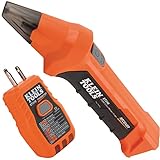
- Invest in a Voltage Tester. A simple, non-contact voltage tester is incredibly cheap (around $15-$20) and is your best friend for confirming if a circuit is truly live or dead. Don’t rely solely on the breaker handle position.
- Don’t Overload. If breakers trip frequently on a specific circuit, it’s not just annoying; it’s a sign of a problem. Too many devices, a faulty appliance, or a wiring issue. Get it checked out.
I once had a breaker for my home office that tripped maybe once a month. I’d reset it and forget about it. Then, one day, it started tripping every time I turned on my monitor. I’d reset it, and it would trip again within seconds. That’s when I finally took it seriously. I unplugged everything on that circuit, and it still tripped. Turns out, there was a loose wire connection behind the outlet that was causing a intermittent short. If I’d ignored it, that loose connection could have easily sparked a fire. The consistent tripping was the alarm I should have heeded sooner.
When to Call a Pro: Don’t Be a Hero
Look, I’m all for DIY. I’ve spent countless weekends wrestling with tools and instructions, saving myself a few bucks and learning a ton. But when it comes to your electrical panel, there’s a line. If you see sparking, smell burning plastic, or if breakers are tripping constantly and you can’t figure out why after a simple reset, it’s time to call a qualified electrician. Their specialized equipment and knowledge can identify problems you might miss, and more importantly, they know how to work safely around live electricity.
The wiring in your house is a complex system. While understanding how circuit breakers work is a great start, there are many potential issues that require professional expertise. For instance, if you have a breaker that feels hot to the touch even when it’s not tripped, that’s a serious warning sign of a loose connection or a faulty breaker. Or if you notice discoloration around outlets or switches, that indicates overheating. These aren’t things to mess with. It’s not about being scared; it’s about being sensible. The cost of an electrician is far less than the cost of a house fire or a serious injury. (See Also: Can 12v Circuit Breakers Handle Higher Voltage )
I once tried to ‘fix’ a buzzing sound coming from my panel. I was convinced it was just a loose screw.
I opened the panel (with the main breaker off, thankfully!), and the sheer density of wires and terminals looked like a spaghetti junction designed by a madman. I poked around cautiously, but the buzzing persisted. I decided then and there that my DIY skills had met their match. I called an electrician, who quickly identified a loose connection on the main bus bar.
He fixed it in about 20 minutes. I was relieved and a little embarrassed I hadn’t called him sooner. It’s a fine line between empowerment and recklessness, and with electrical work, it’s always better to err on the side of caution.
People Also Ask Faq
What Does It Mean When a Circuit Breaker Is Halfway?
A circuit breaker that is halfway between the ‘on’ (up) and ‘off’ (down) positions is typically in a ‘tripped’ state. This means the breaker has automatically activated to interrupt the flow of electricity due to an overload or a short circuit. It’s a safety mechanism designed to protect your wiring and prevent hazards. You usually need to push the breaker all the way to the ‘off’ position before you can then flip it back to the ‘on’ position to reset it.
Can You Leave a Tripped Breaker Halfway?
No, you should not leave a tripped breaker in a halfway position. The ‘tripped’ state is an indication that a fault has occurred on that circuit. Leaving it in this state means the circuit is not functioning properly and the safety mechanism is not fully engaged. You need to either reset the breaker properly (by pushing it all the way off, then on) or leave it off if the problem persists, investigating the cause.
What Is the Difference Between a Tripped and an Off Breaker?
An ‘off’ breaker is one that you have manually moved to the down position to intentionally disconnect power from a circuit. A ‘tripped’ breaker is one that has automatically disconnected power due to an electrical fault, such as an overload or short circuit. The handle of a tripped breaker is usually in a position that is neither fully ‘on’ nor fully ‘off’, often appearing in the middle, indicating that it needs to be reset.
Should You Turn Off All Circuit Breakers When You Leave for Vacation?
Turning off all circuit breakers when leaving for an extended vacation is generally not recommended for most circuits. Key systems like your refrigerator, security system, or any battery backup systems need continuous power. However, you might consider turning off breakers for non-key circuits or those that might pose a risk, such as water heaters or certain appliances, after taking precautions to prevent issues like frozen pipes if water is turned off.
Is It Bad to Flip Breakers on and Off?
Flipping breakers on and off occasionally is normal and necessary for managing your home’s electricity. However, constantly flipping breakers on and off unnecessarily can cause wear and tear on the breaker’s internal mechanisms over time. If a breaker trips repeatedly, it indicates an underlying problem with the circuit, and the focus should be on diagnosing and fixing that problem rather than just repeatedly resetting the breaker.
| Breaker Position | Typical Meaning | Verdict |
|---|---|---|
| Fully Up | ON (Circuit is powered) | Normal operational state. |
| Fully Down | OFF (Circuit is de-energized) | Used for manual disconnection or after a trip. |
| Middle/Halfway | TRIPPED (Fault detected) | Requires investigation and a full reset. NOT a normal state. |
| Almost Up (but not fully) | Potentially Tripped or Loose Connection | Investigate with a voltage tester; do not assume ‘on’. |
Final Thoughts
So, to sum up the whole ‘up or down’ debate: generally, ‘up’ means ‘on’ and ‘down’ means ‘off’. But that simple rule has a big asterisk: the tripped state. A tripped breaker isn’t just ‘off’; it’s a signal that something went wrong. Ignoring that signal and just flipping the switch back can be a risky move. Always remember the full reset: push it all the way down, then back up. And never, ever hesitate to grab a voltage tester or call an electrician if you’re unsure.
Your home’s electrical system is a vital, and potentially dangerous, part of your life. Understanding the basics of your circuit breaker panel isn’t just about fixing minor annoyances; it’s about maintaining safety. If you’re staring at a panel that looks like a cryptic puzzle, take the time to label it clearly and understand what each switch controls. It’s a small investment of time that pays dividends in peace of mind.
Ultimately, the question ‘are circuit breakers switches supposed to be up or down’ has a straightforward answer for normal operation, but the real knowledge comes from understanding what happens when they deviate from that. Don’t let your panel be a mystery; make it a tool you understand.