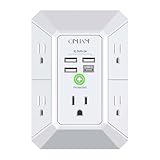
I remember staring at a brand-new, ridiculously expensive power strip, ready to plug in my audio interface and a couple of monitors. Then I saw it – the plug didn’t quite fit. It was one of those moments where you question everything you thought you knew about basic household stuff. This isn’t about some obscure gadget; it’s about the fundamental way we get juice to our gear. So, let’s cut to the chase: are 20 amp outlets T-slot? The short answer is: it depends, and frankly, it’s more complicated than it needs to be for most folks.
My initial confusion led me down a rabbit hole of electrical codes, plug types, and what actually matters when you’re just trying to power your home office or workshop. Forget the marketing jargon; what you need is plain talk about what works and what’s just a confusing mess of wires and metal.
Why Your “standard” Outlet Might Be a Curveball
Look, most of us grew up with the image of a wall outlet as a simple two-slot or three-slot hole in the wall. For standard 15-amp circuits, which are the vast majority in homes, this is generally true. You’ve got your hot, your neutral, and your ground.
Simple enough. But when you step up to 20 amps, things get a little… different. The question of whether are 20 amp outlets T-slot pops up because some older or specialized 20-amp outlets do have a horizontal slot, and it’s not just for looks; it’s a signifier of a specific type of connection. This horizontal slot is part of the NEMA 5-20R receptacle configuration.
It’s designed to accept both standard 15-amp plugs (which have two parallel vertical blades) and the larger 20-amp plugs that have one blade that’s horizontal, forming a ‘T’ shape with the vertical one. This is the key distinction – the T-slot is specifically for accepting the 20-amp plug.
Now, why would you even encounter a 20-amp circuit? Think about kitchens, bathrooms, garages, workshops, or anywhere you might plug in a high-draw appliance like a microwave, a toaster oven, a powerful shop vacuum, or a welder. These areas are often wired with 20-amp circuits to handle the increased load safely.
The wiring itself is thicker (12-gauge wire instead of 14-gauge for 15-amp circuits), and the breaker in your electrical panel is rated for 20 amps. The outlet needs to match this capacity. The NEMA 5-20R outlet is backward compatible, meaning you can still plug your 15-amp devices into it. This is a good thing; you don’t have to worry about your phone charger suddenly becoming incompatible.
However, if you try to plug a 20-amp plug into a standard 15-amp outlet (which typically only has the two vertical slots), it won’t fit. The horizontal blade on the 20-amp plug would have nowhere to go.
The confusion often arises because not all 20-amp circuits have outlets with that distinctive T-slot. Many modern installations, especially in kitchens or bathrooms, might use NEMA 5-15R outlets even on a 20-amp circuit. These look identical to standard 15-amp outlets but are simply rated to handle the higher amperage.
They have two vertical slots and a ground hole. This is permitted by electrical code and offers a consistent look throughout the house.
The advantage of the NEMA 5-20R with the T-slot is its explicit dual-acceptance capability, allowing both 15A and 20A plugs. It’s a visual cue that the circuit is indeed 20-amp rated and designed for higher loads.
But the absence of the T-slot on a 20-amp rated outlet doesn’t mean it’s not a 20-amp outlet; it just means it’s a different type of NEMA 5-20R or even a NEMA 5-15R installed on a 20-amp circuit.
I learned this the hard way when I was setting up my home recording studio. I had a bunch of gear, and I figured I needed more power, so I had an electrician run a new 20-amp circuit to my desk. He installed NEMA 5-15R outlets, which looked exactly like the ones in my living room. I assumed because they didn’t have the T-slot, they weren’t actually 20-amp. (See Also: Are American Outlets Ac Or Dc )
Turns out, he’d used 20-amp rated 5-15Rs on a 20-amp circuit, which is perfectly fine and code-compliant. It saved me from having to buy a whole new set of plugs for my existing gear.
The real differentiator for the T-slot is its ability to accept the 20-amp plug, not that all 20-amp outlets must have it.
The Nitty-Gritty: Plug Types and What They Mean
Let’s get down to the plug itself, because that’s where the ‘T-slot’ concept really makes sense. The world of electrical plugs and outlets is governed by standards set by organizations like NEMA (National Electrical Manufacturers Association) in the U.S. For household power, the most common types you’ll see are based on the NEMA 5 series. A standard 15-amp plug has two parallel vertical blades. That’s it. Nothing fancy. It’s designed to plug into a NEMA 5-15R receptacle, which has two corresponding vertical slots. These are ubiquitous – every room in your house probably has several of these.
Now, for 20-amp circuits, things can get a bit more nuanced, but the most common configuration you’ll find that explicitly accepts a 20-amp plug is the NEMA 5-20P plug. This plug looks very similar to the 15-amp plug, but it has one of its parallel blades turned 90 degrees, making it horizontal. When you see this horizontal blade, you know you’re dealing with a 20-amp plug.
This horizontal blade is designed to fit into the horizontal slot found on a NEMA 5-20R receptacle. So, yes, are 20 amp outlets T-slot? The specific outlet designed to accept this 20-amp plug is the one with the T-slot – the NEMA 5-20R.
This receptacle has one vertical slot on one side, a horizontal slot on the other, and the ground hole. This design allows it to accept both the standard 15-amp plug (where both blades go into the vertical slots) and the 20-amp plug (where the horizontal blade goes into the horizontal slot).
However, it’s important to reiterate that not all 20-amp circuits are equipped with NEMA 5-20R outlets. As I mentioned, it’s common for electricians to install NEMA 5-15R outlets on 20-amp circuits. These outlets look identical to standard 15-amp outlets – two vertical slots and a ground hole. They are rated for 20 amps, meaning the wiring and the breaker can handle the load, but the outlet itself can only accept 15-amp plugs. This is often done for aesthetic consistency or cost-effectiveness. The key takeaway here is that a 20-amp circuit doesn’t always mean a T-slot outlet, but a T-slot outlet always indicates a 20-amp rated receptacle designed to accept both 15A and 20A plugs.
What about plugs that only have the T-shaped configuration and aren’t backward compatible? These are less common in general household use but can be found in industrial settings or for specific high-draw appliances. For instance, a heavy-duty welder might have a plug that is only 20-amp and requires a corresponding 20-amp receptacle. Some older electrical systems might also have different configurations, but for modern residential and light commercial use, the NEMA 5-20P plug and the NEMA 5-20R receptacle with the T-slot are the main players when you’re talking about 20-amp capacity and plug compatibility. Understanding these differences is important if you’re trying to power equipment that draws a lot of juice, especially if you’re dealing with older buildings or specialized setups.
When the “standard” Advice Goes Wrong: Common Mistakes
The biggest mistake people make is assuming that all outlets are the same, or that if a circuit is labeled 20-amp, it must have outlets with T-slots. This is just not true. I’ve seen people bring home a fancy new piece of shop equipment with a beefy 20-amp plug, only to find out the outlet in their garage is a standard 15-amp NEMA 5-15R. They curse the equipment manufacturer, curse the electrician, curse the world, when all they needed was a different type of outlet or to understand that their existing outlet, while looking like a 15-amp, might actually be rated for 20 amps but only accept 15-amp plugs. The outlet itself is rated for 20 amps, but the plug it accepts is limited to 15 amps.
Another common pitfall is trying to force a 20-amp plug into a 15-amp outlet. Don’t do it. The blades are designed differently for a reason. While you might be tempted to bend or shave the plug blade to make it fit, this is incredibly dangerous. You risk damaging the outlet, creating a loose connection which can overheat and cause a fire, or overloading the circuit. Remember, the T-slot on a 20-amp outlet is there to accommodate the 20-amp plug; it’s not a universal adapter.
People also get confused about the wire gauge. A 20-amp circuit requires 12-gauge wire.
A 15-amp circuit typically uses 14-gauge wire. If you have a 20-amp breaker but 14-gauge wire, that’s a code violation and a fire hazard. (See Also: Are All Power Outlets Ac )
The wire can overheat before the breaker trips. You can’t just swap out a breaker for a higher amperage one without making sure the rest of the circuit can handle it. Similarly, installing a NEMA 5-20R outlet on a 15-amp circuit is technically allowed by code (as it accepts 15A plugs), but it doesn’t gain you anything in terms of increased amperage capacity for that outlet.
The circuit’s amperage is determined by the breaker and the wire gauge, not just the outlet type.
My own blunder involved a power strip. I bought one that boasted a “heavy-duty” rating, and I assumed it would handle anything. It had multiple outlets, some of which were indeed NEMA 5-20R with T-slots.
I plugged in a couple of high-draw studio monitors and a desktop computer. I didn’t think about the circuit it was plugged into – it was just a standard 15-amp circuit in my office. The power strip itself was fine, but the circuit breaker tripped after about 20 minutes of heavy use.
I was frustrated, thinking the power strip was faulty, but it was simply a mismatch between the load and the circuit capacity. You can have the fanciest outlets in the world, but if the circuit feeding them can’t handle the juice, you’ll keep tripping that breaker. It’s a system, and all parts need to be appropriately matched.
| Outlet Type | NEMA Designation | Blade Configuration Accepted | Typical Amperage | My Verdict |
|---|---|---|---|---|
| Standard Duplex Outlet | NEMA 5-15R | Two vertical blades (15A plug) | 15 Amps | The workhorse for general use. Fine for most things, but watch out for overloading.Verdict: Reliable for everyday. |
| T-Slot Outlet | NEMA 5-20R | Two vertical blades (15A plug) OR one vertical and one horizontal blade (20A plug) | 20 Amps | The flexible option. Great for workshops or anywhere you might use higher-draw tools. The T-slot is the visual cue.Verdict: Versatile and recommended for dedicated high-draw zones. |
| 20A Rated, Non-T-Slot Outlet | NEMA 5-15R (but rated for 20A circuit) | Two vertical blades (15A plug ONLY) | 20 Amps (circuit capacity) | Common in modern kitchens/bathrooms on 20A circuits. Looks standard but is tougher. Accepts only 15A plugs.Verdict: Good for consistent look, but less obvious for 20A use. |
Real-World Scenarios: Where You’ll See the Difference
Let’s talk practical applications, because knowing are 20 amp outlets T-slot is one thing, but seeing it in action is another. The most obvious place you’ll encounter the NEMA 5-20R outlet with its signature T-slot is in a workshop or garage. Think about powering a table saw, a drill press, a compressor, or even a hefty battery charger. These tools often come with plugs that have that horizontal blade to draw more power. If you have a dedicated 20-amp circuit for your workbench, you’ll likely find these outlets. It’s a clear indicator that the circuit is designed for demanding tasks.
Kitchens are another area where 20-amp circuits are common, but often with the NEMA 5-15R outlets that look standard. Why? Because appliances like microwaves, toaster ovens, and coffee makers can draw significant power, especially when heating up. However, you might have several of these appliances plugged into a single circuit. If you have a NEMA 5-20R outlet in your kitchen, it’s usually placed near an area where a larger appliance might go, like under a counter for a microwave or near a dedicated appliance plug-in. It’s designed to be backward compatible so you can plug in your everyday items without issue, but it’s ready if you need to plug in something that requires more juice.
Bathrooms also often have 20-amp circuits dedicated to them, especially for GFCI (Ground Fault Circuit Interrupter) outlets. This is a safety requirement for areas near water. While the circuit is 20-amp, you’ll typically find NEMA 5-15R outlets. The reason is that most bathroom appliances – hairdryers, curling irons, electric razors – use 15-amp plugs. The GFCI protection is the primary focus here, making sure safety. However, it’s not unheard of to see a NEMA 5-20R in a bathroom if there’s a specific high-draw appliance or fixture planned for that location, though it’s less common than in a workshop.
Another place you might see them is in places where you’d plug in a lot of electronics that draw a moderate amount of power, like in some office environments or server rooms. While server racks often have specialized power distribution units (PDUs), the general outlets might be 20-amp rated. Again, the NEMA 5-15R is prevalent here, but the NEMA 5-20R provides that extra flexibility if a piece of equipment happens to have a 20-amp plug. For me, in my home studio, the NEMA 5-20R outlets are invaluable. I have a mix of gear, and while most run fine on 15 amps, having the option for a dedicated 20-amp circuit with the T-slot outlet gives me peace of mind that I’m not pushing my limits with my more power-hungry monitors and amplifiers.
Practical Tips for Choosing and Using Outlets
First off, if you’re unsure about what you have, look at the outlet itself. If you see a T-slot (a horizontal slot next to a vertical one), you have a NEMA 5-20R outlet. This means the circuit it’s on is designed to handle 20 amps and can accept both standard 15-amp plugs and 20-amp plugs.
If you only see two vertical slots and a ground hole, it could be a 15-amp outlet or it could be a 20-amp rated NEMA 5-15R on a 20-amp circuit. The safest way to know for sure is to check your electrical panel. Look for the circuit breaker labeled for that area – it will say ’15’ or ’20’ on it.
If it’s a 20-amp breaker, you have a 20-amp circuit, regardless of the outlet’s appearance. (See Also: Are Arc Trip Outlets Required In Hillsborough County )
If you have a tool or appliance with a 20-amp plug (the one with the horizontal blade) and you only have standard 15-amp outlets (no T-slot, no horizontal slot), you need to upgrade. You can’t force it. The upgrade usually involves replacing the existing NEMA 5-15R outlet with a NEMA 5-20R outlet. Make sure the circuit breaker and wiring are also 20-amp rated (12-gauge wire).
If your circuit breaker is only 15 amps, you cannot simply swap it for a 20-amp breaker unless the wiring is 12-gauge or thicker. This is a job for a qualified electrician. Messing with electrical panels can be incredibly dangerous. I learned this when I tried to swap a breaker myself, thinking it was easy.
I nearly gave myself a nasty shock and ended up calling an electrician anyway, who informed me that my wiring wasn’t even rated for the higher amperage.
When buying power strips or extension cords, pay attention to their ratings. If you plan to plug high-draw equipment into them, look for ones that explicitly state they are rated for 20 amps and have NEMA 5-20R receptacles. Some heavy-duty power strips will have a mix of 5-15R and 5-20R outlets. Make sure the cord itself is adequately thick for the amperage you intend to draw.
A thin, flimsy cord on a power strip designed for 20 amps is a recipe for disaster. Always check the specifications, and if anything seems questionable, err on the side of caution and consult a professional. For my workshop, I opted for a wall-mounted power distribution unit that has multiple 20-amp outlets and a solid circuit breaker system. It cost a bit more upfront, but the peace of mind and reliable power are worth every penny.
What’s the Difference Between a 15 Amp and 20 Amp Outlet?
A 15 amp outlet (NEMA 5-15R) has two vertical slots and is designed for plugs with two parallel vertical blades. A 20 amp outlet can come in two main forms: the NEMA 5-20R, which has a T-slot (a horizontal slot next to a vertical one) and can accept both 15 amp and 20 amp plugs, or a NEMA 5-15R rated for a 20 amp circuit, which looks identical to a 15 amp outlet but is installed on a circuit with thicker wiring and a 20 amp breaker, and can only accept 15 amp plugs. The key difference is the ability of the outlet to physically accept a 20 amp plug, which is only possible with the T-slot configuration.
Can I Plug a 15 Amp Plug Into a 20 Amp Outlet?
Yes, absolutely. Both the NEMA 5-20R (with the T-slot) and the NEMA 5-15R outlet installed on a 20 amp circuit are designed to accept standard 15 amp plugs. The NEMA 5-20R is specifically designed to be backward compatible, making it flexible for various devices. The 20 amp circuit capacity makes sure that even with multiple 15 amp devices running, the circuit can handle the load safely, provided the total draw doesn’t exceed 20 amps.
Do All 20 Amp Outlets Have a T-Slot?
No, not all 20 amp outlets have a T-slot. While the NEMA 5-20R outlet features the T-slot and is designed to accept 20 amp plugs, many modern installations use NEMA 5-15R outlets on 20 amp circuits. These outlets look like standard 15 amp outlets (two vertical slots) but are connected to thicker wiring (12-gauge) and protected by a 20 amp breaker. They are rated for 20 amps but can only physically accept 15 amp plugs. The T-slot is a characteristic of the NEMA 5-20R, which is one type of 20 amp receptacle.
What Happens If I Plug a 20 Amp Plug Into a 15 Amp Outlet?
You generally cannot plug a 20 amp plug into a standard 15 amp outlet because the blades are shaped differently. A 20 amp plug has a horizontal blade which has no corresponding slot in a standard 15 amp outlet. Trying to force it can damage the outlet or the plug, and more importantly, it bypasses safety mechanisms. If you were somehow able to force it (which is highly discouraged and dangerous), you would likely overload the 15 amp circuit, causing the breaker to trip or, in a worst-case scenario, creating a fire hazard due to overheating wires.
How Do I Know If I Have a 20 Amp Circuit?
The most reliable way to know if you have a 20 amp circuit is to check your electrical panel. Locate the circuit breaker that controls the area in question; it will be clearly labeled with a number indicating its amperage rating (e.g., ’15’ or ’20’). You can also look at the outlets themselves. If you see a T-slot (a horizontal slot next to a vertical one), you likely have a NEMA 5-20R outlet, which indicates a 20 amp rated receptacle. However, remember that 20 amp circuits can also use standard-looking 15 amp outlets (NEMA 5-15R), so checking the breaker is the definitive method.
Final Verdict
So, to circle back to the original question: are 20 amp outlets T-slot? Yes, the NEMA 5-20R outlet, which is designed to accept 20 amp plugs, features that distinctive T-slot. However, the electrical world isn’t always that straightforward. You can have a 20-amp circuit feeding a standard-looking 15-amp outlet, which is perfectly fine for most household devices but won’t accept a 20-amp plug.
The key is understanding the amperage rating of your circuit breaker and the type of outlet you have. If you’re outfitting a workshop or need to power high-demand equipment, making sure you have actual 20-amp circuits with NEMA 5-20R outlets installed is the way to go. Don’t guess, and never force a plug where it doesn’t belong. Safety first, always.
If you’re unsure about your wiring or outlets, it’s always best to consult a qualified electrician. They can identify your existing setup, advise on necessary upgrades, and make sure everything is up to code and safe for your needs. It might cost a bit upfront, but it’s far cheaper than a fire or a shock.