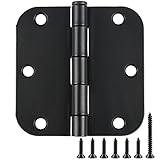
I remember the first time I tried to replace a squeaky hinge on my own. Sounded simple enough. Grabbed a hinge from the hardware store, thinking, ‘How different can they be?’ Turns out, very different. The new one looked almost the same, but when I went to put it up, the screw holes were off by a millimeter, and the door sagged like a tired old man. It taught me a hard lesson: no, are all door hinges the same size is a myth that’ll cost you time and frustration.
It’s not just about size, either. There are finishes, swing directions, weight capacities – a whole hidden world of hinge specifics I never knew existed.
Getting it wrong means a door that doesn’t close right, looks wonky, or worse, risks falling off. Let’s cut through the confusion.
Why Hinges Aren’t One-Size-Fits-All
So, you’re staring at a wobbly door, or maybe you’re building a new one from scratch, and the question pops into your head: are all door hinges the same size? The blunt answer is a resounding no. It’s like asking if all screws are the same size, or all nails. They serve a similar purpose, sure, but the devil is in the details, and those details matter immensely when you’re dealing with something as fundamental as a door.
Think about the sheer variety of doors out there. You have lightweight interior closet doors, heavy solid wood exterior doors, screen doors that need to swing both ways, and even ornate cabinet doors. Each of these has different requirements for support, movement, and aesthetics. A hinge designed for a flimsy hollow-core interior door would buckle under the weight of a solid oak entry door. Conversely, an oversized, heavy-duty hinge on a light closet door would look clunky and might not even operate smoothly.
The primary dimensions that often get people are the length and width of the hinge leaf (the flat part that attaches to the door and frame) and the thickness of the hinge pin. These aren’t arbitrary. The length and width affect how the weight of the door is distributed. A longer hinge can spread the load over more of the door edge and frame, providing better support. The pin diameter and length also play a role in the hinge’s strength and stability. A thicker pin is generally stronger.
Then there’s the corner radius. Many doors have a slightly rounded corner where the hinge mounts. Hinges come with either a square corner or a radius corner, and you need to match the hinge to the door’s cutout. I once tried to force a square-cornered hinge into a radiused cutout, thinking I could just file it down. Big mistake. It created a gap, looked terrible, and the hinge wasn’t seated properly, leading to binding. You need the hinge to sit flush against the door and frame for optimal operation and appearance. This means matching not just the overall size, but the specific shape of the mounting surfaces.
Beyond the physical dimensions, the construction materials and the type of pin are also significant factors. Steel, brass, and stainless steel hinges all have different strengths and corrosion resistance. Some pins are fixed, while others are removable, which is handy for maintenance or for removing the door itself without unscrewing the entire hinge. This is particularly useful for screen doors or for tasks like painting. So, while they might look similar at a glance, the underlying engineering and design choices mean that hinges are far from interchangeable.
Decoding Hinge Sizes and Types: What to Look For
Okay, so we’ve established that hinges aren’t all the same size. But what are the actual measurements you need to pay attention to, and what types of hinges are out there? When you’re at the hardware store, or browsing online, you’ll see hinges described with a few key dimensions. The most common are the length of the hinge leaf (measured from the tip of the curve to the end of the leaf), the width of each leaf (when the hinge is closed), and the pin diameter. Typically, for standard interior doors, you’ll see hinges that are 3 or 3.5 inches long. Exterior doors, especially heavier ones, might require 4-inch hinges or even larger.
The width of the leaf is also important. A standard residential door hinge might have leaves that are about 1.5 inches wide each. When the door is closed, these leaves stack up. The thicker the leaf, the more solid the hinge. This is often described as ‘thickness’ – you might see terms like 2.5mm or 3mm thickness. Thicker hinges are generally rated for heavier doors and will feel more substantial and durable.
But size isn’t the only differentiator. Let’s talk about the different types you’ll encounter:
- Standard Butt Hinges: These are the workhorses, the most common type for interior and exterior doors. They have two leaves that butt up against each other when the door is closed. They come in various finishes (brass, brushed nickel, oil-rubbed bronze, black, white) to match your decor.
- Ball Bearing Hinges: These have ball bearings between the knuckles (the parts that interlock). They’re designed for heavy doors or doors that get a lot of use, as they reduce friction and make operation smoother and quieter. You’ll often find these on exterior doors or in commercial settings.
- Spring Hinges (or Self-Closing Hinges): These have a built-in spring mechanism that automatically closes the door after it’s opened. Think of screen doors or utility room doors. They can be adjusted to control the closing speed.
- Double-Acting Hinges: These allow a door to swing in both directions (inward and outward). You see them most often on saloon-style doors or in kitchens where you need to move through without using your hands.
- Security Hinges: These have non-removable pins or security studs that prevent the door from being lifted off its hinges even when open. They’re an added layer of security for exterior doors.
When you’re replacing a hinge, the best way to make sure you get the right one is to take the old one with you to the store. Lay it flat and measure the length from the tip of the rounded end to the tip of the other rounded end. Measure the width of each leaf. Note the number of screw holes on each leaf. And, importantly, check the corner radius – is it square, or is it a quarter-inch or half-inch radius? If you can’t take the old one, take clear photos and measure the door itself, but it’s always easier to match an existing component. (See Also: A Box Without Hinges Key )
Common Mistakes That Turn Into Headaches
I’ve made my share of DIY blunders, and hinge installation is a classic spot for them. The most obvious mistake, as we’ve discussed, is assuming all hinges are the same size and picking one that looks right. But there are subtler errors that can cause just as much grief. One I learned the hard way was ignoring the door’s weight rating for the hinges.
I was installing a new, solid wood interior door – a beautiful, heavy beast. I bought what I thought were standard 3.5-inch hinges. They fit the mortise (the cutout in the door and frame), but after a few weeks, the door started to sag noticeably.
The hinges were simply not rated to handle that much weight. They started to bend, and the door began to drag on the carpet.
I ended up having to replace them with heavier-duty, thicker hinges, which meant chiseling out the mortise a bit larger to accommodate them. What should have been a straightforward replacement turned into a much bigger job because I didn’t check the weight capacity.
For most interior doors, 3-3.5 inch, 2.5mm thick hinges are fine. But for heavier doors, like solid wood or exterior doors, you need thicker leaves (3mm or more) and potentially more hinges, or even a larger hinge size altogether.
Another common pitfall is mixing hinge finishes or types on the same door. While it might seem minor, mismatched hinges can look jarring and unprofessional. For instance, using a polished brass hinge on one side and a brushed nickel on the other just screams ‘amateur hour’. Stick to the same finish for all hinges on a given door. Similarly, if you’re replacing just one hinge on a door with multiple hinges, try to get an identical one. Even slight differences in how smoothly they operate can cause uneven wear and stress on the other hinges over time.
Then there’s the issue of handing, especially with security hinges or specialized types. Most standard butt hinges are reversible, meaning they work whether the door swings left or right. However, some hinges have a specific ‘hand’ – they are designed to work only with doors that open in a certain direction. If you buy the wrong hand for a security hinge, for example, the security feature might be compromised or simply won’t function correctly. Always check the product description or consult with the manufacturer if you’re unsure about the handing of a particular hinge.
Finally, and this is a big one for me, people often over-tighten the screws. While you want the hinge to be secure, cranking down on those screws can strip the wood in the door or frame, especially in older homes with softer wood.
This leads to loose hinges that wobble and don’t support the door properly. It’s better to use the right size screws for the pre-drilled holes (or pilot holes if you’re drilling your own) and tighten them until snug, but not until you feel like you’re going to break something.
If the screws keep spinning, you might need to use wood filler or slightly larger screws to get a good bite. My own experience with this involved a bathroom door that constantly swung open on its own until I realized the hinge screws were all loose because I’d stripped the frame holes years ago by overtightening them.
| Hinge Feature | What to Look For | Why It Matters (My Verdict) |
|---|---|---|
| Length | Measure old hinge leaf tip to tip. Common sizes: 3″ to 4″. | Important for proper door alignment and support. Too short = sag. |
| Width | Measure the leaf width when closed. Standard: ~1.5″. Thicker is stronger. | Contributes to overall strength and load-bearing capacity. |
| Thickness | Measured in mm (e.g., 2.5mm, 3mm). | Directly relates to how much weight the hinge can handle. Thicker is better for heavy doors. |
| Corner Radius | Square or rounded (e.g., 1/4″, 1/2″). | Must match the cutout on your door/frame for a flush fit. Mismatched = binding/gaps. |
| Material & Finish | Steel, brass, stainless steel. Various finishes. | Durability, corrosion resistance, and aesthetics. Match existing hardware. |
| Weight Rating | Often not explicitly stated, but inferred from thickness and size. | Absolutely vital for preventing sag and premature wear on heavy doors. Don’t skimp here. |
Real-World Application: Replacing a Door Hinge
Let’s walk through the actual process of replacing a door hinge. Imagine you have that squeaky, slightly sagging interior door. You’ve measured your old hinge, noted the 3.5-inch length, square corners, and standard width. You head to the store and find an identical-looking replacement. Here’s how to swap it out without turning it into a multi-hour ordeal. (See Also: Are Integrated Washing Machine Door Hinges Standard )
First, you need to support the door. You can use a door support jack if you have one, but for a single interior door hinge replacement, I usually just wedge something sturdy underneath the edge of the door, like a few pieces of scrap wood or even a book. This takes the weight off the hinges, preventing the other two from getting stressed and the door from falling. Get it positioned so the door is stable but you can still open and close it slightly to access the hinge you’re working on.
Now, tackle the hinge you’re replacing. Unscrew it from both the door and the frame. This is where you might encounter slightly stripped screw holes. If the screws come out easily and aren’t stripped, great. If they’re a bit loose, don’t force it. Once the old hinge is out, examine the mortise – the cutout in the wood. Is it clean? Are there any splinters or damage?
If your new hinge has the exact same dimensions, it should fit right into the existing mortise. Place the new hinge in position, starting with attaching it to the door first is usually easiest. Put in the screws, but don’t tighten them all the way down immediately. Just get them started so the hinge is held in place. Then, attach the hinge to the frame. Again, get the screws started. Now, with the door still supported, you can go back and tighten all the screws until they are snug. Make sure the hinge leaves are sitting flush against the door and frame. If they’re not, you might have a slight issue with the mortise or the hinge itself.
Once all screws are snug, remove your support and test the door. Open and close it a few times. Listen for squeaks. Check for sagging or binding. If it feels smooth and operates correctly, you’re done. If it’s still a bit off, you might need to slightly loosen the screws on one leaf, adjust the door’s position, and then retighten. Sometimes, a tiny adjustment is all it takes.
If the mortise was damaged or the new hinge is slightly different, you might need a chisel. For example, if the mortise is too deep, you can use a thin shim (a small piece of cardboard or wood) behind the hinge leaf to make it sit higher. If it’s too shallow, you’ll need to carefully chisel out a bit more wood to make the hinge leaf sit flush. This is where having the exact same size hinge saves you a lot of grief. I once had to chisel out a mortise for a new hinge because the old one had been installed so poorly, it had warped the wood. It took me nearly an hour to get it right.
The key is patience. Don’t rush the process. Double-checking your measurements and taking the time to support the door properly will save you a lot of headaches down the line. It’s not rocket science, but it does require attention to detail.
Contrarian View: Are Standard Hinges really That Bad?
Now, here’s my contrarian take: While it’s true that hinges come in many sizes and types, and you absolutely need to match them for a perfect fit, the common advice to obsess over getting an exact replica might be overkill for many situations. Everyone says, ‘Take your old hinge to the store!’ and while that’s good advice, it sometimes leads people to believe that any deviation means disaster.
I disagree because, for most standard interior doors, there’s a fair bit of tolerance. The big three hardware stores – Home Depot, Lowe’s, and Ace Hardware – stock a very common range of hinges. For interior residential doors, you’re overwhelmingly likely to find hinges that are 3.5 inches long with 1.5-inch wide leaves, typically around 2.5mm thick, with square or 1/4-inch radius corners. The differences between brands and models in this common category are often minimal when it comes to basic functionality.
My experience tells me that if your old hinge is, say, 3.5 inches long and your new one is 3.5 inches long, but maybe the leaf width is 1.4 inches instead of 1.5 inches, or the screw holes are a tiny bit off, you can usually make it work. The wood in the door and frame is forgiving. A slightly narrower leaf might mean the mortise looks a bit larger, but as long as the hinge is flush and the screws bite well, it will hold.
If the screw holes aren’t perfectly aligned, you can sometimes slightly enlarge a hole or two with a drill bit or a small file. It’s not ideal, but it’s often a perfectly functional fix that avoids a trip back to the store or the need to chisel out a new mortise.
I’ve done this multiple times on my own doors, saving myself time and hassle, and the doors still operate perfectly fine years later. (See Also: Are Hinges Wheeels )
Where this gets dicey is with exterior doors, very heavy doors, or specialized hinges. For those, precision is indeed key. But for the average bedroom or closet door, don’t let the fear of a millimeter’s difference paralyze you.
As long as the general dimensions match and the corners align with the door’s cutouts, you’ve got a good chance of success. The important thing is that the hinge sits flush and the screws are secure. If you’re replacing a hinge on a standard interior door and you can’t find an exact match, look for one that is the same length and has the same corner radius.
Minor variations in leaf width or thickness are often manageable with a little bit of care. It’s about understanding the function: the hinge needs to pivot and support the door’s weight. Most common hinges are engineered to do that within a certain range of tolerance.
Do All Interior Door Hinges Have the Same Size?
No, interior door hinges do not all have the same size. While there are very common standard sizes, like 3.5 inches long for most residential doors, you can find variations. Factors like the door’s weight, thickness, and style can dictate slightly different dimensions or thicker leaf materials. Always measure your existing hinge and door cutout before purchasing a replacement.
What Are the Standard Sizes for Door Hinges?
The most common standard size for residential interior door hinges is 3.5 inches in length. Exterior doors, especially heavier ones, often use 4-inch hinges or larger. The width of the hinge leaf and the thickness of the metal also vary, with thicker hinges (e.g., 3mm) being stronger and better suited for heavier applications. The corner radius (square or rounded) must also match the door’s cutout.
How Do I Measure a Door Hinge Size?
To measure a door hinge, lay it flat on a surface. Measure the length from the tip of one rounded end of the hinge leaf to the tip of the other rounded end. Then, measure the width of each individual leaf when the hinge is closed. Note the type of corner on the leaves (square or rounded) and count the number of screw holes on each leaf. This will give you the key dimensions for finding a replacement.
Can I Use a Different Size Hinge?
While you can sometimes get away with minor differences, it’s best to use the same size hinge as the one you’re replacing, especially for the length and corner radius. Using a hinge that is too short can lead to door sag, and mismatched corner radii will prevent the hinge from sitting flush, causing binding or gaps. For weight-bearing, make sure the new hinge’s thickness and construction are appropriate for the door’s weight.
Final Thoughts
So, to circle back to that initial question: are all door hinges the same size? Absolutely not. It’s a subtle but important detail that can make or break a door installation, turning a simple fix into a frustrating weekend project. You need to look at length, width, thickness, corner radius, and even the material and finish.
My advice? Always take the old hinge with you if you can. If not, measure meticulously. Don’t guess. If you’re dealing with a standard interior door and can’t find an exact match, there’s often some leeway, but for exterior or heavy doors, precision is a must. Get it right the first time, and save yourself the headache.
Next time you notice a squeaky hinge or a sagging door, you’ll know exactly what to look for.