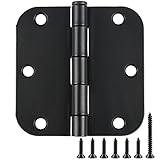
I remember staring at a pile of hinges at the hardware store, feeling utterly defeated. I needed to replace a wonky cabinet door hinge, and the salesperson just pointed vaguely at a bin. They all looked… the same. Three holes, metal, hinge-like. But are all 3 hole hinges the same? Spoiler alert: absolutely not. And I learned that the hard way, wasting a weekend and a fair bit of cash on the wrong ones.
It’s a question that sounds simple, but the answer has major implications for your DIY projects. Get it wrong, and you’re in for a frustrating time of drilling new holes, dealing with misaligned doors, or worse, hinges that just won’t hold. So, let’s get down to brass tacks about these seemingly identical pieces of hardware.
Why You Can’t Just Grab Any Three Holes
Look, I’ve been there. You’ve got a door, a cabinet, maybe even a small gate that needs a new hinge. You see a hinge with three screw holes, and your brain – or at least, my brain – goes, ‘Great, that’s the one.’ It’s a natural assumption, right? Three holes means it’s built for three screws, which means it’s sturdy. It’s like expecting all screws of the same length to fit the same hole. Except, with hinges, the devil is really in the details, and those details dictate whether your project is a success or a headache.
The truth is, the ‘three holes’ is just the most visible feature. What’s really going on under the hood, so to speak, is far more complex. We’re talking about load-bearing capacity, swing direction, material thickness, the type of door it’s meant for, and even how it’s designed to attach to its frame.
I once bought a set of what I thought were standard 3 hole cabinet hinges for an old dresser. They looked identical to the old ones.
Big mistake. These were designed for a much lighter application, and within a week, the drawers were sagging.
The doors themselves looked fine, but the stress on the frame was just too much for the thinner metal and lighter pin construction. It cost me another trip to the store and a bit of a smug lecture from a different hardware store employee who actually knew his stuff.
It’s not just about the door staying shut; it’s about how it stays shut, how it opens, and how long it will continue to do so without looking like a sad, drooping mess. The angle of the pivot point, the depth of the barrel, and the precise spacing of those three holes are all engineered for specific purposes.
Think of it like buying shoes. You wouldn’t buy a hiking boot for a marathon, even if it has laces and a sole. Different jobs require different tools, and hinges are no different.
The common advice to just ‘measure the old one’ is decent, but it often misses the important functional differences. It’s not just about the hole pattern; it’s about the internal mechanics and the intended use.
The Hidden Specs: What Really Makes Hinges Different
When you’re comparing 3 hole hinges, you’re not just comparing hole patterns. You’re comparing a whole bunch of specifications that are often buried in the product description or require a magnifying glass to read on the packaging. The most obvious, after the holes, is the hinge type. You’ve got your standard butt hinges, but then you get into specialized types like concealed hinges (Euro-style), surface-mounted hinges, and even decorative strap hinges. Even within the ‘butt hinge’ category, there are variations like tight pin, loose pin, and removable pin hinges, each with its own pros and cons for installation and maintenance. (See Also: A Box Without Hinges Key )
Then there’s the material and finish. Are they solid brass, steel, or some kind of alloy? Are they plated with nickel, oil-rubbed bronze, or painted? This affects not only the look but also the durability and resistance to corrosion. I learned this when I tried to use some cheap, zinc-plated hinges on an outdoor potting bench. They looked okay for a few months, but the first rainy season turned them into rusty nightmares. The wood of the bench looked better than the hinges!
The thickness of the hinge leaf is another often-overlooked factor. Thicker leaves generally mean a higher weight rating and more durability. A cabinet door usually doesn’t need the same heavy-duty construction as a shed door. You also need to consider the ‘knuckle’ – the part of the hinge where the pin sits.
The size and construction of the knuckle influence the strength and how smoothly the door swings. A flimsy knuckle will bend under load, leading to sag.
Finally, there’s the radius of the corners. Sometimes you need a square corner, sometimes a rounded one, to match the cut of the door and frame. It’s this subtle interplay of material, construction, and dimensions that dictates whether a hinge will perform as expected.
It’s why, despite having three holes, they aren’t all the same.
| Feature | What to Look For | Why It Matters | My Verdict |
|---|---|---|---|
| Material | Solid Brass, Stainless Steel, Heavy Gauge Steel | Durability, rust resistance, weight capacity | For anything exposed to moisture or heavy use, don’t skimp. Solid brass is king, but good quality steel is fine for interior doors. |
| Leaf Thickness | Generally thicker is better for load-bearing | Structural integrity, prevents bending under weight | Measure against a known good hinge if possible. If it feels flimsy, it probably is. |
| Knuckle Size/Construction | Tight, well-formed knuckle | Smooth operation, prevents sag, longevity | Look for clean machining. Any looseness here is a bad sign. |
| Finish | Plating (nickel, chrome), powder coating, solid finishes (brass, bronze) | Aesthetics, corrosion resistance | Consider the environment. Oil-rubbed bronze looks great but can wear over time in high-traffic areas. |
| Corner Radius | Square or rounded (e.g., 1/4″, 5/8″) | Matches door/frame mortise for a clean fit | Important for a flush installation. Measure the existing mortise precisely. |
The Common Mistakes That Cost You Time and Money
You’d think hinge selection would be straightforward, but I’ve made enough blunders to fill a hardware store aisle. The most common one, as I’ve hammered home, is assuming all three-hole hinges are interchangeable. You see the holes, you buy the hinge. Boom. Except then the door sticks, the alignment is off, or it just doesn’t feel right when you open it. My first cabinet door project involved a set of hinges that were technically ‘3 hole’ but had a different offset. The door would only open about 70 degrees before hitting the cabinet frame. I spent hours trying to adjust it, thinking I was just bad at DIY, before realizing the hinge itself was fundamentally wrong for the cabinet style.
Another massive mistake is not considering the door’s weight. A lightweight hollow-core interior door needs a different hinge than a solid wood interior door, let alone a substantial exterior door or a heavy gate. Manufacturers often specify the weight capacity for their hinges, but many DIYers skip this step. They see the holes, they buy. This leads to sagging doors, strained frames, and hinges that eventually fail. I once saw a friend try to use simple cabinet hinges on a large, solid oak screen door. It was a disaster waiting to happen, and it did, with the hinges bending visibly after only a few weeks.
Then there’s the issue of handing. While many butt hinges are reversible, some specialized hinges are designed for a specific swing direction (left-hand or right-hand opening). If you pick the wrong one, it might not mount correctly or operate smoothly. It’s less common with basic 3 hole butt hinges but can be a trap if you’re not paying attention. Lastly, people often neglect the finish. Using interior-grade hinges on an exterior application or in a humid bathroom is a recipe for rust and early failure. It’s tempting to go for the cheapest option, but the long-term cost of replacement and repair is far higher.
How to Actually Choose the Right 3 Hole Hinge
Okay, so how do you avoid my mistakes? First, ditch the ‘they all look the same’ mentality. You need to look beyond those three holes. Start by identifying the type of door you’re working with. Is it a cabinet door, an interior door, an exterior door, a gate? What’s the material (wood, metal, MDF)? What’s its approximate weight? If you can, weigh it or estimate its weight. This is your primary guide.
Next, measure your existing hinge very carefully if you’re replacing one. Don’t just measure the hole spacing. You need to measure the length of the hinge leaf, the width of the leaf, the thickness of the metal, and the radius of the corners (square, 1/4 inch, 5/8 inch, etc.). Take photos from multiple angles. Bring your measurements and photos to the hardware store, or use them when searching online. For new installations, you’ll need to decide on the hinge type based on the door and frame construction and the desired swing. For cabinet doors, you’ll often be looking at European-style concealed hinges, which have different mounting systems but often use a similar three-screw pattern on the cabinet side. (See Also: Are Integrated Washing Machine Door Hinges Standard )
Pay attention to the weight rating. Many manufacturers will list this. If a hinge is rated for a 50lb door, and your door weighs 40lbs, you’re probably good.
If your door weighs 60lbs, you need a heavier-duty hinge. Consider the material and finish based on the environment. For interior doors, a decent steel or brass-plated hinge is usually fine.
For exteriors or damp areas, look for stainless steel or solid brass. Don’t be afraid to ask for help!
A knowledgeable person at a good hardware store can be a lifesaver. They might ask you questions you haven’t thought of, like ‘What kind of door stop are you using?’
or ‘How far do you want the door to open?’ These details matter.
People Also Ask:
What Is the Standard Spacing for a 3 Hole Hinge?
There isn’t a single universal standard spacing for all 3 hole hinges, as it depends on the hinge’s intended application and manufacturer. However, for common cabinet hinges, you might find consistent patterns, often around 2 inches (50mm) or 2.5 inches (64mm) between the center of the first and third holes. Always measure your existing hardware or the intended mounting surface to make sure compatibility, as variations exist especially between different hinge types and brands.
How Much Weight Can a 3 Hole Hinge Hold?
The weight capacity of a 3 hole hinge can vary wildly, from as little as 10-20 pounds for very small, light-duty hinges to over 100 pounds for heavy-duty industrial or exterior door hinges. Factors like material (steel, brass, aluminum), leaf thickness, knuckle construction, and the overall hinge size determine its load-bearing capability. It’s key to check the manufacturer’s specifications for the specific hinge you are considering.
Can I Use Any 3 Hole Hinge?
No, you absolutely cannot use any 3 hole hinge interchangeably. While they share the visual characteristic of having three screw holes, their dimensions, weight ratings, materials, corner radii, and intended applications differ significantly. Using the wrong hinge can lead to poor door alignment, binding, sagging, premature wear, or outright failure.
A Real-World Example: My Shed Door Saga
Let me tell you about my shed door. It’s a beast – solid wood, probably weighs a good 70-80 pounds. For years, I’d been using what I thought were serviceable hinges. They had three holes, looked sturdy enough, and they worked… sort of. The door always sagged a bit, and it was a real pain to open and close, especially in damp weather. I’d put it down to the shed settling or the wood expanding. Then, one blustery afternoon, one of the hinges just gave up the ghost. The leaf snapped right where the screw holes were.
I went to the hardware store, grabbed what looked like a replacement – three holes, same brand I thought. Installed it. The door still sagged, and the new hinge felt… flimsy. (See Also: Are Hinges Wheeels )
I was frustrated. I went back the next day and found an older guy who actually knew his stuff. He took one look at my old, bent hinge and my new, inadequate replacement.
He explained that the old hinges, while looking similar, were forged steel with a much thicker leaf and a deeper knuckle. The ones I’d bought were stamped steel, thinner, and clearly designed for a lighter-duty application, probably a large cabinet or a smaller interior door. He showed me a proper heavy-duty T-hinge with three mounting points (effectively three holes, just arranged differently) made of forged steel, specifically rated for exterior doors up to 100 pounds.
The difference was night and day. After installing the correct forged steel hinges, the shed door swung smoothly for the first time in years. No sag, no sticking. It felt secure and solid. The lesson? The three holes are just the beginning of the story. The quality of the metal, the forging process (as opposed to stamping), and the overall engineering for the specific load are what truly matter. It cost me more money to get it right the second time, plus a lot of wasted effort, but it was a powerful lesson in not judging a hinge by its hole count alone.
Don’t Be Fooled by the Three Holes
I’ve learned over the years that many products, especially in the hardware world, rely on superficial similarities to fool you. Three holes might seem like a universal standard, but it’s really just a common mounting pattern. The real engineering happens in the material science, the manufacturing process, and the intended use. Companies know that the average person isn’t going to spend hours researching hinge specifications. They’ll see three holes and assume it’s fine. This is why the market is flooded with hinges that look adequate but will fail prematurely under even moderate stress.
When you’re buying hinges, especially for anything more than a lightweight interior door or small cabinet, do yourself a favor: look up the specs. Check the weight rating. If you can, feel the weight and thickness of the metal. Compare it to known good examples if possible. For important applications, or if you’re unsure, don’t hesitate to buy from a reputable brand that clearly lists its specifications or consult with a hardware professional. Sometimes, the slightly more expensive option that’s clearly designed for the job will save you a heap of trouble and money down the line. So, no, are all 3 hole hinges the same? Definitely not. And your doors will thank you for understanding why.
Are All 3 Hole Hinges the Same for Cabinets and Doors?
No, they are not the same. Cabinet hinges, especially European-style concealed hinges, often use a three-hole pattern on the cabinet side, but they are designed for lighter loads and specific cabinet construction. Standard interior or exterior door hinges with three holes are typically larger, heavier duty, and designed to support the weight and movement of a full-sized door, often featuring different knuckle construction and leaf thickness compared to cabinet hinges.
What Happens If I Use the Wrong 3 Hole Hinge?
If you use the wrong 3 hole hinge, you’ll likely encounter several problems. The door may not align correctly, it could bind or sag, the hinges might bend or break under the door’s weight, and the overall function and lifespan of the door and frame will be compromised. In essence, the door won’t operate smoothly or reliably, and you’ll end up needing to replace the incorrect hinges, potentially with additional repairs to the mounting surface.
How Do I Know If a 3 Hole Hinge Is Good Quality?
A good quality 3 hole hinge will feel substantial and heavy for its size, indicating thicker metal. Look for smooth, well-machined knuckles where the pin sits, with minimal play. Forged steel or solid brass are generally signs of higher quality than stamped steel or thin, plated alloys. Manufacturers’ specifications for weight capacity are also a key indicator; higher ratings for a given size usually mean better quality construction. If it feels light and flimsy, it probably is.
Verdict
So, to be crystal clear: no, not all 3 hole hinges are the same. It’s a trap that many of us fall into, thinking that a visible pattern means universal compatibility. I’ve learned that the hard way, with sagging doors and wasted trips to the store.
The key takeaway is to always look past those three holes. Consider the weight of the door, the environment it’s in, and the type of movement required. Measure twice, buy once, and don’t be afraid to ask for help or buy from brands that are transparent about their product specifications.
Next time you’re faced with a hinge decision, remember my shed door saga. A little bit of research and a focus on quality over superficial similarity will save you a world of frustration. Go grab the right hinge, and get that door working like it should.