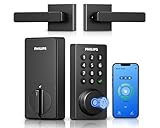
I remember the first time I saw one of those fancy digital locks on a friend’s front door. No keys, just a keypad. ‘This is the future!’ they declared, practically glowing with smug satisfaction. I nodded along, but honestly, I was skeptical. Keys felt… solid. Dependable. This digital thing felt like it could glitch out, or worse, be cracked with a computer whiz I didn’t know existed. Years later, I’ve tinkered with enough of these things to have a pretty clear picture, and the question I always come back to is: are combination door locks secure? The answer isn’t as simple as ‘yes’ or ‘no’.
We’ve all seen movies where a bad guy taps away at a keypad, and the door just… opens. It’s dramatic, sure, but does it reflect reality? For most of us, we’re not worried about secret agents; we’re worried about opportunistic thieves or just wanting peace of mind that our stuff is safe when we’re out. I’ve learned that while they can be secure, a lot depends on the specific lock, how you use it, and what you’re protecting it from.
The Nitty-Gritty: How Do These Things Even Work?
Okay, let’s get down to brass tacks. Forget the Hollywood hacking scenes for a minute. Most combination door locks, whether they’re the old-school mechanical dial types or the slicker electronic ones, operate on a pretty straightforward principle: you input a secret sequence, and if it matches the internal mechanism, the bolt retracts. Simple enough, right?
But the devil, as always, is in the details. Mechanical locks use tumblers that need to align to a specific position, dictated by the numbers you turn the dial to.
Think of it like a miniature safe on your door. Electronic locks are more about circuits and software.
You punch in a code on a keypad, a microchip compares it to the stored code, and if it’s a match, it sends a signal to a motor or solenoid to disengage the deadbolt. Some even use Bluetooth or Wi-Fi to let you manage codes from your phone, which adds a whole new layer of complexity – and potential vulnerability, but we’ll get to that.
The security of a mechanical lock hinges on the complexity of its internal mechanism. A cheap, basic dial lock might have a limited number of possible combinations, making it susceptible to ‘impressioning’ (where a thief carefully manipulates the dial to feel the tumblers click into place) or even just brute-force combinations. Fancy ones, though, have overlapping gates and stricter tolerances that make this much harder, if not impossible without specialized tools and a lot of time. Electronic locks, on the other hand, depend on the strength of their encryption, the security of their firmware, and how well they are protected against physical tampering.
A poorly designed electronic lock might have a weak password system, be vulnerable to ‘replay attacks’ where a signal is captured and re-broadcast, or have easily accessible bypass mechanisms. I once spent a frustrating afternoon trying to get a budget electronic lock to recognize my fingerprint after it got a bit damp from rain.
It worked fine in dry conditions, but that little bit of moisture made it utterly useless. It made me realize how much we rely on these things working flawlessly, every single time, regardless of the weather.
The common advice often focuses on the ‘code’ itself – making it long and complex. And yes, that’s important for electronic locks.
But for mechanical ones, it’s about the quality of the build, the number of distinct locking points, and the resistance to being jiggled open. You can have a 10-digit code on an electronic lock, but if the physical bolt can be easily pried out, the code is somewhat moot. The same applies to mechanical locks; a well-engineered, high-security dial lock is often more solid than a flimsy electronic one, despite the lack of a ‘code’ in the digital sense.
The key takeaway here is that ‘combination lock’ is a broad term, and the security level can vary wildly from one model to another. It’s not just about the sequence of numbers; it’s about the engineering that prevents unauthorized entry.
What Makes a Combination Lock Actually Secure?
So, you’ve decided you want the keyless convenience, or maybe you just lost your keys for the hundredth time and are ready to throw in the towel. What should you actually be looking for? First off, don’t be seduced by the cheapest option. I learned this the hard way with a set of bike locks that looked sturdy but could be snapped with a surprisingly small amount of force.
For door locks, it’s the same story. Look for reputable brands known for security hardware. They’ve generally invested more in research and development to make their products harder to defeat.
For electronic locks, check the specifics. Does it use standard, solid encryption protocols? Is there an option for a temporary code or scheduled access for guests? Does it have a physical key override in case of battery failure or electronic malfunction? (See Also: Are There Different Size Holes For Installing Door Locks )
I remember a friend whose smart lock completely died during a power outage. They were stuck outside their own house until the power came back on because they hadn’t considered that fallback. A good lock will have a battery compartment on the outside for easy replacement, and often a hidden keyhole just in case.
For mechanical locks, the devil is in the details of the mechanism. Look for locks with a high number of ‘pins’ or ‘tumblers’ – more of them means more possible combinations and more complexity. Features like ‘anti-pick’ pins or a hardened steel bolt are also big pluses. You want something that feels substantial.
Pick it up. Does it feel flimsy?
That’s a bad sign. Read reviews, and not just the glowing five-star ones.
Look for people who have had them for a while, or who mention specific security concerns. Some brands are better than others at resisting common attack methods. For example, a lock with a drilled spindle or exposed screws on the outside is a no-go.
You want all the operational parts to be on the inside, protected.
A truly secure combination lock will also have a solid deadbolt that extends far enough into the doorframe and, ideally, a reinforced strike plate. The lock itself is only one part of the equation; the frame and the way the door closes are equally important. If the door can be kicked in easily, even the best lock won’t do much good.
I’ve seen cheap, flimsy strike plates get ripped right out of the wood. For electronic locks, consider the connectivity. If it’s a smart lock that connects to Wi-Fi, how secure is that connection?
Is it encrypted? Is the app it connects to well-maintained and regularly updated? A lock that connects to the internet is only as secure as the network it’s on, and the software that runs it.
Common Mistakes People Make (and How to Avoid Them)
One of the biggest mistakes I see people make is thinking that just because it’s a ‘combination lock,’ it’s automatically secure. This is absolutely not true. A cheap, poorly made lock is still a weak lock, regardless of whether it has a keypad or a dial. I’ve seen folks install high-end electronic locks on flimsy hollow-core doors.
The lock might be impenetrable, but the door itself is the weak link. It’s like putting a top-tier alarm system on a shed. You’ve got to consider the entire system – the door, the frame, the hinges, and the lock. Another massive error is using easily guessable codes.
We all know someone who uses ‘1234’ or their birthday. On an electronic lock, this is like leaving your front door wide open. Even on mechanical locks, if you have a limited range of numbers (say, 0-39 on a standard dial lock), certain patterns or sequences are statistically more common and can be tried more quickly by someone who knows what they’re doing.
I once witnessed a ‘locksmith’ (who was actually a petty thief) open a dial lock in under a minute because the owner had set it to a very common sequence of turns. It was sickening to watch.
Forgetting to change default codes is another huge blunder, especially with electronic locks. Manufacturers often set a universal master code or a very simple factory code. If you don’t change that immediately, you’ve basically handed over the keys. (See Also: Are Sesame Seeds Kosher For Passoveris Pollock Kosher )
Also, people often neglect the maintenance. Mechanical locks can get stiff if not lubricated, and electronic locks can have battery issues or firmware glitches. I had a weather-resistant electronic lock where the battery contacts corroded after a year, and it just wouldn’t power on.
A bit of contact cleaner fixed it, but I learned that ‘weather-resistant’ doesn’t mean ‘maintenance-free.’ Forgetting to update firmware on smart locks is also a security risk. Updates often patch vulnerabilities that have been discovered. If you’re not updating, you’re leaving yourself exposed to known exploits.
It sounds like a lot of work, but it’s way less work than dealing with a break-in. Treat your lock like any other piece of technology that needs occasional TLC.
Finally, relying solely on a combination lock without considering other security measures is a mistake. A good deadbolt is key. If you’re using a padlock on a shed or gate, make sure it’s a hardened steel one with a good shackle. Don’t skimp on the secondary security.
People often think, ‘I have a combination lock, I’m good.’ But a determined thief with the right tools and enough time can get through most locks.
The goal is to make it as difficult and time-consuming as possible for them to give up and move on. This means looking at the whole picture of your home or property security, not just one component. A well-installed, high-quality combination lock is a piece of a larger puzzle, not the entire solution.
Real-World Use: Are They Worth the Hassle?
Let’s talk about practical application. I’ve used combination locks on everything from my shed to my gym locker, and I even had one on my front door for a while. The convenience is undeniable. No more fumbling for keys in the rain, no more worrying about losing them down a storm drain, and being able to grant temporary access to friends or family without needing to be there to hand over a physical key is a massive plus.
My sister lives across the country, and when she needed to pop into my house to water plants while I was away, I just gave her the code. It was so much simpler than arranging for someone to drop off a key. That kind of flexibility is hard to beat.
However, the ‘hassle’ factor can be real, especially with the older mechanical dials. They can be finicky.
Sometimes you have to spin the dial a few extra times to get it to catch. And if you forget the combination?
Well, you’re in for some fun. I had a friend who genuinely forgot the code to his shed.
It wasn’t a high-security shed, but he ended up having to cut the lock off, which was a frustrating and unnecessary expense. Electronic locks can also have their own brand of hassle.
Batteries die, apps glitch, Wi-Fi can be spotty. I had a smart lock that would sometimes randomly disconnect from my Wi-Fi, rendering the remote access useless until I reset it. It was annoying enough that I eventually switched back to a simpler mechanical deadbolt for my front door, even though I liked the convenience of the smart lock. For me, the peace of mind that it would always work, even if the power went out or my internet was down, outweighed the slick features.
So, are they worth it? For certain applications, absolutely. For a gym locker or a shed where the contents aren’t irreplaceable, a decent mechanical combination lock is usually sufficient and offers great convenience. For a front door, it’s a more nuanced decision. (See Also: Are Sliding Door Locks Common )
If you go with an electronic lock, invest in a good one from a reputable brand, make sure it has a reliable backup (like a key override and easy battery access), and commit to keeping the firmware updated. If you prefer mechanical, get a heavy-duty, high-quality one with a complex mechanism.
Ultimately, the ‘hassle’ is often a trade-off for convenience. You need to decide how much convenience you want and what level of security you’re willing to accept to get it. I’ve found that for my main entry points, I lean towards tried-and-true mechanical locks that don’t rely on power or Wi-Fi, but I still use a combination padlock on my garden gate – the convenience there outweighs the slight risk.
Putting It All Together: A Practical Comparison
When you’re deciding between different types of combination locks, it helps to see them laid out. It’s not just about looks; it’s about what they’re designed to do and how well they do it. I’ve found this table useful for breaking down the key differences when I’m trying to figure out which type is right for a specific job. You can’t just assume one is better than the other without looking at the specifics.
| Type | Mechanism | Pros | Cons | My Verdict |
|---|---|---|---|---|
| Mechanical Dial Lock | Rotating wheels with notches (tumblers) | No batteries needed, simple, often very durable, less susceptible to EMP or digital attacks. | Can be slow to operate, harder to change combinations, potential for mechanical wear over time, some are vulnerable to manipulation. | Good for sheds, gates, lockers where simplicity and reliability are most important. For doors, only very high-end models are truly solid. |
| Mechanical Push-Button Lock | Buttons that must be pressed in a specific sequence. | Faster to operate than dial locks, no batteries needed. | Limited number of combinations, can be prone to wear and tear, some are easily bypassed. | Okay for secondary doors or areas where extreme security isn’t the top priority. |
| Electronic Keypad Lock | Electronic circuit board, keypad, motor/solenoid. | Easy to change codes, can have multiple user codes, battery powered, often integrates with smart home systems. | Requires batteries, vulnerable to power outages (unless a backup exists), potential for electronic failure or hacking, can be more expensive. | Convenient for main doors if you get a quality model with good battery backup and physical key override. Smart features add complexity. |
| Smart Lock (App/Bluetooth/Wi-Fi) | Advanced electronics, often includes keypad, biometric, or key override. Connects to smartphone app. | Ultimate convenience (remote access, guest codes), activity logs, integration with other smart devices. | Most complex and potentially vulnerable, relies on stable Wi-Fi/Bluetooth, apps need regular updates, battery life is a constant concern, highest cost. | Best for tech-savvy users who prioritize convenience and are diligent about security updates. Not for those who want ‘set it and forget it’. |
When I look at this, I’m always drawn back to the idea that the most secure option for a front door isn’t necessarily the one with the most buttons or the coolest app. It’s the one that’s built like a tank, with a mechanism that’s incredibly difficult to defeat, whether it’s mechanical or digital. The fact that some older mechanical locks, with their internal pins and springs, are still considered highly secure after decades is a testament to good engineering. Electronic locks have to constantly evolve to keep up with new threats, and that’s a race they’re always running.
For me, the true security of a combination door lock comes down to a balance of solid engineering, thoughtful design, and user diligence. It’s not a passive form of security; you have to be smart about it.
Are Combination Door Locks Secure? The Faq
Can Electronic Combination Locks Be Hacked?
Yes, electronic combination locks can be hacked, although the ease and likelihood depend heavily on the lock’s quality. Basic models might be vulnerable to ‘brute force’ attacks where a device rapidly tries many combinations. More sophisticated attacks can target the lock’s firmware, communication protocols (if it’s a smart lock), or even exploit vulnerabilities in the associated mobile app. However, reputable brands use strong encryption and security measures to make these attacks very difficult for the average thief.
Are Mechanical Combination Locks Better Than Electronic Ones for Security?
It’s not a straightforward ‘yes’ or ‘no.’ High-quality mechanical combination locks, especially those with complex internal mechanisms and a high number of tumblers, can be extremely secure and are immune to digital hacking. However, some simpler mechanical locks can be susceptible to manipulation or ‘impressioning’ techniques. Electronic locks offer greater convenience and easier code changes, but they rely on batteries and can be vulnerable to digital exploits if not well-designed and maintained. For sheer resistance to common picking or bypassing, a top-tier mechanical lock often has an edge.
How Often Should I Change the Combination on My Lock?
For mechanical combination locks, changing the combination is often a more involved process and typically doesn’t need to be done unless you suspect the code has been compromised or you’re sharing access. For electronic locks, it’s a good practice to change the primary code every 6-12 months, or whenever someone with access leaves your household or organization. This helps mitigate the risk of a compromised code being used long-term. Smart locks should also have their firmware updated regularly, which is a different kind of ‘combination’ update.
What’s the Best Way to Prevent Someone From Guessing My Combination?
Avoid using easily guessable patterns like ‘1234’, consecutive numbers, or repeating digits. Don’t use personal information like birthdays or addresses that can be easily found. For dial locks, avoid simple sequences of turns (e.g., ‘right 5 times, left 3 times’). For electronic locks, choose a longer code (at least 6 digits if possible) and mix numbers randomly. If you have a smart lock, use strong, unique passwords for your account and enable two-factor authentication if available.
Can a Combination Lock Be Forced Open?
Yes, any lock can theoretically be forced open with enough force, the right tools, and enough time. The goal of a good combination lock is to make this process extremely difficult, time-consuming, and noisy, deterring most opportunistic criminals. The strength of the lock’s construction, the quality of its materials, and how securely it’s mounted to the doorframe are all factors in its resistance to being forced open.
Final Verdict
So, after all this, are combination door locks secure? My honest answer is: they can be, but it’s not automatic. The security level depends entirely on the quality of the lock itself, how it’s installed, and how you use it. A cheap, poorly made lock, whether it’s a dial or a digital keypad, is simply not going to offer much protection. You get what you pay for, and with security, skimping is a false economy.
For peace of mind on your main entry points, I lean towards investing in a high-quality mechanical deadbolt or a top-tier electronic lock from a brand that has a proven track record for security and reliability. For less important areas like sheds or gates, a solid mechanical combination lock is often a perfectly good and convenient choice. Just remember that no lock is foolproof, and the best defense is always layered: a good lock, a strong door, a secure frame, and common sense.
If you’re considering upgrading your home security with a combination lock, do your homework. Read reviews, understand the technology, and choose something that fits your specific needs and budget without compromising on safety. It’s better to spend a little more upfront than to deal with the aftermath of a breach. Think about what you’re really trying to protect and choose your lock accordingly. The question of whether are combination door locks secure is one you have to answer for yourself, with the right product and the right precautions.