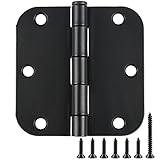
You’re staring at a cabinet door that’s gone rogue. It’s sagging, it won’t close right, or maybe it’s just… off. The immediate thought is, ‘I need a new hinge.’ Then comes the bewildering sea of options online or at the hardware store. Are cabinet hinges standard, or am I about to embark on a wild goose chase for a unicorn part? I’ve been there, rummaging through bins, convinced that all hinges were basically the same. Spoiler alert: they’re not. And understanding that difference can save you a whole lot of frustration.
The truth is, while there are common standards, ‘standard’ in the cabinet hinge world isn’t quite as simple as, say, a standard screw size. It’s a mix of mounting types, overlay measurements, and specialized features that can make choosing the right one feel like deciphering ancient hieroglyphs. But don’t sweat it. Let’s break down what ‘standard’ really means for cabinet hinges so you can fix that wonky door and get back to actually enjoying your kitchen.
Forget Fancy, What’s Actually Holding Your Doors on?
When I first started tinkering around the house, I assumed cabinet hinges were like light bulbs. You know, you need a medium base, screw it in, and boom. Simple.
Then I tried to replace a hinge on my grandmother’s old oak cabinets, and it was like trying to fit a square peg into a round hole. The screw holes didn’t line up.
The arm didn’t reach the cabinet side correctly. It looked completely different.
That’s when I realized the term ‘are cabinet hinges standard’ is a bit of a trick question. They follow standards, sure, but there are many types of standards, and they’re not all interchangeable. You’ve got to match the hinge to the cabinet construction and the door style. It’s less about a single universal standard and more about a system of compatibility.
The most common hinge types you’ll run into for kitchen and bath cabinets boil down to how they mount and how the door sits in relation to the cabinet frame. For frameless cabinets (often called European or Euro-style), you’ll see concealed, or ‘hidden’, hinges that mount into a routed hole in the door and clip onto a plate on the cabinet interior. These are pretty standardized in terms of their mounting cup size (usually 35mm diameter) and the clip-on mechanism.
For face-frame cabinets, which have a solid wood frame around the cabinet opening, you’ll encounter ‘surface-mount’ or ‘semi-concealed’ hinges. These attach to the face frame itself.
The trick here is that the ‘overlay’ – how much the door overlaps the cabinet frame when closed – dictates the hinge’s shape and arm length. A full overlay hinge lets the door cover almost the entire face frame, while a partial overlay leaves some of the frame visible.
Then there are butt hinges, which are more traditional and visible, used on furniture and older cabinets, where the two leaves are mortised into the door and frame. My first mistake was buying a generic ‘kitchen cabinet hinge’ online without checking the overlay.
It looked right in the picture, but when it arrived, the door stuck out a good inch past the frame. Useless.
It taught me that ‘standard’ isn’t a one-size-fits-all concept here; it’s about matching the hinge’s specifications to your cabinet’s design.
The material also plays a role, though less in standardization and more in durability and aesthetics. Most are steel, often nickel-plated or brass-plated for looks and corrosion resistance. Stainless steel is great for humid environments like under-sink cabinets. Soft-close mechanisms are also increasingly common, adding a hydraulic damper to prevent doors from slamming.
These are usually integrated into the hinge arm and are a feature you either get or you don’t; they don’t fundamentally change the mounting standard itself, but they do add complexity if you’re replacing a non-soft-close hinge. So, while the 35mm cup for concealed hinges is a pretty solid standard, the face-frame world is a bit more nuanced, driven by the desired door coverage.
Always measure your overlay! That’s the golden rule.
The Overlay Equation: Why Your Door Sits How It Sits
Let’s talk about ‘overlay.’ This is the big one that trips people up when they ask if are cabinet hinges standard.
Overlay is simply how much the cabinet door extends over the cabinet frame when it’s closed. It sounds straightforward, but it dictates the exact type of hinge you need, especially for face-frame cabinets. If you have frameless cabinets, you’re usually dealing with concealed hinges, and the overlay is adjusted via screws on the hinge itself. But for those lovely old face-frame cabinets?
Oh boy, do you need to get this right. The hinge arm is designed to create a specific amount of ‘wrap’ or overhang.
Get the wrong one, and your doors will either look wonky, not close properly, or even bang into each other.
There are three main categories for face-frame hinges based on overlay: full overlay, partial overlay, and inset. Full overlay means the doors cover almost the entire cabinet frame. This gives a clean, modern look. (See Also: A Box Without Hinges Key )
To achieve this, you need hinges with a significant ‘bow’ or curve in their arm. Partial overlay is what most older cabinets have. The doors cover only part of the frame, leaving a gap between doors and around the frame.
Here, the hinge arm has less of a bow, or sometimes none at all, depending on the exact overlay percentage (like 1/2 inch or 3/4 inch). Inset doors sit flush within the cabinet frame, meaning the hinge needs to be specifically designed for this, often a more traditional-looking butt hinge or a specialized concealed hinge that allows for flush mounting. My first DIY cabinet project involved replacing a few warped doors on a vintage dresser. I bought what I thought were standard butt hinges from a big box store.
They looked the part. But when I installed them, the doors sat slightly proud of the frame, leaving a noticeable gap. Turns out, they were designed for a slightly thicker frame or a different overlay than my dresser’s construction. I ended up having to mortise out a little more wood on the frame for the hinge knuckle to sit deeper, a total pain.
Lesson learned: the hinge’s arm shape and offset are precisely engineered for a particular overlay. Don’t guess; measure.
How do you measure? For face-frame cabinets, close the door and measure the distance from the edge of the door to the edge of the cabinet frame.
If it’s a single door, that’s your overlay. If it’s a pair of doors, measure the gap between them and the overlay on each side.
For concealed hinges on frameless cabinets, the overlay is less about the hinge shape and more about how deep the cup is routed into the door and how the hinge arm is positioned on the cabinet side. The hinge itself will often have multiple adjustment screws to fine-tune the overlay and alignment.
So, while the 35mm cup size for concealed hinges is a standard, the overlay requirement for face-frame hinges is the key differentiator. It’s not a ‘one size fits all’ deal; it’s a ‘fits this specific door-to-frame relationship’ deal.
Understanding your cabinet’s construction – frameless or face-frame – and then measuring your desired overlay is the absolute first step before you even look at hinge styles.
Concealed vs. Exposed: The Big Hinge Showdown
When you start looking at hinges, you’ll quickly see two main camps: concealed and exposed. The question of ‘are cabinet hinges standard’ really splits along this line. Concealed hinges, often called European hinges or cabinet hinges, are the modern workhorses. They are designed to be hidden, mounted into a circular ‘cup’ routed into the back of the cabinet door and then clipped or screwed onto a mounting plate attached to the cabinet frame.
These are fantastic because they offer a clean, minimalist look where only the door and the cabinet box are visible, not the hardware. The 35mm mounting cup diameter is a pretty universal standard for these, making them highly interchangeable as long as the overlay and drilling patterns match. I recently redid my kitchen island cabinets, swapping out old, clunky surface-mount hinges for sleek, concealed ones. The transformation was night and day.
It made the whole island look so much cleaner and more custom.
Exposed hinges, on the other hand, are designed to be seen. Think of traditional antique cabinets, Shaker-style doors with visible hardware, or even decorative accents on furniture. These can range from simple butt hinges, where each leaf is mortised into the door and frame, to more ornate strap hinges, barrel hinges, or butterfly hinges. The ‘standard’ here is much looser.
Butt hinges have their own standards in terms of pin diameter and leaf size, but they are often chosen for their aesthetic rather than a precise functional fit in the way concealed hinges are. Strap hinges, for example, are often chosen more for their visual flair and might require custom drilling or mounting.
The key difference is that with concealed hinges, the mechanism is hidden, and adjustments are made via screws on the hinge itself to fine-tune door alignment. With exposed hinges, the hinge is part of the design, and its shape and how it’s mounted directly impact the door’s appearance and function.
You’re not just buying a functional part; you’re buying a decorative element too.
One common area of confusion is the difference between different types of concealed hinges. You have full overlay, half overlay, and inset variations, all adjusted via the hinge itself. Then there are special types like blind hinges (where one leaf mounts to the edge of the door, used when you can’t rout a cup) or bi-fold door hinges.
My friend Sarah tried to ‘upgrade’ her kitchen with new doors, but she reused her old hinges. Big mistake.
The doors didn’t sit right because the old hinges were designed for a thicker frame or a different overlay. She ended up having gaps and doors that didn’t align. The beauty of the standardized 35mm cup for concealed hinges is that if you’re replacing a broken one and the drilling is already there, you can usually find a direct replacement as long as you match the overlay type. But if you’re going from exposed to concealed, or changing the door style, you’re looking at new drilling and potentially new mounting plates. (See Also: Are Integrated Washing Machine Door Hinges Standard )
It’s a trade-off between a clean, adjustable modern look and a more visible, often decorative, traditional style.
The Nitty-Gritty: Types of Hinges and What They Actually Do
Let’s get down to the nuts and bolts, or rather, the hinges and their specific types. When we talk about whether are cabinet hinges standard, we’re really talking about compatibility and function. The most common type you’ll encounter in modern kitchens and bathrooms are concealed hinges, often referred to as European hinges. These are brilliant because they’re hidden, giving cabinets a clean, uninterrupted look.
They mount into a circular hole, or ‘cup,’ drilled into the back of the cabinet door. This cup is almost universally 35mm in diameter. The hinge then attaches to a mounting plate screwed onto the cabinet frame. These hinges are highly adjustable, allowing you to fine-tune door alignment up, down, left, right, and in/out using screws on the hinge arm.
This adjustability is a huge win for DIYers and anyone who’s ever dealt with sagging doors.
Within concealed hinges, you have variations based on how much the door covers the cabinet frame, known as the overlay. Full overlay hinges are used when doors cover nearly the entire cabinet frame, common in frameless cabinets.
Partial overlay hinges are used for face-frame cabinets where the doors only cover a portion of the frame. The shape of the hinge arm dictates this overlay. For example, a hinge designed for a 1/2-inch partial overlay on a face frame will have a different arm shape than one for a full overlay.
My first attempt at replacing hinges involved me buying ‘kitchen cabinet hinges’ that looked generic. I didn’t understand the overlay concept for face-frame cabinets. The doors ended up sticking out too far, making the cabinet look unfinished. I had to go back and get hinges specifically designed for the 1/2-inch overlay my cabinets required.
It was a frustrating but valuable lesson in specificity.
Beyond concealed hinges, you have exposed hinges. These are not hidden and are part of the cabinet’s aesthetic. The most basic is the butt hinge, typically made of two leaves connected by a pin. One leaf attaches to the door, the other to the frame.
Mortising (carving out a recess) is usually required for them to sit flush. These are common on furniture and older cabinets. Then there are decorative hinges like strap hinges, which have a long decorative plate that runs along the door, or T-hinges, shaped like the letter T. These are chosen for their look and often require specific mounting techniques.
You might also find barrel hinges, which are cylindrical and often used for inset doors or specific furniture designs. The ‘standard’ for these exposed types is less about universal fit and more about matching the style and the specific application.
For example, a 3-inch brass butt hinge is a common size and style, but it’s not interchangeable with a concealed hinge by any stretch. The hinge market also offers specialty hinges for things like bi-fold doors, appliance panels, or corner cabinets, each with its own mounting quirks and standards.
When in doubt, identifying your cabinet style (frameless or face-frame) and measuring your overlay is key to finding the right replacement, especially for concealed hinges where the 35mm cup is a strong standard.
Common Mistakes and How to Avoid Them
The biggest mistake I see people make, and honestly, one I’ve made myself, is assuming ‘are cabinet hinges standard’ means any old hinge will do. This is a recipe for frustration. People buy hinges based on looks or price alone, without considering the cabinet construction or the required overlay. For instance, trying to use a full overlay concealed hinge on a cabinet that needs a partial overlay face-frame hinge will result in doors that don’t close properly, hit each other, or look completely out of whack.
I once spent an entire Saturday trying to make a set of ‘universal’ hinges work on my mom’s old pantry cabinets. They were designed for frameless cabinets, but hers were face-frame.
I ended up with doors that didn’t seat correctly, and the gap between them was uneven. I finally had to pull them off, buy the right type of semi-concealed hinge for face frames with the correct overlay, and start over. It cost me time, a bit of money, and a whole lot of my sanity.
Another common pitfall is not paying attention to the mounting screw pattern or the hinge type required for the specific cabinet side. Concealed hinges usually have a clip-on mechanism that attaches to a separate mounting plate.
If you buy a hinge that doesn’t come with the correct plate, or if the screw holes on the plate don’t match the existing ones on your cabinet frame, you’re in trouble. This is especially true if you’re trying to match existing hinges.
Sometimes the mounting plate is integrated, and you have to replace the whole thing. I learned this the hard way when a hinge broke on my dishwasher’s cabinet panel. I ordered a replacement hinge, but it came with a different style of mounting plate. I thought I could just use the old plate, but the hinge arm wouldn’t seat properly. (See Also: Are Hinges Wheeels )
I had to order the specific mounting plate that came with the new hinge. So, always check if mounting plates are included and if they are compatible with your cabinet.
It’s not just about the hinge arm itself; it’s the whole system.
People also often overlook the subtle differences in hinge finishes. While nickel, brass, and black finishes are common, the exact shade and sheen can vary wildly between manufacturers. If you’re only replacing one hinge, trying to match an existing finish can be a challenge.
It’s often better to replace hinges in pairs or on a whole cabinet section if an exact match is important for aesthetics. Finally, don’t forget about the added features.
Soft-close hinges are great, but if you’re replacing a standard hinge with one, make sure your cabinet doors are sturdy enough to handle the mechanism. Similarly, some hinges offer a ‘quick-release’ feature, which is handy for removing doors for cleaning or painting.
If you don’t need that feature, it might add unnecessary complexity or cost. Always read the product description carefully and look at the diagrams.
Don’t just assume. Measure twice, buy once. It’s cliché, but it’s the absolute gospel when it comes to cabinet hardware.
Real-World Use: Hinges That Don’t Suck
After years of wrestling with cheap, poorly made hinges that sagged, squeaked, and eventually broke, I’ve gravitated towards a few types and brands that just… work. For concealed hinges on frameless cabinets, the Blum clip-top and Salice brands are, in my opinion, the gold standard. Yes, they cost more than the bargain bin stuff, but they are worth every penny. The adjustability is superb – you can dial in perfect door alignment with a few turns of a screwdriver, and they feel solid and smooth.
I installed Blum hinges in my own kitchen about five years ago, and they haven’t missed a beat. No sagging, no squeaking, just smooth, quiet operation every single day. They have different overlay options and opening angles, but the core mounting system and the 35mm cup are consistent.
For face-frame cabinets where you need exposed or semi-concealed hinges, I’ve had good luck with Amerock and Hickory Hardware. They offer a decent range of styles and finishes, and their hinges generally feel more solid than the absolute cheapest options. For example, their semi-concealed hinges for partial overlay doors have a nice heft to them, and the movement is smooth, not jerky.
I used Amerock semi-concealed hinges on a bathroom vanity I built, and they’ve held up beautifully. The finish hasn’t tarnished, and they still operate smoothly after years of constant use, which is a big deal in a steamy bathroom.
What makes a hinge ‘good’ in real use? It’s the buttery smooth movement, the ability to make precise adjustments without stripping screws or bending metal, and the durability over time. Cheap hinges often feel flimsy from the start, and their adjustment screws can be gritty or imprecise.
They also tend to sag faster, especially on heavier doors, because the internal mechanisms aren’t built to last.
When considering hinges, also think about the weight of your doors. Solid wood doors, especially larger ones, need sturdier hinges.
Particleboard or MDF doors might be lighter but can be prone to pulling screws out if not installed correctly. Soft-close mechanisms are fantastic for preventing slamming, but they add a slight resistance.
If you have very lightweight doors, the soft-close might feel a bit stiff. Conversely, if you have heavy, solid wood doors, a standard hinge might not be enough, and you’ll want to look for heavy-duty options, often with more mounting points or a thicker gauge steel.
For example, I once installed some very large, heavy wooden doors on a built-in bookshelf. I used standard cabinet hinges, and within a year, they were visibly sagging. I had to replace them with beefier, multi-screw mounting hinges specifically designed for heavy loads.
So, ‘real-world use’ means matching the hinge’s capability to the demands you’re placing on it.
Frequently Asked Questions About Cabinet Hinges
Conclusion
So, are cabinet hinges standard? Yes, but with important caveats. The 35mm cup for concealed hinges is a strong standard, but the overlay, mounting type, and specific design are what truly matter. Don’t just grab the cheapest pack; measure your existing hinges, check your cabinet’s construction, and understand how your doors sit relative to the frame. My own blunders have taught me that a little upfront research saves a mountain of headaches later.
If you’re replacing a hinge on a modern cabinet with a routed cup, finding a compatible replacement is usually straightforward as long as you match the overlay. For older cabinets or if you’re changing styles, you might need to get more specific. It’s about finding the right fit for your cabinet’s architecture and your desired look. Trust me, getting the hinge right is the difference between doors that glide open smoothly and doors that fight you every step of the way.
The next time you’re faced with a sticky hinge or a sagging door, remember it’s not just about the screw; it’s about the entire system. Take a good look, measure carefully, and choose wisely. Your cabinets (and your sanity) will thank you.