I’ve lost count of the number of times I’ve stared at a cabinet door, a lid, or a gate, utterly baffled by why the darn thing wouldn’t swing open just a little bit further. It’s a small thing, but when you’re wrestling with a piece of furniture or trying to get something to fit just right, that lack of an extra inch of swing can be infuriating. It led me down a rabbit hole, frankly, to figure out: are all hinges capable of moving 360 degrees? The short, blunt answer is no. Not even close. And it’s a lesson I learned the hard way, wasting time and money on the wrong hardware.
Most people assume a hinge is a hinge, right? Just something that lets things pivot. But the reality is far more nuanced, and understanding that nuance can save you a whole lot of frustration. We’re going to break down what makes a hinge go 360 degrees (or not) and what you actually need to look for.
Okay, let’s cut to the chase. When you ask if are all hinges capable of moving 360 degrees, the immediate answer is a resounding NO. Think about it: the most common hinge you’ll ever see is the standard butt hinge on a door. It swings open maybe 90 to 120 degrees before hitting the frame. If it swung 360 degrees, your door would just keep spinning in circles, which is… well, useless for keeping anything contained or providing privacy.
So, what kind of hinges can move 360 degrees, and why would you even want that? We’re talking about specialty hardware here. The most common examples are concealed hinges, often called 360-degree hinges or continuous hinges in certain contexts, designed for specific applications like hidden doors, display cases, or certain types of furniture where the entire panel needs to swing completely around. Imagine a bookshelf that swings out from a wall, or a display case where you need access from all sides. These aren’t your grandma’s cabinet hinges.
The mechanics behind a 360-degree hinge are what make them special. They often involve multiple pivot points or a clever cam system that allows the swinging element to clear its own path as it rotates. Standard butt hinges have a pin connecting two leaves, and their movement is inherently limited by the plates themselves and the surrounding structure. A 360-degree hinge needs to be designed so that as it rotates, no part of the hinge body obstructs the path of the swinging element. This usually means the hinge itself is mounted in a way that it’s not directly in the plane of the swing, or it has a more complex, multi-axis movement.
Why Your Standard Hinges Won’t Do a Full Spin
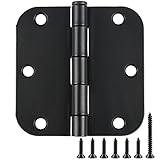
Let’s get down to brass tacks about why the hinges you see every day on your interior doors, cabinet doors, or even your car hood aren’t built for a full 360-degree revolution. It’s all about design and function. A standard butt hinge, the kind you’ll find on almost every interior door, is designed for a simple, predictable arc of movement. It has two leaves, typically attached to the door jamb and the door itself, with a pin holding them together.
This pin acts as the pivot. The leaves are usually flat plates, and as the door swings open, these plates move within a limited space. Once the door reaches a certain point – usually somewhere between 90 and 120 degrees – the door itself or the hinge leaves will physically collide with the door frame or the wall. There’s simply no clearance for it to go any further.
Think about my own experience with trying to repurpose an old wardrobe. I wanted the doors to swing outwards and then tuck neatly against the sides.
I bought what I thought were heavy-duty cabinet hinges, but they were just beefed-up versions of standard butt hinges. I spent an entire Saturday trying to get them to open more than 100 degrees, convinced I was just installing them wrong.
I even tried mortising them deeper into the wood, hoping for that extra bit of clearance. Nope. The design of the hinge itself was the limitation.
They’d hit the frame, then the door would sag because the hinges were under stress trying to force it. It was a frustrating afternoon that ended with me buying a set of truly continuous hinges designed for cabinet doors that could swing further, though still not a full 360. That experience hammered home the fact that hinge design dictates function, not just strength.
This physical limitation is intentional. The purpose of a standard door hinge is to allow access while maintaining separation. If doors swung 360 degrees, they’d be a hazard and completely impractical. You’d constantly be bumping into them, and you couldn’t seal a room properly. The same applies to most cabinet doors. While you might want them to open wide enough to easily access the contents, a full 360-degree swing would mean the door could swing into the next cabinet or collide with appliances. It’s a matter of controlled movement, not unrestricted rotation.
The Mechanics of 360-Degree Hinges: What Makes Them Spin?
So, if standard hinges are out, what’s the secret sauce for hinges that can perform a full 360-degree rotation? It all comes down to their unique construction and how they’re designed to avoid self-collision. These aren’t your typical flat-plate hinges. Instead, they often incorporate multiple pivot points, offset axes, or cam mechanisms that allow the swinging element to clear its own path as it rotates.
One common type is the offset pivot hinge. Instead of being mounted on the edge of the door and frame like a butt hinge, these hinges are typically mounted to the top and bottom of the door and the floor and ceiling (or a frame). The pivot point is offset from the edge of the door. As the door rotates, this offset allows the door to swing away from the frame, creating the clearance needed for a full revolution.
Think of it like a swing set pivot – the pivot point is above and below the swing itself, allowing it to move freely in a wide arc. These are often used for very heavy doors or doors that need to swing both inwards and outwards, and with proper installation, they can achieve a full 360-degree swing. (See Also: A Box Without Hinges Key )
Another type, often found in smaller applications like display cases or secret panels, is a concealed hinge that uses a complex internal mechanism. These might involve bearings and interlocking parts that guide the movement. The hinge body itself might be designed to retract or rotate within a housing as the door opens.
I saw one particularly clever design on a custom bar cabinet where the entire front panel, when opened, swung 180 degrees and then another 180 degrees to lie flat against the side of the cabinet. It looked like magic, but it was just a series of precisely engineered pivot points and sliding components within the hinge assembly. It wasn’t cheap, mind you, costing me close to $250 for a set of four, but the effect was exactly what I wanted for that quirky project.
The key takeaway here is that a 360-degree hinge isn’t just a stronger version of a regular hinge; it’s a fundamentally different mechanical system designed for a very specific purpose: unrestricted rotation. They require careful planning and often more complex installation than their standard counterparts.
When You Might Actually Need a 360-Degree Hinge
Let’s be honest, the average homeowner isn’t going to be installing 360-degree hinges on their bedroom doors anytime soon. But there are specific scenarios where these specialty hinges are not just useful, but downright key for achieving a desired aesthetic or functional outcome. This is where you stop thinking about doors and start thinking about architectural features or clever design elements.
One of the most common applications is for secret doors or hidden panels. Think of a bookshelf that swings open to reveal a hidden room, or a wall panel that conceals a safe.
For these to be truly smooth, the door or panel needs to swing open without any visible hardware or obvious obstruction. A 360-degree hinge (or more commonly, a hinge that allows for a very wide swing, like 270 degrees, to tuck the door away) is often the only way to achieve this. The hinge needs to allow the panel to move completely out of the way, often tucking it flush against an adjacent wall or surface. I remember helping a friend build a hidden bar behind a false wall.
We used a pair of heavy-duty, concealed pivot hinges that allowed the entire section of wall paneling to swing out and then fold back almost completely flat against the adjacent wall. It looked incredible, and the smooth, continuous motion was thanks to those specialized hinges.
Another area where you might encounter them is in specialized furniture or display cases. Imagine a rotating display stand for jewelry or a multi-sided cabinet where you need access from all directions. Hinges that allow for a full 360-degree swing or even continuous rotation are perfect for these applications. They allow for maximum accessibility and often a more dynamic presentation of the item being displayed. For example, a retail display might have a cabinet with a door that can spin completely around to showcase different products from every angle.
You might also find them in industrial settings or custom architectural designs. Think of large, pivoting room dividers that can be moved out of the way, or access panels on machinery that need to swing wide open for maintenance. The key is always when you need something to move past its normal stopping point, to basically get out of its own way.
Here’s a quick rundown of applications:
| Application | Typical Hinge Type | Reason for 360° (or wide swing) | My Verdict |
|---|---|---|---|
| Secret Doors/Panels | Concealed Pivot, Continuous | To hide from view, tuck panel away | Key for smooth integration. Gets pricey. |
| Display Cases/Stands | Offset Pivot, Specialty Concealed | Full product visibility, accessibility | Great for retail or showpieces. Can be bulky. |
| Room Dividers | Heavy-Duty Pivot | Flexibility in room layout | Good for large, dynamic spaces. Needs solid framing. |
| Cabinet Doors (rare) | Specialty Concealed (e.g., for corners) | Unique access needs, aesthetic | Often overkill. Standard hinges usually suffice. |
What to Look for (and What to Avoid) When Buying Hinges
Navigating the world of hinges can feel like a deep dive into a hardware catalog, especially when you’re trying to find something that deviates from the standard. If you’re eyeing a project that might require more than your typical door swing, here’s what you need to pay attention to. And importantly, what to steer clear of if you don’t want a repeat of my wardrobe door saga.
First off, understand your exact needs. Do you really need 360 degrees? Or is 180 degrees, or even just a wider-than-usual swing (say, 135-150 degrees), sufficient? Many projects that people think require a full 360-degree rotation can be accomplished with a strong 180-degree swing or a cleverly placed offset pivot. Don’t overbuy hardware you don’t need. For a typical cabinet door that just needs to clear a countertop, a standard overlay or inset hinge with a good degree of opening (110-170 degrees is common) is perfectly fine. You’re likely looking at $10-$30 for a pair of these, depending on quality and finish.
If you do need that wider swing or full rotation, you’re looking at specialty hinges. For 360-degree movement, you’ll likely be dealing with offset pivot hinges or complex concealed pivot hinges. These can range from $50 to $300 or even more per hinge, depending on load capacity, material, and brand. Always check the specifications for the maximum degree of rotation. Manufacturers are usually very clear about this. Look for terms like “full 360-degree rotation,” “180-degree swing,” or “concealed pivot.”
What to avoid? Firstly, avoid generic “heavy-duty” hinges if you’re aiming for a specialized swing. What’s heavy-duty for a standard door might still be a standard hinge in terms of its rotational limits. (See Also: Are Integrated Washing Machine Door Hinges Standard )
If the product description doesn’t explicitly mention the degree of rotation or if it just talks about weight capacity, assume it’s a standard hinge. Secondly, don’t be swayed by fancy finishes if the core mechanism isn’t right. A beautiful brass hinge that only opens 90 degrees is still the wrong hinge for a 360-degree requirement. I once bought a set of gorgeous antique-style brass hinges for a custom jewelry box, only to find out they were standard butt hinges with a decorative flair.
They looked amazing, but the lid could only open about 80 degrees, which felt very cramped.
When in doubt, ask the manufacturer or a knowledgeable hardware store professional. It’s better to ask a dozen questions upfront than to spend hours installing something that won’t do what you need it to. For very specific applications, sometimes custom solutions or industrial-grade hardware are the only way to go.
Common Mistakes and How to Sidestep Them
My journey into the world of hinges has been paved with a few… well, let’s call them learning experiences. I’ve definitely learned what not to do, and I’m happy to share to save you the same headaches and wasted money. The biggest mistake people make when they’re thinking about hinges that move a lot is assuming all hinges are created equal, or that “heavy-duty” means “can swing infinitely.”
One of the most common pitfalls is buying hinges based solely on appearance or general load capacity without checking the specific degree of rotation. I’ve fallen for this hook, line, and sinker.
I remember needing a hinge for a particularly wide cabinet door that I wanted to fold back flush against the side. I picked a set that looked solid and had a high weight rating, thinking that would be enough. What I failed to realize was that even with a high weight rating, a standard cabinet hinge is designed to open to around 110-170 degrees, max. It would hit the adjacent cabinet or wall long before it could fold back.
I ended up spending another $60 on a set of specialized overlay hinges with a much wider opening angle. That’s about $100 down the drain on hinges for one door, all because I didn’t look at the spec sheet for the angle.
Another mistake is underestimating the installation requirements for specialty hinges. A 360-degree hinge, especially an offset pivot type, often requires precise placement and sometimes deeper mortising or reinforcement in the frame or floor. If you’re not comfortable with precise woodworking and measuring, you might struggle.
I once tried to install a set of concealed pivot hinges for a modern-looking internal door. The instructions were complex, and I ended up with a door that sagged and didn’t close quite right because the pivot point wasn’t perfectly aligned. It took me three attempts and a lot of shimming to get it right. If you’re not a seasoned DIYer, for these kinds of hinges, it might be worth budgeting for a professional installer, even if it adds to the cost.
Finally, people often don’t consider the interaction between the hinge and the surrounding environment. For a 360-degree hinge, this is most important. If the hinge is on a door that swings into a walkway, it can be a hazard. If it’s on a cabinet door that swings against another cabinet, it can cause damage.
Always measure clearances meticulously. Think about where the door will be when it’s fully open. Will it hit anything?
Will it obstruct anything? For instance, I wanted a set of 360-degree hinges for a large garden gate, thinking it would be cool. I quickly realized that when fully open, it would block half the driveway. So, I had to compromise on the swing angle to make it practical.
It’s about balancing the desire for functionality with real-world constraints.
Can Any Hinge Open a Full 360 Degrees?
No, not all hinges are capable of moving 360 degrees. Standard hinges like butt hinges, commonly found on doors and cabinets, have physical limitations in their design that prevent them from rotating more than a limited angle, typically around 90 to 120 degrees. Specialty hinges, such as offset pivot hinges or complex concealed pivot hinges, are specifically engineered to achieve full 360-degree rotation, but these are not standard hardware. (See Also: Are Hinges Wheeels )
What Is a 360-Degree Hinge Called?
A hinge capable of moving 360 degrees is often referred to by several names depending on its type and application. Common terms include “360-degree hinge,” “full rotation hinge,” “concealed pivot hinge” (if it’s hidden from view), or simply “pivot hinge” (as many pivot hinges are designed for wide swings, including 360 degrees). In some industrial contexts, a continuous hinge that allows for full rotation might be used.
Do I Need a Special Door for a 360-Degree Hinge?
While not always strictly necessary, doors designed for 360-degree hinges often benefit from specific considerations. The door frame and surrounding walls need to accommodate the full range of motion without obstruction. For pivot hinges, the door might be hung differently, and the frame might need to be reinforced to support the pivot points. For hidden doors, the entire structure is usually built around the hinge’s unique movement capabilities.
How Much Do 360-Degree Hinges Cost?
The cost of hinges capable of 360-degree movement varies significantly. Standard cabinet hinges are relatively inexpensive, costing $10-$30 per pair. However, specialty 360-degree or wide-swing pivot hinges can range from $50 to over $300 per hinge, especially for heavy-duty or concealed models. The price often reflects the complexity of the mechanism, load capacity, material, and brand.
The Real-World Impact of Choosing the Right Hinge
We’ve talked a lot about the mechanics and the types of hinges, but what’s the actual, tangible difference when you pick the right hinge for the job? For me, it boils down to functionality, aesthetics, and avoiding sheer frustration. When you get it wrong, the impact is immediate and annoying. When you get it right, it’s often so smooth you don’t even notice the hardware, which is usually the goal.
Let’s take the secret door example again. If you use standard hinges on a hidden panel meant to blend into a wall, it’s going to be a dead giveaway. The gap will be visible, the door won’t sit flush when open, and the illusion is ruined.
Spending an extra $100-$200 on proper concealed pivot hinges that allow the panel to swing out and tuck away neatly makes all the difference. It transforms a clunky attempt at secrecy into something that genuinely fools the eye. The feeling when a guest walks into a room and has no idea there’s a hidden bar behind a bookshelf is pretty satisfying, and that’s a direct result of the hardware doing its job perfectly. It’s the difference between a cool trick and a well-executed architectural feature.
On the flip side, I’ve also learned that sometimes, the fanciest hinge isn’t the best hinge. I once installed a set of expensive, self-closing, soft-close, fancy-finish hinges on a pantry door.
They were supposed to be a step up. But they had a slightly narrower opening angle than the cheap ones I replaced.
Suddenly, getting a large grocery bag or a bulky pizza box through the doorway became a wrestling match. I ended up swapping them back for basic, wide-swinging hinges because, in this case, the functionality of a wider opening angle was far more important than the fancy features.
It’s a reminder that for everyday items, the simplest, most effective solution is often best. The impact here was negative – a daily dose of minor annoyance.
Ultimately, understanding whether are all hinges capable of moving 360 degrees (spoiler: they are not) is about aligning your hardware choice with your project’s goals. Whether it’s achieving a hidden effect, maximizing accessibility, or just making sure a cabinet door opens wide enough to grab that jar of pickles without knocking over three other things, the right hinge makes the entire experience smoother, more functional, and frankly, less irritating. It’s a small component, but its impact on how something operates is huge.
Final Verdict
So, to circle back to our original question: are all hinges capable of moving 360 degrees? Absolutely not. The vast majority of hinges you encounter daily are designed for limited, controlled movement. Trying to force them beyond their intended range is a recipe for frustration and damage. If you need that full rotation, or even a significantly wider swing than standard, you’re looking at specialized hardware that needs careful selection and installation.
It’s easy to get caught up in the idea of what could be, but remember to ground your choices in practicality. For most homes, standard cabinet and door hinges are perfectly adequate. But for those unique projects – the hidden doors, the custom furniture, the architectural quirks – understanding the capabilities of specialty hinges can turn a good idea into a stunning reality. Don’t be afraid to do your homework and invest in the right hardware; it’s often the unsung hero of a successful build.
Next time you’re staring at a door that just won’t open quite far enough, you’ll know exactly why. And you’ll know what to look for if you want it to swing free.