I was installing a new closet door last weekend, and I swear I spent an hour staring at the hinges, thinking, ‘Are door hinges only 180 degrees?’ It sounds like a dumb question, but as I wrestled with the door, trying to get it to swing just right, I realized there’s more to it than just ‘open’ and ‘closed.’ Most people probably don’t give it a second thought, but if you’ve ever had a door that wouldn’t quite close, or one that swung too far and banged into something, you’ve probably felt my pain.
It’s not just about the angle, either. There are different types of hinges, and they all behave differently. I’ve learned the hard way that picking the right hinge can save you a ton of hassle. Trust me, I’ve bought my fair share of cheap, flimsy hinges that made me question my sanity and the structural integrity of my house.
Beyond the Basic Swing: Understanding Hinge Degrees
So, to answer the burning question: are door hinges only 180 degrees? Nope, not by a long shot. While a standard door hinge, like the kind you see on most interior doors, is designed to open about 90 degrees in one direction before hitting the frame, that’s just the most common scenario. The actual potential swing of a door is dictated by the hinge type and, importantly, the door’s placement within its frame.
Think about it. A typical interior door is set into a jamb. When the door opens, it’s supposed to stop when it reaches the wall or the jamb itself, usually around the 90-degree mark. If it were to swing a full 180 degrees, it would likely be slamming into the adjacent wall or, if it were an exterior door, it could be a security risk, letting someone get a much wider view of your home’s interior.
However, there are specialized hinges designed for much wider swings. Pivot hinges, for example, can allow a door to swing 360 degrees, making them popular for things like saloon doors or even some modern architectural features. Then there are continuous hinges, which run the entire length of the door. These are incredibly strong and can allow for very smooth operation, and while they might not inherently allow for more than 180 degrees of unobstructed swing, their design focuses on stability and durability.
The material and construction of the hinge play a massive role too. I once bought a set of cabinet hinges that looked great, but they were made of some kind of soft metal. After a few weeks, they started to sag, and the door wouldn’t close properly anymore. It felt like I was fighting the door more than using it.
That experience taught me to pay attention to the weight and quality of the hinge, not just its theoretical swing potential. The standard butt hinge, the most common type, is usually rated for a certain weight capacity, and exceeding that can lead to all sorts of problems, including reduced swing and premature wear.
You’re not just buying a piece of metal; you’re buying a mechanical component that needs to withstand repeated stress.
What to Look for When Buying Hinges
When you’re in the hardware store, or scrolling online, and you see a wall of hinges, it can be overwhelming. Most people grab the first pack that looks like their old hinges and call it a day. Big mistake. I’ve fallen into that trap more times than I care to admit, usually ending up with a door that sticks, squeaks, or just feels… off.
First off, let’s talk about material. You’ll see steel, brass, stainless steel, and sometimes aluminum. For interior doors, steel is usually fine, especially if they’re painted or coated. Stainless steel is your friend if you’re dealing with moisture, like in a bathroom or laundry room, because it won’t rust. Solid brass hinges look beautiful and are very durable, but they can be pricey. Avoid hinges that feel too light or have a hollow sound when tapped; they’re usually made of thinner metal and won’t last. I learned this the hard way with some cheap brass-plated hinges that started flaking within a year. The plating wore off, and it looked terrible.
Next, the pin. Most standard hinges have a removable pin. Some have security pins, which are a great idea for exterior doors to prevent easy removal. Look at the finish, too. A good finish not only looks better but also protects the metal. Ball bearings in the hinge knuckles are a sign of a higher-quality, smoother-swinging hinge, especially for heavier doors. I once installed a heavy solid wood door with basic, non-ball-bearing hinges, and it was a workout to open and close. Swapping them out for ball-bearing ones made a world of difference; it was like a new door entirely. (See Also: Are Hinges And Glides For Kitchen Cabinets Important )
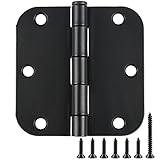
Finally, consider the corner radius. Hinges come with square corners or rounded corners (usually a quarter-inch radius). You need to match this to the mortise cut in your door and frame. If you don’t have a router or a chisel handy, getting hinges that already match the shape of the cutout will save you a lot of frustration. I’ve had to spend extra time with a chisel, trying to force a square-corner hinge into a rounded mortise, and let me tell you, it’s not a fun afternoon. It’s the small details like this that make or break a DIY project.
Common Mistakes People Make with Hinges
You know, I used to think hinges were just… hinges. You screw them in, and they work.
Turns out, there’s a whole world of things that can go wrong, and most of them are pretty avoidable if you just pay a little attention. The biggest mistake I see, and one I’ve definitely made myself, is using the wrong size or weight rating for the door.
A heavy solid core door needs beefier hinges than a hollow core interior door. If you use hinges that are too weak, they’ll bend, the door will sag, and it won’t hang right. I had a situation where a door started scraping the floor after about six months, and it was all because the hinges couldn’t handle the weight. Replacing them with thicker, heavier-duty ones fixed it instantly.
Another classic blunder is not aligning the hinges properly. When you mortise the hinges into the door and frame, they need to be perfectly flush and parallel. If one hinge is set slightly deeper than the other, or if they aren’t straight, the door will bind. This is especially true for double-swinging doors like saloon doors. I remember a friend who was installing some custom doors, and he got the hinge mortises slightly off. The doors looked okay, but they wouldn’t swing freely; they’d catch on each other. We ended up having to recut the mortises, which was a pain, but necessary.
People also often forget about the door stop. That little piece of wood the door closes against? It limits how far the door can swing. If you’re not careful, a door could swing past 90 degrees and hit the wall, potentially damaging both. Conversely, if the door stop is too thick or positioned incorrectly, it can prevent the door from closing fully. This was a surprise to me when I first started. I thought the hinge was the only factor in how far a door opened, but the door stop is just as important in controlling that swing. It’s not just about the hinge’s physical capability; it’s about the whole system working together.
Finally, and this is a big one for me, people skimp on the screws. The hinges might be good quality, but if you use short, cheap screws, they won’t hold. You need screws long enough to get a good bite into the stud behind the door frame and the solid wood of the door itself. I’ve seen people use the little screws that come with the hinges, and then wonder why the door feels wobbly. For important doors, especially exterior ones, I always use longer, sturdier screws, sometimes even reinforcing the frame a bit if needed. It’s cheap insurance against future headaches.
Real-World Use Cases: Beyond the Bedroom Door
When we talk about door hinges, most people picture the standard swing of an interior bedroom or closet door. And yeah, that’s the most common application, where your typical 3-knuckle, flat-butt hinge is king, designed to swing about 90-100 degrees before meeting the door stop or the wall. But hinges are used in so many more places, and the type of hinge is dictated entirely by its job. Let’s look at a few examples that show hinges aren’t just about a simple 180-degree arc.
Take a cabinet door. These often use smaller, lighter-duty hinges, and many are designed to swing open much wider than a standard door, sometimes 110 or even 125 degrees. This is so you can easily access the items inside, especially if they’re pushed back. Self-closing cabinet hinges are another beast entirely; they use springs to pull the door shut, and their movement can be a bit more complex, often with a soft-close feature to prevent slamming. I’ve got a kitchen cabinet above the stove that I fitted with these, and it’s a big deal for safety and noise reduction. The old ones used to slam shut with a bang that echoed through the house.
Then you have specialty doors. Think about screen doors or storm doors. These often use spring hinges or double-action hinges that allow them to swing both inward and outward. These are designed for convenience and airflow, and they don’t have a strict 180-degree limitation in one direction. They’re built to ‘bounce back’ to center. I remember a summer job I had at a restaurant with a swinging kitchen door. It was great for staff to move quickly, but you had to be careful not to get smacked by it if someone opened it from the other side without looking. They definitely weren’t limited to a single 180-degree swing; they went both ways. (See Also: Are My Hinges Cliptop )
Fireplace doors often use hinges that are designed to withstand high heat and allow for a wide opening to access the firebox. These might be more solid, made of specialized alloys, and might not have the same aesthetic concerns as interior doors. Even something as simple as a gate uses hinges, and these can be heavy-duty strap hinges or specialized gate hinges that need to support weight and endure outdoor elements. The range of motion and the forces involved are vastly different from your average interior door.
| Hinge Type | Typical Swing Angle | Best For | Opinion |
|---|---|---|---|
| Standard Butt Hinge | ~90-100 degrees | Interior doors (bedroom, closet) |
The workhorse. Fine for most jobs, but don’t skimp on quality or weight rating. Too light and your door will sag. |
| Ball Bearing Hinge | ~100-120 degrees | Heavy interior doors, high-traffic areas |
Worth the extra few bucks. Makes a huge difference in how smooth a heavy door feels. You’ll thank yourself later. |
| Cabinet Concealed Hinge (Euro-style) | ~90-170 degrees | Frameless cabinets |
Clean look, great adjustability. Can be fiddly to install but the result is a sleek, modern cabinet. |
| Double Action Spring Hinge | 360 degrees (both ways) | Saloon doors, kitchen doors |
Fun for a bit, but can be noisy and a pain if you’re not used to them. Good for high-traffic areas where you need hands-free entry. |
| Pivot Hinge | 360 degrees (single axis) | Modern doors, large statement doors |
Sleek and minimalist. Can be complex to install and expensive, but offers a really clean look. Great for heavy doors that need a unique swing. |
Practical Tips for Hinge Installation and Maintenance
Alright, so you’ve picked out your hinges. Now comes the part where things can go south if you’re not careful: installation. I’ve installed enough hinges in my time to know that even the pros can mess it up.
First tip: measure twice, cut (or mortise) once. Seriously. Lay the hinge in place, trace it precisely, and then carefully chisel out the recess. Make sure it’s deep enough for the hinge to sit flush, but not so deep that it’s loose.
A hinge that sits proud of the surface will bind, and one that’s too loose will cause the door to sag over time. I made this mistake on my first ever door hang; the mortise was too shallow, and the door just wouldn’t close right. Took me an extra hour to fix it.
When it comes to screws, use the right ones. Most hinges come with screws, but they’re often just adequate. For a standard hollow-core door, the included screws might be fine. But for a solid-core door, or if you’re concerned about long-term stability, I strongly recommend using longer screws that can reach the studs behind the jamb. Sometimes, I’ll even drill a pilot hole and use a good quality wood screw. Some people swear by using machine screws and threaded inserts for really heavy doors, but that’s usually overkill for a typical home application. (See Also: Are Truck Topper Hinges )
Maintenance is often overlooked. Hinges are mechanical parts; they need a little love.
A squeaky hinge isn’t just annoying; it’s often a sign that the metal is rubbing together without enough lubrication. A quick spray of WD-40 or a dab of silicone lubricant can work wonders. For hinges with ball bearings, a bit of grease might be needed over time, but usually, a good quality hinge won’t need much.
I also like to check the screws periodically. Over time, they can loosen up due to the door’s movement. A quick tighten can prevent sagging and make sure the door continues to operate smoothly for years. I’ve found that checking them about once a year is usually sufficient.
It’s a small task that can prevent bigger problems down the line.
And if you’re installing new hinges on an existing door frame that already has hinge mortises, make sure you’re using hinges of the same size and shape. If you’re changing hinge types, you might need to do some wood filler or re-chiseling to make them fit. It sounds obvious, but I’ve seen people try to force a slightly different hinge into an old mortise, which never ends well. Compatibility is key. It’s not always about reinventing the wheel; sometimes, it’s just about getting the right replacement part.
Are Door Hinges Universal?
No, door hinges are not universal. While standard butt hinges share similar designs, they come in various sizes, thicknesses, and corner types (square or radius). You need to match the hinge to the weight and size of your door, as well as the existing mortise cut into the door and frame. Specialty hinges, like concealed cabinet hinges or pivot hinges, are completely different and not interchangeable with standard ones.
Can a Door Hinge Open More Than 180 Degrees?
Standard interior door hinges are typically limited to around 90-100 degrees by the door stop and frame. However, specialized hinges like pivot hinges or double-action spring hinges can allow doors to swing 360 degrees or more, in both directions. The physical design of the hinge, combined with the door’s environment and adjacent structures, determines the maximum possible swing.
What Is the Most Common Type of Door Hinge?
The most common type of door hinge is the standard butt hinge. These are the flat, rectangular hinges with two or three knuckles that you see on most interior and exterior doors. They are relatively inexpensive, easy to install, and come in a variety of finishes and sizes to accommodate different door weights and styles.
How Do I Know If I Need a Different Type of Hinge?
You might need a different type of hinge if your current door is sagging, difficult to open or close, squeaking excessively, or if you want a specific aesthetic or functional benefit. For example, if you have a heavy solid wood door, you’ll need heavier-duty hinges, possibly with ball bearings. If you want a clean, modern look for cabinets, concealed European-style hinges are the way to go. For doors that need to swing both ways, like in a kitchen or a saloon, double-action spring hinges are necessary.
Verdict
So, to wrap things up, no, door hinges are definitely not only 180 degrees. The humble hinge is a surprisingly complex piece of hardware, and its capabilities extend far beyond that common opening angle, depending entirely on its design and application. From the basic butt hinge that stops at 90 degrees to specialized hinges that allow a full 360-degree swing, there’s a hinge for almost every need.
My own experiences have taught me that overlooking hinge quality or type is a surefire way to invite frustration down the line. Whether you’re hanging a new door or just replacing an old hinge, taking a moment to understand what you need can save you hours of headaches and make sure your doors function as they should. Don’t just grab the cheapest pack; consider the weight of the door, the required swing, and the environment it will be in.
Next time you open a door, take a quick look at its hinge. You might be surprised by what you learn, and hopefully, you’ll feel a little more confident tackling your own hinge projects. And if you’re dealing with a squeaky hinge right now, grab some lubricant – it’s probably the easiest fix you’ll make all week.